Do these 3 things before closing this tab:
1Fix the driver behind crashes, sound loss and screen glitches2Repair Windows errors before they cause bigger problems3Scan for outdated or missing drivers - takes under a minuteGames can make you root for a morally compromised protagonist by tying your immediate goals to theirs, putting you in direct control of their actions, and revealing experiences that complicate your first judgment. That can create sympathy or a sense of involvement without making you approve of what the character does. Sometimes the game makes that gap the point: you understand the protagonist and still feel uneasy about helping them.
Antihero and villain protagonist are not the same thing
An antihero is a central protagonist who lacks conventional heroic virtues. A villain protagonist is a central viewpoint character whose goals or conduct put them at odds with the moral or social order the story presents. These are useful working labels, not fixed categories: a character’s role can look different as the game changes whose perspective you inhabit or what you know about them.
As an Amazon Associate I earn from qualifying purchases.
It also helps to keep three responses separate. Sympathy means understanding or feeling for a character; identification means feeling aligned with them or their experience; moral approval means judging their actions acceptable. A game can invite the first two while resisting the third.
Why do I root for a villain in a game?
Often, the game gives you the character’s immediate objective before you have enough context to judge the larger moral picture. If you are trying to survive, find someone, or complete a mission, your moment-to-moment goal can line up with the protagonist’s even when their methods trouble you. You may be invested in succeeding without endorsing the person you are helping.
#1 Best Overall

- Travis touchdown lathe a Santa Destroy dopo dieci anni di assenza
- Quali pericolosi assassassini dovrà affrontare travis questa volta
Action creates alignment
Unlike a film, a game can ask you to perform the protagonist’s actions directly. Game-studies analysis of Spec Ops: The Line connects that control with a desire to keep the avatar alive and a sense of responsibility for events. When you carry out an action rather than watch it happen, the story can make your involvement feel more personal. That feeling is not the same as having chosen freely: the game may limit what actions are available.
Motives and context complicate a first judgment
Time spent with a character can disclose their motives, relationships, or fears. That context may make their conduct easier to understand, but understanding is not acquittal. A story can make a character more legible while leaving the harm they cause—and your reaction to it—intact.
Rank #2

- OFFICIALLY LICENSED COSTUME - shadow inflatable costume inspired by shadow from sonic Halloween costume delivers authentic character styling fans will recognize from the iconic franchise
- INFLATABLE SONIC COSTUME FOR ADULTS - sonic inflatable costume adult design creates a bold, oversized silhouette perfect for parties, trick or treat, and standout group looks
- EASY SETUP & ALL-IN-ONE DESIGN - includes inflatable suit & fan for quick inflation, keeping your adult inflatable shadow costume fully formed and comfortable throughout wear
- ICONIC SHADOW CHARACTER DETAILING - shadow costume from sonic features signature colors and design elements that bring the ultimate anti-hero to life in a fun, eye-catching way
- ONE SIZE FITS MOST ADULTS - adult inflatable shadow costume offers a flexible fit for grown ups, making it an easy and exciting Halloween outfit choice for cosplay and events
How can games make players feel responsible for a character’s actions?
Responsibility in a game is shaped by more than the number of branches in its plot. A game may offer an explicit moral choice, constrain the alternatives, show consequences, or make continuing to play part of the ethical question. A 2024 study describes Spec Ops: The Line’s “stop sign” framing as a meta-choice: it shifts attention from what the playable character can choose to what the person playing is willing to do.
The Tool Desk
Outbyte Driver Updater FREEFix the driver behind crashes, sound loss and screen glitchesFind Drivers →Outbyte PC Repair FREEClear out junk files and repair common Windows errorsFree Scan →That distinction helps explain why control over an action is not necessarily control over its outcome. In a 2012 interview, Spec Ops: The Line lead writer Walt Williams said the larger narrative moves toward chaos despite some major explicit choices. He argued that making the world validate a player’s preferred “good guy” role would create an unrealistic sense of agency. As Williams put it, “The concept we currently have of player agency [in most video games] is that since I’m the player and I’m the hero and this world revolves around me, it has to react however I want it to react.” Read the Ars Technica interview with Walt Williams.
Rank #3

- 🎮 100+ Curated Premium Games – No Extra Purchases Required: It features a wide variety of genres including action, puzzle, sports, and educational games, allowing kids to learn while having fun and stay engaged for hours. No downloads or subscriptions needed — just plug and play right out of the box.
- 🎯 Innovative AR Camera Game Console: Built with advanced motion-sensing technology, this game console lets kids control games with physical body movements, turning the living room into an interactive playground. It effectively improves children's motor coordination and reaction speed.
- 📺 HDMI Plug & Play Design: No complicated setup required. Simply connect to your TV and start playing instantly. Compatible with any TV that has an HDMI port. Setup takes as little as 3 minutes — perfect for parents of all tech skill levels.
- 👨👩👧👦 Equipped with 2 Wireless Controllers: Supports two-player versus and co-op adventure modes. An ideal parent-child interactive toy that strengthens family bonding and creates precious memories.(The wireless controller requires 4 AAA batteries; batteries are not included.)
- 🎁 Safe & Eco-Friendly Materials: Certified and specially designed for kids aged 3+. An ideal gift for birthdays, holidays, or as a daily reward. Provides a fun, wholesome alternative to smartphone and tablet screen time.
Lead designer Cory Davis described choice as something that can be overlooked in discussions of game design: “Basically, the element of choice usually isn’t part of the discussion.” Read Davis’s interview with Game Developer. The point is not that players always have meaningful alternatives; it is that a game’s limits, consequences, and framing can make those limits part of what the player considers.
Spec Ops: The Line uses control to challenge the hero role
The 2012 shooter begins with familiar military-shooter expectations, then challenges the player’s assumptions about heroic action through disturbing events, constrained choices, and consequences. Its designers described an intention to make gameplay and combat contribute to character and story, rather than reserving that work for dialogue and cutscenes.
Rank #4
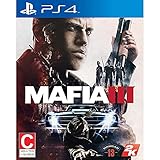
- Collectible map of New Bordeaux Included.
- 1968 NEW BORDEAUX, A REIMAGINED NEW ORLEANS: A vast open world ruled by the mob and detailed with the sights and sounds of the era.
- A LETHAL ANTI-HERO: Be Lincoln Clay, orphan and Vietnam veteran hell bent on revenge for the deaths of his surrogate family.
- REVENGE YOUR WAY: Choose your own play-style; brute force, blazing guns or stalk-and-kill tactics, to tear down the Italian Mafia.
- A NEW FAMILY ON THE ASHES OF THE OLD: Build a new criminal empire your way by deciding which lieutenants you reward, and which you betray
Narrative designer Richard Pearsey wrote that the team wanted “gameplay and combat informed us as much about character development and story” as cutscenes and dialogue. Read Pearsey’s development account. Davis likewise described wanting to tell a specific story about specific characters and to put players in control in scenes that games might otherwise present as cutscenes. These statements describe design aims, not proof that every player had the same response.
Quick wins for a faster PC:
Fix the driver behind crashes, sound loss and screen glitchesFind Drivers →Clear out junk files and repair common Windows errorsFree Scan →The result is a useful example of how a game can make participation uncomfortable: it can align play with a protagonist’s immediate aims, then ask the player to confront what those actions mean. The effect depends on the individual player; the available evidence does not establish a universal reaction.
Best Value

- Bring home the ultimate antihero with this officially licensed SEGA Shadow the Hedgehog Pillow Pet. A bold, super-soft plush that folds out into a comfy pillow for lounging, gaming breaks, and relaxing.
- Transforms in seconds—fasten for a snuggly stuffed animal or unfasten for a full 16 inch pillow. Ideal for reading, watching TV, studying, or resting after a long day of adventures.
- Made with extra-soft plush fabric. Designed for comfort, durability, and safe snuggles for fans, from kids to teens to adult collectors.
- Shadow teams up with Sonic in this cuddly collectible, making it a great companion for gamers, Sonic merch fans, and anyone who loves iconic video game characters.
- A cozy cuddle buddy and a lightweight travel pillow for road trips and flights. Pillow Pets deliver comfort, security, and fun—whether used as décor or as an everyday cuddle favorite.
The Last of Us Part II asks players to reconsider an antagonist
The Last of Us Part II uses a different approach. After Abby is introduced as an antagonist to Ellie and kills Joel, the game shifts the playable viewpoint from Ellie to Abby for a substantial section. Ferrari and Soraci describe this structure as an attempt to create empathy for a character first presented as a villain. The official PlayStation Blog interview with director Neil Druckmann offers context on the story and Ellie’s development; the 2022 paper analyzes the viewpoint shift and player reactions.
The perspective change gives players direct access to Abby’s experiences, but it does not guarantee sympathy or approval. In their analysis of six highly viewed, commented gameplay videos, Ferrari and Soraci found that five of the six observed players expressed dissent with the climactic attempt to make them harm Ellie. This is a small, selected sample of videos—not a survey or a representative estimate of player opinion. The finding illustrates why an empathy-seeking design should not be treated as proof that players felt empathy.
What to look for when a game asks you to root for a compromised protagonist
These questions help distinguish the game’s techniques from your own response:
- Player control: Do you directly perform the protagonist’s actions, or mainly observe them?
- Choice structure: Are moral choices explicit, constrained, ambiguous, or implied by continuing to play?
- Consequences: Does the game show who is harmed and how, or leave the effects abstract?
- Viewpoint: Does the story stay with one protagonist, or give substantial control to an opposing character?
- Refusal: Can you choose another outcome, refuse an action, or stop playing? What does the game communicate through that limit?
- Moral framing: Does the story endorse the protagonist, criticize them, or leave room for conflicting readings?
There is no representative cross-game statistic establishing how often players root for villain protagonists. The evidence discussed here is case-specific, so it supports an explanation of possible design techniques—not a claim about how all players respond.
Quick Recap
Product prices and availability are accurate as of the date/time indicated and are subject to change. Any price and availability information displayed on Amazon at the time of purchase will apply.




