Recommended Free Tools
Most missing or unstable over-the-air channels trace back to one of six causes. The first checks cost nothing: select the TV’s antenna input, run a fresh scan, and confirm the cable connections are sound. If those fail, the usual next suspects are an antenna that does not cover the bands local stations use, poor placement, a weak cable or splitter, terrain and interference, and a station that has changed its frequency or power. No antenna guarantees every channel at every address, and an antenna cannot unlock premium subscription channels.
Work through these checks in order
Start with the steps that cost nothing and change nothing physical. Move to hardware only after they fail.
As an Amazon Associate I earn from qualifying purchases.
- Select the antenna input. Press the Input or Source button on the TV remote and choose the option labeled Antenna or Air. Labels vary by brand, but the setting must point at the antenna connector, not a cable or satellite box input.
- Run a channel scan. Look for Auto Scan, Autotune, or Channel Setup in the settings menu, and choose the antenna or air source if asked. A scan refreshes the TV’s channel list. It cannot create a signal the antenna does not receive.
- Inspect the cable. Make sure each coaxial connector is firmly seated and the cable has no kinks, cuts, or corroded fittings. Check every connection between the antenna and the TV, including any splitter.
- Read the signal meter, if your TV has one. Some TVs show a signal strength or quality display during scanning. Move the antenna in small increments while watching the readout, then rescan once you settle on a position.
- Test a higher spot near a window. Keep the antenna away from electronics and large metal objects, and turn it toward the station. Rescan after each relocation.
- Check reception predictions for your address. The FCC’s Digital TV Reception Maps estimate what a receiver should get, but they assume an outdoor antenna mounted 30 feet above ground. Treat the result as an estimate for planning, not a guarantee for an indoor antenna.
- Confirm the station’s band and current status. Find which VHF and UHF channels your local stations use, then check the station’s website or contact it about frequency or service changes.
- Only then change hardware. Consider an antenna that covers both VHF and UHF, a rooftop or attic installation if repositioning fails, or a splitter change if several TVs share one feed.
Six causes behind missing or unstable channels
1. The TV is on the wrong input or has a stale channel list
This is the most common and the cheapest to fix. A TV set to cable, satellite, or an HDMI input will show no over-the-air channels at all, and a list built before you moved the antenna can omit stations that now come in. Rescan after any change to the antenna, the cable, or the station lineup. The FCC and TV Answers both point to rescanning as the first remedy, but a scan only reads what the antenna already receives.
Free tools Windows power users keep installed
One-click scans. No signup required.
2. The antenna does not cover the station’s band
Over-the-air stations broadcast on two frequency ranges. The FCC defines VHF as channels 2 to 13 and UHF as channels 14 to 51. An antenna built for one range may pick up some stations and miss others. The FCC specifically warns that some products marketed as “HDTV antennas” perform poorly on VHF, so the marketing label does not establish band coverage. Look at the antenna’s stated VHF and UHF performance, and compare it with the channels your local stations actually use.
#1 Best Overall

- UNIVERSAL TV ANTENNA COMPATIBILITY — Works with all TV and antenna brands and supports HDTV, VHF and UHF broadcasts as well as 1080p HD, 4K Ultra HD and NEXTGEN TV (ATSC 3.0) technologies
- PUREAMP SIGNAL BOOSTING — Integrated amplifier with built-in 4G/5G LTE filter helps reduce cell phone interference and improve reception quality for available HDTV, VHF and UHF channels
- LOW-NOISE SIGNAL AMPLIFIER — Helps offset cable loss, minimize reception dropouts and strengthen signals already being received by compatible over-the-air TV antennas
- QUICK, TOOL-FREE INSTALLATION — Connects easily between your antenna and TV using standard coaxial connections; includes AC power adapter for convenient indoor use
- NEXTGEN TV READY — Compatible with ATSC 3.0 technology to support current and future over-the-air television standards where available
3. The antenna is poorly placed or aimed
Indoor reception is sensitive to position. A few feet can change what comes in, because signals arrive by more than one path and interfere with each other, a effect called multipath. The FCC’s consumer advisory puts it plainly: “The location of an indoor antenna is key.” A window-adjacent spot, higher off the floor, and pointed toward the transmitter usually does better than a corner behind a TV. If indoor placement cannot deliver the stations you need, the FCC notes that a rooftop antenna may be necessary in some cases.
4. The cable, connector, or splitter is degrading the signal
A damaged coaxial cable or loose connector can reduce signal strength enough to drop weaker channels. Splitters are the bigger concern when several TVs share one antenna. A passive splitter divides the signal and reduces what each output receives. TV Answers describes an active, powered splitter as an option for some long-range or multi-TV setups. It is conditional: an active splitter can help a weak feed, but it does not fix a poor antenna location or a band the antenna does not cover, and it should be tested against a single-TV connection first.
5. Terrain, buildings, foliage, and interference weaken or distort the signal
Over-the-air broadcasts travel largely in a straight line. Bob Weller, Vice President of Spectrum Policy at the National Association of Broadcasters, put it this way in a TV Answers Q&A: “Airwaves generally travel along the ‘line of sight,’ so, any blockage, whether it’s a building or a mountain, reduces the signal.” Hills, nearby buildings, and trees can reduce reception, and weak fringe reception is the most vulnerable to these losses. Weather can change results as well.
What’s actually slowing this PC down?
Pick the symptom - the matching free tool is one click away.
Rank #2

- Enhanced Replacement for Ulta-Mini Model CM-3414
- 4 Output Ports - Splits TV Antenna Signals to Four Rooms While Boosting Signals. (Replaces standard four-way splitters and improves signal)
- Works With All Indoor or Outdoor TV Antennas - Can Be Installed Indoor, Outdoor or in Attic Due to its Compact Size and Heavy-Duty Weatherproof Housing.
- Designed and Optimized Exclusively for TV Antennas (Not Compatible with Cable and Satellite TV Signals)
- Improves Signal Strength, Decreases Pixelation and May Increase Number of Channels
Two other problems look similar but have different fixes. Reflections off buildings and terrain can cause ghosting or pixelation. Co-channel interference, where another signal on the same frequency competes with the station you want, can come and go with atmospheric conditions. Repositioning or redirecting the antenna may reduce reflections, but atmospheric interference is often temporary and cannot be corrected at home.
6. The station changed its frequency, transmitter location, or power
A station can move to a different channel, change its transmitter site, or reduce power, and the viewer’s antenna then receives less of it or none. A rescan picks up a frequency change, but only if the station has already completed the move. TV Answers advises viewers who still lack a station to check the station’s website or contact it, because an operational change may be temporary. A missing station in this situation is a broadcast-side problem, not a failed antenna, and no amount of repositioning will bring back a station that is off the air.
Independent reader supportYour contribution helps us test, update, and keep practical guides available for everyone.Choosing hardware only after the checks
If repositioning, rescanning, and cable checks do not restore the channels you need, compare the setup along four axes. Do not judge an antenna by advertised range or a promised channel count; the FCC’s map assumptions and its warnings about variability are the more reliable guide.
Rank #3
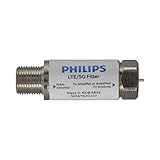
- FILTER 4G 5G LTE SIGNAL NOISE – This filter's TruAmp Technology blocks unwanted 4G/5G LTE cell phone and transmitter frequencies that can cause intermittent channel loss, pixilation and overall reception disruption while allowing lower 5-608MHz frequencies to pass through.
- COMPATIBLE WITH YOUR DEVICES – Designed to work with any TV, amplified TV antenna, coax cable or coax cable splitter, this LTE filter may be especially helpful in metropolitan and suburban areas with a high number of cell towers and mobile device users.
- NO HARDWARE OR POWER SUPPLY NEEDED - An F-type coax cable jack and port allow for easy in-line installation with your existing antenna setup – no hardware or external power supply is needed.
- WEATHERPROOF DESIGN – This compact filter is built to withstand the elements and can be used with indoor or outdoor antenna installations.
- U.S.-BASED TECHNICAL SUPPORT – Backed by a limited-lifetime replacement pledge and free U.S.-based technical support that is available Monday – Friday, 7AM-8AM, Central Time to assist with any questions or issues.
| Comparison axis | What to check | Why it matters |
|---|---|---|
| VHF and UHF coverage | Whether the antenna lists both bands and whether your local stations use VHF, UHF, or both | An antenna that handles only one range can miss stations regardless of placement, and “HDTV antenna” labels do not confirm band performance |
| Indoor versus attic or outdoor placement | Whether a room, window, attic, or roof location gives a stronger signal in your home | Indoor reception varies by spot, and the FCC notes a rooftop installation may be needed in some cases |
| Station direction and predicted signal | The compass bearing to each station and the FCC reception prediction for your address | The prediction assumes an outdoor antenna 30 feet above ground, so indoor results will generally differ |
| Single TV or multiple TVs | How many sets share one antenna feed and whether a splitter is already in use | Passive splitters reduce the signal to each set, and an active splitter is only a conditional fix for some setups |
What an antenna cannot do
An antenna receives free over-the-air broadcasts only. The Federal Trade Commission’s consumer alert, “Indoor TV antenna? Make sure you know what you’re getting,” from March 15, 2021, states: “But an OTA antenna won’t get you free ‘premium’ channels, which you can only get from cable, satellite, or online content services.” Premium subscription channels require a paid service. An amplifier does not change this, and no product can guarantee a fixed number of channels at every address.
Quick wins for a faster PC:
Fix the driver behind crashes, sound loss and screen glitchesFind Drivers →Clear out junk files and repair common Windows errorsFree Scan →Scan for outdated or missing drivers - takes under a minuteDriver Scan →Sources and dates
- FCC, “Consumer Alert: Double Check & Relocate Your Antenna.” The page carries no publication date.
- FTC, “Indoor TV antenna? Make sure you know what you’re getting,” March 15, 2021.
- TV Answers, “Back to Basics: Rescanning Your TV,” May 27, 2020.
- TV Answers, “TV Rescan Tips and Tricks,” January 29, 2020.
- FCC, Digital TV Reception Maps, an interactive tool with no listed publication date. Its predictions reflect the 30-foot outdoor model described above.
- FCC, “Other Interference Information.” The page carries no publication date.
- FCC, FCC 10-195, a 2010 proceeding document.
Several of these sources are from 2020 and 2021, and the FCC pages do not show dates. Check your local station’s own site and the FCC reception map before acting on any specific frequency or coverage detail.
Quick Recap
Product prices and availability are accurate as of the date/time indicated and are subject to change. Any price and availability information displayed on Amazon at the time of purchase will apply.




