To upload a file to Amazon S3, create a bucket in an AWS Region, upload the file as an object, then view or download it. Buckets and objects are private by default, but storage and data transfer can incur charges. This guide walks through the first upload in the AWS Management Console and explains the choices to make before you start.
What Amazon S3 is—and how buckets and objects work
Amazon Simple Storage Service (Amazon S3) is AWS object storage. A bucket is a container for objects. An object is a file together with metadata describing it; its key identifies it within the bucket. If versioning is enabled, a version ID distinguishes one version of an object from another. AWS recommends general purpose buckets as the standard starting point for most use cases and access patterns. AWS explains the S3 model and bucket types in its user guide.
As an Amazon Associate I earn from qualifying purchases.
A bucket belongs to an AWS Region. Choose its name and Region carefully: neither can be changed after the bucket is created. The Region can affect where data is stored and the applicable rates.
Free tools Windows power users keep installed
One-click scans. No signup required.
Before you create a bucket: check access and cost
Keep the first bucket private
S3 buckets and objects are private by default. Block Public Access is enabled by default at the bucket level, and AWS recommends keeping those protections unless a specific use case requires public access. Do not disable them just to make an upload work or to share one file.
#1 Best Overall

- Low Cost Professional Grade Network Attached Storage - Optimized to organize, store, share, and back up your important and everyday files.
- Purpose-Built for Data Protection – Secure NAS with 256-bit drive encryption, a closed system, and flexible replication and backup features to keep your data safe.
- Fast Data Transfers – Native 2.5GbE port for high speed file transfers with no cable upgrade needed.
- Reliable Storage with Effortless Setup – Hard drives included and RAID pre-configured for hassle-free, out-of-the-box protection, and can be changed to other RAID modes to best suit your needs.
- Cloud Integration – Sync with Amazon S3, Dropbox, Azure and OneDrive to create a hybrid cloud for extra data security, cost savings, and flexible scalability.
When you need to grant access, use IAM and bucket policies to define who can do what. AWS generally recommends policy-based controls over access control lists (ACLs); Object Ownership can disable ACLs and simplify access management. Grant only the permissions needed, and understand who could reach the data before changing a public-access setting. See AWS’s S3 security guidance and access-management documentation.
Know what can be billed
S3 is pay-for-use. AWS says creating a bucket itself is not charged, but storage and data transfer can be chargeable; requests and other details can also affect the bill. Rates depend on Region, storage class, usage, and scenario, so there is no single reliable price for every bucket. Check the current S3 pricing page or use the AWS Pricing Calculator to estimate your expected use. Do not treat “no charge to create a bucket” as meaning the service as a whole is free.
Rank #2

- Full-Scale Professional Network-Attached Storage – Business storage solution with hard drives included and optimized to store, share, and back up data for environments of any size.
- Advanced Hardware and Firmware – Product designed for stability and security, capable of handling heavy data loads without dropping performance.
- Purpose-Built for Data Protection – Secure NAS on closed system with 256-bit drive encryption, two-factor authentication, and flexible backup features to keep your data safe.
- Snapshots for Instant Data Backup and Recovery – Snapshots can be created and used to recover data near instantaneously, with little or no system disruptions, and mitigate ransomware.
- Fast Data Transfers – Native 10GbE port for high-speed file transfers with no cable upgrade needed.
Create a bucket and upload your first file in the console
-
Sign in to the AWS Management Console with an AWS account. AWS’s bucket creation instructions provide the current console path and settings.
The Tool Desk
Outbyte PC Repair FREERepair Windows errors before they cause bigger problemsFix Now →Outbyte Driver Updater FREEFix the driver behind crashes, sound loss and screen glitchesFind Drivers →Special offer. See more information about Outbyte and uninstall instructions. Please review EULA and Privacy policy. -
Open Amazon S3 and choose to create a bucket. Enter a bucket name and select an AWS Region. Pause to confirm both: the bucket name and Region cannot be changed after creation.
Rank #3
 BUFFALO TeraStation 5420RN 4-Bay Business Rackmount NAS 80TB (4x20TB) with Hard Drives Included RAID iSCSI Network Storage File Server
- Full-Scale Professional Network-Attached Storage – Business storage solution with hard drives included and optimized to store, share, and back up data for environments of any size.
- Advanced Hardware and Firmware – Product designed for stability and security, capable of handling heavy data loads without dropping performance.
- Purpose-Built for Data Protection – Secure NAS on closed system with 256-bit drive encryption, two-factor authentication, and flexible backup features to keep your data safe.
- Snapshots for Instant Data Backup and Recovery – Snapshots can be created and used to recover data near instantaneously, with little or no system disruptions, and mitigate ransomware.
- Fast Data Transfers – Native 10GbE port for high-speed file transfers with no cable upgrade needed.
-
Retain the default public-access protections for a normal private upload. Review other options, such as versioning, only if they fit your needs; they are not required just to store a file.
-
Create the bucket. The bucket is the container; it does not contain a file until you upload an object.
Rank #4
 BUFFALO TeraStation 51220RH 12-Bay Business Rackmount NAS 16TB (4x4TB) with Hard Drives Included RAID iSCSI Network Storage File Server
- Full-Scale Professional Network-Attached Storage – Business storage solution with hard drives included and optimized to store, share, and back up data for environments of any size.
- Advanced Hardware and Firmware – Product designed for stability and security, capable of handling heavy data loads without dropping performance.
- Purpose-Built for Data Protection – Secure NAS on closed system with 256-bit drive encryption, two-factor authentication, and flexible backup features to keep your data safe.
- Snapshots for Instant Data Backup and Recovery – Snapshots can be created and used to recover data near instantaneously, with little or no system disruptions, and mitigate ransomware.
- Fast Data Transfers – Native 10GbE port for high-speed file transfers with no cable upgrade needed.
-
Open the bucket and choose the upload option. Select a file from your computer, then start the upload. The file becomes an object in the bucket, identified by its key.
Quick wins for a faster PC:
Clear out junk files and repair common Windows errorsFree Scan →Fix the driver behind crashes, sound loss and screen glitchesFind Drivers →Repair Windows errors before they cause bigger problemsFix Now →Special offer. See more information about Outbyte and uninstall instructions. Please review EULA and Privacy policy. -
View or download the object from the bucket’s object list. An upload does not make an object public; access still depends on the applicable AWS permissions and policies.
Best Value
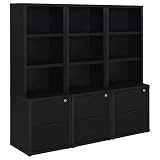 Coaster Westpark 61-Inch 3-Piece 9-Shelf Bookcase Set, Black 802703-S3
- Includes: Three (3) bookcases
- Three-piece bookcase set functions as a wall unit, tower shelf, or freestanding storage system
- Scratch-resistant laminate veneer finish over durable engineered wood frame
- Open shelving offers accessible space for books, décor, and display items
- Top drawers include secure locks to keep personal items and electronics protected
AWS’s getting-started guide covers the create, upload, and download workflow. Console labels can change as AWS updates its interface; use the linked current instructions if a control is named differently in your account.
Independent reader supportYour contribution helps us test, update, and keep practical guides available for everyone.Use the AWS CLI instead
If you prefer commands or need to automate the workflow, AWS also documents a CLI path. Install and configure the AWS CLI and credentials with permission to access S3 before running commands. AWS’s walkthrough is Getting started with Amazon S3 using the AWS CLI; follow its current commands for creating a bucket and uploading an object. The CLI changes the interface, not the essentials: choose a Region, create a bucket, then upload an object, while observing the same privacy and billing considerations.
Choose a storage class for how the data will be used
Storage class affects more than the storage rate: consider how often data is accessed, how quickly it must be retrieved, resilience and availability needs, and retrieval costs or timing. AWS describes these broad fits:
Crashes, No Sound, or Screen Glitches?
Random freezes, missing sound and display glitches usually trace back to one bad driver. Find and replace yours safely.Free scan · under a minuteWindows Errors? Fix Them Before They Spread
Repair common Windows errors and clear accumulated junk for a smoother, more stable PC - no reinstall needed.Free scan · no reinstall| Storage class | Typical fit |
|---|---|
| S3 Standard | Frequently accessed data |
| Infrequent-access classes | Data accessed less frequently |
| Glacier classes | Archiving |
| S3 Intelligent-Tiering | Access patterns that change or are not known in advance |
These are broad use cases, not a substitute for checking the current retrieval, availability, and pricing terms of the specific class. For data whose access pattern changes over time, lifecycle configuration can automatically transition objects between classes. See AWS’s storage-class overview and instructions for setting or changing an object’s storage class.
How large can an S3 object be?
AWS’s objects overview distinguishes a commonly referenced limit of 50 TB from the actual maximum of 53.7 TB (48.8 TiB). These are product limits, not a promise that every upload method or workflow handles an object of that size in the same way. For typical beginner uploads, object size is unlikely to be the first decision; consult AWS’s object overview for the current limit details.
Quick Recap
Product prices and availability are accurate as of the date/time indicated and are subject to change. Any price and availability information displayed on Amazon at the time of purchase will apply.




