What’s actually slowing this PC down?
Pick the symptom - the matching free tool is one click away.
Alternatives to managed AI inference endpoints include running a model server on Kubernetes or operating an inference server on infrastructure you choose. They offer more control over the serving environment, but shift infrastructure and lifecycle work to your team. If your main concern is idle capacity, serverless inference may be another fit—but it is still a managed service, with its own feature limits.
What counts as an alternative?
A managed inference endpoint reduces the amount of serving infrastructure your team has to operate. For example, Azure says its managed online endpoints handle compute provisioning, updates, and removal. A Kubernetes endpoint puts more of that work in your hands. Microsoft’s endpoint overview describes both approaches.


As an Amazon Associate I earn from qualifying purchases.
The practical choice is not simply managed versus self-hosted. It is a question of who owns the deployment lifecycle, how much control you need over containers and serving engines, and whether the workload fits the scaling and network features available on each path.
Which deployment paths can you choose?
| Path | Who operates the serving infrastructure? | When to consider it |
|---|---|---|
| Managed endpoint | The provider handles much of endpoint provisioning and operation. | You want to reduce infrastructure work and the provider’s deployment and security options meet your needs. |
| Kubernetes-hosted endpoint | Your team operates the Kubernetes infrastructure and endpoint. | You prefer Kubernetes and can take responsibility for infrastructure management. |
| Self-managed inference server | Your team selects and operates the serving software and the infrastructure it runs on. | You need control over the serving stack or want to run an engine suited to your model and environment. |
| Serverless managed inference | The provider manages the endpoint and allocates compute in response to requests. | Traffic has idle periods and can tolerate cold starts, subject to service feature limits. |
These paths are not interchangeable products: serverless inference remains managed, while Kubernetes and self-managed servers transfer more operational responsibility to your team.
#1 Best Overall
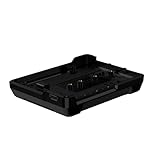
- BOOT YOUR PI 5 FROM FAST NVMe STORAGE — No More Slow SD Cards Connects directly to the Raspberry Pi 5's native PCIe slot for dramatically faster boot times and system performance compared to microSD. Transform your Pi 5 into a desktop-class machine.
- BROAD M.2 NVMe COMPATIBILITY — Fits 2230, 2242, 2260 & 2280 M-Key Drives Works with the full range of M-Key NVMe drives up to 2280 size. Tested with popular brands including Samsung, WD, Kingston, and Crucial. Single-sided drives recommended for best fit.
- BUILT-IN ALUMINUM HEATSINK WITH THERMAL PADS — Keeps Your Drive Cool Under Load Drive-specific aluminum heatsink and pre-applied thermal pads actively dissipate heat, extending the lifespan of your NVMe drive and maintaining consistent read/write speeds during sustained workloads.
- SIGNAL-GRADE FPC CABLE INCLUDED — Impedance-Controlled for Reliable Data Transfer The included impedance-controlled Flexible Printed Circuit cable ensures clean, consistent PCIe signal integrity between the Pi 5 and your NVMe drive — no third-party cable hunting required
- UPGRADE YOUR EXISTING ARGON NEO 5 CASE — Board Only, No Case Duplication Already have an Argon NEO 5 case? This board is the exact upgrade you need — drop-in compatible, replacing the standard base to add full NVMe capability. Requires: Argon NEO 5 enclosure (sold separately) + M-Key NVMe drive (sold separately) + official 27W Raspberry Pi 5 power supply. Raspberry Pi 5 board not included.
When does Kubernetes make sense?
Azure identifies its Kubernetes online endpoints as an option for users who prefer Kubernetes and can self-manage infrastructure. Unlike its managed online endpoint path, Kubernetes endpoints leave node provisioning and maintenance to the user. Azure’s documentation explains that distinction.
Consider Kubernetes when your team already operates it or has a specific need to control the deployment environment. Before choosing it, decide who will own node provisioning, maintenance, upgrades, scaling, and incident response. The infrastructure control is useful only if your team can sustain those responsibilities.
What does a self-managed inference server involve?
With a self-managed server, you choose the inference software and run it on infrastructure you manage or select. Hugging Face documents local endpoint use alongside its managed Inference Endpoints service. Its current endpoint documentation names native support for vLLM, Text Generation Inference (TGI), SGLang, llama.cpp, and Text Embeddings Inference. Hugging Face’s endpoint overview describes the managed service and supported engines; its Hub guide to running inference on servers covers managed, provider, and local endpoint options.
Windows Errors? Fix Them Before They Spread
Repair common Windows errors and clear accumulated junk for a smoother, more stable PC - no reinstall needed.Free scan · no reinstallOutdated Drivers Are Slowing You Down
One free scan finds every outdated or missing driver and matches the right update for your exact hardware.Free scan · exact hardware matchChoose an engine by model and environment
The listed engines are alternatives, not a promise that every engine supports every model, hardware configuration, or deployment requirement. Check compatibility for the model you intend to serve and the infrastructure available to you. The team running the server must also plan how to package and deploy it, monitor health and performance, scale it, secure it, and handle upgrades.
Consider Triton for multi-framework serving
NVIDIA Triton Inference Server is open-source serving software for models built with multiple frameworks. AWS also documents a managed SageMaker hosting path for Triton containers, including single-model endpoints, ensembles, and multi-model endpoints. That makes Triton relevant both as serving software and as a container that can be hosted by a managed service; using Triton does not by itself mean self-hosting. See AWS’s Triton deployment documentation.
When is serverless inference a fit?
AWS describes SageMaker Serverless Inference as suited to workloads with idle periods that can tolerate cold starts. Because the service is managed, it is not a self-hosted replacement; it is a different managed deployment mode to consider when an always-on endpoint may not fit the traffic pattern.
AWS documents exclusions from Serverless Inference that include GPUs, VPC configuration, network isolation, multi-model endpoints, data capture, Model Monitor, and inference pipelines. Feature availability can change, so verify the current AWS Serverless Inference limitations against your requirements before selecting it.
The Tool Desk
Outbyte PC Repair FREEClear out junk files and repair common Windows errorsFree Scan →Outbyte Driver Updater FREEScan for outdated or missing drivers - takes under a minuteDriver Scan →How should you compare the options?
Use the same workload and requirements to assess each candidate. A useful comparison covers ownership, compatibility, control, traffic behavior, security, and measured cost and latency—not just the endpoint’s advertised deployment mode.
- Operational ownership: Identify who provisions and maintains compute, applies updates, scales the service, monitors it, and responds to incidents.
- Model and framework compatibility: Confirm the model, framework, serving engine, and hardware combination is supported.
- Container and engine control: Decide whether built-in deployment paths are sufficient or whether you need to supply a custom container or select a specific inference server. Azure documents no-code, low-code, and bring-your-own-container deployment paths; its no-code options cover common frameworks including scikit-learn, TensorFlow, PyTorch, and ONNX through MLflow and Triton. See Azure’s deployment documentation.
- Scaling and latency: Compare behavior under your real traffic pattern, including idle periods and cold-start tolerance where relevant.
- Security and networking: Check required network isolation, VPC configuration, and other security controls against the service’s supported features.
- Total cost: Measure compute, redundancy, utilization, and the engineering and operational work required to keep the endpoint running.
The vendor documentation cited here describes product capabilities, but it does not establish a neutral cross-provider cost or performance winner. Benchmark latency and calculate total cost using your model, traffic shape, reliability needs, and operational requirements. Do not assume that self-hosting is always cheaper or that a particular platform is fastest.
When should you stay with a managed endpoint?
Choose a managed endpoint when reducing infrastructure and lifecycle work matters more than taking direct control of the serving environment, and the provider supports your model, security requirements, and traffic pattern. Managed services can also expose multiple deployment approaches: Azure, for example, documents no-code, low-code, and custom-container routes rather than a single fixed serving path. The decision is therefore not necessarily between a fully managed endpoint and building every part of the serving stack yourself.
Quick Recap
Product prices and availability are accurate as of the date/time indicated and are subject to change. Any price and availability information displayed on Amazon at the time of purchase will apply.
Quick wins for a faster PC:
Clear out junk files and repair common Windows errorsFree Scan →Scan for outdated or missing drivers - takes under a minuteDriver Scan →



