Windows Errors? Fix Them Before They Spread
Repair common Windows errors and clear accumulated junk for a smoother, more stable PC - no reinstall needed.Free scan · no reinstallOutdated Drivers Are Slowing You Down
One free scan finds every outdated or missing driver and matches the right update for your exact hardware.Free scan · exact hardware matchAI is showing up in real malicious breaches, but the evidence does not establish that every attacker now operates at machine speed—or that most organizations are unprepared. IBM’s 2026 study found AI-enabled activity in one in four malicious breaches in its sample. For security and IT leaders, the practical response is to make recovery executable: know who starts it, what must be isolated, which clean copies and dependencies are needed, and how restoration will be tested.
What the AI-enabled breach figures do—and don’t—show
IBM’s 2026 Cost of a Data Breach study reported that one in four malicious breaches in its study were AI-enabled, with an average cost of $6 million for those breaches. These are findings from a defined study population, not rates for all cyberattacks or all organizations.
As an Amazon Associate I earn from qualifying purchases.
The study was conducted by the Ponemon Institute and sponsored and analyzed by IBM. Its evidence window ran from March 2025 through February 2026 and covered breaches experienced by 602 organizations globally. The study announcement does not make this a census of organizations or attacks; its figures should be read in that context. IBM’s announcement of the 2026 study describes the population and results.
Do these 3 things before closing this tab:
1Clear out junk files and repair common Windows errors2Scan for outdated or missing drivers - takes under a minute3Repair Windows errors before they cause bigger problems| Study finding | What it refers to |
|---|---|
| One in four malicious breaches were AI-enabled | IBM’s 2026 study of breaches at 602 organizations globally during March 2025–February 2026; conducted by Ponemon Institute, sponsored and analyzed by IBM. |
| $6 million average cost | Average cost reported by IBM for the AI-enabled breaches in that same study; not a general cost estimate for every AI-related incident. |
“Machine speed” is a useful warning about the potential to accelerate or scale parts of cyber activity, not a measured universal comparison between attacker action time and organizational recovery time. The study supports concern about AI-enabled breaches; it does not establish that all attackers move at the same speed, or quantify how quickly organizations can recover. IBM vice president Suja Viswesan said the priority is to eliminate lag through remediation in development workflows, runtime identity security, and faster risk fixes. That is an executive’s view, not a regulator finding or a NIST requirement.
Why recovery readiness matters alongside prevention
Prevention and detection can reduce risk or help identify an incident, but they do not by themselves restore operations. A recovery plan needs to guide a coordinated return to service: contain affected systems, establish which copies and systems can be trusted, restore critical dependencies in a deliberate order, and communicate with the people who depend on those operations.
#1 Best Overall

- Easily store and access 2TB to content on the go with the Seagate Portable Drive, a USB external hard drive
- Designed to work with Windows or Mac computers, this external hard drive makes backup a snap just drag and drop
- To get set up, connect the portable hard drive to a computer for automatic recognition no software required
- This USB drive provides plug and play simplicity with the included 18 inch USB 3.0 cable
- The available storage capacity may vary.
Ransomware makes the distinction particularly visible: attackers may disrupt access to data or systems, while recovery depends on having usable copies and a rehearsed way to restore them. IBM’s overview of ransomware discusses backup and disaster recovery as part of preparation. A backup that exists but cannot be located, trusted, or restored in time is not a workable recovery capability.
Use NIST’s current ransomware profile to set priorities
NIST published its final Ransomware Risk Management: A Cybersecurity Framework 2.0 Community Profile on June 11, 2026. It is intended to help organizations assess their defenses and prioritize improvements to ransomware risk management and resilience. Use the profile as a structured planning reference rather than treating any single control or backup type as a complete recovery strategy. NIST’s announcement of the final IR 8374r1 profile provides its publication status and purpose.
Rank #2

- Slim durable design to help take your important files with you
- Vast capacities up to 6TB[1] to store your photos, videos, music, important documents and more
- Back up smarter with included device management software[2] with defense against ransomware
- Help secure your important files with password protection and hardware encryption
- 3-year limited warranty
Recovery planning should connect the incident response process to the operational work of restoring service. Assign ownership in advance: who can declare that recovery should begin, who coordinates technical restoration, who decides when a system is safe to reconnect, and who handles communications with business teams, customers, suppliers, or other affected parties. The right roles vary by organization, but the handoffs should be explicit.
A practical recovery-readiness checklist
- Set the trigger and authority. Identify who can initiate the recovery plan, how that decision relates to incident response, and who can authorize isolation, restoration, and reconnection.
- Map essential operations and dependencies. Record which services and data support critical business functions, what they rely on, and which dependencies must be recovered first. Include external services and identity or management systems where their loss would prevent restoration.
- Define isolation and trust decisions. Document how responders will isolate affected systems and how they will determine whether a system or backup copy is suitable for restoration. Do not assume that a system is safe merely because it is available.
- Choose backup designs that fit the recovery plan. Consider copies that can be disconnected from the network, as well as other protections appropriate to the environment. An external hard drive or other removable device can be one offline-copy option when it fits the design; a drive alone does not provide enterprise-wide resilience or prove a copy is clean, protected, or restorable.
- Write and exercise restoration procedures. Specify how teams will restore data and systems, validate them, and resume operations. Test restores in conditions that expose missing credentials, dependencies, capacity, or documentation, then address what the exercise uncovers.
- Coordinate operations and communications. Tie technical recovery milestones to business priorities and communications. Define who needs updates, what decisions depend on operational status, and how teams will handle a staged rather than all-at-once return to service.
- Revisit the plan when systems change. Reassess recovery order, dependencies, contacts, and restore procedures after major infrastructure, application, supplier, or business-process changes.
Include AI systems and operational technology in the recovery design
For AI systems, identify what must be restored beyond the model itself: the data and software it depends on, the platform or infrastructure that runs it, and the surrounding services needed to put it back into operation. NIST’s Cybersecurity Framework Profile for Artificial Intelligence is an initial public draft, not final normative guidance. The draft identifies AI-related recovery as an area that can bring additional complexity; treat it as a planning consideration, not a settled requirement. Read the NIST AI profile draft.
Rank #3

- Large Data Storage Capacity: Flash Drive with 128GB capacity, meet your needs of daily use on work, school, home and travelling for photos, music, videos, files storage and transfer
- Wide Compatibility: USB flash drive support TV, desktop, notebook computer, car, audio and other device; It is your great data storage and transfer companion with traveling and working
- Easy to use: The usb drive is plug and play without any software installation; Supports Windows 7/8/10 / Vista / XP / Unix / 2000 / ME / NT Linux and Mac OS, also compatible with USB 3.0 and 2.0 ports; Storage is fast, safe and stable
- Retractable & Portable: Slide in/out design is convenient to use and protects the plug as well as the contents, avoiding frustrating misplacing; Built in mini size, thumb drive 128gb is a companion for travel or work to keep your digital world close at hand
- What You Get: 1 x 128GB USB Flash Drive USB 3.1 Thumb Drive, All of usb drives have been rigorously tested and formatted before leaving the factory; The default format of the USB stick is exFAT
In manufacturing and other operational technology environments, restoration decisions can affect production and safety as well as information systems. Recovery priorities and reconnection decisions therefore need input from the teams responsible for plant operations and safety, not only IT. NIST’s manufacturing-sector practice guide, SP 1800-41, Responding to and Recovering from a Cyber Attack, is an initial public draft; it should not be described as a final guide. NIST’s draft manufacturing practice guide identifies its status.
Independent reader supportYour contribution helps us test, update, and keep practical guides available for everyone.How to judge whether a recovery approach is adequate
Compare options against the recovery job your organization actually needs to perform, not against a generic claim that a backup is “secure.” For each critical service or operation, ask:
What’s actually slowing this PC down?
Pick the symptom - the matching free tool is one click away.
Rank #4

- High capacity in a small enclosure – The small, lightweight design offers up to 6TB* capacity, making WD Elements portable hard drives the ideal companion for consumers on the go.
- Plug-and-play expandability
- Vast capacities up to 6TB[1] to store your photos, videos, music, important documents and more
- SuperSpeed USB 3.2 Gen 1 (5Gbps)
- How isolated or immutable are recovery copies, and who can alter or delete them?
- How often is restoration tested, and does the test validate usable service rather than only the existence of stored data?
- Which systems, data, identities, and external dependencies must be restored first?
- Does the approach support the organization’s operational recovery objectives, including the order and pace at which service can return?
These questions expose trade-offs without implying that one medium or product is right for every environment. The deciding evidence is whether the organization can restore the required operations from trusted copies using procedures people have practiced.
Quick Recap
Best Value
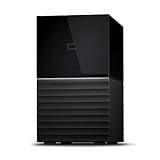
- Massive capacity storage with auto and system backup
- RAID-0 ready out of the box
- USB 3.1 Gen 1-ready, USB 3.0 compatibility
- 2x USB 3.0 hub ports
- 256-bit AES hardware encryption and password protection
Product prices and availability are accurate as of the date/time indicated and are subject to change. Any price and availability information displayed on Amazon at the time of purchase will apply.




