An AI checker can label human-written text as AI-generated because it estimates authorship from patterns in the text; it does not observe who wrote it or how. A score is therefore a fallible signal, not proof. Accuracy can vary with the writer, language, text type, length, detector version, and scoring threshold.
What is an AI-checker false positive?
A false positive happens when a detector flags human-authored writing as AI-generated. The result reflects how closely a passage matches signals the detector uses, not direct evidence of the writing process. Turnitin itself warns that its model may misidentify human-written text and says its report should not be the sole basis for adverse action against a student.


As an Amazon Associate I earn from qualifying purchases.
That distinction matters: a detector score is not the same as a finding that someone used ChatGPT, and it is not a plagiarism score. Turnitin says its AI percentage is independent of its similarity score; the two indicators address different questions.
Recommended Free Tools
Why might an AI checker flag a human-written essay?
Some writing patterns look predictable to a detector
Detectors compare text with learned patterns or statistical signals. One measure discussed in research is perplexity, which describes how predictable a sequence of words is to a language model. In a 2023 study of tested GPT detectors, the authors connected less varied vocabulary and sentence structure with greater risk of misclassification in their sample of non-native English writing. This is a documented failure mode, not a complete explanation of how every commercial detector works.
#1 Best Overall
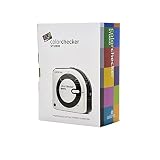
- SPECIFICATIONS: All in one spectrophotometer for camera to print color control, supports monitor display and projector profiling plus printer paper and scanner profiling with Calibrite PROFILER software, includes ColorChecker Classic Mini target for camera profiling, includes USB cable and monitor profiling holder pouch.
- ALL IN ONE: Profiles the devices that impact your final results including monitors, laptops, and projectors plus printers, paper, cameras and scanners, helping photographers maintain consistent color across capture, edit, and output workflows.
- INTELLIGENT PROFILING: Adaptive iterative profiling optimizes results for each unique display every time you calibrate, improving accuracy over repeat sessions and reducing the frustration of color drift and inconsistent screen performance.
- PRINT MATCHING: Ambient light measurement helps set optimal display luminance for comparing prints to your screen, improving print to monitor consistency and supporting more reliable proofing and final output decisions.
- CAMERA SUPPORT: Includes ColorChecker Classic Mini for camera profiling with Calibrite PROFILER software, enabling custom profiles for RAW workflows and a more consistent starting point before you begin editing and grading.
Clear, conventional, or repetitive prose can share patterns a detector associates with generated text. That resemblance does not establish who wrote the passage.
Language background can affect results
Stanford HAI’s May 15, 2023 summary of Liang and colleagues’ study reported that the tested detectors classified 61.22% of the sampled TOEFL essays as AI-generated. Eighteen of 91 essays (19%) were flagged unanimously by all seven detectors, and 89 of 91 (97%) were flagged by at least one. The study was submitted on April 6, 2023, and revised on July 10, 2023.
Those numbers describe that study’s samples and systems—not a current false-positive rate for every checker. They do show why a flag should be examined carefully, particularly when a writer’s language background may affect the patterns being scored. The study’s explanation should not be generalized to every product or treated as proof that all detectors have the same bias.
Sources: Stanford HAI’s study summary and Liang et al., arXiv:2304.02819.
Text type, length, and product settings matter
A detector may be used on material outside its supported or reliably assessed conditions. For Turnitin specifically, its current guidance requires at least 300 words of qualifying long-form prose. It says the system does not reliably detect poetry, scripts, code, bullet points, tables, or annotated bibliographies. Those are Turnitin-specific boundaries, not universal rules for every checker.
Turnitin also marks AI-writing scores from 0–19% with an asterisk because results in that range are less reliable. The figure is a product-specific reporting convention, not a general confidence scale that can be applied to other tools.
Rank #3
![WavePad Audio Editing Software - Professional Audio and Music Editor for Anyone [Download]](https://m.media-amazon.com/images/I/B1fcLEGCs6S.png._SL160_.png)
- Full-featured professional audio and music editor that lets you record and edit music, voice and other audio recordings
- Add effects like echo, amplification, noise reduction, normalize, equalizer, envelope, reverb, echo, reverse and more
- Supports all popular audio formats including, wav, mp3, vox, gsm, wma, real audio, au, aif, flac, ogg and more
- Sound editing functions include cut, copy, paste, delete, insert, silence, auto-trim and more
- Integrated VST plugin support gives professionals access to thousands of additional tools and effects
Does an AI detector score prove I used ChatGPT?
No. A detector’s output is an inference from text, not confirmation of which tool—or person—created it. The available evidence does not establish a universal accuracy rate or a method that conclusively identifies the author of a specific passage. A score should be read with its product, model version, language, report date, and the text’s format in mind.
What’s actually slowing this PC down?
Pick the symptom - the matching free tool is one click away.
For Turnitin, model versions change. Its release notes document 2026 updates and state that earlier reports are not retroactively changed; a new model result requires resubmission. A result generated at one point in time may therefore not match a later report.
Sources: Turnitin’s AI Writing Report guidance and Turnitin’s model release notes.
Independent reader supportYour contribution helps us test, update, and keep practical guides available for everyone.What to do if your own work is flagged
- Check what the report covers. Note the detector, report date, model or version if shown, score, highlighted passages, and whether the text meets the product’s stated format and length requirements.
- Ask for a human review. Request that the decision-maker examine the writing and context under the applicable school or workplace policy. Turnitin says its AI report should not be the sole basis for adverse action against a student.
- Share ordinary process records if available. Drafts, notes, and revision history can help explain how the work developed. They are useful context, not a guarantee that a detector will change its score or that a reviewer will reach a particular conclusion.
- Respond to the specific concern. If particular passages are questioned, discuss how you developed them and provide relevant context rather than treating the score alone as a definitive finding.
Rewriting solely to evade a detector is not a reliable way to resolve a disputed result. The appropriate response is a fair review of the evidence and the governing policy.
How instructors should interpret a flag
- Treat the score as a prompt for scrutiny, not proof of misconduct.
- Review the flagged text in context and consider whether the document’s language, genre, and format fit the product’s stated limitations.
- Distinguish the AI-writing indicator from a similarity or plagiarism result; in Turnitin, the AI percentage is independent of the similarity score.
- Follow institutional policy and give the student an opportunity to respond before taking consequential action.
How to compare detector claims or studies
Numbers from different evaluations are not directly comparable unless their methods line up. Check these details before relying on a claimed accuracy rate:
Do these 3 things before closing this tab:
1Clear out junk files and repair common Windows errors2Scan for outdated or missing drivers - takes under a minute3Repair Windows errors before they cause bigger problems- Detector and model version: identify the system tested and the date or version.
- Writers and language: note who wrote the sample and which languages were represented.
- Genre and length: essays, short answers, code, and other formats may produce different results.
- Definition and threshold: check what the evaluator counted as a false positive and what score triggered a flag.
- Reported output: distinguish a document-level score from highlighted segments.
- Evaluation source: separate independent testing from a vendor’s own product guidance.
The cited evidence does not provide a like-for-like current ranking of commercial detectors, so it cannot support a claim that one is universally more accurate than another.
Quick Recap
Product prices and availability are accurate as of the date/time indicated and are subject to change. Any price and availability information displayed on Amazon at the time of purchase will apply.




