AI agents can retrieve information, automate workflows, help develop software, and support cybersecurity operations. Giving one permission to act, however, also means deciding whose authority it uses, which systems it can reach, and how its actions can be traced. NIST identifies security concerns as a barrier to adoption and describes unresolved identity and governance challenges—but its published work does not measure what share of companies are ready.
What changes when an AI agent can take action?
An AI tool that only provides suggestions leaves a person to carry them out. An agent may instead use tools or interact with systems to complete a task. The specific capabilities vary: NIST describes possible uses such as information retrieval, workflow automation, software development, and cybersecurity operations, not behavior that every agent has or should be allowed to perform.
As an Amazon Associate I earn from qualifying purchases.
Once an agent can act, access control has to account for more than the employee who started it. An organization needs to distinguish the agent from its operator, establish what authority it has been delegated, and retain a way to review the resulting activity. NIST’s National Cybersecurity Center of Excellence (NCCoE) describes agent identity and authorization as practical implementation concerns in its project resource hub.
Free tools Windows power users keep installed
One-click scans. No signup required.
Why safe deployment is still difficult
In its May 18, 2026 summary of responses to a security request for information, NIST reported: “Commenters widely agreed that AI agents present novel security threats and that these security concerns present a barrier to adoption.” That is evidence of a recognized obstacle, not a survey finding that most companies are unprepared.
#1 Best Overall

- Embodied AI : EBO features advanced Embodied AI
The difficulty is not that existing cybersecurity practice has become irrelevant. NIST’s summary says existing practices remain useful but need adaptation. Agent scale, delegation between agents, and the ability to audit activity complicate familiar identity and access controls. The same control may also be difficult to apply consistently when agents are created for short-lived tasks or work across multiple services.
NIST’s review of responses does not establish a representative percentage of companies ready to deploy agents. Its findings describe concerns and feedback, while its identity work is intended to test a standards-based approach and identify gaps. The title’s “most companies” should therefore be read as a warning about the readiness gap, not a measured statistic.
Readiness means being able to answer five questions
Having an agent platform is not, by itself, operational readiness. For each deployment, an organization should be able to determine:
Quick wins for a faster PC:
Repair Windows errors before they cause bigger problemsFix Now →Scan for outdated or missing drivers - takes under a minuteDriver Scan →Rank #2

- BRING MORE LIFE TO YOUR DESK – Meet Eilik – your little robot friend with personality. With loving animations, expressive reactions, and playful interactions, Eilik brings more joy to your everyday life. Whether on your desk, at your workspace, or by your bedside, Eilik quickly becomes a familiar companion for special moments.
- EVERY INTERACTION BRINGS A NEW SURPRISE – Touch Eilik and discover playful reactions that bring your little robot friend to life. Whether you’re giving Eilik a gentle touch, picking Eilik up, or playing together, Eilik responds with expressive animations, charming expressions, and playful reactions. Every interaction reveals more of Eilik’s personality and makes your little companion feel even more special.
- READY FOR LITTLE MOMENTS, RIGHT AWAY – Eilik is ready to interact right out of the box – no complicated setup required. A simple touch is all it takes, and Eilik responds with expressive animations and charming reactions. Easy, intuitive, and full of little surprises that make every moment special.
- EVEN MORE FUN TOGETHER – Every Eilik has its own charm. Bring two or more Eiliks together and watch them interact in their own playful ways – they play, dance, tease each other, and create fun moments together. Whether with friends, family, or as a couple, more Eiliks mean even more ways to play and enjoy.
- MORE POSSIBILITIES AWAIT – Eilik is more than a little robot – it’s the beginning of a bigger world filled with new experiences. Expand your Eilik experience with AI Station for natural AI conversations and Panxer for exciting adventures. Regular updates also bring new animations, games, and surprises along the way.(AI Station and Panxer sold separately.)
- Which agent is acting? There should be an identifiable agent rather than an ambiguous action recorded under a shared employee account.
- Whose authority is it using? The agent’s identity and entitlements should be bound to the user or system responsible for operating it.
- What can it reach? Its access to data, services, and tools should be limited to what its task requires.
- What can it do? Permissions should specify allowed actions, not simply provide broad access to a system.
- Can its activity be reviewed and its authority withdrawn? Records need to support accountability across systems, including when agents delegate work.
This is a practical synthesis of NIST’s identity, authorization, accountability, and governance concerns; it is not a checklist that guarantees a deployment is safe.
Set up identity and permissions before granting system access
Give each agent a distinct identity
Do not make an agent act through an employee’s shared login as though the human performed every action. In an August 27, 2026 NIST article, security engineer Bill Fisher and Digital Identity Program Lead Ryan Galluzzo write: “For organizations to have confidence in transactions, agents need to be treated like first-class entities with their own unique identifiers, credentials, and associated entitlements that are bound to and by the identity of the user or system operating the agent.”
A distinct identity makes it possible to identify the agent in access decisions and activity records while retaining the link to its responsible operator. That relationship matters when investigating an action or deciding whether the agent’s authority should continue.
Rank #3

- Smart AI-Inspired Robot Toy for Kids: Bring futuristic fun to playtime with this smart interactive robot toy. Designed with AI-inspired features, glowing LED face effects, music, movement, and responsive controls, it keeps kids engaged through hands-on play and imagination
- Gesture Sensing & Remote Control Play: Kids can control the robot with simple hand gestures or use the included remote control for forward, backward, left turn, right turn, dancing, music, and demo functions. Easy operation makes it fun for beginners and exciting for daily play
- DIY Programming for Creative Fun: Create custom action sequences with the programmable function. Kids can set movements, add music, and play back their own routines, helping encourage creativity, logical thinking, and hands-on STEM learning through interactive play
- Voice Recording & Playback: Record fun messages and let the robot play back. The voice recording feature makes parent-child interaction more exciting and gives kids a fun way to hear their own voice while playing with the robot
- Singing, Dancing & Educational Companion: This robot toy combines built-in songs, dance moves, auto demo, science knowledge, and interactive play in one entertaining design. A birthday, holiday, or Christmas gift for boys and girls who love robots, technology, and smart toys
Delegate narrowly and avoid weak credential patterns
Grant an agent only the permissions needed for its assigned task. Broad API keys and static, long-lived credentials increase exposure and make it harder to limit what an agent can do. Where stronger authorization patterns are available, prefer scoped delegated permissions and short-lived or otherwise bounded credentials over general-purpose secrets.
What’s actually slowing this PC down?
Pick the symptom - the matching free tool is one click away.
Consider each permission in terms of the specific data, tools, and actions required. A task that needs to read a record does not automatically need permission to change or delete it. NIST’s identity guidance discusses existing protocols and standards as a foundation; it does not endorse a particular vendor or IAM platform.
Keep delegation and activity traceable
When an agent hands a task to another agent or crosses system boundaries, preserve enough context to reconstruct the chain: which agent initiated the work, what authority it passed on, and which actions followed. Short-lived or ephemeral agents still need identities and records that support review. If a chain of delegated actions cannot be attributed, an organization may have access controls on paper without a dependable account of what happened.
Rank #4

- Meet EMO, Your New Desk Buddy - Say hello to EMO, the ultimate desk robot that’s here to jazz up your workspace. With built-in AI model and wide-angle camera, it can see you, hear you and understand you, just like a real pet would
- Voice Commands Enabled - The EMO robot comes with a series of built-in voice commands, you can talk and play with EMO like with a real pet. And with the ability to connect to network and powered by ChatGPT, you can have more complex conversations with EMO like talking to a tech-savvy friend who’s always up for a chat
- Dance Party & Game Time - EMO is ready to party! Simply turn up your favorite tunes and tell EMO to dance with you, it’ll be your perfect desk-side party buddy. Plus, EMO supports to connect to the EMO app for a range of interactive games and activities. Whether you’re solo or with friends, EMO ensures you’re always entertained
- Endless Fun - The EMO robot features with multiple sensors built-in to bring more interactions with you, you can rub it, shake it and even “shoot” it with finger gesture, making it feel like you’re playing with a real pet. It even “gets sick” with weather changes, so you can care for it like you would a furry friend
- Enjoy Every Moment with EMO - With the EMOPET App has a unique achievement system that helps record all the big and little moments you have spent with EMO, like a new dance moves, a new expression, celebration of your birthday, and more...Enjoy all the life events with your new best buddy!
Decide which deployment boundary you are governing
NIST’s comment summary distinguishes three deployment models. They differ in who controls the agent and how much authority the enterprise can directly issue, verify, or revoke. The summary does not prescribe a universal prompt source, credential issuer, or system-access pattern for each model; those details depend on the implementation.
| Deployment model | Who controls the agent | Prompt and identity questions | Enterprise access and revocation |
|---|---|---|---|
| Enterprise-owned internal agent | The enterprise operates the agent for internal use. | Identify the employee or system directing it, and establish how the enterprise assigns its distinct identity and delegated entitlements. | Define which internal systems and actions it may use, and ensure the enterprise can review activity and withdraw its authority. |
| Enterprise-owned agent interacting with external users | The enterprise operates the agent, but it serves users outside the organization. | Distinguish enterprise control of the agent from the external user’s request; determine which identity and authority apply to each action. | Set boundaries between external interactions and enterprise systems, with a means to review and revoke the agent’s access. |
| Externally owned agent interacting with enterprise services | An outside party controls the agent; the enterprise controls the services it exposes. | Establish how the enterprise can verify the agent and the authority behind a request before granting access. | Limit access to the enterprise services and actions explicitly authorized, and make that authorization revocable. The enterprise may have less direct control over the agent itself. |
The categories are useful because a control suitable for an internal agent may not answer the trust question posed by an agent owned by an outside party. For externally owned agents in particular, the enterprise should make decisions at the service boundary: what it will accept, what evidence of identity and authority it requires, and how it can stop access.
The Tool Desk
Outbyte Driver Updater FREEScan for outdated or missing drivers - takes under a minuteDriver Scan →Outbyte PC Repair FREEClear out junk files and repair common Windows errorsFree Scan →Build on existing standards, then test where agents expose gaps
NIST’s summary says most commenters favored building on existing identity standards. They also pointed to implementation challenges created by agent scale, delegation, and auditability. The practical direction is to use established identity and authorization approaches where they fit, while checking whether they still provide clear attribution and bounded authority when agents multiply, act briefly, or delegate tasks.
Best Value
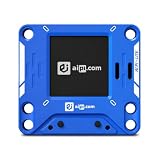
- POCKET AI COMPANION: AIPI Lite is a physical AI companion you can talk to directly. Press the button, speak, and hear your AI agent respond by voice, making it ideal for your desk, nightstand, study space, workshop, or creative setup.
- CUSTOM AI CHARACTERS: Create your own AI agent with a unique personality, backstory, speaking style, and memory. Build a study partner, roleplay character, personal assistant, domain expert, or collectible AI companion that feels more personal over time.
- KNOWLEDGE BASE SUPPORT: Upload or paste manuals, notes, guides, menus, product specs, study materials, or character lore so your agent can answer based on your own content. Great for learning, customer guidance, hobby projects, and specialized Q&A.
- FREE TO START, UPGRADE ANYTIME: Every device starts on a free tier with 20 AI agents, unlimited conversations, agent creation/editing, memory, knowledge base support, MCP integration, and multi-LLM access. Optional paid plans unlock features such as voice cloning, larger knowledge bases, and more advanced models.
- COMPACT, RECHARGEABLE & EASY TO SET UP: AIPI Lite features a sleek, lightweight 23g design that fits easily on desks, shelves, nightstands, or workspaces, making it a great tech gift or personal AI companion. Includes AIPI Lite device, quick start guide, and box, with setup in minutes over password-protected 2.4GHz Wi-Fi. Public Wi-Fi login networks are not supported; battery, USB-C cable and power adapter are not included.
NIST NCCoE describes its work as developing practical, implementation-oriented guidance for agent identity and authorization. In its comment summary, NIST says it received more than 600 responses to its concept paper. That volume indicates substantial input to the project; it is not a representative poll of enterprise readiness. NIST’s AI Agent Standards Initiative, announced February 17, 2026, also outlines work on standards, open protocols, security, and identity. This work remains in progress.
A practical gate before an agent goes live
Before granting an agent access to a company system, require the deployment team to document and test these conditions:
- Owner and purpose: Name the responsible user or system, the task the agent is meant to perform, and the party that controls it.
- Identity and authority: Assign a distinct agent identity, bind it to its responsible operator, and specify the permissions delegated for the task.
- Scope: Confirm that data, tools, and permitted actions are no broader than necessary; reject shared credentials or broad, static keys where safer authorization patterns are available.
- Traceability: Verify that records can attribute actions to the agent and connect them to the initiating user or system, including across delegated work.
- Revocation and review: Establish who can withdraw the agent’s access and how its activity will be reviewed. Test the process rather than relying on an assumed ability to stop it.
- Boundary check: Confirm whether the agent is internal, enterprise-operated for external users, or externally owned, and apply controls appropriate to that trust relationship.
These checks are readiness considerations grounded in the concerns NIST reports, not a certification or guarantee of safety. The organization still needs to assess the risks of the particular agent, task, and systems involved.
Quick Recap
Product prices and availability are accurate as of the date/time indicated and are subject to change. Any price and availability information displayed on Amazon at the time of purchase will apply.




