Free tools Windows power users keep installed
One-click scans. No signup required.
Traditional SOAR follows predefined playbooks; an agentic AI SOC can interpret context, investigate across tools, and adapt its next steps as evidence changes. They are not necessarily competing replacements: an AI agent can work inside a SOAR playbook, with the playbook controlling known actions and the agent handling uncertain analysis. The practical difference is how much decision-making a workflow can adaptively delegate—and what controls surround that delegation.
What is the difference between agentic AI and traditional SOAR?
SOAR—security orchestration, automation, and response—coordinates tools and automates response procedures. In a traditional SOAR workflow, engineers define the conditions, sequence, and actions in advance. When an alert matches those conditions, the playbook runs its prescribed steps.


As an Amazon Associate I earn from qualifying purchases.
An agentic workflow can use an AI agent to gather evidence, correlate context, and choose or revise investigation steps when the case does not fit a fully specified path. It may then report findings or trigger downstream actions, subject to its permissions and approval rules. The label “agentic SOC” does not, by itself, establish how much autonomy a particular product has.
Microsoft describes conventional SOAR playbooks as predefined and procedural, while Google Cloud describes agentic SOC systems as using AI agents to reason, plan, and act dynamically. Those are vendor descriptions, not a standardized definition shared across products. In practice, the distinction is best treated as a spectrum of workflow behavior rather than a clean boundary between product categories.
#1 Best Overall

- APPLIANCE ONLY: Hardware unit sold without a service subscription — security services, firmware updates and support are NOT included and must be purchased separately to activate protection.
- PERFORMANCE: Up to 2.5 Gbps firewall inspection, 1 Gbps threat prevention and 1.2 Gbps IPSec VPN throughput driven by SonicWall's patented Reassembly-Free Deep Packet Inspection (RFDPI) engine.
- CONNECTIVITY: 8x1GbE + 2x1G SFP in a desktop form factor; zero-touch deploy and manage on-box or via cloud Network Security Manager (NSM).
- THREAT PROTECTION: SonicOS 8 delivers intrusion prevention, gateway anti-malware, application control, TLS/SSL decryption, Capture ATP multi-engine sandboxing (RTDMI) and reputation-based content & DNS filtering with an active service subscription.
- BUILT FOR SMALL BUSINESS & BRANCH: Secure SD-WAN, IPSec and SSL VPN plus Zero-Trust Network Access through Cloud Secure Edge keep distributed sites and remote workers protected.
How do the approaches compare?
| Dimension | Traditional SOAR | Agentic AI SOC |
|---|---|---|
| Adaptability | Follows conditions and steps defined in advance; unexpected evidence or process changes may require a playbook update. | Can use contextual reasoning to adjust an investigation as evidence changes. Actual limits depend on the product and configuration. |
| Repeatability and control | Known conditions lead to predictable, preconfigured actions. | Can handle less-predictable investigation paths, but the team must define what the agent may do and where approval is required. |
| Investigation scope | Can orchestrate connected tools through configured steps; the workflow follows its designed path. | May gather and correlate evidence across tools in a multi-stage investigation. Compatibility and data access must be validated for the actual environment. |
| Permissions and approvals | Actions are determined by the playbook and its configured access. | Requires explicit boundaries for what the agent can read or change, which actions need human approval, and how decisions are recorded. |
| Failure handling | Depends on the playbook’s configured handling for missing data, failed steps, or unavailable connectors. | Also depends on supported alert sources, connector behavior, and configured responses to unsupported or incomplete inputs; verify these paths rather than assuming the agent can recover. |
| Evidence of performance | Measure results in the organization’s own workflows. | Measure results using the same alert population, response definitions, and review criteria. The sources cited here do not establish an independent head-to-head benchmark. |
When is each approach a better fit?
Use playbooks for known, repeatable actions
A fixed phishing-response playbook can quarantine a message, block a sender, and notify a team when configured conditions match. This is useful when the response is understood, the conditions can be expressed reliably, and consistent execution matters. Playbooks still need maintenance as systems, alert types, and procedures change.
Consider agentic investigation for uncertain cases
A case may call for gathering alert evidence, consulting threat intelligence, checking cloud posture, and retrieving endpoint telemetry before deciding what merits attention. Google Cloud’s reference architecture describes this kind of workflow across SIEM, threat intelligence, CSPM, and EDR, with a human approval step. It is an architecture example, not proof that every agent product supports those integrations or that they will work with every organization’s data and permissions.
Can agentic AI work with existing SOAR?
Yes. A hybrid workflow can preserve deterministic playbook steps while using an agent for analysis that depends on context. Google SecOps documentation describes embedding AI agent steps in playbooks, with agent execution set to automatic or manual. Its documentation also describes alert-source limits: for unsupported automatic alerts, a playbook can be configured to stop or skip the agent step.
What’s actually slowing this PC down?
Pick the symptom - the matching free tool is one click away.
That design lets a team keep established controls around actions it already understands while testing adaptive analysis in a bounded part of the workflow. It also makes failure paths part of the design: a team should decide what happens when the alert is unsupported, information is missing, a connector fails, or the agent cannot complete its task.
Rank #3
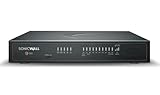
- APPLIANCE ONLY: Hardware unit sold without a service subscription — security services, firmware updates and support are NOT included and must be purchased separately to activate protection.
- PERFORMANCE: Up to 5 Gbps firewall inspection, 2.5 Gbps threat prevention and 2.5 Gbps IPSec VPN throughput driven by SonicWall's patented Reassembly-Free Deep Packet Inspection (RFDPI) engine.
- CONNECTIVITY: 8x1GbE + 2x5G SFP+ + 2x10G SFP in a desktop form factor; zero-touch deploy and manage on-box or via cloud Network Security Manager (NSM).
- THREAT PROTECTION: SonicOS 8 delivers intrusion prevention, gateway anti-malware, application control, TLS/SSL decryption, Capture ATP multi-engine sandboxing (RTDMI) and reputation-based content & DNS filtering with an active service subscription.
- BUILT FOR DISTRIBUTED & HIGH-END SMB: Secure SD-WAN, IPSec and SSL VPN plus Zero-Trust Network Access through Cloud Secure Edge keep distributed sites and remote workers protected.
What controls should be in place before an agent can act?
An agent connected to operational tools can have real effects, not just produce recommendations. Microsoft calls out guardrails, approval workflows, role-based access controls, and auditing. Google’s reference architecture illustrates human approval. These are useful control categories, not a universal assurance that a setup is sufficient for every organization or regulatory obligation.
- Scope permissions: Specify the data and tools the agent can access, and which actions it may perform.
- Gate high-impact actions: Require a person to approve actions with significant operational consequences, such as containment or blocking, where appropriate to your policies.
- Make work reviewable: Ensure investigators can see the evidence gathered, the agent’s findings, decisions, and resulting actions.
- Define failure behavior: Decide whether an unsupported alert, incomplete evidence, failed integration, or stalled investigation should stop, skip a step, or route to a person.
- Check governance fit: Assess privacy, security, legacy-system integration, and governance requirements in the context of your environment.
Palo Alto Networks frames the choices as traditional automation, pure agentic AI, and hybrid agentic AI, and warns that autonomy without guardrails can lead to policy violations or unintended consequences. This is vendor guidance, not an independently validated ranking of the three approaches.
How should a security team evaluate an agentic SOC?
Test the workflow against your own alert population and response process instead of relying on a demonstration of successful investigations. Microsoft advises a gradual progression from scripted automation and AI-assisted analysis toward more autonomous workflows as governance and operational maturity develop; this is Microsoft’s guidance, not a measured rule for every organization.
- Choose a bounded use case: Select an investigation where the needed evidence, expected outputs, and permitted actions can be clearly reviewed.
- Verify inputs and integrations: Confirm the alert sources and connectors your environment actually uses, including how unsupported alerts and incomplete data are handled.
- Map authority: Record what the agent can read, change, or initiate, and identify where human approval is mandatory.
- Inspect audit and recovery paths: Check whether investigators can review the agent’s evidence and decisions, and what happens when a connector or agent step fails.
- Run a comparable pilot: Compare the workflow with the existing process using the same alert population, definition of response time, and review criteria. The reviewed sources do not establish an independent, controlled head-to-head result across organizations.
What does the reported MTTR figure establish?
Google Cloud’s resource page reports “50% faster Mean Time to Respond (MTTR)” for organizations adopting Google SecOps with AI agents. The page does not state a publication year in the material cited here. Treat this as a Google-reported outcome for its offering, not a general benchmark for agentic SOCs or proof that agents outperform traditional SOAR across settings. A local pilot should define precisely when response time starts and ends before comparing results.
Quick Recap
Product prices and availability are accurate as of the date/time indicated and are subject to change. Any price and availability information displayed on Amazon at the time of purchase will apply.




