Quick wins for a faster PC:
Repair Windows errors before they cause bigger problemsFix Now →Scan for outdated or missing drivers - takes under a minuteDriver Scan →Clear out junk files and repair common Windows errorsFree Scan →If stimulant medication is not tolerated, has not helped, or is not wanted, ADHD care can still include other medicines, psychological treatment, behavior therapy and school supports. The options depend on age and location: UK NICE guidance names atomoxetine for adults in specified circumstances, and atomoxetine or guanfacine for children aged five and older and young people. A prescriber can help choose a plan based on treatment history, needs and local approvals.
Which alternatives are options at different ages?
Guidelines do not offer one interchangeable list for everyone. NICE is UK guidance; the AAP and CDC materials cited here address children and adolescents in the United States. A medicine’s recommendation in one guideline is not proof that it is approved or appropriate for every age or country.




As an Amazon Associate I earn from qualifying purchases.
| Option | What the cited guidance says | Important boundary |
|---|---|---|
| Atomoxetine | NICE recommends it for adults who cannot tolerate methylphenidate or lisdexamfetamine, or whose symptoms have not responded after adequate trials of both. NICE also recommends it for children aged five and older and young people in similar circumstances. NICE recommendations | The adult nonresponse pathway specifies separate six-week trials of methylphenidate and lisdexamfetamine, after considering alternative preparations and doses. This is a guideline pathway, not a self-treatment checklist. |
| Guanfacine | NICE includes it for children aged five and older and young people when stimulants cannot be tolerated or have not worked in the specified circumstances. NICE recommendations | NICE says use in children aged five is off-label. For adults, guanfacine is an off-label choice and should not be offered without advice from a tertiary ADHD service. |
| Extended-release clonidine | The AAP guideline describes evidence for extended-release clonidine in school-age children and adolescents. AAP clinical practice guideline | The cited material does not establish it as a routine first alternative for stimulant intolerance across age groups. |
| Viloxazine | The FDA consumer page lists viloxazine among approved nonstimulants. FDA: Treating and Dealing with ADHD | The cited material does not establish detailed age-specific guideline positioning. Confirm current product information and local approval with the prescriber. |
The AAP describes the evidence base for atomoxetine and extended-release guanfacine and clonidine in children as less robust than the stimulant evidence. Its guideline reports approximate effect sizes of 0.7 for those nonstimulants and 1.0 for stimulants in school-age evidence; these historical group-level figures do not predict an individual response or guarantee a head-to-head result. AAP clinical practice guideline
What does “stimulants aren’t a good fit” mean?
It may mean that side effects are unacceptable, the benefit is inadequate, taking the medicine consistently is difficult, or the person prefers not to use medication. Those situations do not automatically lead to the same next step. In the adult pathway, NICE specifies adequate six-week trials of both methylphenidate and lisdexamfetamine for nonresponse, with alternative preparations and doses considered. That recommendation is distinct from a case where a stimulant cannot be tolerated. The prescriber should interpret treatment history rather than treating the sequence as a do-it-yourself rule. NICE recommendations
#1 Best Overall
What can treatment include besides medication?
Adults
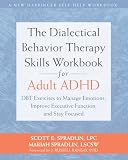
NICE says to consider non-pharmacological treatment when an adult chooses not to take medication, has difficulty adhering to it, or finds it ineffective or intolerable. When indicated, the guidance recommends at least a structured ADHD-focused psychological intervention. This supports discussing therapy with an appropriately qualified clinician; it does not endorse a particular workbook or make a self-guided resource a substitute for care. NICE recommendations
Children and adolescents
For children, care may combine medication with behavioral approaches and support in the classroom or wider school setting. The CDC summarizes parent training for young children, behavioral classroom interventions and school supports; the AAP also emphasizes developmentally appropriate behavioral and training interventions. The particular mix depends on the child’s developmental stage and needs. CDC: Treatment of ADHD AAP clinical practice guideline
Independent reader supportYour contribution helps us test, update, and keep practical guides available for everyone.How should you discuss the next step with a clinician?
- Describe what made the stimulant a poor fit: specific unwanted effects, little or no benefit, difficulty adhering, or a preference to avoid medication.
- Bring the treatment history, including medicines tried, formulations and doses where known, how long each was taken, and what changed. This helps the clinician assess whether a trial was adequate.
- Ask which options are appropriate for the person’s age and location, and whether each is recommended, approved or being considered off-label in that setting.
- Discuss the main treatment goals and how progress and tolerability will be reviewed. Current product labeling and individualized monitoring should be reviewed with the prescriber; the sources here do not provide a full adverse-effect or monitoring comparison.
- If symptoms remain unresponsive to one or more stimulants and one nonstimulant, NICE recommends a second opinion or referral to a tertiary service. It also reserves certain further medication choices for advice from a tertiary ADHD service. NICE recommendations
Do not stop, taper or switch a prescribed medicine without discussing it with the prescriber. Coaching, mindfulness, supplements, diet changes and consumer gadgets should not be assumed to treat core ADHD symptoms on the basis of the guidance cited here.
Quick Recap
Product prices and availability are accurate as of the date/time indicated and are subject to change. Any price and availability information displayed on Amazon at the time of purchase will apply.




