A hexagonal aperture changes which points on the lens your camera samples. It should not change how a diffuse surface gathers light. If diffuse surfaces darken, brighten, or turn speckled only after you switch from a circular to a hexagonal aperture, the fault is almost always in how the lens sampler and the surface bounce share random numbers or sample indices. The aperture shape is the trigger, not the cause. The diagnosis below follows from the standard Lambertian estimator and from the symptom described in a DEV Community post by Ibukun Sanni; it is an inference, not a reproduced test.
Two sampling domains that should never meet
A path tracer draws random numbers for two unrelated jobs, and it is easy to mix them up when the code is written quickly.
As an Amazon Associate I earn from qualifying purchases.
- Lens sampling. The camera picks a point on the aperture, then builds a ray from that point toward the focal plane. Averaged over many samples, the spread of these lens points produces defocus blur. The aperture’s outline determines the shape of out-of-focus highlights, which is why a hexagonal aperture yields hexagonal bokeh.
- Hemisphere sampling. When a ray hits a diffuse surface, the path tracer picks an outgoing direction over the hemisphere above that point to estimate indirect light. This choice belongs to the material and the surface normal, not to the camera.
The aperture therefore lives on the camera side of the light path, and the hemisphere lives on the surface side. A correct renderer lets the aperture shape change the first and leaves the second untouched.
Do these 3 things before closing this tab:
1Fix the driver behind crashes, sound loss and screen glitches2Clear out junk files and repair common Windows errors3Scan for outdated or missing drivers - takes under a minuteWhy the Lambertian estimator cancels cleanly
The Ray Tracing GPU Edition book’s diffuse BRDF and Monte Carlo chapter gives the ideal Lambertian reflectance. For a Lambertian surface with albedo ρ, the BRDF is ρ/π, and the rendering integral weights each incoming direction by the cosine of its angle to the surface normal. Cosine-weighted hemisphere sampling draws directions with probability density cos θ / π. Substituting into the estimator:
#1 Best Overall

- POWERFUL BUSINESS PERFORMANCE – The Dell Precision 3431 is a professional-grade business workstation featuring an Intel Core i5-9500 9th Gen Hexa-Core processor, delivering fast performance, efficient multitasking, and enterprise-level reliability for office environments.
- OPTIMIZED MEMORY & STORAGE FOR PRODUCTIVITY – Equipped with 16GB DDR4 RAM for smooth multitasking and a 1TB SSD, this workstation provides lightning-fast boot times, quick file access, and ample storage for business applications and large datasets.
- PPROFESSIONAL GRAPHICS FOR VISUAL WORKLOADS – Featuring an NVIDIA Quadro P620 2GB graphics card, the Dell Precision 3431 is designed for business professionals, engineers, and creatives who need reliable performance for CAD, 3D modeling, and multi-display setups.
- WINDOWS 11 PRO & ESSENTIAL CONNECTIVITY – Pre-installed with Windows 11 Pro, offering advanced security, remote desktop access, and business-friendly features. Built-in WiFi and Bluetooth ensure seamless connectivity to networks, wireless peripherals, and office devices.
- READY-TO-USE WITH INCLUDED KEYBOARD & MOUSE – Comes with a wired keyboard and mouse, ensuring a plug-and-play setup for immediate productivity in any office or professional workspace.
(ρ/π) · Li · cos θ ÷ (cos θ / π) = ρ · Li
The BRDF’s π and the cosine in the integrand both cancel against the PDF. What remains is albedo multiplied by the incoming radiance. Ibukun Sanni’s post makes the same point in its own notation: “For a Lambertian surface, whose BRDF is ρ/π, the estimator then cancels completely:”. Source: Ibukun Sanni, DEV Community; the derivation itself is in the Ray Tracing GPU Edition diffuse BRDF and Monte Carlo sampling chapter.
Rank #2

- [Superior Machine] ; 802.11ax Wifi, Bluetooth 5.4, RJ-45, No, USB Keyboard, USB Mouse
- [Powerful Performance] 15th Gen Ultra 7 265F 2.40GHz Processor (upto 5.3 GHz, 30MB Cache, 20-Cores, 20-Threads, 8 Performance-cores); GeForce RTX 5060 8GB GDDR7 Dedicated Graphics
- [High Speed and Multitasking] 32GB DDR5 DIMM; 360W PSU; Black Color
- [Enormous Storage] 1TB 2230 PCIe NVMe SSD; 4 USB 2.0, HDMI, 3 Display Port, USB 3.2 Type-C, SD Reader, Headphone/Microphone Combo Jack
- Windows 11 Pro-64,
This is the property that makes a hexagonal aperture irrelevant to the diffuse term. Nothing in the cancellation refers to the lens. If your diffuse result changes, the estimator’s inputs are changing, and the aperture change is reaching them through a side channel.
What a hexagonal aperture should change
- The outline of defocused highlights, which becomes hexagonal.
- The noise pattern in defocused regions, since the lens samples cover a different area.
- The per-pixel variance of depth-of-field results, which may need more samples to converge on a sharp aperture edge.
It should not change the average radiance reflected from a diffuse point in a scene where the camera’s aperture is not the thing being measured. A brighter or darker wall in an in-focus region is therefore a bug signal.
Rank #3

- Content Creation Workstation PC: Powered by the Intel Hexa-Core i5 (8th Gen) processor with 32GB DDR4 RAM and NVIDIA's Quadro K1200 4GB Graphics Card, this Workstation PC Computer is built for creative environments
- NVIDIA's Quadro K1200 4GB Graphics Card: Graphic support built to be an efficient workstation for creative applications like photo and video editing, 3D Design, AutoCAD, and much more
- Software Compatibility: Workstation PC for use with independent software vendors (ISV) and certified for use with modeling, rendering, and engineering software from Adobe, AutoCAD, 3DS Max, and many more
- Massive Storage Solutions: An ultra-fast 1TB Solid State Drive (SSD) setup as the primary boot device; Boot and load programs with little to no lag; An additional 4TB Hard Disk Drive (HDD) is installed for additional storage; Never run out of storage
- Connectivity for Creative Projects: USB 3.0 (x5) | USB 2.0 (x4) | USB Type-C (x1) | DisplayPort (x2) | Serial Port (x1) | VGA Port (x1) | Audio Combo Jack (x1) | Audio In (x1) | Audio Out (x1) | RJ-45 Ethernet (x1) | Internal SATA (x3)
How the coupling shows up and how to isolate it
The coupling usually appears in one of three ways: the lens sampler consumes random numbers that the bounce code expects, the hexagonal mapping uses a variable number of draws per sample, or both paths index the same sample dimension. Each one shifts the random sequence for every later bounce, which looks like a change in diffuse shading even though the BRDF is untouched.
- Render a pinhole baseline. Set the aperture radius to zero, keep the seed and sample count fixed, and render a scene that contains only diffuse surfaces in focus. Save the image as your reference.
- Render the circular aperture with the same seed. Compare its diffuse regions with the pinhole. Differences should be limited to noise in the defocused areas.
- Render the hexagonal aperture with the same seed. If the hexagonal result differs from the circular one in the in-focus diffuse regions, while the defocused regions differ only in shape and noise, the problem is in shared state, not in the aperture geometry.
- Inspect the random streams. Lens samples and bounce directions must come from separate sample dimensions or independent generators. Check whether the hexagonal mapping calls the RNG more or fewer times than the circular mapping; a rejection-sampling step is a common culprit.
- Run a white furnace check. Place a diffuse sphere with albedo 0.5 inside a uniform environment of radiance 1. With cosine-weighted bounces, the estimate should approach 0.5 as samples increase, and the result should not depend on the aperture. A systematic offset that tracks the aperture shape points to the coupling.
- Confirm the PDF matches the sampled direction. If the hemisphere sampler’s PDF is computed from one distribution but the directions come from another, the cancellation above fails, and the error shows up as aperture-dependent brightness.
Fixing the coupling means giving the lens sampler its own dimensions or generator, so that the hexagonal mapping’s draw count cannot shift the hemisphere sequence.
Rank #4

- Model: Dell OptiPlex 3070 Small Form Desktop PC
- Processor: Intel Core i5-9500 64-bit 6-Cores Processor, 3.0 GHz Base Speed up to 4.40 GHz Boost Speed, 9MB Intel Smart Cache
- Specifications: 16GB DDR4 Memory, High speed 512GB SSD, Intel UHD Graphics 630
- Features: Compact Form, Windows 11 Pro (64-bit), Wireless Keyboard and Mouse included
- Ports: DisplayPorts, USB 3.1 Gen 1, USB 2.0, Audio Ports, Gigabit Ethernet.
Polygonal bokeh without touching the path tracer
Lens sampling is not the only way to get polygonal bokeh. A post-process depth-of-field pass can approximate it after rendering. The table compares the two routes using only what the sources report.
| Approach | Where depth of field is computed | Aperture shapes | Geometry changes | Performance evidence |
|---|---|---|---|---|
| Lens sampling in a path tracer | Camera ray generation | Any shape you can map uniform samples onto, including hexagonal, with a correct mapping | Not stated in the sources | Not stated in the sources; cost depends on samples needed for clean defocus |
| Separable post-process filter (L. McIntosh, Computer Graphics Forum, 2012) | Screen-space depth-of-field shader pass, after rendering | Square, hexagonal, and octagonal apertures, as described in the paper | Not stated in the sources | The paper reports better frame rates than a naive non-separable approach in a video-game-engine test in 2012; this is historical and not a current benchmark |
The post-process route avoids the sampler-sharing problem entirely, because it never draws lens samples inside the path tracer. Its trade-off is that it approximates the optics in screen space rather than tracing real lens rays, so it cannot reproduce effects that depend on true per-ray lens geometry. The paper is L. McIntosh, “Efficiently Simulating the Bokeh of Polygonal Apertures in a Post-Process Depth of Field Shader,” Computer Graphics Forum, 2012.
Best Value
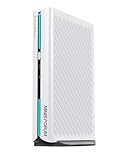
- 【Powerful Performance】The MINISFORUM G1 Pro Mini PC is powered by the high-performance AMD Ryzen 9 8945HX processor (16 cores, 32 threads, up to 5.4GHz). It delivers exceptional speed to smoothly handle heavy computing workloads and multitasking with ease. Ideal for gaming, image and video editing, web browsing, media streaming, programming, and more.
- 【Stunning Graphics Performance】Features a dedicated GeForce RTX 5060 8GB graphics card for outstanding visual performance. Supports real‑time ray tracing and DLSS super‑resolution technology, producing highly realistic lighting, shadows, and reflections for an immersive gaming experience. Built on the Ada Lovelace architecture, it maximizes ray‑tracing efficiency and accurately simulates real‑world light behavior. DLSS 4, an advanced AI‑powered graphics technology, boosts performance significantly by generating high‑quality additional frames, perfectly optimized for next‑generation high‑efficiency gaming.
- 【Five Outputs for Four Displays】The G1 Pro Mini PC comes with 2x HDMI and 3x DisplayPort, it supports you to connect four ultra high definition monitors simultaneously. Expand your workspace and greatly improve work efficiency. Suitable for high performance computing and graphics intensive applications such as digital signage, securities trading, CAD, engineering design, scientific computing, animation production, and film and television post production—perfect for professional users and industry experts.
- 【Wired & Wireless Connectivity】Equipped with a 5G RJ45 Ethernet port for stable wired networking, plus Wi‑Fi 7 and Bluetooth 5.4 for ultra‑fast wireless connections. Compared to Wi‑Fi 6’s maximum 8×8 spatial streams, Wi‑Fi 7 supports up to 16×16 spatial streams, greatly enhancing network speed, stability, and overall system performance.
- 【Expandable Storage】This Mini Computer has pre-installed 32GB DDR5-5200MT/s RAM and 1TB M.2 2280 PCIe4.0 SSD. However, you could expand the DDR5 RAM up to 64GB and 2TB for the SSD. There is another M.2 2280 PCIe4.0 slot available for expanding the storage. Without worrying about lack of capacity, you can run software smoothly, watch and storage large-scale movies, photos without any stress.
What the sources establish and where they stop
- The aperture-versus-BRDF separation and the Lambertian cancellation are standard rendering results, documented in the Ray Tracing GPU Edition reference.
- The coupling diagnosis is the author’s explanation of the symptom, drawn from the estimator’s structure. Its code and test results are not independently verified here.
- The DEV Community post is listed as posted on September 26 and as “last year” in its search listing, which points to 2025. The year is not printed on the indexed page, so treat it as likely rather than confirmed.
- No current performance figures, incidence rates, or quality measurements for hexagonal apertures were established. The 2012 frame-rate result describes one historical game-engine test.
The aperture controls the camera’s sampling of the lens. The Lambertian estimator controls the surface’s sampling of the hemisphere. A correct renderer keeps those two apart, and a hexagonal aperture that changes diffuse shading is a sign of shared state to remove, not a property of the shape.
Quick Recap
Product prices and availability are accurate as of the date/time indicated and are subject to change. Any price and availability information displayed on Amazon at the time of purchase will apply.




