A 2G core network is the central part of a GSM mobile network behind its radio access system. It manages subscribers and mobility, switches circuit-switched calls, and—when GPRS packet service is supported—handles mobile data through additional packet-core functions.
What the 2G core network does
The core connects radio access to the operator’s network services. It performs network-side tasks such as managing subscriber information and mobility, routing calls, and carrying packet-data sessions. The radio equipment that connects a handset over the air is the access network, not the core.

As an Amazon Associate I earn from qualifying purchases.
For the standardized architecture, see 3GPP TS 23.002, Network architecture, version 18.0.0 (Release 18, April 2024). Specific implementations can depend on the standard’s release and the services an operator supports.
Quick wins for a faster PC:
Clear out junk files and repair common Windows errorsFree Scan →Fix the driver behind crashes, sound loss and screen glitchesFind Drivers →Which nodes belong to each service domain?
It is clearer to describe GSM’s core as related service domains than as one fixed list of equipment. Circuit-switched services and GPRS packet data use different core functions.
| Service domain | Core functions | What they do |
|---|---|---|
| Circuit-switched | MSC and VLR | The Mobile Switching Centre (MSC) handles call control and switching. Its associated Visitor Location Register (VLR) holds subscriber and service data for mobiles in the area it serves. |
| Subscriber data | HLR | The Home Location Register (HLR) is the network’s central subscriber database. |
| GPRS packet-switched | SGSN and GGSN | The Serving GPRS Support Node (SGSN) serves mobile stations and supports authentication, authorization, mobility management, and related subscriber procedures. The Gateway GPRS Support Node (GGSN) provides a gateway toward external packet networks, such as the Internet. |
The GPRS node roles are also described in RFC 3314 (September 2002), an informational reference rather than a replacement for current 3GPP specifications. For GPRS service architecture, consult 3GPP TS 23.060.
Is GPRS part of every 2G core?
No. GPRS is an added packet-data capability, not a requirement of every GSM network. A network supporting GPRS packet service includes the relevant SGSN and GGSN functions; a GSM network without that service does not need to be described as having those packet-core nodes. The 3GPP architecture specifies these functions for networks supporting the relevant GPRS service with GERAN or UTRAN access.
Rank #2
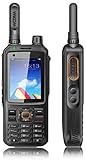
- Android 4g mobile radio t320 US version: LTE-B2/4/5/12/13/17, GSMB2/B3/B5/B8 ,WCDMA B1/B2/B5/B8
- Unlocked Android 7.0 internet radio support Zello/ Real ptt
- Support wireless wifi connect, and Works as wifi hotspot when paired with a sim card and data plan
- Features: GPS Positioning system supports , Sturdiness and durability,military quality, Intelligent global intercom, Front & rear camera with auto-focus function
- Inrico 100% brand new internet radio. FCC ID: 2AIV6-T320
How the core differs from GSM radio access
The Base Station Subsystem (BSS), also known as GERAN in the GSM radio-access context, provides the radio link between mobile stations and the network. BTS and BSC equipment belongs to that access side. The core sits behind it and handles switching, subscriber data, mobility-related network functions, and—if GPRS is available—packet-data service and gateways. In GPRS, the access network communicates with the packet core over specified interfaces; that does not make BTS or BSC core nodes.
Recommended Free Tools
Quick Recap
Best Value

- EXCELLENT MATERIAL: The directional is made of excellent ABS material, non and , and sunscreen.
- HIGH PERFORMANCE: This foldable has 5dbi high gain, the is super strong, the bigger the range, the farther the distance.
- STABLE CONNECTION: With SMA male interface, stable and in connection, wear and , has a long service life.
- HIGH EFFICIENCY: Independent channel transmission is reducing co channel interference and improving transmission efficiency.
- MULTIPLE USAGES: Used in GSM, 2G, 3G, 4G, LET full band equipment, number taking machines, routers, vending machines, etc.
Rank #4
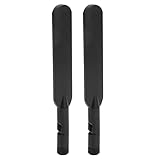
- Long Durability-- ABS environmental material, first‑class production technology, anti‑acid and alkali, heat and excellent stability.
- 9dbi High Gain-- The gain is as high as 9dbi, and the range is large. Affected by the environment, the more open the area, the longer the distance.
- Wide Application-- Suitable for GSM, 2G, 3G, 4G, LET full‑band network equipment, number taking machines, routers, advertising machines, vending machines, etc.
- Flexible Structure-- The adopts a flexible structure design, you can choose a better angle for the , and the side can be turned 90°, which is more efficient.
- Fast --Independent channel is reduces co‑channel interference, enhances gain, and improves performance.
Rank #3

- Wide Frequency: Supports full band 600–6000MHz for GSM, GPRS, 2G, 3G, 4G, 5G, and NB-IoT devices.
- Use: Compatible with routers, DTU, wireless modules, smart home systems, and monitoring.
- High Gain: 18dBi design provides stronger and more stable signals for improved wireless performance.
- Omni Directional: Ensures 360° coverage, reducing dead zones and boosting connectivity everywhere.
- SMA Male Connector: Standard SMA interface with inner pin for secure and reliable connections.
A simple way to read a 2G network diagram
- Identify the radio access side first: BSS/GERAN is not the core.
- For voice and other circuit-switched services, look for MSC/VLR and the HLR subscriber database.
- For GPRS packet data, look for SGSN and GGSN; their presence reflects packet-service support.
- Check the cited 3GPP release when interpreting detailed architecture or implementation-specific diagrams.
Product prices and availability are accurate as of the date/time indicated and are subject to change. Any price and availability information displayed on Amazon at the time of purchase will apply.




