Quick wins for a faster PC:
Fix the driver behind crashes, sound loss and screen glitchesFind Drivers →Repair Windows errors before they cause bigger problemsFix Now →Scan for outdated or missing drivers - takes under a minuteDriver Scan →Microsoft removed Windows To Go in Windows 10 version 2004, and Windows 11 does not bring back the built-in feature. You can still create a portable Windows workspace with third-party tools such as Hasleo WinToUSB, but that is a workaround—not a Microsoft-supported Windows To Go installation—and success depends on the image, drive, PC, and licensing. If you only need to install or restore Windows, use installation or recovery media instead; neither gives you a persistent desktop you can carry between PCs.
What “Windows from a USB drive” can mean
People use the phrase for several different things. The important distinction is what the computer starts: a persistent Windows workspace, Windows Setup, a recovery environment, or a virtual machine inside another operating system.
As an Amazon Associate I earn from qualifying purchases.
| Option | What starts | Best fit | Microsoft Windows To Go support |
|---|---|---|---|
| Third-party portable Windows | A Windows workspace installed on external storage | Carrying a working Windows environment between compatible PCs | No; it is a third-party workaround |
| Rufus bootable USB | Bootable media, often Windows Setup; Windows To Go availability depends on the image | Creating bootable USB media | No restoration of Microsoft’s discontinued feature |
| Windows installation media | Windows Setup | Installing, clean-installing, or reinstalling Windows | No; it installs Windows rather than providing a portable workspace |
| Windows Recovery Drive | Recovery tools for restoring a device | Recovering the PC for which the drive was created | No; it is recovery media |
| Virtual machine on external storage | A guest Windows system inside a running host operating system | Using an isolated Windows environment when the host OS can stay on | No; VM setup and requirements depend on the chosen hypervisor |
Why Windows To Go is no longer an official option
Microsoft described Windows To Go as a way for Windows 10 Enterprise and Education users to boot a full Windows version from external USB drives. It was intended for managed organizational use, not as a standard consumer feature. Microsoft’s Windows To Go FAQ says the feature was removed in Windows 10 version 2004 and later.
Windows 11 does not restore Microsoft’s built-in Windows To Go feature. A tool that creates a portable Windows drive should therefore be understood as a separate, third-party method, with its own image, hardware, and support limitations.
#1 Best Overall

- PEAK PERFORMANCE. Up to 1,000MB/s(2) read and 900MB/s(2) write speeds help ensure you meet your deadlines with time to spare.
- ROOM TO GROW. Easily store, access, and share your creative projects and critical documents with up to 2TB(1) capacity.
- PREMIUM BUILD. Engineered for resilience with a sophisticated metal design, this dual drive not only performs; it endures — so you can take your files anywhere.
- DATA ENCRYPTION. Live confidently knowing SanDisk helps protect your data with encryption technology(4).
- UNIVERSAL CONNECTIVITY. Transfer files between your USB Type-C and USB Type-A laptop, tablet, and Android smartphone(6).
Third-party portable Windows: WinToUSB and Rufus
Hasleo WinToUSB
Hasleo’s WinToUSB documentation describes creating a Windows To Go workspace from image files such as ISO, WIM, ESD, SWM, and VHD-family formats. Its workflow involves selecting a Windows image, choosing the destination drive and partitions, then starting the installation. These are vendor-described capabilities, not a guarantee that every Windows edition or image will work on every drive and PC. Check Hasleo’s current compatibility guidance and Microsoft’s licensing terms for the Windows edition you plan to use.
Rufus
Rufus is a utility for formatting and creating bootable USB drives, including Windows installation media. Its FAQ says the Windows To Go option is not available with every Windows image, including some images created with Microsoft’s Media Creation Tool. Treat Rufus as a bootable-media utility with image-dependent options, not as a promise that any Windows download can become a working portable desktop.
Rank #2

- Performance: Advanced read speeds of up to 130MB/s for everyday data storage & transfers²
- Speed: Transfer speeds up to 10x faster than standard USB 2.0 flash drives²
- Durability: Sturdy, light-weight design with convenient and modern sliding collar cap design protects content when not in use
- Reliability: Essential mobile storage solution ideal for transferring large files such as movies, videos, photos, music & documents
- Compatibility: Compatible with most Type-A USB 3.2 Gen 1/USB 3.0 PC and Mac laptop and desktop computers, backwards compatible with USB 2.0
Pick storage for sustained system work, not just file transfer
A Windows workspace reads and writes constantly, so a generic USB stick may feel slow or wear poorly under system workloads. Microsoft’s historical Windows To Go certified-drive overview emphasized high random read/write activity. That certification information is historical; it is not a current list of recommended or certified products.
Hasleo cautions that common flash drives can be slow and recommends external hard drives, legacy certified drives, or high-performance USB flash drives. For a new setup, a portable external SSD is a more appropriate storage category to consider than a basic thumb drive, but no particular current model is established here as tested or Windows To Go-certified. Capacity and performance needs vary with the Windows image, applications, and intended use.
Rank #3

- Large Data Storage Capacity: Flash Drive with 128GB capacity, meet your needs of daily use on work, school, home and travelling for photos, music, videos, files storage and transfer
- Easy to use: The thumb drive is plug and play without any software installation; Supports Windows 7/8/10 / Vista / XP / Unix / 2000 / ME / NT Linux and Mac OS, also compatible with USB 2.0 and 1.1 ports; Storage is fast, safe and stable
- Wide Compatibility: USB flash drive support TV, desktop, notebook computer, car, audio and other device; It is your great data storage and transfer companion with traveling and working
- Retractable Desgin: The usb drive's retractable design can effectively protect the USB interface; The capless design can avoid losing of cap; Weight: 7g, Size: 2.6 × 0.8 × 0.4 inch. Portable to take your digital world anywhere
- What You Get: 1 x 128GB USB Flash Drive Thumb Drive, All of usb drives have been rigorously tested and formatted before leaving the factory; The default format of the USB stick is exFAT
Check the PC before trying to boot from the drive
Portable Windows can fail before Windows itself loads if the computer cannot boot from the external drive. The legacy Windows To Go requirements offer useful context, but they apply to Microsoft’s discontinued implementation and do not guarantee compatibility with third-party tools.
- USB boot and firmware access: The PC’s firmware must allow USB boot. Consult the computer maker’s instructions for enabling it and opening the boot menu; settings and keys vary by model.
- Connect directly: Microsoft’s legacy FAQ advised plugging the drive directly into a USB port. Some systems did not support booting through a USB hub or add-on card.
- Image and processor architecture: Microsoft’s old requirements said the image architecture had to match the processor. Check the current tool’s requirements and the target PCs rather than assuming an image will boot everywhere.
- Different hardware: A workspace that starts on one PC may behave differently on another because of firmware, hardware, drivers, and security policies. Portability is not universal compatibility.
- Trust and data exposure: Microsoft’s old design disabled hibernation by default for roaming and kept host internal disks offline by default to reduce accidental disclosure. Microsoft also warned that an untrusted host or its firmware could compromise a drive. Do not assume a portable installation makes an untrusted PC safe.
Microsoft’s Windows To Go overview also noted that its legacy workspace did not support in-place upgrades, Windows Recovery Environment recovery, or reset/refresh; its described recovery approach was reprovisioning from a fresh image. Those limitations describe Microsoft’s old implementation and should not automatically be attributed to every third-party product.
Rank #4

- High-speed USB 3.0 performance of up to 150MB/s(1) [(1) Write to drive up to 15x faster than standard USB 2.0 drives (4MB/s); varies by drive capacity. Up to 150MB/s read speed. USB 3.0 port required. Based on internal testing; performance may be lower depending on host device, usage conditions, and other factors; 1MB=1,000,000 bytes]
- Transfer a full-length movie in less than 30 seconds(2) [(2) Based on 1.2GB MPEG-4 video transfer with USB 3.0 host device. Results may vary based on host device, file attributes and other factors]
- Transfer to drive up to 15 times faster than standard USB 2.0 drives(1)
- Sleek, durable metal casing
- Easy-to-use password protection for your private files(3) [(3)Password protection uses 128-bit AES encryption and is supported by Windows 7, Windows 8, Windows 10, and Mac OS X v10.9 plus; Software download required for Mac, visit the SanDisk SecureAccess support page]
Use installer or recovery media for their actual jobs
Windows installation media
Microsoft’s installation-media instructions cover creating a USB drive or ISO to install a new copy of Windows, perform a clean installation, or reinstall. The page specifies a blank USB drive with at least 8 GB and warns that its contents will be deleted. This media starts Windows Setup; it is not a persistent Windows desktop to use on different PCs.
Do these 3 things before closing this tab:
1Scan for outdated or missing drivers - takes under a minute2Repair Windows errors before they cause bigger problems3Fix the driver behind crashes, sound loss and screen glitchesMicrosoft states Windows 10 support ended on October 14, 2025. After that date, Microsoft says it no longer provides free Windows Update software updates, technical assistance, or security fixes for Windows 10. Consider that support status when choosing an installation image.
Best Value
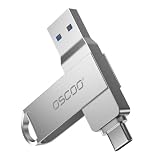
- Dual USB-A & USB-C Interface: Featuring both USB-A and USB-C connectors, this flash drive supports USB 3.2 Gen 2x2, USB 3.2 Gen 2, USB 3.0, and USB 2.0 for versatile connectivity across different USB generations. Compatible with a wide range of devices, including smartphones, tablets, laptops, desktops, and other compatible USB-enabled devices. Note: For detailed setup and usage instructions, please refer to the product video on the Amazon listing.
- Fast Data Transfer Speeds: Offers read speeds up to 150MB/s and write speeds up to 60MB/s, allowing quick transfer of 4K videos, photos, and large files, saving your valuable time
- Compact & Portable Design: Measuring just 63.67×13.79×9.22mm, this sleek flash drive easily fits in your pocket or bag, making it ideal for on-the-go data storage and transfer
- Durable & Reliable Build: Constructed with sturdy zinc alloy to withstand everyday shocks and drops, ensuring your data stays safe and secure during use
- Plug & Play Convenience: No drivers or software needed. Compatible with Windows, macOS, Linux, Android, and more. Simply plug in and start transferring data instantly
Windows Recovery Drive
Microsoft’s Recovery Drive instructions describe USB recovery media that can help restore a device to its factory state, including after a drive replacement or wipe. Creating it erases the USB drive. A Recovery Drive is for restoration, not for carrying a working Windows installation.
Choose the option that matches the task
- You need a persistent Windows desktop on external storage: Consider a third-party portable Windows workflow such as Hasleo WinToUSB, after checking the tool’s current compatibility information, Windows licensing, host boot support, and drive suitability.
- You need to install or reinstall Windows on a PC: Create Windows installation media. Back up anything on the destination USB drive first, because Microsoft’s media-creation process erases it.
- You need to recover a particular device: Create that device’s Windows Recovery Drive, and keep in mind that it erases the USB drive used to make it.
- You can leave the host operating system running: A virtual machine stored on external storage is a separate possibility. Its setup and requirements depend on the hypervisor and Windows licensing, so check the current documentation for both before choosing it.
Back up the drive before creating media
Creating installation or recovery media erases the USB drive, and provisioning a destination drive for portable Windows may also alter its partitions or contents. Back up files from both the USB drive and any destination storage before starting, and verify which disk the tool has selected before confirming an operation.
Quick Recap
Product prices and availability are accurate as of the date/time indicated and are subject to change. Any price and availability information displayed on Amazon at the time of purchase will apply.
The Tool Desk
Outbyte Driver Updater FREEFix the driver behind crashes, sound loss and screen glitchesFind Drivers →Outbyte PC Repair FREERepair Windows errors before they cause bigger problemsFix Now →



