A blurry, streaked, or starburst-shaped red dot does not by itself mean the sight is defective. Excess brightness—especially in dim surroundings—dirt on the window or emitter, and the way your eyes see the projected dot can all affect its appearance. Start by lowering brightness, looking at the target rather than the dot, and checking the optic for contamination; treat informal eye and camera comparisons only as clues.
Why a red dot can look blurry
A red dot sight projects a point of light that you superimpose on the target. The dot may look swollen, fuzzy, streaked, or starburst-like for several different reasons, and appearance alone cannot identify the cause.
As an Amazon Associate I earn from qualifying purchases.
- Brightness and lighting: A setting that works outdoors can be excessive indoors or in low light. Vortex and Firefield both note that high intensity can make a dot bloom or appear starburst-shaped; Firefield says this can happen regardless of astigmatism. Vortex’s blooming guidance and Firefield’s explanation cover this effect.
- Viewing technique: Focusing on the glowing dot instead of the target can make the sight picture less useful. Meprolight and Vortex recommend maintaining target focus; Meprolight also recommends using both eyes open when appropriate for the shooter and task. Meprolight’s red-dot guidance explains the approach.
- Contamination: Oil, fingerprints, dust, or debris on the viewing window or exposed emitter may distort what you see. Burris specifically includes emitter contamination among possible causes. Burris’s support article discusses cleaning and inspection.
- Your eyes or correction: An eye-related effect, including astigmatism, can make a projected dot look irregular. SIG SAUER lists astigmatism as one possible reason a dot may not look round, and Holosun advises users with corrective prescriptions to wear their lenses. SIG SAUER’s guidance and Holosun’s troubleshooting notes describe these possibilities.
- Angle-dependent glare: Holosun notes that reflective coatings can create some glare at certain angles, particularly in low light or with overhead or back lighting. Glare is not the same thing as a misshapen dot or proof of damage.
These causes can overlap. There is no supported prevalence figure for how often blurry-dot complaints are attributable to astigmatism, so the appearance should not be used to estimate whether you have it.
Recommended Free Tools
Try these checks in order
- Lower the brightness. Set the dot to the lowest intensity that remains comfortably visible against the target in the current lighting. Recheck it in the setting where you intend to use the sight; a level suitable outdoors may be too bright indoors or in dim conditions. Manufacturer guidance from SIG SAUER, Holosun, Vortex, and Firefield supports checking brightness first.
- Focus on the target. Keep your attention on the target and superimpose the dot rather than staring at the dot itself. Meprolight recommends both eyes open; Vortex also includes target focus and both-eyes-open viewing among its checks. Follow your training and account for the sight configuration and task.
- Wear prescribed corrective lenses. If you have a prescription, use the correction prescribed for you while assessing the sight picture. This is not a way to diagnose an eye condition; an eye-care professional can assess vision concerns.
- Inspect and clean the sight carefully. Check the viewing window and exposed emitter for fingerprints, oil, dust, or debris. Follow the manual for your exact model, since cleaning methods can vary. Burris advises blowing dust away, using a soft brush, and using a drop of lens cleaner on microfiber only if needed. Meprolight likewise advises using optic-safe tools and avoiding scratches. See Burris’s cleaning advice and Meprolight’s guidance; a blower, soft brush, and microfiber cloth are useful only when approved by your sight’s manual.
- Use comparisons as clues, not diagnoses. SIG SAUER suggests comparing the dot as seen by each eye and taking a phone photo. If a photo shows a crisp point while you see a starburst, an eye-related effect is plausible, but the comparison does not establish a diagnosis. Holosun suggests rotating an uninstalled optic while viewing the dot; distortion that rotates with the sight may point to an optic-side issue. This is not a definitive fault test. SIG SAUER and Holosun describe these informal checks.
What different symptoms may suggest
| What you notice | A useful next check | What it does—and does not—show |
|---|---|---|
| The dot looks swollen or starburst-like mainly in dim surroundings. | Lower brightness and reassess while looking at the target. | Excess intensity can cause bloom even without astigmatism; this appearance alone does not identify an eye condition. |
| The dot remains irregular at modest brightness, or looks different between eyes or in a phone image. | Try the manufacturer-suggested eye or camera comparison, if useful. | An eye-related effect is plausible, but the comparison is not a medical test. |
| The dot’s distortion appears to turn when the uninstalled sight is rotated. | Consult the sight’s manual and contact the manufacturer if the issue persists. | Holosun says this may point toward an electronic or mechanical optic issue; it does not conclusively diagnose a fault. |
| You can see a smudge or debris on the window or emitter. | Clean only by the method allowed in the model’s manual. | Contamination may contribute to blur; improper tools or technique can scratch the optic. |
| You see glare that changes with the viewing angle or surrounding light. | Check the angle and lighting, then distinguish glare from a distorted dot. | Some angle-dependent glare from reflective coatings is not, on its own, evidence of damage. |
When to seek help
If the dot remains distorted after you have checked brightness, target focus, and cleanliness, consult the manual for your specific model and contact its manufacturer support team. Burris’s support guidance was updated on 2025-09-12; other manufacturer pages may not state a publication date, so the current model manual is the relevant source for model-specific instructions.
#1 Best Overall
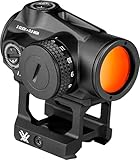
- The Triumph delivers fast, accurate, and reliable performance with a crisp 2 MOA red dot, unlimited eye relief, and a parallax-free design for superior results in any scenario.
- Choose from 9 daylight and 2 NV compatible illumination levels for optimal visibility in any environment.
- Red dot automatically powers on with motion and features a 10-minute auto-shutoff, delivering up to 50,000 hours of battery run time at setting 5.
- Includes both Lower 1/3 Co-Witness and Low Mounts, compatible with Picatinny & Weaver footprints for easy installation on a variety of platforms.
- Fully multi-coated lenses, nitrogen purged, waterproof, fogproof, and shockproof for reliable performance in any condition.
If your vision is unclear or you suspect your prescription needs attention, ask an eye-care professional for an assessment. Do not rely on a sight picture you cannot see or use safely. The manufacturer guidance reviewed here does not establish a universal severity threshold for repair or replacement.
Independent reader supportYour contribution helps us test, update, and keep practical guides available for everyone.Would another sight design help?
If you are considering a different design after trying the basic checks, compare the sight you are considering against your own use rather than assuming any one option is best for everyone.
Rank #2

- Four adjustable reticles provide you various choices in different occasions. Dot, Circle/Dot, Crosshair/Dot and Crosshair/Circle/Dot combinations are all in one reflex sight.
- With 5 adjustable brightness levels in both Red & Green mode, the red dot sight allows reticle tuning to match varying lighting conditions, from bright sunlight to low-light dusk.
- Tubeless design with upgraded 33mm multi-coated reflex lens aperture provides a wide field of view, enhances situational awareness in dynamic environments.
- Absolute Co-Witness reflex sight with standard 20mm Picatinny mounting base is easy to install on the rail, using included Allen Wrench.
- This open reflex sight is made of high-grade aluminum alloy, lightweight but robust, easy to zero and holds zero well. Parallax corrected & unlimited eye-relief for more consistent experience with the red dot optic.
- Reticle type: A prism sight with an etched reticle is an alternative to a projected dot for some users. It is not a guaranteed remedy for an individual vision issue.
- Brightness range: Check the exact model’s official specification against the lighting in which you expect to use it.
- Your corrected view: Assess how you see through the specific sight while wearing prescribed correction, where applicable.
- Fit and purpose: Verify size, mounting compatibility, and intended use in the manufacturer’s specifications. Do not assume one sight type will suit every setup.
For a comparison grounded in product details, consult the official specification for each model you are considering and its manual. Primary Arms’ overview of prism optics explains the general design distinction, but it does not establish that an etched reticle will resolve an individual user’s blur.
Free tools Windows power users keep installed
One-click scans. No signup required.
Quick Recap
Best Value

- Reticle allows for 4 different styles. Dot, Circle/Dot, Crosshair/Dot, Crosshair/Circle/Dot combinations. All in one sight!
- A 33mm lens provides quick target acquisition. Wide field of view to maintain situational awareness.
- Very sturdy and secure rail mounting system. Will not come loose, made to last.
- Parallax corrected & unlimited eye-relief, where the dot goes, so does the bullet!
- Ultralight, waterproof and shockproof - Powered one 3V lithium battery (included).
Rank #4

- 𝗥𝗲𝗱 𝗠𝘂𝗹𝘁𝗶-𝗥𝗲𝘁𝗶𝗰𝗹𝗲 𝗦𝘆𝘀𝘁𝗲𝗺: Switching between dot-and-circle, dot-only, or circle-only reticles, you can tailor your aiming solution to any operational conditions. The sharp and bright dot-and-circle reticle provides a cutting-edge aiming experience.
- 𝗙𝘂𝗹𝗹𝘆 𝗘𝗻𝗰𝗹𝗼𝘀𝗲𝗱 𝗢𝗽𝘁𝗶𝗰: Designed with a fully sealed system, the optic offers unmatched protection against the elements, ensuring reliable performance in any environment.
- 𝗦𝗶𝗱𝗲 𝗟𝗼𝗮𝗱 𝗕𝗮𝘁𝘁𝗲𝗿𝘆: Effortless battery replacement without removing the optic ensures hassle-free re-zeroing. A premium-grade battery features easy accessibility but still offers steady performance.
- 𝗔𝘀𝗽𝗵𝗲𝗿𝗶𝗰𝗮𝗹 𝗟𝗲𝗻𝘀: The aspherical lens ensures zero distortion and parallax-free performance, delivering exceptional clarity through the large window for rapid and precise target acquisition.
- 𝗥𝗠𝗦𝗰 𝗙𝗼𝗼𝘁𝗽𝗿𝗶𝗻𝘁: Designed for RMSc Footprint-cut, optics-ready slides. Non-RMSc slides require an adapter plate (not included). Please verify compatibility before purchase.
Rank #3
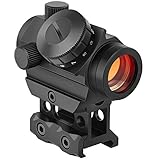
- [ More Accurate ] From 3-4MOA to 2MOA. This Updated MidTen 2MOA red dot sight is more accurate. Unlimited eye relief makes for quick sighting. Multi-coated scratch resistant lens provides optimized image clarity and increases light transmission during low light situations.
- [ Optimized Red Dot ] make the dot centered in the inner tube and not blurry, reduce red glare and extra red lights in the view.
- [ Multi Levels of Brightness ] 11 red dot brightness settings provide optimal visibility in any light conditions. Settings 1-5 are suitable for dim or rainy environment while settings 6-9 are better for a bright or sunny day. Settings 10-11 are good for sunny noon.
- [ Dependable ] A shockproof aluminum housing displays extreme robustness. Nitrogen purged and O-ring sealed. Fully waterproof with sealed housing. Nitrogen inside the scope ensures interior optical surfaces won’t fog due to humidity or rapid temperature change.
- [ 2 Height Mount Options ] Offers two height options (Low and Lower 1/3 Co-Witness), lending its functionality on any platform.
Product prices and availability are accurate as of the date/time indicated and are subject to change. Any price and availability information displayed on Amazon at the time of purchase will apply.




