Recommended Free Tools
Vertical farming is a workable way to grow certain fresh crops in certain places. It is not a general repair for food-system problems. Studies available as of October 2026 point to high electricity demand, environmental results that swing with the power source, a narrow crop range, and thin assessment of the social and economic effects that decide whether food is affordable and reachable for ordinary buyers.
The case worth taking seriously
The strongest argument for vertical farming is not that it can feed a country. It is that controlled production can supply some fresh food where land, climate or reliability are the binding constraints. The main claimed advantages, as set out in a 2021 review in Nature Food, are these:
As an Amazon Associate I earn from qualifying purchases.
- Year-round output. Indoor systems are not tied to a growing season, which can make supply steadier.
- Climate resilience. Controlled environments can buffer crops from drought, heat and flooding that damage field harvests.
- Lower land and water use, and fewer chemical releases, in some designs. These are potential gains that depend on how a given facility is built and run, not guaranteed outcomes.
A European Parliamentary Research Service briefing also notes possible fit in land-scarce urban areas and in extreme environments. The briefing states that its views should not be read as the European Parliament’s official position. Those settings are where the case is most plausible, and they are the settings the rest of this article treats as the honest test.
Free tools Windows power users keep installed
One-click scans. No signup required.
High yield per square metre is not the same as cheap calories
Vertical farms are very productive per unit of floor area. A food system, however, has to supply calories and protein at prices people can pay, and that depends on energy, crop choice and total cost. Floor-area yield tells you how densely a facility uses space. It does not tell you what food costs, who can buy it, or whether it replaces something more efficient.
#1 Best Overall
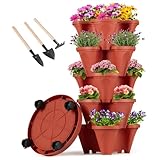
- SAVE FLOOR SPACE - Stackable vertical planter tower
- EASY 360° MOBILITY - 4 lockable swivel wheels
- PREVENT OVERWATERING - Bottom drainage holes for breathable pots
- RIGHT MOISTURE - Soil board holds a little water to keep soil moist
- VIBRANT & ROOT-SAFE: PATENTED SOIL BOARDS - Our vertical garden design features specialized airflow gaps and a patented soil-holding board that prevents root rot. This breathable system ensures your indoor or outdoor herbs stay lush, green, and healthy from the top tier to the bottom.
The energy floor on cost
A 2025 analysis in Plant Physiology estimates a minimum cost of roughly $10 per kilogram of dry plant matter, derived from the energy that indoor production requires. This is a modelled estimate built on stated assumptions. It is not an observed retail price, a farmgate price, or a quote. On that basis, the authors conclude that vertical farming cannot currently compete with dried staples such as wheat, rice and soybeans. They also find limited competitiveness for tomatoes and lettuce.
The authors add that low-impact electricity and better energy efficiency would be needed before outcomes improve. That makes energy the variable to watch, not yield density.
A narrow crop range
The 2021 Nature Food review says these systems currently grow a limited range of crops. Most of the calories and protein people eat come from staples, grains, pulses, roots and animal products, that are not grown in these facilities at scale. A shelf of leafy greens and herbs can add useful fresh food. It cannot stand in for the foods that supply most of the energy in a diet.
Rank #2

- Space-Saving : This strawberry planter maximizes your gardening space by stacking 5 layers to grow more plants in a compact area. The strawberry tower planter is ideal for patios, balconies, or indoor use
- Efficient Self-Draining: This vertical garden planter’s built-in drainage feature prevents waterlogging, keeping plants healthy by automatically channeling excess water away
- Soil Moisture Retention: Designed to maintain ideal moisture levels, the greenstalk vertical planter keeps soil hydrated longer, reducing the need for frequent watering and helping plants thrive
- Easy to Move: The strawberry pot’s movable wheels make the vertical planter tower simple to transport for optimal sun exposure or to rearrange spaces
- Suitable for Multiple Plants: This tiered planter is perfect for herbs, flowers, vegetables, or succulents, this planter accommodates diverse plant types, letting you build a mini garden with ease
Lifecycle results turn on the electricity and the comparison
A lifecycle assessment (LCA) estimates environmental impacts within defined boundaries and per a stated functional unit. A figure per kilogram of fresh produce, per kilogram of dry matter, or per square metre of land are different measures and cannot be compared directly. The table below sets out the studies and the conditions attached to each result.
| Study (year) | Study type and crop | Functional unit | Energy scenario | Reported result | Boundary to keep in view |
|---|---|---|---|---|---|
| UK lettuce LCA (2025) | Commercial vertical-farm lettuce compared with field-grown lettuce, UK case | Per kg lettuce | Renewable-energy scenario | Vertical farm 0.93 kg CO2-equivalent; UK field comparison 0.58 kg CO2-equivalent. Vertical farm had higher impacts in every assessed category except water use. | Figures apply to the study’s own cases and system boundaries, not a universal ratio. Yield was 97.3 kg/m² for the vertical farm versus 3.3 kg/m² for average field farms. |
| Container chili-pepper LCA, Technical University of Munich (2026) | Experimental container system growing chili peppers | Per kg fresh weight for climate impact; energy and water per kg dry weight | Fossil-based electricity | 74 kg CO2-equivalent per kg fresh weight | Scenario-specific. System-level energy 922 kWh/kg dry weight and water 14 L/kg dry weight were reported for this system. |
| Container chili-pepper LCA, Technical University of Munich (2026) | Same container system | Per kg fresh weight for climate impact | Renewable electricity plus industrial waste-heat cooling | 3.9 kg CO2-equivalent per kg fresh weight | Not an average for all farms, and not comparable with the lettuce figures as though from one trial. |
| Cost estimate, Plant Physiology (2025) | Analytical estimate across vertical-farm crops, compared with dried staples | Per kg dry plant matter | Modelled energy requirements | About $10/kg minimum cost | Assumption-based estimate; not an observed market price. |
UK lettuce: a narrower gap, not a reversal
In the UK comparison, the vertical farm had higher impacts than field production in every assessed category except water. Supplying the vertical farm with renewable electricity narrowed the greenhouse-gas gap, but did not close it. The study also raises land sparing as a possible benefit: if a vertical farm produces the same food on far less land, the land released could be restored to nature or used for other purposes. That benefit is real only if the spared land is actually used that way. If it is converted to other development, the saving disappears from the calculation.
Chili peppers: energy sourcing can dominate
The container chili-pepper study shows how strongly electricity and cooling can shape the result. Under the fossil-based scenario, the climate impact is far higher than under the renewable scenario that also uses industrial waste heat for cooling. The gap is roughly nineteen-fold on the reported figures. The lesson is specific to this fruiting crop and system: sourcing and cooling configuration can matter more than the growing method itself. It should not be read as a verdict on vertical farming for all crops.
Rank #3

- SAVE FLOOR SPACE - Stackable vertical planter tower
- EASY 360° MOBILITY - 4 lockable swivel wheels
- PREVENT OVERWATERING - Bottom drainage holes for breathable pots
- RIGHT MOISTURE - Soil board holds a little water to keep soil moist
- VIBRANT & ROOT-SAFE: PATENTED SOIL BOARDS - Our vertical garden design features specialized airflow gaps and a patented soil-holding board that prevents root rot. This breathable system ensures your indoor or outdoor herbs stay lush, green, and healthy from the top tier to the bottom.
What the evidence does not yet measure
A 2025 systematic review in the Journal of Cleaner Production covered 92 studies. It found that most assessments emphasised environmental indicators, usually through LCA. Social and economic factors received less attention, and the interactions and trade-offs between sustainability dimensions were insufficiently explored. The review recommends assessments that account for place and time, including local resource availability, food availability, long-term economic viability and climate trends.
Quick wins for a faster PC:
Repair Windows errors before they cause bigger problemsFix Now →Fix the driver behind crashes, sound loss and screen glitchesFind Drivers →Clear out junk files and repair common Windows errorsFree Scan →Several questions a food-system decision needs answered are not established by these studies:
- Price against alternatives in a specific local market, after energy, labour, capital and distribution costs.
- Access, meaning whether output reaches lower-income households or mainly premium buyers.
- Labour conditions, including skills, pay and the stability of indoor jobs.
- Crop diversity, meaning whether the range extends beyond leafy greens and herbs to staples or proteins.
- Land outcomes, meaning whether land spared by high yield is actually restored or repurposed.
- Long-term viability of individual operations, given high fixed energy and capital costs.
Claims that vertical farming will improve food access, worker conditions, affordability or overall resilience in general are therefore not supported by the current evidence. Those outcomes need evidence from the specific place and operation being discussed.
Rank #4

- [MINIMAL FOOTPRINT & MAXIMIZED SUNLIGHT] Save your valuable floor area! Designed to occupy very little ground space, this ergonomic trapezoid 5-tier vertical garden planter raised bed maximizes your growing capacity vertically. The smartly staggered structure ensures no plant is shaded, allowing every leaf to receive full sunlight and moisture. Whether on a narrow balcony or compact patio, this versatile vertical raised garden bed is perfect for harvesting fresh veggies, herbs, and blooms!
- [STABLE BASE & DETACHABLE BINS] Designed with a sturdy freestanding base, you can securely position your vertical garden plant stand in any desired corner. Want to replant comfortably at your table? Each independent vertical planting box simply lifts right off the main frame, allowing incredibly flexible, free-range planting.
- [STURDY STRUCTURE & FOOD-SAFE MATERIALS] Designed for reliable stability and everyday outdoor use. Constructed with rust-resistant painted steel, fortified triangular brackets, and two additional bottom fixing rods, this frame provides a secure and balanced foundation for your plants. Built to hold up well in typical outdoor environments, the high-quality vertical raised garden planter boxes are crafted from durable, 100% food-safe PP material—capable of safely supporting heavy damp soil without breaking.
- [SMART CASCADING DRAINAGE SYSTEM] Stop rotting roots or making messy patios! This innovative vertical garden bed features 3 strategically placed side holes per tier, channeling excess water seamlessly downward. Brilliantly, the bottom box has sealed hole knockouts (you can choose to open them), ensuring no muddy spills ever ruin your indoor floors.
- [BONUS STORAGE STATION & FAST SETUP] Go beyond standard planters—our comprehensive vertical herb garden uniquely features a heavy-duty Textilene mesh bottom and 5 hanging hooks for neatly organizing trowels and fertilizers! Complete setup in minutes with included clear manual and step-by-step installation video.
How to judge a specific vertical farming proposal
When a project or policy claims that vertical farming will help a food system, work through the following questions before accepting the claim:
- Which crops, and what role do they play in local diets? Leafy greens and herbs and staple calories are different tasks.
- What is the functional unit and system boundary of any environmental figure? Ask whether it is per kilogram fresh weight, per kilogram dry matter, per kilogram of calories, or per square metre.
- Where does the electricity come from, and how is heat and cooling handled? Ask for the supply contract or grid mix and whether waste heat is used.
- What is the realistic alternative? Compare against field production, greenhouses or imports for the same crop in the same place, not against an abstract baseline.
- What happens to any land saved? Ask for a written plan for restoration or other use.
- What are the whole-system outcomes? Ask about price, access, labour, distribution and the operation’s financial viability.
Where vertical farming fits
Vertical farming can complement field farms and greenhouses in defined niches, particularly for fresh leafy greens and herbs and in settings where land is scarce or controlled production has a specific value. It is not supported as a standalone fix for the food system. Its benefits depend on what is grown, what it replaces, how it is powered, and what happens to the land it spares, and the evidence on each of those points is still incomplete.
Quick Recap
Product prices and availability are accurate as of the date/time indicated and are subject to change. Any price and availability information displayed on Amazon at the time of purchase will apply.




