Most smartphone makers moved from user-removable batteries to batteries fitted inside sealed enclosures during the 2010s. The shift reflected several overlapping priorities: compact product design, soft-pack lithium-ion cells, enclosure construction and certification concerns. It was not a single technical necessity, and it made battery replacement less accessible to owners.
Why did phones stop having removable batteries?
The European Commission Joint Research Centre describes user-replaceable phone batteries as typical in the early 2000s, followed by a rapid move toward non-replaceable designs in the following decade. The available official sources do not quantify what share of devices changed or identify one cause that explains every company’s decision.
As an Amazon Associate I earn from qualifying purchases.
Manufacturers cited compact integrated designs, soft-pack lithium-ion batteries and safety-certification requirements in material reviewed by the Commission. These considerations can affect how a device is designed, but they do not prove that every phone needed a sealed battery. In particular, using a soft-pack cell for weight or form-factor reasons is not, by itself, sufficient grounds for an exemption under the Commission’s technical assessment.
The Tool Desk
Outbyte Driver Updater FREEScan for outdated or missing drivers - takes under a minuteDriver Scan →Outbyte PC Repair FREEClear out junk files and repair common Windows errorsFree Scan →Integration gave designers more flexibility
A battery installed inside the enclosure can be designed as part of the device’s internal layout rather than as a component the owner removes through a back cover. That can support compact construction, but the trade-off is that reaching the battery may require opening the device and handling parts that are glued, fastened or connected internally.
#1 Best Overall
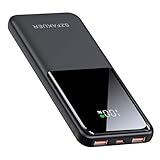
- Ultra-Slim & Light weight Design: At just 0.63 inches thick and 8.11oz, this is the slim and light 10000mAh power bank. Perfect for travel, it easily fits in your pocket or bag without adding bulk.
- 22.5W USB-C Fast Charging: Equipped with USB-C input and output, this power bank supports PD3.0 and QC4+ fast charging, delivering up to 22.5W of power. Charge your iPhone to 65% in just 30 minutes or power up multiple devices quickly.
- 3 Output & Dual Input: Features 3 outputs (2 USB-A + 1 USB-C) and 1 inputs (USB-C ), allowing you to charge up to three devices simultaneously. Ideal for smartphones, tablets, earbuds, and more.
- Wide Compatibility: Works seamlessly with a wide range of devices,Compatible with iPhone 17/16/15/14/13/12, Samsung Galaxy, Google Pixel, iPads, AirPods, Android tablets, and other USB-C devices.
- Advanced Safety & LED Display: Built with an 8-Layer Protection System to prevent overcharging, overheating, and short circuits. The LED digital display shows the remaining battery percentage, so you’re never caught off guard by a low battery.
Water resistance and safety are not universal explanations
A sealed enclosure can involve design and reassembly challenges when opened, and manufacturers have raised safety and certification concerns. But the available evidence does not establish that removable batteries inherently prevent water resistance or that every sealed device is safer. The EU rules themselves allow professional-only battery replacement in specified categories, including certain appliances designed for wet environments and professional medical devices; that is not proof that every consumer phone needs a sealed battery.
What changed for owners?
With an older phone that had a removable cover, an owner could often access the battery directly. With an integrated battery, replacement typically involves opening the enclosure. The effort, cost and repair options depend on the particular model and the repair provider.
Battery access is only one part of repairability. The Joint Research Centre also points to choices such as removable fasteners and connectors rather than tightly glued components, along with access to spare parts and clear repair information. A removable battery does not automatically make a device easy or economical to maintain; an integrated one is not automatically unrepairable.
Rank #2
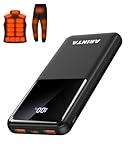
- 📱 Compatible with 5V USB Heated Clothing – This battery is compatible with 5V heated vests, jackets, and other heated clothing. Its professionally customized chip provides continuous, stable output, making it safe and reliable. The 10000mAh capacity gives you up to 7 hours of power, while the slim body makes it easy to carry in your pocket.
- ⚡PD Super-Fast Charging: Rapidly power up compatible devices with USB-C Power Delivery (PD 20W)—recharge an iPhone 15 to 60% in~30 minutes. Dual USB-A ports also deliver 22.5W speeds for Android Smartphones.
- 🔋 2-3 Full Phone Charges: The 10,000mAh high-capacity battery reliably recharges an iPhone 15 twice, a Samsung Galaxy 1.8 times, or an iPad once—perfect for travel or daily use.
- 🔌 Triple-Port Simultaneous Charging: Power 3 devices at once with dual 22.5W USB-A ports + 20W USB-C PD port. Ideal for phones, tablets, earbuds, or smartwatches without slowdowns.
- 📊Precision LED Digital Display: Track exact remaining power down to 1%—no guessing. Includes a visual fast-charge indicator (e.g., green light for PD/QC activation).
| Consideration | User-removable design | Integrated design |
|---|---|---|
| Battery access | Designed for owner access without opening the main enclosure. | Usually requires opening the enclosure; the method varies by model. |
| Enclosure and form factor | Must accommodate a user-accessible battery and cover; the actual design trade-off varies. | Offers different layout options, but does not prove that integration is essential for compactness. |
| Replacement effort and cost | Can make a battery swap simpler, depending on battery availability and device condition. | May require more work or a repair service; cost and difficulty vary by model and provider. |
| Repairability beyond the battery | Still depends on parts, fasteners, connectors and instructions. | Also depends on those factors; battery integration alone does not determine whether other repairs are practical. |
| Water resistance and safety | Cannot be assumed absent solely because a battery is removable. | Sealed construction does not establish a universal safety advantage; claims depend on the product and evidence. |
What EU rules say about battery replacement
Regulation (EU) 2023/1542 establishes a general requirement for portable batteries in products placed on the EU market to be removable and replaceable by end users, subject to specified exceptions. That rule is not a blanket instruction to bring back the old snap-off phone back: exceptions and product-specific requirements matter.
On 14 July 2026, the European Commission announced that it had adopted a delegated act adding six product categories to the exemption list, including smartwatches and fitness trackers, electric toys and equipment within the ATEX scope. The Commission said the act would enter into force 20 days after publication in the Official Journal if Parliament or the Council did not object. The announcement alone does not establish that those additions are now in force; check the Official Journal and objection status for the current legal position. European Commission announcement, 14 July 2026.
Smartphone ecodesign rules are separate
The Commission’s smartphone and tablet ecodesign summary lists a battery durability requirement of at least 800 charge-discharge cycles while retaining at least 80% of initial capacity. It also describes disassembly, repair and spare-part provisions: critical spare parts must be made available to repairers within 5–10 working days and until seven years after the end of sales of the product model in the EU market. These are product-policy requirements, not a claim about the historical share of phones with integrated batteries, and they do not simply require manufacturers to use a removable plastic back. European Commission: Smartphones and Tablets.
Rank #3

- Up to 3.5 Phone Charges On the Go: Compact and easy to carry, this 15,000mAh power bank keeps you powered for travel, commuting, and emergencies. Charges iPhone 17 up to 3.5 times, Samsung S26+ up to 2.5 times, and AirPods Pro up to 20 times.
- 40% Smaller, 45% Lighter: Designed for power without the extra bulk, this compact power bank is 40% smaller and 45% lighter than conventional models, making it easy to carry for travel and daily use. Built-in USB-A, Type-C, iOS, and Micro cables keep your devices ready to charge—no extra cables needed.
- Airline-Safe Power, Trusted Worldwide: Safe charging you can trust. Join over 50 million users worldwide who rely on our safety-focused design for worry-free charging and carry-on travel.
- 50% Power in 30 Minutes: Get fast, convenient charging when you need it most. This 22.5W portable charger powers your phone up to 50% in just 30 minutes, ideal for busy days and travel.
- Charge 6 Devices at Once: With 6 outputs and a bi-directional Type-C port, this portable charger powers multiple devices at the same time. Compact enough for your pocket or bag.
Can an integrated-battery phone still be worth repairing?
It can be, but check the specific model rather than judging by battery design alone. Before arranging a replacement, confirm the battery is compatible with the exact device, whether suitable tools and instructions are available, and whether a qualified service option exists. Parts availability and the condition of the rest of the phone affect whether replacement is a practical way to extend its life.
A power bank can help when a charge runs low away from an outlet, but it does not repair internal battery wear or make an integrated battery replaceable. The Commission describes the intended benefit of easier battery access this way: “This helps extend products’ lifetime by allowing battery replacements and supports recycling by making it easier to collect used batteries.” European Commission, Directorate-General for Environment.
What the shift does—and does not—show
The move away from removable batteries reflects competing design priorities and choices about repair access. It does not, on the evidence cited here, prove that one engineering constraint forced every manufacturer to seal every battery, nor does it establish planned obsolescence as the universal motive. For an owner deciding what to do now, the useful questions are model-specific: can the battery be sourced, can the device be opened and reassembled reliably, and are repair information and service available?
Sources: European Commission Joint Research Centre, “Why repairability matters for the future of tech products”; European Commission, Directorate-General for Environment, technical support Task 1 report; Regulation (EU) 2023/1542, consolidated text.
Quick Recap
Product prices and availability are accurate as of the date/time indicated and are subject to change. Any price and availability information displayed on Amazon at the time of purchase will apply.




