Recommended Free Tools
DDR4 and, in some cases, even DDR3 are receiving renewed attention in refurbished and low-cost computers in 2026. The shift is being reported alongside memory shortages and higher prices, not because older memory has suddenly become universally faster or cheaper. For a buyer, the practical rule is simple: choose the generation your processor and motherboard support, then compare the complete computer’s price, capacity, condition and upgrade path.
What “older RAM” means in a 2026 PC
“Older RAM” is not one interchangeable product. Desktop and laptop memory has moved through several generations—SDRAM, DDR, DDR2, DDR3, DDR4 and DDR5—and each generation uses different electrical specifications, signaling and physical keying. A module from one generation cannot be treated as a drop-in replacement for another.
As an Amazon Associate I earn from qualifying purchases.
DDR3, DDR4 and DDR5 are separate standards
Crucial’s memory-generation explainer states: “So, you can’t mix and match SDRAM, DDR, DDR2, DDR3, DDR4, or DDR5 memory on the same motherboard, as they won’t function.” A DDR4 module does not make a DDR5 motherboard compatible with DDR4, and a DDR5 module cannot be installed in a DDR4 board. The slot notch, voltage requirements and memory controller support all matter.
Quick wins for a faster PC:
Repair Windows errors before they cause bigger problemsFix Now →Scan for outdated or missing drivers - takes under a minuteDriver Scan →DDR5 technology was released in 2021. DDR4 is therefore an older generation relative to current platforms, while DDR3 is several generations back. That age can make a memory kit attractive for repairing an existing machine, but it does not make the kit suitable for every inexpensive PC.
#1 Best Overall

- [Color] PCB color may vary (black or green) depending on production batch. Quality and performance remain consistent across all Timetec products.
- DDR3L / DDR3 1600MHz PC3L-12800 / PC3-12800 240-Pin Unbuffered Non-ECC 1.35V / 1.5V CL11 Dual Rank 2Rx8 based 512x8
- Module Size: 16GB KIT(2x8GB Modules) Package: 2x8GB ; JEDEC standard 1.35V, this is a dual voltage piece and can operate at 1.35V or 1.5V
- For DDR3 Desktop Compatible with Intel and AMD CPU, Not for Laptop
- Guaranteed Lifetime warranty from Purchase Date and Free technical support based on United States
Transfer-rate ranges are not a system benchmark
Crucial lists DDR3 transfer-rate ranges of 8.5–14.9 GB/s and DDR4 ranges of 17–25.6 GB/s. Those are vendor-stated ranges for the memory generations, not measurements of a particular refurbished computer. Real application performance also depends on the processor, memory channels, timings, graphics workload, storage and software.
A speed printed on a module is a rating, not a promise that every system will use that speed. Intel gives the example of DDR4-3200 installed with a processor whose supported maximum is DDR4-2666: the memory operates at 2666. The same principle applies when a board, firmware setting or processor imposes a lower limit.
Why DDR4 is getting another look
Shortages and price increases changed the calculation
Tom’s Hardware reported on June 4, 2026, citing multiple industry sources, that demand for DDR4 platforms had increased while motherboard makers and memory-module companies adjusted strategy toward DDR4 amid shortages and rising prices. This is evidence of an industry-reported resurgence, not a census showing that every buyer has switched back to older memory.
Rank #2
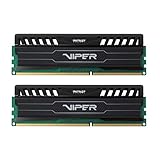
- Capacity: 16GB (2 x 8GB) Kit
- DIMM Type: 240-Pin NON-ECC UDIMM Voltage: 1.5
- Tested Frequency: PC3-15000 (1866MHz) Tested Timings: 10-11-10-30
- Feature Overclock: XMP 1.3
When newer memory is constrained or expensive, manufacturers and system builders have a reason to keep producing or supporting a platform that is mature and widely deployed. Refurbishers can also obtain compatible replacement parts for a large installed base of DDR4 desktops and laptops. Those supply conditions make DDR4 relevant again even though DDR5 is the newer standard.
“Older” does not automatically mean cheaper
Windows Central’s 2026 reporting described a DDR3 market that did not follow a simple “obsolete means inexpensive” pattern and cited a market update characterizing prices as high across DDR3, DDR4 and DDR5. That is secondary reporting, not a local price list or a complete cross-generation price index.
There is no reliable universal savings percentage to apply to a refurbished DDR4 computer. A scarce older module can cost more than a newer module in a particular region, while a used office PC may be inexpensive because of its age, condition or corporate surplus—not because DDR4 itself is cheap. Check current local prices for the whole computer and for replacement memory before deciding that an older platform is the value winner.
Rank #3

- Efficient performance: A lower voltage of 1.35 V is applied to reduce 20% power, enabling to effectively decrease hardware power consumption.
- System upgrade: With our high quality memory module, ideal for virtualization, cloud computing and multitasks handling, 100% factory-tested for stability, durability and compatibility.
- Durability Armed: 100% factory-tested to make sure the high stability, durability and compatibility.
- Compatibility is imperative: Compatible with major DDR3L / DDR3 motherboards.
- 【NOTE】The DDR3L UDIMM is backed by a lifetime warranty to promise complete services and technical support.
The trend is relevant, but not universal
Availability differs by country, retailer, module capacity and form factor. A report of increased platform demand does not establish that DDR4 is preferred in every geography, that DDR3 demand is rising at the same rate, or that a particular refurbished model will have plentiful spare parts. Treat the market story as context for comparison, not as a reason to buy incompatible hardware.
The Tool Desk
Outbyte Driver Updater FREEScan for outdated or missing drivers - takes under a minuteDriver Scan →Outbyte PC Repair FREERepair Windows errors before they cause bigger problemsFix Now →Compatibility checks to complete before buying
Identify the exact machine first. A listing that says “desktop RAM” or “DDR4 memory” is not enough to establish fit.
- Find the PC or motherboard model. Read the manufacturer label, system-information screen or motherboard marking. Use the exact model number when opening the technical manual or specification page.
- Confirm the memory generation. Verify whether the system uses DDR3, DDR4 or DDR5. Do not infer the generation from the computer’s age, processor brand or a seller’s photograph.
- Check the form factor. Desktops generally use full-size DIMMs; laptops and compact systems commonly use SO-DIMMs. A desktop DIMM is not a substitute for a laptop SO-DIMM even when both are DDR4.
- Check the maximum capacity. Confirm the total supported RAM and the per-slot limit. Older firmware or a two-slot board may support less than a newer platform with the same memory generation.
- Check supported speeds. Read both the motherboard guidance and the processor specification. A higher-rated module can downshift, but buying a higher rating does not make the processor run beyond its supported maximum.
- Check the number of slots and the existing layout. Determine whether the machine has one open slot, a replaceable module pair or memory soldered to the board. Capacity planning depends on what can actually be removed or added.
- Verify the seller’s description against the specification. A compatibility checker can serve as a cross-check, but the PC or motherboard specification is the basis for the purchase decision.
Only after these checks should you describe a product as “compatible DDR4 desktop memory.” That phrase is accurate for a confirmed DDR4 desktop DIMM system; it is not a guarantee that the kit fits every refurbished PC.
Rank #4

- [Color] PCB color may vary (black or green) depending on production batch. Quality and performance remain consistent across all Timetec products.
- DDR3L / DDR3 1600MHz PC3L-12800 / PC3-12800 240-Pin Unbuffered Non-ECC 1.35V / 1.5V CL11 Dual Rank 2Rx8 based 512x8
- Module Size: 32GB KIT(4x8GB Modules) Package: 4x8GB ; JEDEC standard 1.35V, this is a dual voltage piece and can operate at 1.35V or 1.5V
- For DDR3 Desktop Compatible with Intel and AMD CPU, Not for Laptop
- Guaranteed Lifetime warranty from Purchase Date and Free technical support based on United States
How the platforms compare for a budget purchase
The useful comparison is the complete platform, not the memory generation in isolation. The table separates what is established about the standards from factors that must be checked for an individual machine.
| Decision factor | DDR3-based refurbished PC | DDR4-based refurbished PC | DDR5-based newer PC |
|---|---|---|---|
| Relative generation | Older than DDR4 and DDR5 | Older than DDR5; widely deployed | Current generation; released in 2021 |
| Vendor-stated transfer-rate range | 8.5–14.9 GB/s (Crucial range) | 17–25.6 GB/s (Crucial range) | No range is stated in the cited specifications |
| Interchangeability | Requires a DDR3-compatible motherboard and processor | Requires a DDR4-compatible motherboard and processor | Requires a DDR5-compatible motherboard and processor |
| Typical physical form to verify | DIMM or SO-DIMM, depending on system | DIMM or SO-DIMM, depending on system | DIMM or SO-DIMM, depending on system |
| Supported speed | System-specific; not stated universally | System-specific; a DDR4-3200 module may run at DDR4-2666 on a processor limited to 2666 | System-specific; check the processor and board |
| Current price advantage | Not established; 2026 reporting described high prices across generations | Not established; shortages and demand changes may affect local prices | Not established without a current local comparison |
| Upgrade path | Depends on the exact board’s capacity and remaining slots | Depends on the exact board’s capacity and remaining slots | Depends on the exact board’s capacity and remaining slots |
The table’s ranges describe memory-generation specifications, not guaranteed application speed. A low-cost DDR4 machine can be the better purchase when it has a healthier chassis, a stronger processor, more usable capacity or a better warranty, even if a DDR3 machine has a lower sticker price.
When a refurbished DDR4 computer makes sense
Replacing or expanding an existing DDR4 system
This is the clearest use case. If the machine already has a DDR4 motherboard and processor, adding a compatible module can extend its useful life without replacing the board and CPU. Match the form factor, capacity limits and supported speed. If the system uses paired channels, follow the board manual’s slot guidance rather than placing modules arbitrarily.
Best Value
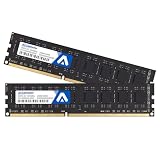
- System Upgrade: Designed for desktop PCs upgrading to DDR3-1600 (PC3-12800) memory, this upgrade maximizes memory performance through dual-channel configuration. Please check if your motherboard is DDR3 compatible before purchasing.
- Specifications: CL=11, Pin Count = 240, Dual Voltage = 1.5V, ECC Type = Non-ECC, Form Factor = Unbuffered UDIMM
- Stable Performance: High-performance memory chips, dual-in-line memory architecture, using a 512MB*16 high-performance memory chip architecture to ensure optimal performance at all times. More compatible with older motherboards/CPUs.
- DDR3 memory uses original IC chips. Compliant with RoHS and JEDEC standards, highly compatible with some desktop computers.
- Aclamator DDR3 memory modules come with a lifetime warranty and comprehensive service and technical support.
Buying an inexpensive general-purpose desktop
For web browsing, office software, media playback and similar workloads, evaluate the whole refurbished system: processor model, installed capacity, storage type, ports, operating-system support, physical condition, return policy and warranty. DDR4 may provide an adequate platform at a lower total system cost in a particular market, but the available evidence does not establish a fixed discount or a universal performance result.
Choosing a small laptop or compact PC
Confirm SO-DIMM support and whether any memory is soldered. A compact system may have one accessible slot and a separate soldered amount, or no upgradeable slot at all. A desktop DDR4 kit will not solve a laptop memory limitation merely because the generation name matches.
Planning for future upgrades
Compare the board’s maximum capacity, number of slots and processor ceiling with what you expect to run over the next few years. A cheap machine with no open slots may require replacing existing modules for a later capacity increase. A slightly more expensive refurbished model with accessible slots and a larger supported maximum can have a lower upgrade cost, even if both systems initially contain the same amount of RAM.
Free tools Windows power users keep installed
One-click scans. No signup required.
How to install and verify a compatible module
- Back up important data and shut down completely. Disconnect power and peripherals, then follow the computer maker’s service instructions. Laptops may require battery disconnection before opening the memory compartment.
- Use the correct module type. Compare the notch position, DIMM or SO-DIMM format, generation and capacity with the specification you recorded. Never force a module into a slot.
- Install it in the recommended slot. Open the retaining clips, align the notch and press evenly until the clips lock. For a pair of modules, use the board’s recommended channel positions.
- Check firmware detection. Enter the system firmware setup after powering on and confirm that the expected total capacity is recognized. If the total is wrong, power down and reseat the module before changing settings.
- Check the operating system. Verify the installed capacity and, where available, the reported memory speed. A rated speed higher than the processor limit may correctly appear at the lower supported speed.
- Test for stability. Run the computer through the workloads you actually use. Crashes, failure to boot or intermittent errors after an upgrade usually point to an incompatible module, poor seating, an unsupported capacity or a defective part.
Common mistakes and how to avoid them
- Mixing generations: DDR3, DDR4 and DDR5 cannot be mixed on one motherboard. Buy for the board, not for the desired speed number.
- Assuming the fastest label wins: A DDR4-3200 module on a DDR4-2666-limited processor runs at 2666. Paying extra for a higher rating may provide no benefit on that system.
- Confusing DIMM and SO-DIMM: Matching “DDR4” alone does not match the physical format.
- Ignoring capacity limits: A board may reject a module that exceeds its per-slot or total-capacity specification, even when the generation is correct.
- Using age as a price shortcut: DDR3 or DDR4 may be expensive in a shortage. Compare current local prices rather than assuming obsolete means discounted.
- Buying a generic kit for an unverified model: Refurbished PCs vary widely in board revision, slot count and firmware. Confirm the exact model before ordering.
- Judging performance from transfer rate alone: Generation ranges are not application benchmarks. Processor capability, dual-channel operation, storage and workload can matter more to the experience.
A practical decision framework
- Start with the use case. Decide whether the computer is for basic productivity, creative work, gaming, a home server or a specialized application.
- Set a total-system budget. Include replacement memory, storage, shipping, taxes and any warranty difference—not just the advertised computer price.
- Shortlist exact models. Record the processor, motherboard or system model, memory generation, form factor, installed capacity and available slots.
- Compare upgrade headroom. Prefer a machine whose supported capacity and slot layout fit your likely next upgrade.
- Check condition and support. A refurbished system’s warranty, return window and physical condition can outweigh a small memory-price difference.
- Verify local availability. Confirm that compatible replacement modules are actually sold in your region at current prices.
The result may be a DDR4 system, a DDR5 system or a carefully chosen DDR3 repair. The generation label is an input to the decision, not the decision itself.
Bottom line
Older RAM is returning to consideration because memory shortages, price increases and platform-maker strategy have made established DDR4 systems relevant again. The resurgence does not prove that every older module is cheap or that every buyer should avoid DDR5. Identify the exact generation, DIMM or SO-DIMM format, capacity limit and processor speed support first; then compare the complete refurbished computer, its upgrade path, condition, warranty and current local cost.
Quick Recap
Product prices and availability are accurate as of the date/time indicated and are subject to change. Any price and availability information displayed on Amazon at the time of purchase will apply.




