Lithium-ion batteries catch fire when a fault causes a cell to heat faster than it can shed heat. The rising temperature can trigger further heat-producing reactions inside the cell—a self-amplifying failure called thermal runaway. A cell may vent hot gases or ignite; heat can then spread to other cells in a pack and to nearby combustible materials.
What happens during thermal runaway?
In normal operation, lithium ions move between a battery cell’s electrodes through an electrolyte, while electrons travel through an external circuit. A separator keeps the electrodes from touching. If damage, a defect, or excessive heat compromises that separation, the electrodes can make contact and create an internal short circuit.
As an Amazon Associate I earn from qualifying purchases.
- A fault starts heating the cell. An internal short or another failure can generate heat inside the cell.
- Heat drives further reactions. At high temperatures, reactions inside the cell can release more heat and build pressure.
- The process feeds itself. If heat is produced faster than it can escape, the rising temperature drives still more heat-producing reactions. This uncontrolled, self-heating process is thermal runaway.
- The cell may vent or ignite. Hot gases and pressure can escape; the cell may catch fire or, in some circumstances, rupture.
- Failure may spread beyond that cell. Heat can bring neighboring cells in a multi-cell pack into failure and ignite nearby materials.
The U.S. Department of Energy’s 2025 explainer describes electrode contact after separator failure as one fire pathway. A National Renewable Energy Laboratory safety report also describes internal shorts, exothermic reactions, and the possibility that continued heating can overcome a separator’s protective shutdown and propagate to other cells or modules. These explain mechanisms; they do not mean every lithium-ion battery is about to fail.
What can start a battery fire?
The Federal Aviation Administration identifies damage, overheating, water exposure, overcharging, improper packing, and manufacturing defects as potential conditions for overheating and thermal runaway. Short circuits and defects are also among the causes discussed by the National Transportation Safety Board. These are recognized risk conditions, not a way to diagnose the cause of a particular incident; that requires investigation.
#1 Best Overall

- 1. Product specification: Input voltage: 100-240V 50HZ/60HZ, output voltage: 21V1A. Application: Suitable for battery packs, beauty equipment, floor sweepers, aerial photography aircraft, medical equipment, etc
- 2. Product interface: American standard plug, metal plug is durable, antioxidant, conductive, wear-resistant, and not easily deformed. Ports 5.5 * 2.5/2.1 are compatible. The tail card is sturdy and durable.
- 3. Safety protection: IC chip control, stable power supply, multiple protections, with overvoltage protection, overcurrent protection, temperature protection, overload protection, short circuit protection, power supply protection
- 4. High quality materials: wear-resistant and pressure resistant, using PC+ABS shell, flame retardant and environmentally friendly materials, safe to use. Use bold pure copper wire core for faster transmission speed
- 5. Perfect service: We solemnly promise to provide you with the most friendly service, available 24 hours a day. If you have any questions after receiving the product, please feel free to contact us at any time
- Damage: A battery that has been crushed, punctured, or otherwise damaged may have internal faults that are not visible from the outside.
- Short circuits: An unintended electrical connection can generate heat. In a FedEx truck fire investigated by the NTSB, a short circuit between a terminal bolt and upper cells caused thermal runaway. The agency also identified a design that did not protect against short-circuiting and combustible packaging as contributing factors.
- Excessive heat or overcharging: Heat and charging conditions outside the manufacturer’s instructions can contribute to failure.
- Water exposure, defects, or poor handling: The FAA lists these among potential conditions; the particular effect depends on the battery and circumstances.
A fire involving a battery pack may have more than one stage: a fault begins in a cell, heat spreads to other cells, and the pack or its surroundings become involved. A combustible object or packaging can burn without itself being the source of the original battery fault.
Why can one cell become a pack fire?
A battery pack contains one or more cells connected together. Thermal runaway begins at the cell level, but heat from a failing cell can raise the temperature of nearby cells until they also fail. In a tightly arranged pack, the failure can propagate from cell to cell or module to module. Once flames or hot gases escape, nearby materials can ignite too.
Rank #2

- AC/DC Lithium ion Battery Charger for 7S 29.4 Rechargeable Li-ion Battery Pack. Output 29.4V, World Wide Input Voltage 100-240VAC 50/60Hz. DC head 5.5 x 2.1mm (inner positive / negative outside), Double-check your charging port size (this charger has 5.5mm x 2.5mm / 4.0mm x 1.7mm / 4.8mm x 1.7mm / 4.0mm x 1.35mm / 3.5mm x 1.35mm barrel connectors) Verify your battery voltage
- Engineered specifically for 24V (7S) Lithium-ion battery systems with a stable 29.4V 2A output. It provides a precise charging curve that maximizes battery lifespan and ensures a full, deep charge every time
- Built with advanced protection against Over-Voltage, Over-Current, Short-Circuit, and Over-Heating. The flame-retardant casing ensures a secure charging environment for your home, office, or workshop. This versatile power supply is an ideal replacement for lost or broken adapters in various high-performance electronic devices
- The DC 29.4V/0.4a Charger protected: stops charging if voltage exceeds safe levels, prevents damage from drawing too much power, regulates current flow to prevent overheating, shuts down if the charger gets too hot, safeguards against electrical faults
- The built-in dual-color LED indicator provides instant feedback: Red means the device is fast-charging, and Green means the cycle is complete or the charger is idle. No manual checking required. Many people choose TANGSPOWER charger because of the light feature that indicates if it’s charged or not
That distinction matters: the first failing cell, the wider pack, and surrounding combustibles are related but not identical parts of an incident. Preventing an ignition source or removing combustible material may reduce some risks, but neither guarantees that a faulty cell will not enter thermal runaway.
The Tool Desk
Outbyte PC Repair FREEClear out junk files and repair common Windows errorsFree Scan →Outbyte Driver Updater FREEScan for outdated or missing drivers - takes under a minuteDriver Scan →How to reduce risk during everyday use
The NTSB advises following the device or battery manufacturer’s care and maintenance instructions, avoiding unsupervised charging, keeping batteries and chargers away from heat sources and flammable materials, and properly disposing of damaged batteries. It also recommends choosing devices and packs certified by Underwriters Laboratories or another recognized organization. Certification is a useful safety consideration, not a guarantee that a battery cannot fail.
Rank #3

- 【Perfect for Lithium Battery Charging】 Provides precise 4.2V/1A output specifically designed for lithium battery charging, ideal for RC airplanes, toy cars, and other low-power electronics.
- 【Worldwide Voltage Compatibility】 100-240V AC input works globally - just confirm your device needs 5.5x2.5mm center positive plug before purchasing.
- 【Multiple Safety Protections】 Built-in over-current, over-voltage, overcharge and short circuit protection with visual LED alert system for complete peace of mind.
- 【Fire-Resistant & Long-Lasting】 Flame-retardant PC-ABS housing withstands high temperatures, with premium components ensuring 10,000+ hours reliable service.
- 【Easy Troubleshooting Guide】 Red light flashing? Simply check for shorts, verify power ≤1000mA, and ensure no overload - designed exclusively for sub-1A devices.
- Use the manufacturer’s charging equipment and follow its charging and storage instructions.
- Charge where you can notice a problem; avoid leaving a battery charging unattended.
- Keep batteries and chargers away from heat sources and combustible materials.
- Do not continue using a battery or device that is damaged or showing unusual behavior.
- Follow local guidance and the manufacturer’s instructions for disposing of damaged batteries; do not put them in ordinary household rubbish unless local rules specifically allow it.
What should I do if a battery swells, overheats, smokes, or burns?
Swelling, unusual heat, smoke, or flames are warning signs, not conditions to investigate by handling the battery. Prioritize distance and follow local emergency guidance. Do not pick up or carry a battery that may be failing, and contact emergency services if there is smoke, fire, or immediate danger. The appropriate response can depend on the device, battery size, setting, and local emergency instructions; there is no universal household firefighting procedure established here.
Do not treat advice for trained crews at a particular vessel or other incident as do-it-yourself guidance for a phone, power bank, or household battery. The NTSB’s discussion of extinguishing agents and controlled burning concerns a specific vessel incident and crew response, not a general instruction for consumers.
Rank #4
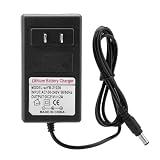
- 【Universal Charger for Multiple Devices】This 21V 2A power adapter is a fast, charging solution to replace lost or broken chargers. It a wide range of 21V devices, from power tools like electric drills and wrenches to balance cars, toy cars, and LED headlamps. Enjoy the convenience of one charger for all, eliminating clutter and the need for multiple units.
- 【High-Efficiency 2A Charging & Smart Protection】With a 2A high-current output, this charger delivers efficient and noticeably faster power replenishment compared to standard 1A adapters. Built-in intelligent circuitry provides comprehensive safety protections, including defense against over-charging, over-current, short circuits, and overheating, ensuring both rapid and completely safe charging for your devices.
- 【US Plug & Easy Plug-and-Play】This adapter comes with a standard US plug for instant use in any outlet. With its wide voltage input (100-240V), it's also travel-ready—simply use a basic plug converter for worldwide compatibility. Just connect the 5.5*2.5mm DC plug (fits 5.5*2.1mm ports) to power your device.
- 【Clear LED Indicator & Durable, Portable Design】Stay informed with the intuitive LED indicator: a red light means charging is in progress, and a solid green light signals a full charge. Housed in a compact, durable ABS shell with a reinforced cable, this charger is both rugged enough for daily use and portable enough to take anywhere you need reliable power.
- 【Reliable Power Supply】】Engineered with safety as the priority, this adapter uses high-quality, flame-retardant materials and stable performance chips to ensure consistent and clean power delivery. It acts as a dependable and versatile AC/DC power supply adapter for your various 21V lithium-ion battery-powered gadgets, giving you peace of mind with use.
Can I bring a power bank or spare battery on a plane?
Under FAA guidance, spare, uninstalled lithium-ion batteries—including power banks—must be carried in carry-on baggage, not checked baggage. If your carry-on is taken at the gate or planeside to be checked, remove spare batteries and power banks and keep them in the cabin. Damaged or recalled batteries likely to spark or generate dangerous heat must not be carried aboard in either carry-on or checked baggage unless they have been removed or otherwise made safe.
Battery rules can depend on the battery’s capacity and the specific trip. Check the current FAA guidance and your airline’s instructions for the device and itinerary rather than applying one watt-hour limit to every battery. If a device or battery overheats, swells, smokes, or burns in flight, notify the crew immediately; the FAA says passengers should alert flight crew promptly.
How many lithium-ion battery fires are there?
A 2026 National Institute of Standards and Technology analysis estimated 198,000 lithium-ion battery fires in structures since 2011, with a 95% confidence interval of 84,000–465,000. It estimated 5,718 electric-vehicle and plug-in-hybrid fires since 2011, with a 95% confidence interval of 2,866–10,846. These are estimates from a multi-source analysis, not a complete official count: NIST notes that source data are fragmented and incomplete and that some datasets make lithium-ion battery fires difficult to identify.
Quick Recap
Product prices and availability are accurate as of the date/time indicated and are subject to change. Any price and availability information displayed on Amazon at the time of purchase will apply.




