A UPI collect request asks you to approve a payment. If you do not recognize it, do not approve it or enter your UPI PIN. If you already approved a suspicious request or see money debited, contact your bank promptly, report the transaction in your UPI app, and report suspected financial cyber fraud by calling 1930 or using the National Cyber Crime Reporting Portal.
What is a UPI collect request?
A collect request is a request for you to pay: entering your UPI PIN authorizes the payment. Check the amount and payee, and approve only a request you recognize and intend to pay. If a person says the request, a QR code, or a PIN is needed to receive a refund, prize, sale proceeds, or transfer, do not follow their instructions. NPCI warns that scanning a QR code and entering a UPI PIN is for making a payment, not receiving money (NPCI fraud awareness).
As an Amazon Associate I earn from qualifying purchases.
What should I do if the request is still pending?
- Leave an unexpected or unclear request unapproved. If someone claims it is legitimate, verify with them through a separate, trusted channel before deciding.
- Never share your UPI PIN, OTP, or other credentials. A PIN authorizes transactions; NPCI says bank customer support will never ask for your UPI PIN (NPCI UPI FAQs).
- Do not scan a QR code or follow a link to “receive” money. Do not enter your PIN because someone says it will release funds.
Does opening a UPI app approve a payment?
No. NPCI clarified in January 2025 that opening a UPI or bank app alone does not automatically approve a transaction. A user must go to the payment request, choose “pay,” and authorize it with the UPI PIN (NPCI clarification, January 2025). Still review the payee and amount before authorizing any payment.
Crashes, No Sound, or Screen Glitches?
Random freezes, missing sound and display glitches usually trace back to one bad driver. Find and replace yours safely.Free scan · under a minuteWindows Errors? Fix Them Before They Spread
Repair common Windows errors and clear accumulated junk for a smoother, more stable PC - no reinstall needed.Free scan · no reinstallWhat should I do if I approved a request or money was debited?
- Contact your bank immediately. Use the number or reporting channel in the bank’s official app, on your card, or on its website—not contact details supplied by a suspicious caller. Report the transaction as suspected fraud or unauthorised and ask the bank to record your complaint and advise on protecting your account. RBI directions require banks to provide channels for reporting and to act after a report (RBI customer-protection directions).
- Report the transaction in your UPI app. Open transaction history, select the relevant transaction, and use its help or complaint option if available. NPCI says users can raise grievances or check transaction status through a participating UPI app (NPCI UPI FAQs).
- Report suspected financial cyber fraud. Call 1930 or file a report at the National Cyber Crime Reporting Portal. Keep the bank or wallet name, transaction ID and date, relevant UPI or account details, and screenshots ready if possible (government reporting guidance).
- Keep records. Preserve messages, call details, payment notifications, screenshots, and complaint acknowledgements while the bank or authorities review the report.
Which reporting channel should I use?
| Channel | What it is for | When to use it |
|---|---|---|
| Bank | Reporting a suspected unauthorised transaction and addressing account concerns. | Promptly if you see a debit or approved a suspicious payment. |
| UPI app | Transaction-specific help, grievance submission, or status checks. | Use the transaction’s help or complaint option where available. |
| NPCI complaint page | Transaction-status complaints routed to member institutions. | For status-related complaints; NPCI directs fraudulent, unidentified, or unauthorised transaction complaints to your bank (NPCI dispute redressal). |
| 1930 or cybercrime.gov.in | Reporting suspected financial cyber fraud. | Use when money was taken or you suspect a financial cybercrime. |
Can I get the money back?
There is no automatic refund guarantee for every scam. RBI’s customer-protection directions make liability depend on the circumstances and how quickly the bank is notified. If customer negligence, such as sharing payment credentials, caused the loss, the customer bears the loss until reporting; later loss is borne by the bank. For a third-party breach elsewhere in the system where neither the bank nor customer is at fault, reporting within three working days of receiving communication of the unauthorised transaction can qualify for zero liability. A report after three but within seven working days may mean capped liability; later reporting is governed by the bank’s board-approved policy. Qualifying zero- or limited-liability cases also have provisions for a shadow credit within 10 working days (RBI customer-protection directions).
#1 Best Overall

- POWERFUL SECURITY KEY: The Security Key C NFC is the essential physical passkey for protecting your digital life from phishing attacks. It ensures only you can access your accounts.
- WORKS WITH 1000+ ACCOUNTS: Compatible with Google, Microsoft, and Apple. A single Security Key C NFC secures 100 of your favorite accounts, including email, password managers, and more.
- FAST & CONVENIENT LOGIN: Plug in your Security Key C NFC via USB-C and tap it, or tap it against your phone (NFC) to authenticate. No batteries, no internet connection, and no extra fees required.
- TRUSTED PASSKEY TECHNOLOGY: Uses the latest passkey standards (FIDO2/WebAuthn & FIDO U2F) but does not support One-Time Passwords. For complex needs, check out the YubiKey 5 Series.
- BUILT TO LAST: Made from tough, waterproof, and crush-resistant materials. Manufactured in Sweden and programmed in the USA with the highest security standards.
If you knowingly entered your PIN but were deceived about why you were paying, report the payment promptly and ask the bank to assess it under applicable rules. Do not assume every such payment is automatically classified as unauthorised or will be reimbursed; the outcome depends on the facts.
Quick Recap
Best Value

- HARDWARE 2FA AND MFA: FIDO Alliance Certified FIDO2 v2.1 with CTAP2 plus legacy U2F and CTAP1 for strong two-factor login and passwordless sign-in on services that support security keys
- BUILDING ACCESS ON ONE CARD: MIFARE DESFire EV2 4K applet with AES encryption adds office door and physical access control alongside digital authentication
- CERTIFIED SECURE ELEMENT: An NXP Common Criteria EAL6+ certified secure controller and Java Card platform protects your keys on a tamper-resistant chip
- DUAL INTERFACE SMART CARD: Contactless NFC ISO 14443 plus ISO 7816 contact reader support in an ISO 7810 ID-1 format that is passive and needs no battery
- SWISS ENGINEERED DESIGN: Built by Cryptnox as a single card for authentication and access control and backed by a 2 year warranty
Rank #4
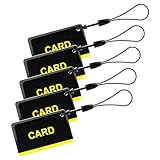
- These are 5 pcs 13.56Hz key fobs (tags). Only support the frequency 13.56MHz.
- Read only. Not re-writable. Each key fob is already pre-programmed. You cannot re-program them by a card writer.
- Great for 13.56Hz RFID proximity access control system and ID management system. For example, register them to your RFID lock as new keys if applicable.
Rank #3

- 100 encrypted contactless cards for security access control
- DESFire technology ensures secure, encrypted communication
- ISO 14443-A compliant (13.56 MHz) for compatibility with most access control systems
- Reliable, fast, and secure contactless entry
- Perfect for use in both residential and commercial settings
Rank #2

- FIDO2 CERTIFIED: FIDO Alliance Certified FIDO2 v2.1 and CTAP Level 1 for 2FA and MFA on Google Microsoft Apple GitHub login.gov AGOV SwissID and any WebAuthn service
- PASSKEY READY: Works as a hardware passkey for passwordless sign-in where the service enables it and as a U2F and WebAuthn security key everywhere else
- CERTIFIED SECURITY: NXP JCOP 4.5 secure element rated Common Criteria EAL6+ (augmented)
- TAP OR INSERT: Dual NFC ISO 14443 and contact ISO 7816 interface in an ID-1 format smart card that is passive and battery-free
- BUILT TO LAST: Passive smart card made in Switzerland designed by Swiss company Cryptnox and backed by a 2 year manufacturer warranty
Product prices and availability are accurate as of the date/time indicated and are subject to change. Any price and availability information displayed on Amazon at the time of purchase will apply.
Independent reader supportYour contribution helps us test, update, and keep practical guides available for everyone.



