PC Slower Than It Used to Be?
A free scan shows the junk files, broken settings and background clutter dragging Windows down - then fixes them in one click.Free scan · Windows 10 & 11Crashes, No Sound, or Screen Glitches?
Random freezes, missing sound and display glitches usually trace back to one bad driver. Find and replace yours safely.Free scan · under a minuteWhat to check before replacing Google apps with open-source alternatives: start by listing what you actually use, then test a representative workflow before moving all your data. An export is not the same as a working replacement, and an open-source platform’s broad feature set does not prove that it matches every Google app or collaboration habit.
This is a migration decision, not a blanket case for leaving Google. The right outcome may be replacing one app, keeping another, or deciding that a candidate is not ready for a particular job. A small trial helps you discover that before the whole family, team, or archive depends on the new setup.
As an Amazon Associate I earn from qualifying purchases.
1. Map your real Google workflows
Begin with the jobs each app performs, not a shortlist of alternatives. A person who uses Gmail only for messages has different migration needs from a team that relies on labels, shared inbox practices, calendar invitations, document comments, and mobile access. For each app, note routine tasks and the people or systems that depend on it.
Quick wins for a faster PC:
Repair Windows errors before they cause bigger problemsFix Now →Fix the driver behind crashes, sound loss and screen glitchesFind Drivers →Clear out junk files and repair common Windows errorsFree Scan →Make the inventory concrete. “We use Drive” is too broad to test. “Three people edit a project document, share a folder with a client, and open files from phones while traveling” gives you behaviors you can reproduce in a trial. Likewise, “we use Calendar” may involve personal events, shared calendars, invitations, and checking schedules on several devices. The purpose is not to make a complete technical specification; it is to identify what a replacement must do for your real users.
#1 Best Overall

- Value NAS with RAID for centralized storage and backup for all your devices. Check out the LS 700 for enhanced features, cloud capabilities, macOS 26, and up to 7x faster performance than the LS 200.
- Connect the LinkStation to your router and enjoy shared network storage for your devices. The NAS is compatible with Windows and macOS*, and Buffalo's US-based support is on-hand 24/7 for installation walkthroughs. *Only for macOS 15 (Sequoia) and earlier. For macOS 26, check out our LS 700 series.
- Subscription-Free Personal Cloud – Store, back up, and manage all your videos, music, and photos and access them anytime without paying any monthly fees.
- Storage Purpose-Built for Data Security – A NAS designed to keep your data safe, the LS200 features a closed system to reduce vulnerabilities from 3rd party apps and SSL encryption for secure file transfers.
- Back Up Multiple Computers & Devices – NAS Navigator management utility and PC backup software included. NAS Navigator 2 for macOS 15 and earlier. You can set up automated backups of data on your computers.
Build an inventory
- Tasks: Record what you do repeatedly, including less frequent but important work such as searching old mail or sharing a folder with a new collaborator. Note which steps happen together, so you can test the whole sequence rather than isolated features.
- Data: List the file types, approximate storage needs, and any metadata that matters, such as dates, labels, comments, or calendar details. Identify whether you need only a readable copy or need to continue editing and organizing the data.
- Sharing: Identify who can view, edit, or administer the data. Include family members, coworkers, clients, and anyone who needs access from a different account. Record whether people need to collaborate at the same time or only exchange finished files.
- Devices and connectivity: Check browsers, desktop and mobile use, offline needs, and whether collaborators use devices or apps that the candidate must support. Test the devices people actually use rather than assuming a desktop trial covers mobile work.
- Integrations: Note connected services, automations, and workflows that rely on the current account or file formats. If something passes data between apps, include that handoff in your trial.
- Requirements: Separate must-have functions from conveniences. A missing convenience may be acceptable; a broken essential workflow is not. Ask the people who do the work which gaps they can tolerate and which would stop them using the service.
Ask other users to contribute to the inventory. A migration that works for the account owner can still fail if collaborators cannot open, edit, or share the resulting data in their usual way. For a household, include the people who need to access shared photos, files, calendars, or contacts. For a team, include both the people who create content and those who only review or receive it.
Include the awkward and occasional cases, not only the normal day. An old message that must be found, an attachment that matters, or a folder shared with a new person can expose a gap that a clean sample document will not. The goal is to make a representative test set, not to migrate every item during the first experiment.
2. Compare complete workflows, not product names
There is no established one-to-one feature map for Google’s full app portfolio in the sources cited here. Treat each open-source candidate as a possibility to verify against your own requirements, rather than assuming that a similar product label means equivalent behavior. A platform may cover several useful categories without reproducing every detail of the services you use today.
What’s actually slowing this PC down?
Pick the symptom - the matching free tool is one click away.
For each candidate, translate an inventory item into a simple pass/fail exercise. For example, if a requirement is “share a folder with a collaborator who can edit one document,” create the folder, set the access you intend, invite the collaborator, and have that person open and edit it on their own device. If the requirement is “find a labeled message with an attachment,” import a sample and test the search and organization behavior that matters to you. These are test ideas, not claims that any product will pass them.
Use these comparison axes
- Feature coverage: Test required functions and edge cases, not just the headline feature. For mail, this might include searching, attachments, labels, and how messages appear in the destination. For documents, consider editing and collaboration as well as opening a file. For calendar or contacts, list the actions you actually need before concluding that a broad groupware label covers them.
- Data portability: Check supported export and import formats, and whether metadata, permissions, comments, or labels survive the trip. Separate “the file is present” from “the file retains the organization and context people need.” The source export and destination import both affect the result.
- Compatibility: Confirm that collaborators’ devices, browsers, file formats, mobile apps, and integrations work with the proposed setup. If a collaborator has to install or learn something new, include that requirement in the decision rather than treating it as invisible.
- Privacy and control: Find out where data is stored, who operates the service, and which privacy terms govern it. Open-source software does not by itself tell you who hosts a particular installation or how that operator handles your data.
- Security and recovery: Understand account protection, access controls, update practices, backup arrangements, and how a restore would work. A backup plan is more useful when you know who is responsible for it and have considered how you would verify recovery.
- Operations and cost: Account for hosting, storage, support, and the time required to administer the service. A software license or download alone does not describe the full operating cost. Include both direct spending and the work someone must take on.
Use the same checklist for every candidate, including the option of keeping the current service for a particular workflow. That makes comparison more useful than relying on a general impression that one platform is “more private,” “more flexible,” or “more complete.” The available evidence does not establish a winner across all of these categories.
Use Nextcloud as a capability example, not a parity claim
Nextcloud describes Hub as a platform that groups Files, Talk, Groupware, and Office. Groupware includes calendar and contacts, while Office provides collaborative editing. Those capabilities can make it worth evaluating for some file, calendar, contact, and office workflows. They do not establish that it reproduces every Google feature, migration format, mobile behavior, or integration. Review the platform’s Nextcloud Hub overview and test the specific tasks in your inventory.
Rank #2
- Value NAS with RAID for centralized storage and backup for all your devices. Check out the LS 700 for enhanced features, cloud capabilities, macOS 26, and up to 7x faster performance than the LS 200.
- Connect the LinkStation to your router and enjoy shared network storage for your devices. The NAS is compatible with Windows and macOS*, and Buffalo's US-based support is on-hand 24/7 for installation walkthroughs. *Only for macOS 15 (Sequoia) and earlier. For macOS 26, check out our LS 700 series.
- Subscription-Free Personal Cloud – Store, back up, and manage all your videos, music, and photos and access them anytime without paying any monthly fees.
- Storage Purpose-Built for Data Security – A NAS designed to keep your data safe, the LS200 features a closed system to reduce vulnerabilities from 3rd party apps and SSL encryption for secure file transfers.
- Back Up Multiple Computers & Devices – NAS Navigator management utility and PC backup software included. NAS Navigator 2 for macOS 15 and earlier. You can set up automated backups of data on your computers.
Use that description to decide whether Nextcloud belongs on your candidate list, not to skip the trial. If you are evaluating it for files, test your file-sharing and access needs. If you are considering its calendar, contacts, or office features, test those workflows separately. A platform can be a plausible fit for one part of your setup and not another; you do not need to treat replacement as an all-or-nothing choice.
Free tools Windows power users keep installed
One-click scans. No signup required.
3. Export a representative sample and inspect it
Google Takeout lets you select data from products such as email, documents, calendar, and photos, and create an archive for your records or transfer. You can select products and, for some products, subsets of data. Downloading an archive makes a copy; it does not delete the data in Google. Google also warns that changes made after an export request may not appear in the resulting archive. Check the current options and product-specific details in Google’s guide to downloading your Google data.
Export details vary by product, so do not assume that a single archive behaves like a complete working account. An archive is a snapshot of selected data, and what you can do with it depends on the formats provided and the receiving service’s import support. The transfer should be treated as a test of both sides: what Google exports and what the intended destination can read or reconstruct.
Run a small migration trial
- Choose a representative slice. Include the kinds of data and workflows you rely on, without starting with your entire account. A useful sample should expose relevant edge cases, not only the easiest files. If labels, attachments, shared access, or dates matter, include examples that let you check those things.
- Request the export. In Google Takeout, select the products or product data you want to include and create the archive. Export choices differ by product, so check the options shown for each one. Keep in mind that changes made after you request an export may not be included when the archive is created.
- Inspect the archive on a desktop. Open the archive and check that expected files are present and readable. Look at file formats and organization, not just whether the download completed. If an item appears missing, check the selected products and export details before assuming the destination caused the problem.
- Import the sample into the intended destination. The destination’s import behavior determines what becomes usable; an archive is not automatically a restored replacement account. Follow the target service’s process and note anything it cannot import or represents differently.
- Test the details that matter. Check messages, dates, attachments, documents, photos, calendar items, and the sharing behavior relevant to your workflow. Confirm that collaborators can access and work with the result. Verify the pieces your inventory called essential rather than relying only on a general visual check.
- Keep the original available during the trial. Verify the destination before deleting data or changing access to the Google account. The trial should reveal problems while the source remains available. Treat the export as a copy and keep the original accessible until you have decided the destination works for the intended tasks.
Do not confuse an export archive with a migration plan. The archive may be useful for records or as input to another service, but it does not guarantee the destination will restore the same account structure, sharing, or day-to-day experience. Import behavior is specific to the receiving service. Verify the actual result before committing to a broader move.
Pay attention to Gmail labels
Google stores Gmail labels in a special X-Gmail-Labels header in exported email. Google notes that many mail clients do not recognize that header directly. If labels organize important mail, check whether the target can interpret or otherwise preserve them; do not infer that a successful message import preserved your labeling workflow.
Make labels part of the sample if you rely on them. Check whether messages arrive, whether their dates and attachments remain usable, and whether the organization that helps you find them is still available in a practical form. If the target does not use the same labels, decide whether another supported organization method is acceptable before treating the import as complete.
Rank #3

- Entry-level NAS Personal Storage:UGREEN NAS DH2300 is your first and best NAS made easy. It is designed for beginners who want a simple, private way to store videos, photos and personal files, which is intuitive for users moving from cloud storage or external drives and move away from scattered date across devices. This entry-level NAS 2-bay perfect for personal entertainment, photo storage, and easy data backup (doesn't support Docker or virtual machines).
- Set Your Devices Free, Expand Your Digital World: This unified storage hub supports massive capacity up to 64TB.*Storage drives not included. Stop Deleting, Start Storing. You can store 22 million 3MB images, or 2 million 30MB songs, or 43K 1.5GB movies or 67 million 1MB documents! UGREEN NAS is a better way to free up storage across all your devices such as phones, computers, tablets and also does automatic backups across devices regardless of the operating system—Window, iOS, Android or macOS.
- The Smarter Long-term Way to Store: Unlike cloud storage with recurring monthly fees, a UGREEN NAS enclosure requires only a one-time purchase for long-term use. For example, you only need to pay $459.98 for a NAS, while for cloud storage, you need to pay $719.88 per year, $2,159.64 for 3 years, $3,599.40 for 5 years. You will save $6,738.82 over 10 years with UGREEN NAS! *NAS cost based on DH2300 + 12TB HDD; cloud cost based on 12TB plan (e.g. $59.99/month).
- Blazing Speed, Minimal Power: Equipped with a high-performance processor, 1GbE port, and 4GB LPDDR4X RAM, this NAS handles multiple tasks with ease. File transfers reach up to 125MB/s—a 1GB file takes only 8 seconds. Don't let slow clouds hold you back; they often need over 100 seconds for the same task. The difference is clear.
- Let AI Better Organize Your Memories: UGREEN NAS uses AI to tag faces, locations, texts, and objects—so you can effortlessly find any photo by searching for who or what's in it in seconds. It also automatically finds and deletes similar or duplicate photo, backs up live photos and allows you to share them with your friends or family with just one tap. Everything stays effortlessly organized, powered by intelligent tagging and recognition.
4. Check whether direct third-party transfer is available
Google also provides a separate portability flow in which a supported third-party service can request a copy of selected data. It is conditional: availability depends on your region, account eligibility, and support from the receiving service. The process starts on the third party’s site or app, rather than being a universal transfer option available for every account. Read Google’s current guidance on sharing a copy of your data with a third party before building a plan around it.
Check this option independently of Takeout. It is not safe to plan around direct transfer until the account and receiving service meet the applicable conditions. Confirm what data the third party can request and what its process offers, rather than assuming that a direct transfer covers every product or solves every import issue.
- Confirm eligibility first: Check the account and region you intend to use, and confirm that the specific recipient supports the transfer. If you use a managed work or school account, ask whether administrator controls affect the option.
- Review the recipient: Read its privacy policy and security disclosures before granting access. Once it receives the copy, the recipient is responsible for managing and protecting that copy. The transfer therefore changes who holds a copy; it does not remove the need to assess the receiving service.
- Understand the scope: This option copies selected data; it does not remove the original from Google. Security-related account data, such as passwords, may require a separate export. Do not treat a successful transfer of selected content as proof that all account data has moved.
- Check managed-account rules: A work or school account may be subject to administrator controls that affect portability. Confirm the rules for the particular account before relying on a personal-account workflow.
Grant access only to a service you trust. This is a practical privacy and security checkpoint, not a claim that one transfer method is inherently safer than another. Review the recipient’s disclosures and understand that the copy it receives will be handled under its practices and terms.
Do these 3 things before closing this tab:
1Repair Windows errors before they cause bigger problems2Scan for outdated or missing drivers - takes under a minute3Clear out junk files and repair common Windows errors5. Decide who will operate the replacement
Open-source software and self-hosting are not the same decision. Nextcloud describes deployment through a provider or on a home machine. Either path needs an operating plan: someone must handle infrastructure, updates, access control, availability, and backups. Before choosing a setup, decide whether your household or organization has the time and responsibility to operate it, or whether you prefer to pay a provider to run the service.
Questions for a home-hosted setup
- Who will install and maintain the server and apply updates?
- Who will configure accounts and permissions, and respond if access needs to change?
- How will you monitor whether the service is available?
- Where will backups be kept, who will verify them, and when will you test restoring data?
- Who will take action if a collaborator loses access or a device needs to be reconnected?
These questions are useful because self-hosting assigns work; it does not make that work disappear. If no one is clearly responsible for updates, access, or recovery, add that operational gap to the decision before moving important data. Consider whether the people depending on the service can accept the responsibilities and possible interruptions involved in the arrangement they choose.
Questions for a provider
A provider may reduce the amount of server administration you do directly, but it becomes an operator of your service and data. Review its privacy terms, security practices, support arrangements, and continuity plans. The available deployment descriptions do not establish that every provider is suitable or quantify how much work either approach requires; decide based on the responsibilities you can realistically cover.
Rank #4
- Value NAS with RAID for centralized storage and backup for all your devices. Check out the LS 700 for enhanced features, cloud capabilities, macOS 26, and up to 7x faster performance than the LS 200.
- Connect the LinkStation to your router and enjoy shared network storage for your devices. The NAS is compatible with Windows and macOS*, and Buffalo's US-based support is on-hand 24/7 for installation walkthroughs. *Only for macOS 15 (Sequoia) and earlier. For macOS 26, check out our LS 700 series.
- Subscription-Free Personal Cloud – Store, back up, and manage all your videos, music, and photos and access them anytime without paying any monthly fees.
- Storage Purpose-Built for Data Security – A NAS designed to keep your data safe, the LS200 features a closed system to reduce vulnerabilities from 3rd party apps and SSL encryption for secure file transfers.
- Back Up Multiple Computers & Devices – NAS Navigator management utility and PC backup software included. NAS Navigator 2 for macOS 15 and earlier. You can set up automated backups of data on your computers.
Include the provider’s service and support in your comparison, not just the software it hosts. Ask what you need to know about data handling, support when something goes wrong, and how the service would continue if your needs change. A hosted option can still require you to manage accounts, decide who gets access, and understand your backup and recovery arrangements.
The Tool Desk
Outbyte Driver Updater FREEFix the driver behind crashes, sound loss and screen glitchesFind Drivers →Outbyte PC Repair FREEClear out junk files and repair common Windows errorsFree Scan →Account for the full cost
Compare the operating cost of the candidate with the work and services it requires. Relevant factors include hosting, storage, support, and administration time. The evidence here does not provide prices or quantify how much maintenance either a provider or home machine requires, so do not assume that either choice is universally cheaper. Estimate the costs for the specific arrangement you are considering and include the value of the time someone will spend operating it.
If you are considering home storage, treat hardware as optional infrastructure, not a requirement of open-source software. If you do not want to maintain equipment, a provider is another deployment path to evaluate. Neither choice is automatically the right one: weigh cost, responsibility, privacy terms, and the recovery plan together.
Independent reader supportYour contribution helps us test, update, and keep practical guides available for everyone.6. Set a migration decision gate
Do not make the full move until the trial answers the questions that matter to your users. Use a short go/no-go checklist tied to the inventory from the first step:
- Can the destination handle each must-have task in a realistic test?
- Can you account for the important data and metadata in the exported sample?
- Can intended collaborators access and edit the result on their devices?
- Are privacy, security, backup, and restore responsibilities clear?
- Is there a workable plan for integrations or features the destination does not reproduce?
- Have you confirmed whether direct transfer is available for your account and recipient, or planned an export-and-import trial instead?
- Does someone know how to maintain the chosen deployment and help users when something needs attention?
If a required workflow fails, keep the relevant Google app in place while you assess another destination or a narrower migration. Replacing one app at a time can limit disruption, provided the resulting split workflow is manageable for everyone who uses the data. A partial migration is a valid outcome if it fits the way people work; the goal is a dependable workflow, not a complete switch for its own sake.
Recommended Free Tools
Record the result of the trial: which requirements passed, which were uncertain, what data or metadata behaved differently, and who owns the operational responsibilities. That gives other users a clear basis for deciding whether to proceed, adjust the plan, or stop. Revisit the decision if a missing integration, import limitation, or responsibility becomes a blocker.
Best Value
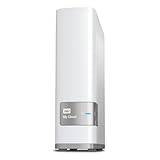
- Centralized, whole-home storage
- Mobile and remote web access, Backs up PC and Mac computers
- Photo and video backup for smartphones and tablets, Operating System - Windows/Mac
- Sync software to keep content up-to-date across all your computers and creates a common place for friends and family to share photos
- Compatible with Windows 10, Windows 8, Windows 7, Mac OS X El Capitan, Yosemite, Mavericks, or Mountain Lion operating systems and requires, DLNA/UPnP devices for streaming and a router with Internet connection
Frequently Asked Questions
Does Google Takeout move or delete my data from Google?
No. Takeout creates an archive copy; downloading it does not delete the data stored in Google. Keep the original available while you inspect and test the destination.
Will a Takeout archive restore my Google account in another service?
Not automatically. Takeout provides selected data, while the receiving service determines what it can import and how it will behave there. Test a representative sample and verify the result before planning a full migration.
Will Gmail labels be preserved when I export email?
Google stores Gmail labels in an X-Gmail-Labels header, but many mail clients do not recognize that header directly. If labels matter to your workflow, check how the intended destination handles them during a sample import.
Can every Google account use direct transfer to a third party?
No. Availability depends on region, account eligibility, and whether the receiving service supports the feature. The transfer starts on the third party’s site or app, so verify eligibility and the recipient’s process before relying on it.
Does direct third-party transfer remove my data from Google?
No. The portability flow copies selected data. The recipient becomes responsible for managing and protecting the copy it receives, so review its privacy policy and security disclosures before granting access.
Is Nextcloud a complete replacement for all Google apps?
The cited Nextcloud Hub description covers Files, Talk, Groupware, and Office, with calendar, contacts, and collaborative editing among the capabilities described. That does not establish one-to-one equivalence with every Google service, feature, migration format, mobile behavior, or integration. Test your own workflows.
Should I self-host or use a provider?
Nextcloud describes both provider and home-machine deployment options. A home setup means assigning responsibility for infrastructure, updates, access control, availability, and backups. A provider may reduce direct server administration, but you should review its privacy terms, security practices, support, and continuity.
The Bottom Line
Before replacing Google apps with open-source alternatives, inventory the work each app does, test a representative export and import, and compare complete workflows rather than product names. Verify direct-transfer eligibility if you plan to use it, and decide who will operate, secure, back up, and support the new service. Move only when the destination works for the people and tasks that depend on it.
Quick Recap
Product prices and availability are accurate as of the date/time indicated and are subject to change. Any price and availability information displayed on Amazon at the time of purchase will apply.




