End-to-end encryption protects message contents, but it does not automatically hide every detail around them. A service may still process information needed to route a message, while other metadata—such as contact lists, sender identity, timing, and account activity—depends on the app’s design and retention practices. Signal illustrates how some of those details can be limited, but its approach should not be assumed to describe every messaging app.
What encryption hides—and what it does not
Think of a message as a locked package. End-to-end encryption (E2EE) is intended to keep the package’s contents readable only by the communicating devices. The service relaying it handles ciphertext rather than having the keys needed to decrypt the message. But delivery still requires some information about where the package should go.
As an Amazon Associate I earn from qualifying purchases.
That delivery information and other facts about a communication are metadata. The term covers several different categories, not one all-seeing record:
Recommended Free Tools
- Routing: destination or recipient information needed to deliver a message.
- Identity: information that associates a message with its sender or an account.
- Contacts and social graph: address-book entries or information about relationships between users.
- Network and timing data: when traffic occurs and, depending on the system, IP-related information.
- Account and operational records: account creation, last use, delivery queues, and signals used to prevent abuse.
An app might process one category while limiting or avoiding another. And processing information to deliver a message is not the same as keeping a complete, permanent log of every conversation.
#1 Best Overall

- POWERFUL SECURITY KEY: The Security Key C NFC is the essential physical passkey for protecting your digital life from phishing attacks. It ensures only you can access your accounts.
- WORKS WITH 1000+ ACCOUNTS: Compatible with Google, Microsoft, and Apple. A single Security Key C NFC secures 100 of your favorite accounts, including email, password managers, and more.
- FAST & CONVENIENT LOGIN: Plug in your Security Key C NFC via USB-C and tap it, or tap it against your phone (NFC) to authenticate. No batteries, no internet connection, and no extra fees required.
- TRUSTED PASSKEY TECHNOLOGY: Uses the latest passkey standards (FIDO2/WebAuthn & FIDO U2F) but does not support One-Time Passwords. For complex needs, check out the YubiKey 5 Series.
- BUILT TO LAST: Made from tough, waterproof, and crush-resistant materials. Manufactured in Sweden and programmed in the USA with the highest security standards.
Why metadata can matter
Even without message text, patterns in communication can reveal when people are active and which accounts may be in contact. Timing and network information can also be relevant to correlating activity. That is why the useful question is not simply “Is the app encrypted?” Ask what information the service needs, what it can associate with an account, and what it retains.
Visibility also depends on who is observing. A messaging service, an internet provider, and another network observer do not necessarily have the same view. Sender-hiding features aimed at the service do not, by themselves, guarantee that traffic timing or IP-related activity is hidden from every other observer.
Rank #2

- FIPS 197 with XTS-AES 256-bit Encryption: Provides business-grade security with hardware-based encryption to protect your sensitive data
- Brute Force and BadUSB Attack Protection: Safeguards against unauthorized access attempts and malicious USB attacks with digitally-signed firmware
- Multi-Password Option with Complex/Passphrase modes: Offers flexible password configuration options to meet various security requirements and user preferences
- New Passphrase Mode: Enhanced security feature allowing users to create longer, more memorable password phrases for easier access without compromising protection
- Dual Read-Only (Write-Protect) Settings: Enables write protection functionality to prevent accidental data modification or deletion when needed
What Signal says it does to limit metadata
Signal is a specific example, not a stand-in for every app. In a November 2023 post, Signal says it uses metadata encryption to protect information about who is communicating with whom, and says it does not know who is sending messages or have access to address books or profile information. It describes private contact discovery as a way for people to find friends without revealing their address books to Signal. Signal’s 2023 explanation
Free tools Windows power users keep installed
One-click scans. No signup required.
Signal’s earlier technical explanation of sealed sender describes a design intended to hide the sender’s certificate and message ciphertext from the service, while allowing the recipient to validate the sender after decrypting. The post explains that traditional delivery involves a client connecting over TLS, authenticating, and sending encrypted content with a destination; authentication can help prevent spoofing and support rate limits and abuse prevention. Sealed sender adds encryption around the message envelope and uses delivery tokens as part of the process. Signal said it is used when possible, so the 2018 description should not be read as a guarantee about every message or client state today. Signal’s 2018 sealed-sender explanation
Rank #3

- FIPS 197 with XTS-AES 256-bit Encryption: Provides business-grade security with hardware-based encryption to protect your sensitive data
- Brute Force and BadUSB Attack Protection: Safeguards against unauthorized access attempts and malicious USB attacks with digitally-signed firmware
- Multi-Password Option with Complex/Passphrase modes: Offers flexible password configuration options to meet various security requirements and user preferences
- New Passphrase Mode: Enhanced security feature allowing users to create longer, more memorable password phrases for easier access without compromising protection
- Dual Read-Only (Write-Protect) Settings: Enables write protection functionality to prevent accidental data modification or deletion when needed
Signal summarized the design goal this way: “While the service always needs to know where a message should be delivered, ideally it shouldn’t need to know who the sender is.” The statement captures the distinction: routing may require a destination even when a service works to learn less about the sender.
What can remain outside the message contents
Destination and delivery
A service needs enough information to get a message to its destination. Signal’s technical post describes this requirement directly. A destination needed for delivery does not automatically mean the service retains a durable record of every recipient; visibility and retention are separate questions.
Rank #4
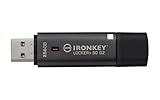
- XTS-AES 256-bit hardware-encryption
- FIPS 197 certified
- Multi-Password (Admin and User) option with complex/passphrase modes
- Up to 145MB/s Read, 115MB/s Write
Timing and network correlation
Signal’s 2018 sealed-sender post identifies traffic correlation through timing and IP addresses as an area where metadata resistance still mattered. Hiding sender identity from the service is not the same as concealing all traffic patterns from all observers.
Quick wins for a faster PC:
Scan for outdated or missing drivers - takes under a minuteDriver Scan →Repair Windows errors before they cause bigger problemsFix Now →Fix the driver behind crashes, sound loss and screen glitchesFind Drivers →Queued messages and account records
Signal says messages awaiting delivery are temporarily queued as encrypted data and dropped after delivery. In a separate account of a particular 2016 US government subpoena, Signal said the information it could provide was an account-creation date and a last-use date—not messages, groups, contacts, or profile information. That historical case shows what Signal said it had available for that request; it does not establish a current, universal retention rule for Signal or any other service. Signal’s account of the 2016 subpoena, published in 2020
Best Value

- 100 encrypted contactless cards for security access control
- DESFire technology ensures secure, encrypted communication
- ISO 14443-A compliant (13.56 MHz) for compatibility with most access control systems
- Reliable, fast, and secure contactless entry
- Perfect for use in both residential and commercial settings
Abuse prevention
Signal describes operational safeguards that can use limited data without reading message contents or relying on a social graph. For example, its report flow sends the initiating phone number and a one-time anonymous message ID; it also describes behavior-related limits. Those are specific claims about Signal’s stated practices, not evidence that every encrypted service handles abuse reports the same way. Signal’s explanation of its misinformation-reporting flow
Independent reader supportYour contribution helps us test, update, and keep practical guides available for everyone.How to assess another messaging app
Do not infer metadata practices from the E2EE label alone. Check the app’s current documentation and settings for each of these points:
- Which message types are end-to-end encrypted by default, and whether any conversations require a separate setting.
- Which sender and recipient identifiers the service processes to deliver messages.
- Whether address books or social-graph information are uploaded, transformed, or kept on the device.
- Whether sender-hiding features exist, when they apply, and what information they are intended to conceal.
- Whether timing, IP-related data, account records, and abuse-prevention signals are processed or retained.
- How long queued messages and other records are kept, and what the service says it has disclosed in response to legal requests.
Look for statements about both access and retention: “the service does not receive this information” is different from “the service receives it but deletes it later.” Also check dates and scope. A technical post, a privacy policy, and a historical legal-request example answer different questions.
Quick Recap
Product prices and availability are accurate as of the date/time indicated and are subject to change. Any price and availability information displayed on Amazon at the time of purchase will apply.




