A vintage toy collection is complete only against a defined standard and an identified toy or release. First establish which version you have, then check its expected parts, packaging and paperwork—and describe presence, originality, association and condition separately. A toy can be ready to play or display without being complete as issued.
What does “complete” mean for a vintage toy?
The word can describe several different things. Collectaneum distinguishes functional completeness, display completeness, collector completeness, completeness as issued, and completeness in original packaging. These standards make different claims, so name the one you mean rather than using “complete” alone. Collectaneum’s guide to completeness and replacement parts explains these distinctions.
As an Amazon Associate I earn from qualifying purchases.
- Functionally complete: It has the parts needed for ordinary operation.
- Display complete: It is assembled to look complete, though a component may be absent or substituted.
- Collector-complete: It has the components normally expected for a specified issue, measured against a named checklist or reference.
- Complete as issued: It matches the contents supplied with a particular release.
- Complete in original packaging: It includes the original packaging and the contents and materials included with that release. Specify which packaging components are present.
These descriptions are not interchangeable. For example, a replacement part may make a toy work while leaving it short of “all original.”
How do you know which parts belong with the toy?
Identify the exact toy and release before counting accessories. Record the maker, model or catalog number, release or revision, territory and packaging form where possible. Then compare the toy with evidence specific to that issue, such as instructions, catalogs, box contents or a specialist checklist. Collectaneum’s completeness-check guidance outlines this issue-first approach.
#1 Best Overall
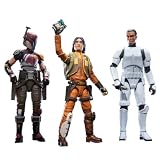
- STAR WARS REBELS MULTIPACK: This action figure set is inspired by the beloved animated series -- a great gift for Star Wars fans ages 4 and up
- 3 FIGURES IN 3.75-INCH SCALE (9.5 CM): Includes Sabine Wren (Spectre-5), Ezra Bridger (Spectre-6), and Kanan Jarrus (Stormtrooper Disguise), celebrating their beginnings as a Rebel crew in the show
- PREMIUM DESIGN AND ARTICULATION: Fans can display each 3.75 inch action figure (9.5 cm) -- featuring multiple articulation points and detailed sculpt and deco -- in their collections
- 12 ACCESSORIES: Sabine includes two blasters, a removable helmet, and paint sprayer. Ezra includes a removable trooper helmet, backpack, Lightsaber, and unlit hilt. Kanan includes a removable trooper helmet, Lightsaber, unlit hilt, and blaster
- COLLECTIBLE KENNER-INSPIRED PACKAGING: Calling back to the original 1970s and 1980s vintage toys, this figure pack features a closed outer box with Kenner branding and 3 blister cards with unique VC numbers
Classify each item on the checklist as required, optional, promotional or uncertain. A part known to exist for a toy line is not automatically expected with every version. Packaging can also vary between releases, so an accessory or insert associated with one box configuration may not belong in another. See Collectaneum’s guide to packaging and presentation variants.
How should you assess accessories and other components?
For the toy and each significant accessory, keep four judgments separate. Collectaneum’s discussion of packaging, accessories and ephemera treats these as distinct aspects of an assessment.
Rank #2

- The Mirialan Padawan to Luminara Unduli, Barriss Offee preferred learning ancient Jedi texts in the Temple to war.
- Presence: Is the item there, missing, optional or uncertain?
- Originality: Is it genuine and correct for this issue, a later official part, a substitution or a reproduction?
- Association: Is there evidence it originally accompanied this particular toy? A correct-period part may have come from another example.
- Condition: Does it show wear, damage, repair, deterioration or alteration?
A toy can be complete with replacements, assembled from genuine parts that were not originally together, or incomplete while retaining its original parts. Describe what is present and what is known about each item rather than allowing one judgment to stand in for the others.
Does the original box count toward completeness?
It can matter to a completeness claim, especially when the claim is “complete in original packaging” or “complete as issued.” But a box by itself does not show that the tray, inserts, instructions or other paperwork are present. Nor does it prove that the box originally belonged with the toy. State which packaging and paper items are included and whether their association is known. Collectaneum’s packaging and ephemera guide covers these distinctions.
Rank #3

- BOBA FETT (TATOOINE): Once regarded as one of the most fearsome bounty hunters in the galaxy, Boba Fett seemingly met his demise in the Sarlacc pit. A survivor to his core, Fett lived to fight another day
- SPECIAL PACKAGING, DELUXE FIGURE: This Star Wars The Vintage Collection 3.75-inch scale classic Star Wars Boba Fett (Tatooine) deluxe action figure features special package artwork, as well as original Kenner branding
- CLASSIC STAR WARS FIGURE: This Boba Fett (Tatooine) action figure is inspired by the character in Star Wars: The Book of Boba Fett, and makes a great gift for Star Wars collectors and fans ages 4 and up
- SERIES-BASED CHARACTER-INSPIRED ACCESSORIES: This Star Wars The Vintage Collection action figure comes with 9 entertainment-inspired accessories, including removeable jetpack and blast effects pieces; a great addition to any Star Wars collection
- DELUXE DESIGN AND PREMIUM ARTICULATION: Highly articulated with fully poseable limbs. Deluxe deco and design with more detail than the standard The Vintage Collection figure. Great to display in any Star Wars collection
For example: “The toy, two standard accessories, illustrated box and instruction sheet are present; the inner tray is missing. The box’s original association with this example is unconfirmed.” That description identifies both the contents and the uncertainty more clearly than “boxed and complete.”
Are there universal grading rules for vintage toys?
No single grading standard is established here for every vintage toy category. Published expectations may differ for trains, dolls, action figures, tin toys and other types, so use a standard only within the category and system it covers.
Rank #4

- STAR WARS: THE LAST COMMAND: This Luuke figure is inspired by the character’s appearance in the Star Wars Legends canon comic book series -- a great gift for Star Wars fans ages 4 and up
- PREMIUM DESIGN AND ARTICULATION: Fans can display this 3.75 inch action figure (9.5 cm) -- featuring multiple articulation points and a soft goods cloak -- in their collections
- CHARACTER-INSPIRED ACCESSORIES: Luuke includes a blue-bladed Lightsaber and unlit hilt
- KENNER-INSPIRED CARDBACK PACKAGING: Calling back to the original 1970s and 1980s vintage toys, this figure features Kenner branding and package design with a unique VC number for collectability
- BUILD OUT YOUR PUBLISHING COLLECTION: Find other Star Wars collectibles from The Vintage Collection to reimagine iconic scenes -- or create your own (Each sold separately. Subject to availability)
The Train Collectors Association’s toy-train grading standards define C-8 as: “Like New—Complete All Original: no rust, no missing parts; may show effects of being on display and/or age; may have been run.” That wording is specific to its train grading scale; it should not be applied to other toy categories without support.
How to assess and document a collection
- Photograph before handling or cleaning. Capture the toy, marks, packaging, paperwork and loose parts so there is a record of their condition and arrangement.
- Record identifying details. Note maker marks, model or catalog numbers, dimensions, construction details and packaging codes.
- Identify the exact release. Establish the version, including territory or revision when relevant.
- Build an issue-specific checklist. Use instructions, catalogs, box contents or specialist references; label each component present, missing, replaced, optional or uncertain.
- Assess each item separately. Record originality, association and condition for the toy and significant components rather than combining them into one completeness judgment.
- State the standard in your description. Say whether the toy is functional, display-complete, collector-complete against a named checklist, complete as issued or complete in original packaging.
- Keep the supporting notes. Record the sources behind the checklist so another owner can review or revise the assessment.
For small loose accessories, the VintageToy.co guide to original toy boxes and collecting recommends labeled archival bags or small boxes. Keep parts from rubbing against painted surfaces and label them to maintain their association with the relevant toy. This helps preserve and organize parts; it does not establish that a toy is complete.
How to compare two examples of the same toy
Use the same release-specific checklist for both examples, then compare the dimensions independently. One may have better surface condition while the other retains more of its original issue configuration. The assessment supports a clear account of those differences, not a universal price premium for completeness.
Quick Recap
- Which expected components are present, missing or replaced?
- Are the parts correct and original to the release?
- Is there evidence they were originally associated with that particular toy?
- Which packaging and paperwork remain?
- How do wear, damage, repairs or alterations compare?
Product prices and availability are accurate as of the date/time indicated and are subject to change. Any price and availability information displayed on Amazon at the time of purchase will apply.




