The oldest RTX-branded GPUs trace back to Nvidia’s first-generation RTX lineup, built on the Turing architecture and introduced in 2018. This was the generation that brought dedicated RT cores for real-time ray tracing and Tensor cores for AI-assisted features into Nvidia’s GPU branding.
When people ask for the oldest RTX card, they usually mean the first consumer GeForce RTX models, especially the GeForce RTX 2080 and RTX 2080 Ti. However, Nvidia’s earliest RTX branding also appeared around its professional Quadro RTX announcements, so the answer depends on whether you mean the first RTX products announced or the first GeForce RTX cards sold to gamers.
As an Amazon Associate I earn from qualifying purchases.
The Short Answer: Nvidia’s First RTX GPUs Arrived in 2018
The oldest RTX-branded GPUs are from Nvidia’s first-generation RTX family, which launched in 2018 and was based on the Turing architecture. In everyday PC gaming discussions, the answer is usually the GeForce RTX 2080 and GeForce RTX 2080 Ti, because those were the first consumer GeForce cards to carry the RTX name. They introduced hardware-accelerated ray tracing and AI-focused Tensor cores to Nvidia’s gaming lineup, marking the shift from the older GTX branding to RTX for high-end cards.
There is a small distinction, though: the first RTX announcements were not limited to GeForce gaming cards. Nvidia introduced the RTX brand with professional workstation products first, including Quadro RTX models, before the GeForce RTX 20-series became the cards most consumers recognize. So if “oldest RTX” means the earliest product family to use RTX branding, the answer points to Nvidia’s 2018 Turing-based RTX lineup broadly. If it means the oldest RTX graphics card a typical gamer would look for, it points to the GeForce RTX 2080 and RTX 2080 Ti.
#1 Best Overall
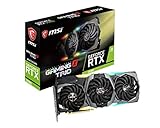
- Chipset: NVIDIA GeForce RTX 2080
- Video Memory: 8GB GDDR6
- Memory Interface: 256-bit
- Max. Resolution: Support 4x Display Monitors
- Input: 2x 8pin PCI-E Power Connectors
The timing matters because RTX was not just a new name. Before 2018, Nvidia’s gaming GPUs were sold under names like GeForce GTX 10-series, based on Pascal, such as the GTX 1080 and GTX 1080 Ti. Those cards could render games very well for their time, but they did not include dedicated RT cores for real-time ray tracing. Turing changed that by adding specialized hardware for ray-triangle intersection testing, along with Tensor cores used for AI workloads such as DLSS.
| Common question | Short answer |
|---|---|
| What year did RTX start? | 2018 |
| What architecture was first RTX? | Nvidia Turing |
| Oldest consumer GeForce RTX cards | GeForce RTX 2080 and RTX 2080 Ti |
| Were there RTX-branded professional cards too? | Yes, Quadro RTX models were part of the earliest RTX rollout |
In practical terms, the oldest RTX card someone is likely to encounter on the used market is a GeForce RTX 20-series model, especially the RTX 2060, RTX 2070, RTX 2080, or RTX 2080 Ti. The RTX 2080 and 2080 Ti were the first high-end consumer models announced, while other 20-series cards followed later at lower price points. All of them belong to the same first RTX generation and share the Turing foundation that made RTX a distinct product line.
The First Consumer RTX Cards: GeForce RTX 2080 and RTX 2080 Ti
When people ask about the oldest RTX card, they usually mean the first consumer GeForce RTX graphics cards rather than professional workstation models. In that sense, the earliest RTX cards most PC gamers would recognize are the GeForce RTX 2080 and GeForce RTX 2080 Ti, announced by Nvidia in August 2018 as part of the first GeForce RTX 20-series lineup.
Do these 3 things before closing this tab:
1Clear out junk files and repair common Windows errors2Fix the driver behind crashes, sound loss and screen glitches3Repair Windows errors before they cause bigger problemsBoth cards were based on Nvidia’s Turing architecture, the first Nvidia GPU architecture sold to consumers with dedicated RT cores for hardware-accelerated ray tracing and Tensor cores for AI-based features such as DLSS. This is what separated them from the earlier GeForce GTX 10-series cards, such as the GTX 1080 and GTX 1080 Ti, which were powerful for traditional rasterized gaming but did not carry the RTX branding or include dedicated ray tracing hardware.
Launch positioning of the first GeForce RTX cards
At launch, the RTX 2080 Ti was the flagship gaming card, while the RTX 2080 sat below it as the high-end option. Nvidia also announced the RTX 2070 at the same event, but the RTX 2080 and RTX 2080 Ti were the first GeForce RTX cards to define the new generation for enthusiasts.
| GPU | Generation | Architecture | Original market position |
|---|---|---|---|
| GeForce RTX 2080 Ti | RTX 20 series | Turing | Flagship consumer gaming GPU |
| GeForce RTX 2080 | RTX 20 series | Turing | High-end consumer gaming GPU |
| GeForce RTX 2070 | RTX 20 series | Turing | Upper-midrange gaming GPU announced alongside them |
The distinction matters because Nvidia’s first RTX launch was not just a routine performance upgrade. The RTX 2080 and 2080 Ti introduced a new feature set that changed how Nvidia branded its top gaming GPUs. “RTX” was used to signal real-time ray tracing support, AI acceleration, and a shift away from the long-running GTX naming used on previous GeForce gaming cards.
So, if the question is “What is the oldest RTX gaming GPU?” the answer is generally the GeForce RTX 2080 and RTX 2080 Ti. If the question is about the absolute earliest RTX-branded products of any type, the answer can include Nvidia’s professional Quadro RTX cards, which appeared in the same first-generation RTX era and are better treated separately from the consumer GeForce lineup.
Recommended Free Tools
RTX Before GeForce: Quadro RTX and the Earliest RTX Branding
Although many people think of the GeForce RTX 2080 and RTX 2080 Ti as the first RTX cards, Nvidia actually introduced the RTX name first in its professional workstation lineup. The earliest RTX-branded GPUs were part of the Quadro RTX family, announced in August 2018 at SIGGRAPH. These cards were aimed at 3D artists, engineers, visualization studios, researchers, and other professional users rather than mainstream PC gamers.
The first Quadro RTX models included the Quadro RTX 8000, Quadro RTX 6000, and Quadro RTX 5000. They were based on Nvidia’s Turing architecture, the same generation that later powered the first GeForce RTX gaming cards. Their launch was significant because it marked Nvidia’s first public use of RTX as a product brand tied to real-time ray tracing, AI-accelerated rendering, and new hardware blocks such as RT cores and Tensor cores.
First RTX branding versus first gaming RTX cards
The distinction matters because “oldest RTX” can mean two slightly different things. If you are asking about the first RTX-branded GPUs announced by Nvidia, the answer points to the Quadro RTX workstation cards. If you are asking about the first consumer gaming RTX cards, the answer is usually the GeForce RTX 2080 and RTX 2080 Ti, which were announced shortly after and became the RTX cards most PC builders remember from 2018.
| Category | Earliest RTX examples | Target user | Architecture |
|---|---|---|---|
| Professional workstation | Quadro RTX 8000, RTX 6000, RTX 5000 | Creators, CAD users, studios, researchers | Turing |
| Consumer gaming | GeForce RTX 2080 Ti, RTX 2080 | PC gamers and enthusiasts | Turing |
Quadro RTX cards were not designed as ordinary gaming GPUs, even though they shared architectural roots with GeForce RTX. They typically offered professional drivers, large amounts of VRAM, workstation certifications, and features valued in software such as Autodesk, Dassault Systèmes, Adobe, Blender, and professional renderers. For example, the Quadro RTX 8000 shipped with far more memory than a GeForce RTX 2080 Ti, making it better suited to large scenes, complex simulations, and high-end visualization workloads.
Rank #2
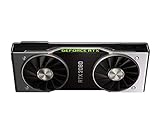
- Powered by the NVIDIA GeForce RTX 2080 graphics processing unit (GPU) with a 1800MHz boost clock speed To help meet the needs of demanding games.
- 8GB GDDR6 (256-bit) on-board memory plus 2944 CUDA processing cores and up to 448GB/sec. of memory bandwidth Provide the memory needed to create striking visual realism.
- VR Ready Experience next-generation VR performance, low latency and plug-and-play compatibility with headsets driven by NVIDIA VRWorks. VR audio, physics, and haptics let you hear and feel every moment.
- Microsoft DirectX 12 Support for the latest Microsoft DirectX API to enable next-generation gaming. OpenGL 4.5 Support Supporting the latest standards in the OpenGL API. Vulkan API Next-generation graphics and compute API from Khronos Group that provides high-efficiency, cross-platform access to modern GPUs.
- Real-Time Ray Tracing Definitive solution for lifelike lighting, reflections, and shadows, offering a high level of realism. NVIDIA G-SYNC and HDR Get smooth, tear-free gameplay at refresh rates up to 240 Hz and High Dynamic Range.
So, when tracing the RTX name back to its beginning, Quadro RTX sits at the very start of the story. GeForce RTX made RTX familiar to gamers, but Quadro RTX was where Nvidia first positioned the brand around ray tracing and AI-assisted graphics in 2018. That is the clearest way to separate the earliest RTX branding from the first RTX cards most consumers could realistically buy for a gaming PC.
Why Turing Was the First RTX Architecture
Nvidia’s Turing architecture was the first to carry the RTX identity because it was the first Nvidia GPU architecture built around hardware features for real-time ray tracing and AI-assisted rendering. Earlier GeForce generations such as Pascal, used in cards like the GTX 1080 and GTX 1080 Ti, could run many advanced graphics effects, but they did not include the dedicated ray tracing and tensor hardware that defined RTX as a product family.
The main change was the addition of RT cores. These specialized units accelerate ray-triangle intersection tests and bounding volume hierarchy traversal, two of the heavy workloads involved in ray tracing. Without dedicated hardware, those calculations place a large burden on general shader cores, making real-time ray-traced lighting, reflections, and shadows much harder to achieve at playable frame rates. Turing made those effects practical enough for consumer games to begin adopting them.
Turing also brought Tensor cores into the GeForce gaming lineup. Tensor cores had appeared earlier in Nvidia’s data-center-focused Volta architecture, but Turing paired them with gaming GPUs and used them for features such as Deep Learning Super Sampling, better known as DLSS. DLSS became closely tied to the RTX brand because it helped offset the performance cost of ray tracing by using AI-based reconstruction to produce higher-resolution output from a lower internal render resolution.
What’s actually slowing this PC down?
Pick the symptom - the matching free tool is one click away.
What made Turing different from GTX-era architectures
- Dedicated RT cores: Hardware acceleration for ray tracing tasks instead of relying only on shader cores.
- Tensor cores in gaming GPUs: AI acceleration for DLSS and other machine-learning-driven graphics features.
- RTX software stack: Support for APIs and tools such as Microsoft DirectX Raytracing, Vulkan ray tracing extensions, Nvidia RTX libraries, and developer-focused rendering workflows.
- Hybrid rendering focus: A design aimed at combining traditional rasterization with selective ray-traced effects in real time.
This is also older Nvidia cards with strong rasterization performance are not considered RTX cards. A GTX 1080 Ti, for example, was a high-end GPU for its time and can still run many games, but it lacks RT cores and Tensor cores. Nvidia later enabled limited ray tracing support on some GTX cards through drivers, but that did not make them RTX products. The RTX name refers to a specific hardware and software platform, not just the ability to display a game that includes ray-traced effects.
In practical terms, Turing marked the start of Nvidia’s modern graphics roadmap. The first-generation RTX cards did not always deliver smooth ray tracing at high settings, especially before DLSS matured, but they established the feature set that later generations improved. Ampere brought much stronger ray tracing performance, Ada Lovelace added more advanced frame generation and efficiency gains, and newer RTX lineups continued building on the same foundation. That foundation began with Turing in 2018.
How the Original RTX Cards Compare to Newer RTX Generations
The original RTX cards from the Turing generation introduced the features that still define Nvidia’s RTX lineup today: hardware-accelerated ray tracing, Tensor cores for AI workloads, and support for DLSS. Compared with later RTX 30-series Ada? no, RTX 30-series Ampere and RTX 40-series Ada Lovelace cards, however, those first models are clearly early-generation implementations. A GeForce RTX 2080 Ti was extremely high-end in 2018, but in modern games it often sits closer to midrange newer cards, especially once ray tracing and high-resolution settings are involved.
The biggest difference is ray tracing performance. Turing’s first-generation RT cores made real-time ray tracing possible on consumer GPUs, but they were limited compared with the second-generation RT cores in Ampere and the third-generation RT cores in Ada Lovelace. An RTX 2080 or RTX 2080 Ti can still run ray-traced games, but newer cards handle heavier effects, higher frame rates, and higher resolutions much better. Features such as improved denoising, shader execution improvements, and more efficient RT hardware mean an RTX 4070 or RTX 4080 can deliver a much smoother ray-traced experience than the original RTX flagships.
DLSS is another major dividing line. Turing cards support DLSS upscaling, including DLSS 2 in supported games, which remains useful for improving frame rates. They do not, however, support DLSS 3 Frame Generation, which is exclusive to RTX 40-series GPUs. That means an RTX 2080 Ti can benefit from AI upscaling, but it cannot use one of the headline performance-boosting features available on newer Ada Lovelace cards. For players comparing used Turing cards against newer RTX models, this distinction matters in games that lean heavily on modern DLSS features.
| Generation | Architecture | Example Cards | RTX Feature Level |
|---|---|---|---|
| RTX 20 Series | Turing | RTX 2060, RTX 2080, RTX 2080 Ti | First-generation RT cores, Tensor cores, DLSS support |
| RTX 30 Series | Ampere | RTX 3060, RTX 3080, RTX 3090 | Stronger ray tracing, better raster performance, DLSS 2 support |
| RTX 40 Series | Ada Lovelace | RTX 4060, RTX 4070, RTX 4090 | Much faster RT hardware, DLSS 3 Frame Generation, higher efficiency |
Traditional rasterized performance also improved substantially after Turing. In non-ray-traced games, a card like the RTX 2080 Ti can still be capable at 1440p, but newer midrange GPUs may match or beat it while using less power and offering newer media engines. The RTX 30 series brought a large performance jump in many games, while the RTX 40 series emphasized efficiency, stronger ray tracing, and AI-assisted frame generation. This makes the original RTX cards historically significant, but not always the best value if a newer card is close in price.
Memory capacity varies by model and can affect how well older RTX cards hold up. The RTX 2080 Ti’s 11GB of VRAM remains useful, while lower-end Turing cards such as the RTX 2060 with 6GB can run into limits in newer titles with high-resolution textures. Newer GPUs may also support more advanced display and encoding features, depending on the model. In short, the oldest RTX cards still provide the core RTX experience, but newer generations deliver faster ray tracing, broader DLSS capabilities, better efficiency, and longer-term support for modern game settings.
Rank #3

- 11GB GDDR6
- CUDA Cores: 4352
- Display Connectors: DisplayPort, HDMI, USB Type-C
- Maximum Digital Resolution: 7680x4320
What to Know Before Buying an Older RTX Card Today
Buying one of the oldest RTX cards can still make sense, especially if you are looking at a used GeForce RTX 2060, RTX 2070, RTX 2080, or RTX 2080 Ti at a low price. These Turing-based cards support hardware ray tracing, DLSS, Nvidia Broadcast features, and modern driver packages, so they are not obsolete in the same way as much older GTX hardware. The main question is not whether an early RTX card still works, but whether its price, condition, VRAM capacity, and performance fit the games or workloads you actually plan to run.
The Tool Desk
Outbyte PC Repair FREERepair Windows errors before they cause bigger problemsFix Now →Outbyte Driver Updater FREEFix the driver behind crashes, sound loss and screen glitchesFind Drivers →For gaming, the RTX 2080 Ti remains the strongest card from the first GeForce RTX generation, while the RTX 2060 is the entry point most buyers will encounter on the second-hand market. The RTX 2060 can still handle many esports and older AAA games well at 1080p, but its 6GB VRAM configuration can be limiting in newer titles with high-resolution textures. The RTX 2070, RTX 2070 Super, RTX 2080, and RTX 2080 Super are more comfortable for 1080p and some 1440p gaming, but they lack newer features found on later RTX 40-series cards, such as DLSS 3 Frame Generation.
Check the exact model, memory, and condition
Older RTX cards have often spent years inside gaming PCs, workstations, or mining rigs, so condition matters as much as the GPU name. Ask for clear photos of the card, including the fans, heatsink, display outputs, PCB area, and power connectors. If possible, ask the seller for a recent benchmark or stress test screenshot showing temperatures, clock speeds, and fan behavior. A working RTX 2080 Ti with worn fans, overheating memory, or random crashes may be a worse buy than a slower RTX 3060 in cleaner condition.
- VRAM: 6GB is increasingly tight for newer games, while 8GB or 11GB gives more breathing room.
- Power supply: Higher-end Turing cards can draw substantially more power than newer midrange GPUs with similar performance.
- Cooling: Listen for rattling fans and check for unusually high temperatures under load.
- Warranty: Most 2018-era cards are out of warranty, so factor in the risk of failure.
- Ports: Confirm the card has the HDMI or DisplayPort outputs your monitor setup needs.
Price is the deciding factor. An old RTX card is attractive only when it is clearly cheaper than newer alternatives that offer better efficiency, newer media engines, more VRAM, or stronger ray tracing performance. For example, a used RTX 2080 may outperform some lower-end newer cards in traditional rasterized games, but newer GPUs may be quieter, use less power, support newer DLSS features, and come with a valid warranty. If ray tracing is your main goal, remember that first-generation RT cores are much slower than those in Ampere, Ada Lovelace, and newer RTX architectures, so enabling high ray tracing settings can require major compromises.
For creators, also check software requirements before buying. Turing RTX cards include useful acceleration for CUDA, OptiX, AI effects, and video work, but newer cards may encode video more efficiently and support newer AV1 workflows. If you just need an inexpensive card for 1080p gaming, light rendering, or experimenting with RTX features, an older Turing card can still be a practical purchase. If you want high-refresh 1440p gaming, heavy ray tracing, long-term driver headroom, or the newest Nvidia features, a more recent RTX generation is usually the safer choice.
Frequently Asked Questions
What was the first Nvidia RTX graphics card?
The first RTX-branded GPUs were part of Nvidia’s Turing generation announced in 2018. If you mean consumer gaming cards, the GeForce RTX 2080 and RTX 2080 Ti were the first major GeForce RTX models, announced in August 2018 and released shortly after.
Was the RTX 2080 Ti the oldest RTX card?
The RTX 2080 Ti was one of the first consumer GeForce RTX cards, but it was not the only oldest RTX product. Nvidia also introduced Quadro RTX workstation cards around the same launch period, and those used the RTX branding before many buyers saw GeForce RTX cards on store shelves.
What architecture did the first RTX cards use?
The first RTX cards used Nvidia’s Turing architecture. Turing introduced dedicated RT cores for ray tracing and Tensor cores for AI features like DLSS, which is what separated RTX cards from earlier GTX models.
Is the RTX 2060 older than the RTX 2080?
No. The RTX 2080 and RTX 2080 Ti came first in 2018, while the RTX 2060 launched later as a more affordable Turing-based RTX card. The RTX 2060 is still part of the first RTX generation, but it was not among the earliest models.
Quick wins for a faster PC:
Scan for outdated or missing drivers - takes under a minuteDriver Scan →Clear out junk files and repair common Windows errorsFree Scan →Is it still worth buying a first-generation RTX card today?
A first-generation RTX card can still be useful for 1080p gaming, older titles, esports games, or a budget PC build. However, ray tracing performance is much weaker than newer RTX 30, 40, and 50 series cards, and older used cards may have worn fans, limited warranty coverage, or high power use compared with modern alternatives.
Bottom Line
The oldest RTX-branded GPUs trace back to Nvidia’s first-generation RTX lineup built on the Turing architecture in 2018. The earliest RTX announcements included professional Quadro RTX cards, while the first consumer GeForce RTX cards most people mean were the GeForce RTX 2080 Ti and RTX 2080, followed by the RTX 2070.
If you’re asking from a gaming or PC-building perspective, look at the GeForce RTX 20-series as the starting point for RTX features like hardware ray tracing and DLSS. For historical accuracy, remember that “first announced” and “first consumer GeForce RTX” are related but not exactly the same.
Quick Recap
Product prices and availability are accurate as of the date/time indicated and are subject to change. Any price and availability information displayed on Amazon at the time of purchase will apply.




