Crashes, No Sound, or Screen Glitches?
Random freezes, missing sound and display glitches usually trace back to one bad driver. Find and replace yours safely.Free scan · under a minuteWindows Errors? Fix Them Before They Spread
Repair common Windows errors and clear accumulated junk for a smoother, more stable PC - no reinstall needed.Free scan · no reinstallA lumen (lm) is the standard unit used to describe how much visible light a source produces. It measures luminous flux, which means the total amount of light emitted in all directions as perceived by the human eye. When a bulb, LED fixture, flashlight, or projector lists a lumen rating, that number helps indicate how much usable light it can deliver.
Lumens are often used to compare lighting products because watts only tell you how much energy a device consumes, not how bright it appears. Understanding lumens also helps distinguish related terms such as lux, candela, and general “brightness,” making it easier to choose the right light for a bedroom, kitchen, workspace, outdoor area, projector screen, or portable flashlight.
As an Amazon Associate I earn from qualifying purchases.
What Is a Lumen (lm)?
A lumen, abbreviated lm, is the SI unit used to measure luminous flux: the total amount of visible light emitted by a light source in all directions. In simpler terms, lumens describe how much usable light a bulb, LED fixture, flashlight, or projector produces as perceived by the human eye. A product with a higher lumen rating generally emits more visible light than one with a lower rating, assuming the light is distributed in a comparable way.
Quick wins for a faster PC:
Repair Windows errors before they cause bigger problemsFix Now →Fix the driver behind crashes, sound loss and screen glitchesFind Drivers →Clear out junk files and repair common Windows errorsFree Scan →Lumens are different from older ways of describing lighting, especially watts. A watt measures electrical power consumption, not light output. This distinction became more relevant as LED lighting replaced incandescent bulbs. For example, a traditional 60-watt incandescent bulb typically produces about 800 lumens, while an LED bulb can produce the same 800 lumens using only about 8 to 10 watts. The lumen rating tells you the light output; the watt rating tells you how much energy the product uses.
#1 Best Overall

- Energy-Saving Brilliance: The EVELOR A19 100 watt LED light bulbs consumes only 13W while delivering the same brightness as a 100W incandescent bulb, achieving up to 90% energy savings. It's the perfect upgrade from outdated, inefficient lighting.
- Vivid, Sunlight-Like Illumination: With 1500LM brightness and a CRI of 80+, this bright white bulb enhances color accuracy, making spaces appear more vibrant. The non-flicker 100 watt lamp light bulbs beads ensure steady brightness, while the 5000K daylight white light is ideal for areas where clarity and visibility matter.
- Reliable Non-Dimmable Lighting: Designed for consistent performance, these light bulbs 100w provide unwavering illumination-perfect for living rooms, bedrooms, garages, meetingroom, office,kitchen, bathroom, readingroom, study, basement and workspaces where stable light is essential.
- Long-Lasting Durability: Rated for 15,000+ hours, these A19 E26 ampoule LED bulbs reduce replacement frequency and maintenance costs, making them suitable for indoor, outdoor, and commercial use.
- Eye Comfort & Easy Installation: The no-flicker design ensures smooth, strain-free lighting, while the standard E26 base allows for quick installation. Enjoy a bright, steady glow that enhances any environment.
The lumen is based on human visual sensitivity, meaning it accounts for the fact that our eyes respond more strongly to some wavelengths than others. Green-yellow light, near the center of the visible spectrum, appears brighter to human vision than deep red or violet light at the same radiant power. Because of this, lumens are a practical unit for everyday lighting decisions, where the goal is not just to measure energy but to understand how bright a space or object will appear.
Lumen definition in practical terms
One lumen can be understood as a small amount of visible light, but lighting products usually produce hundreds, thousands, or even tens of thousands of lumens. The number printed on a package or specification sheet represents the total light output under defined test conditions. This helps buyers compare different technologies, sizes, and product types using a shared measurement.
- Bulbs: A standard household bulb may range from about 450 lm for a soft accent lamp to 1,600 lm for a bright general-purpose bulb.
- LED fixtures: Ceiling panels, downlights, and shop lights are often rated from 1,000 lm to more than 10,000 lm depending on size and intended use.
- Flashlights: Compact flashlights may produce 100 to 500 lm, while high-output models can exceed 1,000 lm.
- Projectors: Projector light output is commonly expressed in lumens to indicate how well the image can compete with ambient room light.
In lighting design and product comparison, lumens serve as the starting point for judging output, but they do not describe everything about how light will look. Beam angle, color temperature, fixture design, room size, wall color, and distance from the source all affect the final visual result. Even so, knowing the lumen rating is the most direct way to estimate how much visible light a product provides before installing or using it.
Do these 3 things before closing this tab:
1Clear out junk files and repair common Windows errors2Scan for outdated or missing drivers - takes under a minute3Repair Windows errors before they cause bigger problemsLumen Meaning in Lighting and Brightness
In lighting, a lumen describes the total amount of visible light a source produces. When a bulb, LED strip, flashlight, or projector lists a lumen rating, it is telling you how much light output the product emits as perceived by the human eye. A higher lumen number generally means more visible light is being produced, so a 1,600-lumen bulb gives off much more light than a 450-lumen bulb.
This is lumens are now the main way to compare modern lighting products. Older incandescent bulbs were often chosen by wattage, such as 40 W, 60 W, or 100 W, because wattage and light output were closely linked for that technology. With LEDs and other efficient lamps, watts only tell you how much electrical power the product uses, not how much light you get. A 10 W LED can produce about as much visible light as a 60 W incandescent bulb, so the lumen rating gives a more accurate comparison.
How lumens relate to perceived brightness
People often use the word brightness to describe how strong a light appears, but brightness is not the same as lumens in a strict technical sense. Lumens measure total visible light output from the source. Perceived brightness depends on several other factors, including the size of the room, wall colors, beam angle, distance from the light, fixture design, and whether the light is concentrated or spread out.
For example, an 800-lumen bare bulb in a small white-painted room may look bright and evenly distributed. The same 800 lumens inside a shaded fixture, or in a large room with dark walls, may feel much dimmer. A flashlight rated at 800 lumens can appear very intense because its light is focused into a narrow beam, while an 800-lumen table lamp spreads light over a wider area and feels softer.
Rank #2
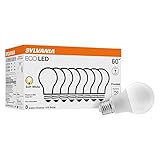
- 60W INCANDESCENT REPLACEMENT BULB - This LED lamp is an energy-efficient replacement and substitute for standard 60-watt incandescent lamps. At 9 watts, it emits a soft white output of 750 lumens and a temperature of 2700K.
- LONG-LASTING – These bulbs are a great energy-saving replacement for old bulbs because they have a total lifespan of up to 7 years. You won’t need to constantly change your lightbulbs anymore.
- ENERGY-SAVING – These LED light bulbs require less energy and can save on your energy bill. An estimated energy cost of only $1.08 per year.
- FUNCTIONALITY: These long-lasting, energy efficient LED light bulbs are ideal in family rooms, kitchens, bathrooms, and in commercial spaces such as retail, hospitality and entertainment industries. With a color rendering of 80 CRI.
- DESIGN: These non-dimmable LED light bulbs have a color temperature of 2700 kelvin, which produces a soft white color rendering ideal for productivity and welcoming spaces.
Typical lumen meanings for common light levels
| Approximate lumens | Common comparison | Typical use |
|---|---|---|
| 250–450 lm | Low to moderate light | Bedside lamps, accent lighting, small decorative bulbs |
| 800 lm | Similar to a traditional 60 W incandescent bulb | General table lamps, bedrooms, hallways |
| 1,100–1,600 lm | Similar to 75–100 W incandescent bulbs | Kitchens, living rooms, work areas, ceiling fixtures |
| 2,000 lm and above | High-output lighting | Garages, workshops, outdoor security lights, some projectors |
The meaning of a lumen rating also changes with the type of product. For household bulbs, lumens help you choose the right replacement for an old incandescent lamp. For LED panels and ceiling fixtures, total lumens help estimate whether a room will have enough general illumination. For projectors, lumens indicate how much image light is available, which affects visibility in larger rooms or spaces with ambient light. For flashlights, lumens describe output, but beam distance and beam shape are also needed to judge real-world performance.
When comparing lighting, the most useful approach is to read lumens as the amount of light available, then consider how that light will be distributed. A high-lumen product is not automatically the best choice if it creates glare, casts uneven shadows, or is too intense for the space. The best lighting choice balances lumen output with fixture design, color temperature, room size, and the task being performed.
Lumens vs Watts, Lux, and Candela
Lumens, watts, lux, and candela all describe lighting in different ways, so they should not be used interchangeably. A lumen (lm) measures the total amount of visible light emitted by a source. A watt (W) measures electrical power consumption, not light output. Lux (lx) measures how much light lands on a surface. Candela (cd) measures light intensity in a specific direction. Understanding the difference helps when comparing LED bulbs, flashlights, projectors, and room lighting products.
The most common confusion is between lumens and watts. With older incandescent bulbs, people often used watts as a rough guide to brightness because higher-watt bulbs usually produced more light. For example, a 60-watt incandescent bulb typically produced about 800 lumens. Modern LEDs break that relationship because they create the same light output using much less power. An LED bulb may produce 800 lumens while using only 8 to 10 watts. For comparing brightness, lumens are the useful number; for comparing energy use, watts are the useful number.
Recommended Free Tools
| Term | What It Measures | Common Use |
|---|---|---|
| Lumens | Total visible light output | Comparing bulbs, LED fixtures, projectors, and lamps |
| Watts | Electrical power used | Estimating energy consumption and running cost |
| Lux | Lumens per square meter on a surface | Planning office, kitchen, workshop, or task lighting levels |
| Candela | Light intensity in one direction | Describing spotlights, flashlights, vehicle lamps, and beam strength |
Lux connects light output to distance and area. One lux equals one lumen spread over one square meter. A 1,000-lumen light will not create the same lux level in every situation: it may feel bright when concentrated over a desk, but dimmer when spread across a large living room. This is room lighting recommendations often use lux rather than only lumens. For instance, a hallway may need a relatively low lux level, while a kitchen counter, reading chair, or workbench needs more light on the actual surface.
Candela is especially useful for directional lighting. Two flashlights may both be rated at 1,000 lumens, but one may spread light widely for camping while the other focuses a narrow beam far into the distance. The narrow-beam flashlight has a higher candela rating because more light is concentrated in one direction. The same idea applies to spotlights, bike lights, stage lights, and car headlights. Lumens tell you how much visible light is produced in total, while candela helps describe how concentrated that light is.
In everyday buying decisions, use these units together rather than choosing one number alone. For a household bulb, compare lumens first to choose the desired light output, then check watts for efficiency. For a desk, kitchen, or office, think about lux at the working surface. For flashlights and spotlights, compare both lumens and candela to understand total output and beam reach. This makes lighting comparisons more accurate than relying on vague words like “bright,” which can mean total light, surface illumination, or beam intensity depending on the product.
Rank #3

- 【Efficiency Meets Comfort】 Dalattin's A19 engergy saving LED bulbs replace 60W incandescents with just 9W while delivering full 800 lumens brightness, slashing energy usage by up to 85%. This eco-conscious choice not only saves you approximately $1.08 annually per bulb but also ensures a cooler operation,and enhancing safety. With a lifespan of up to 13.7 years (at 3 hours daily use), they provide a lasting, no worry experience.
- 【Enhanced Ambiance】 Boasting a high Color Rendering Index (CRI) of 80+, our bulbs bring out the truest hues in your surroundings, ensuring colors appear as vivid and accurate as in natural light. This makes them ideal for spaces where aesthetics matter, from art galleries to cozy living rooms, ensuring that every detail shines in its most authentic light.
- 【Eyes First, Safety Always】 Designed with eye care in mind, our non-flicker and non-dazzling technology reduces eye strain, promoting a healthier visual environment. No of lead, mercury, these bulbs prioritize user safety and environmental sustainability, making them suitable for households with children and pets, without compromising on the quality of light.
- 【Seamless Integration, Versatile Charm】 Universally fitting into E26 sockets, our bulbs effortlessly blend into any setting—be it residential, commercial, or hospitality. From bedrooms to cafes, they enrich spaces with their energy-efficient glow, adding a touch of sophistication without the need for special fixtures. Embrace the future of lighting with bulbs that seamlessly adapt and excel in every application.
- 【Long Lifespan & Dedicated Service】Last up to 7 years with typical 3-hour daily use, significantly outlasting traditional bulbs.
How Lumens Are Measured
Lumens are measured by determining the total amount of visible light a source emits in all relevant directions. In lighting terminology, this total visible output is called luminous flux. The measurement is weighted to match the sensitivity of the human eye, which responds most strongly to yellow-green light and less strongly to deep red or blue light. This is two lamps using the same electrical power can have different lumen ratings: the rating depends on how much human-visible light they produce, not simply how much energy they consume.
In laboratories, manufacturers commonly measure lumens with an integrating sphere or a goniophotometer. An integrating sphere is a hollow sphere with a highly reflective interior coating. A bulb, LED module, or lamp is placed inside, and sensors measure the light after it has scattered evenly around the sphere. This setup helps calculate total luminous flux in lumens, even when the light source emits unevenly. A goniophotometer measures light intensity at many angles around the product, then combines those readings to calculate the total light output. This is especially useful for directional products such as spotlights, streetlights, and LED fixtures with lenses or reflectors.
Rated lumens, initial lumens, and useful lumens
Product packaging may use different lumen terms depending on the type of light. Initial lumens describe the output when a lamp is new, after it has warmed up or stabilized under test conditions. Rated lumens are the published value consumers usually see on bulbs and fixtures. For some directional lamps, such as reflector bulbs, useful lumens may be used to describe the light delivered within a defined beam angle rather than light escaping in less useful directions. This matters because a lamp that emits 800 lumens in all directions may not illuminate a work surface the same way as a directional 800-lumen spotlight.
| Measurement term | What it describes | Where it matters |
|---|---|---|
| Total lumens | All visible light emitted by the source | General bulbs, LED lamps, fixtures |
| Useful lumens | Light delivered in a defined useful direction | Spotlights, downlights, reflector lamps |
| Lux | Lumens arriving per square meter | Desks, rooms, roads, work areas |
| Candela | Light intensity in a specific direction | Flashlights, beams, signal lights |
Test conditions also affect lumen results. Temperature, operating voltage, driver quality, warm-up time, optics, and diffusers can all change measured output. LED products are often tested after reaching thermal stability because LEDs can produce fewer lumens as they heat up. A bare LED chip may have a high theoretical output, but the finished lamp can lose light through lenses, covers, reflectors, and heat buildup. For this reason, the most useful number for buyers is the lumen rating of the complete product, not just the LED component inside it.
For everyday comparison, lumens should be read as a standardized output rating rather than a perfect prediction of how bright a space will feel. A 1,600-lumen LED bulb and a 1,600-lumen compact fluorescent lamp may deliver similar total visible light, but the room can still look different because of beam spread, shade design, mounting height, wall color, and color temperature. When comparing bulbs, projectors, flashlights, or fixtures, use lumens to judge total light output, then consider where that light goes and how it is distributed in the actual space.
Common Uses of Lumens in Everyday Products
Lumens appear on many lighting products because they give shoppers a direct way to compare visible light output. Instead of guessing from wattage, package shape, or marketing terms such as “soft glow” or “super bright,” the lumen rating shows how much light the product produces. This is especially useful now that LEDs, compact fluorescents, halogens, and older incandescent bulbs can use very different amounts of electricity to produce the same amount of light.
For household bulbs, lumens help replace the old habit of choosing by watts. A traditional 60-watt incandescent bulb produced about 800 lumens, while an LED can produce the same output using roughly 8 to 10 watts. A 40-watt incandescent replacement is usually around 450 lumens, and a 100-watt replacement is often around 1,600 lumens. When buying bulbs for table lamps, ceiling fixtures, bathroom vanities, or kitchen pendants, the lumen number tells you whether the bulb will be dim, moderate, or strong for the space.
Rank #4

- Replacement Soft White Bulbs: Make your home more energy efficient with our soft white LED light bulbs; Relax HD Light Bulbs offer a warm, soft white light that is perfect for comfortable moments and cozy spaces
- Enhanced Color: Experience the difference with bolder colors and enhanced contrast vs standard LED bulbs; Ideal soft white LED bulbs for home spaces like bedrooms, family rooms and dining rooms
- Dimmable Bulbs: Set the right mood and room decor for any occasion with these dimmable light bulbs; Dimmable LED light bulbs work with most dimmer switches and bring your home to life in high-definition light
- Cost Effective: Our improved and lasting energy-saving bulbs help lower energy costs more than 60-Watt incandescent bulbs over each bulb-s life span; Replaces 60W light bulbs using only 10 Watts (800 lumens)
- Long-Lasting: Save a bundle with this pack of LED soft white light bulbs that lasts for years, not months; These light bulbs are rated to last up to 13.7 years based on 3 hours of daily use
LED light strips, panels, and under-cabinet lights also use lumen ratings, though the number may be listed per fixture, per meter, or per foot. For example, an LED strip rated at 500 lumens per meter will be suitable for accent lighting, while a brighter strip or panel may be needed for task lighting over a countertop or workbench. With recessed downlights and ceiling panels, total lumens matter, but beam angle and placement also affect how evenly the light fills the room.
Examples of lumen ratings in common products
- General-purpose light bulbs: Often range from about 450 to 1,600 lumens, depending on whether they replace a 40-watt, 60-watt, 75-watt, or 100-watt incandescent bulb.
- Desk lamps and task lights: Commonly use bulbs or integrated LEDs in the 400 to 1,000 lumen range, with higher output useful for reading, drawing, sewing, or detailed work.
- Flashlights: May range from under 100 lumens for keychain lights to 1,000 lumens or more for outdoor, tactical, or search use. Beam focus strongly affects how far the light appears to reach.
- Projectors: Use lumen ratings to describe image brightness. A small portable projector may have a few hundred lumens, while home theater and conference room models often need much higher output to remain clear on large screens or in rooms with ambient light.
- Outdoor security lights: Often range from 700 to several thousand lumens, depending on whether they are meant to light a doorway, driveway, garden path, or large yard.
Projectors are a special case because lumens describe the amount of light sent toward the screen, but perceived image quality also depends on screen size, room darkness, contrast, and projection distance. A projector with a lower lumen rating can look good in a dark home theater on a modest screen, while a brighter model is better for classrooms, offices, or living rooms where lights or windows cannot be fully controlled.
Free tools Windows power users keep installed
One-click scans. No signup required.
For room lighting decisions, lumens are most useful when considered as a total. A bedroom might feel comfortable with a few warm lamps adding up to a moderate lumen level, while a kitchen, garage, or laundry area usually needs more light for practical tasks. Dimmers, mulle fixtures, and layered lighting allow the same room to support different activities without relying on one overly bright source.
Independent reader supportYour contribution helps us test, update, and keep practical guides available for everyone.How Many Lumens Do You Need?
The number of lumens you need depends on the room size, ceiling height, wall color, fixture type, and the task being performed. A soft bedside lamp may only need a few hundred lumens, while a kitchen, garage, or workshop may need several thousand lumens spread across mulle fixtures. In practice, choosing lighting is less about finding one “bright” bulb and more about matching total light output to the space and how people use it.
Typical lumen ranges by use
| Use or area | Typical lumen range |
|---|---|
| Night light or accent light | 10–100 lm |
| Table lamp or bedside reading lamp | 400–800 lm |
| Standard household bulb replacement | 800–1,600 lm |
| Bathroom vanity or mirror lighting | 1,500–4,000 lm total |
| Kitchen general lighting | 3,000–8,000 lm total |
| Garage, basement, or workshop | 4,000–10,000+ lm total |
For familiar bulb comparisons, an old 40-watt incandescent bulb is usually replaced by an LED around 450 lumens, a 60-watt bulb by about 800 lumens, a 75-watt bulb by about 1,100 lumens, and a 100-watt bulb by about 1,600 lumens. These comparisons are useful because modern LED bulbs use far fewer watts to produce the same lumen output. When shopping, the lumen rating tells you how much visible light the product produces, while the watt rating mainly tells you how much electrical power it consumes.
For whole-room lighting, a common approach is to estimate the total lumens needed rather than focusing on one fixture. Living rooms and bedrooms often feel comfortable with lower, warmer light, while kitchens, offices, laundry rooms, and workspaces need stronger illumination. For example, a small 10 ft by 12 ft bedroom might work well with 1,500 to 3,000 total lumens from a ceiling fixture and lamps. A kitchen of the same size may need 4,000 lumens or more, especially if the light is divided between ceiling lights, under-cabinet strips, and task lighting over counters.
What’s actually slowing this PC down?
Pick the symptom - the matching free tool is one click away.
- For reading: choose a lamp around 400–800 lumens, positioned close to the page or work surface.
- For desk work: use focused task lighting of about 500–1,000 lumens in addition to ambient room light.
- For TV rooms: use lower-output lamps or dimmable fixtures to reduce glare and eye strain.
- For garages and workshops: choose high-output LED shop lights, often 4,000 lumens or more per fixture.
- For outdoor security: floodlights commonly range from 700 to 2,500 lumens, depending on coverage area and mounting height.
Projectors and flashlights use lumens in a slightly different practical context. A portable projector for a dark room may be usable at a few hundred ANSI lumens, while a brighter home theater or conference projector may need 2,000 to 4,000 lumens or more. Flashlights can range from under 100 lumens for close-up use to 1,000+ lumens for outdoor search, camping, or emergency use. In all cases, beam angle, distance, reflectors, lenses, and surface conditions affect how bright the light appears, so lumens should be compared alongside design and intended use.
Best Value

- 【Energy Efficiency】: EVELOR A19 LED light bulb is an energy-saving 9W (60W equivalent) bulb, saving up to 90% energy compared to traditional incandescent light bulbs 60 watt. The led lamp bulb is designed to be highly efficient, making it an ideal replacement for old-fashioned bulbs.Gift options for Christmas and other festivals.
- 【High Brightness & Excellent Light】: With 800LM and a high CRI 80+ (color rendering index), the light it gives out is close to the sun's value, making colors in your room appear richer, true and natural. Also, it has No flicker LED beads for enhanced brightness. This makes the light bulbs 60 watt daylight white 5000K light bulbs a perfect fit for any room where accurate color perception is important.
- 【Non Dimmable Feature】: The A19 E26 LED lightbulbs is Non Dimmable, providing a consistent level of illumination. This is especially useful in areas where a steady light source is required, such as in hallways or stairways. Daylight white light bulb gives a reliable and unchanging light output, different from some dimmable bulbs.
- 【Long Lifespan】: Type a 60w LED light bulbs a long lifespan of 15000+ hours, which means fewer replacements and less hassle. Whether used indoors in living rooms, bedrooms, kitchens, bathrooms, dining rooms, entryways or outdoors in gardens, garages, porches, patios, or in commercial settings like offices, hotels, bars, coffee shops, restaurants, etc., this led light bulb can last for a long time, reducing maintenance costs.
- 【No Flicker & Stable Performance】: NO Flicker design ensures a stable and comfortable light output, providing a better visual experience and protecting your eyes. It operates at 110 - 130VAC and has an E26 Medium base for easy installation. The daylight white light bulbs offer a smooth and steady glow, enhancing the overall lighting effect of any space.
Frequently Asked Questions
How many lumens do I need for a normal room?
It depends on the room size and task. A bedroom may feel comfortable with about 1,500 to 3,000 total lumens, while a kitchen or home office often needs 3,000 to 6,000 lumens for clearer visibility. For task areas like counters, desks, or reading chairs, add focused lighting instead of relying only on one ceiling fixture.
Are lumens the same as brightness?
Lumens measure the total amount of visible light a source produces, so they are closely related to brightness. However, perceived brightness also depends on beam angle, distance, room color, fixture design, and where the light is aimed. Two lights with the same lumen rating can look different if one spreads light widely and the other focuses it into a narrow beam.
How many lumens replace a 60-watt bulb?
A traditional 60-watt incandescent bulb is usually replaced by an LED bulb that produces about 800 lumens. The LED may use only around 8 to 10 watts while giving a similar amount of light. When replacing bulbs, compare lumens first and watts second, because watts measure energy use, not light output.
The Tool Desk
Outbyte Driver Updater FREEScan for outdated or missing drivers - takes under a minuteDriver Scan →Outbyte PC Repair FREERepair Windows errors before they cause bigger problemsFix Now →What is the difference between lumens and lux?
Lumens measure the total light output from a source, while lux measures how much light reaches a specific surface area. One lux equals one lumen per square meter. For example, a lamp may produce 1,000 lumens, but the lux on your desk depends on how far away the lamp is and how concentrated its beam is.
Do projector lumens mean the same thing as light bulb lumens?
They are based on the same idea of light output, but projector brightness is usually discussed as ANSI lumens or ISO lumens, which use standardized testing methods. A projector with more lumens can create a brighter image, especially in larger rooms or spaces with ambient light. For dark home theaters, lower lumen ratings can work well, while classrooms, offices, and living rooms usually need brighter projectors.
Bottom Line
A lumen (lm) tells you how much visible light a source produces, making it one of the most useful numbers for comparing bulbs, LED fixtures, flashlights, and projectors. Unlike watts, which measure energy use, lumens help you judge light output and choose the right product for the job.
When buying lighting, match the lumen rating to the space and purpose: lower lumens for accent or mood lighting, higher lumens for tasks, large rooms, outdoor use, or projection. Check lumens alongside factors like beam angle, color temperature, efficiency, and placement to get lighting that feels bright enough without wasting energy.
Quick Recap
Product prices and availability are accurate as of the date/time indicated and are subject to change. Any price and availability information displayed on Amazon at the time of purchase will apply.




