“CrystalGPT” is a headline nickname for Molecular Crystal Representation from Transformers (MCRT), a research model that predicts molecular-crystal properties and structures. It is not a chatbot that invents ready-to-make crystals: its contribution is a learned representation intended to transfer across computational prediction tasks, including cases where a task-specific dataset is small.
What does “CrystalGPT” refer to?
The name in the headline refers to MCRT, described by its authors in Chemical Science as a transformer-based foundation model for molecular crystals. The paper, “A universal foundation model for transfer learning in molecular crystals,” was first published on 21 May 2025. Chemistry World used “CrystalGPT” as shorthand and reported that the researchers compared the model’s intended role to ChatGPT; that analogy does not make MCRT a conversational or general-purpose generative system. Read the paper in Chemical Science; see the Chemistry World report.
As an Amazon Associate I earn from qualifying purchases.
There are unrelated projects with similar names. A 2023 paper titled “CrystalGPT” concerns time-series prediction and control in crystallization processes, while the GitHub CrystalFormer project concerns space-group-conditioned generation of inorganic crystals. Neither is MCRT. For this molecular-crystal work, the full name—Molecular Crystal Representation from Transformers—is the clearest identifier.
Why predict molecular crystals?
A molecule’s identity alone does not determine the material it forms: the arrangement of molecules in the solid, or crystal packing, also matters. Predicting that arrangement and the resulting properties is difficult in part because packing depends on weak intermolecular interactions. Traditional computational approaches can be expensive, and the paper notes that machine-learned interatomic potentials do not speed up every physical-property calculation.
#1 Best Overall

- Made of durable and colorful plastic
- Molecular geometry and bond angles can be visibly seen in the structure, making it great for studying
- Excellent molecular model kit for students studying chemistry in middle school or university
- A visual representation of molecular structures of common compounds and substances
- These unique molecular structures are excellent for visual display
A model that learns reusable patterns from known crystal structures could help researchers screen or prioritize computational candidates before committing more time to detailed calculations or experiments. That is a research aim, not evidence that a prediction is already a synthesized, experimentally validated material.
How MCRT represents crystals
MCRT combines two kinds of input representation. Atom-based graph embeddings describe local, atom-level information; persistence-image embeddings encode global structural and geometric information. The authors designed four pretraining tasks to teach the model useful representations of crystal structure:
Rank #2

- SCIENTIFIC EDUCATIONAL TOOL: Ideal for teachers and students, this plastic molecular crystal structure model kit aids in understanding complex scientific concepts related to crystal structures.
- sturdy PLASTIC MATERIAL: Made from high-quality plastic, the atoms and in this model are built to last, ensuring long-term use in educational settings.
- EASY ASSEMBLY & DISASSEMBLY: The model kit is designed for easy assembly and disassembly, making it convenient for repeated use in classrooms and demonstrations.
- ENHANCED LEARNING EXPERIENCE: By visualizing molecular structures, students can develop a stronger understanding of chemistry and physics concepts, leading to improved academic performance.
- COMPLETE PACKAGE: Includes a variety of molecular structures such as Carbon C60, , and Graphite, along with and a storage box for organized storage.
- Masked atom prediction: predict atom information that has been hidden from the model.
- Atom-pair classification: classify relationships between pairs of atoms.
- Crystal-density prediction: predict a crystal’s density.
- Symmetry-element prediction: predict information about the crystal’s symmetry elements.
After this pretraining, the representation can be fine-tuned for a particular prediction task. In practical terms, pretraining gives the model a foundation drawn from many structures; fine-tuning adapts it to the target property or structure-prediction problem. It does not remove the need to define the task and evaluate performance on appropriate data.
Windows Errors? Fix Them Before They Spread
Repair common Windows errors and clear accumulated junk for a smoother, more stable PC - no reinstall needed.Free scan · no reinstallOutdated Drivers Are Slowing You Down
One free scan finds every outdated or missing driver and matches the right update for your exact hardware.Free scan · exact hardware matchWhat data was used?
The authors pretrained MCRT on 706,126 experimental molecular-crystal structures from the Cambridge Structural Database (CSD). That figure is the paper authors’ reported pretraining count, not a count of materials newly discovered by the model. The corpus was filtered: included structures had fully determined three-dimensional coordinates, an R factor of 0.1 or lower, no disorder or reported errors, and were single-crystal structures of discrete molecular crystals rather than polymers such as metal–organic frameworks.
Rank #3
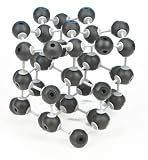
- DIAMOND STRUCTURE MODEL || Build an accurate 3D representation of a diamond crystal lattice using interconnecting atoms and bonds.
- 39 ATOMS & 60 CONNECTORS || Includes black atoms and medium connectors to assemble the tetrahedral arrangement of carbon atoms.
- HANDS-ON LEARNING || Helps visualize molecular geometry, bonding, and crystal structures in chemistry and material science studies.
- DURABLE & REUSABLE COMPONENTS || Sturdy plastic materials ensure long-term use in classrooms, labs, and demonstrations.
- GREAT FOR STEM EDUCATION || Ideal for students, educators, and researchers to explore the fundamental structure of diamond.
Those filters define the scope of the training set. The count should not be read as coverage of every possible crystal, nor does a large pretraining corpus by itself establish performance on a particular new material or property.
Which properties and tasks were evaluated?
The paper reports evaluations in both molecular-crystal property prediction and crystal-structure prediction, including fine-tuning on small datasets. Named property tasks include:
Rank #4

- Visualize Molecular: The molecular model kit simplifies complex chemistry concepts into tangible 3D structures improve learning efficiency, suitable for students from Grade 7 to Graduate level.
- 444 Pcs Complete Set: The atom model kit includes with 136 atoms,158 bonds, and 150 fullerene model parts, explore most the molecules structures from simple compounds to complex polymers.
- Effortless Assembly: Embedded component design ensures easy to construct Ball-and-stick and Space-filling models that maximizes focus on exploration without complex assembly.
- Durable & Portable: Built to last, the chemistry set is crafted from high-quality materials. Plus, its portable Snap-Lock design allows you to take your experiments learning anywhere, between the home, classroom and lab.
- Essential Study Tool: Whether you're studying organic chemistry, biochemistry, or molecular biology, molecule building kit is an perfect learning tool for you deeper comprehension of molecular science.
- Lattice energy, relevant to the energetic stability of a crystal packing arrangement.
- Methane deliverable capacity and diffusivity, properties connected to porous materials and gas storage or transport.
- Bulk modulus, a measure related to resistance to compression and relevant to applications such as pharmaceutical tabletting.
- Charge mobility, relevant to organic electronic materials.
These are examples of evaluated tasks, not a universal scorecard. Results depend on the target, data and evaluation setup; the sources do not establish one headline accuracy, speedup or cost saving that applies across them. The study supports a claim about computational prediction in its reported settings, not a promise that MCRT will perform equally well for every crystal class, property or laboratory workflow.
Do these 3 things before closing this tab:
1Clear out junk files and repair common Windows errors2Fix the driver behind crashes, sound loss and screen glitches3Repair Windows errors before they cause bigger problemsWhat can chemists reasonably conclude?
MCRT’s most useful idea is transfer learning: first learn structural representations from a filtered collection of experimental crystals, then adapt those representations to a more specific prediction task. The reported small-dataset fine-tuning results are relevant to tasks where labeled examples are limited, but do not mean that any small dataset will be sufficient or that a model output can replace independent validation.
Best Value
![[239 PCS] Organic Chemistry Model Kit | Molecular Model Kit for Students](https://m.media-amazon.com/images/I/511A7UN+wEL._SL160_.jpg)
- 𝐇𝐀𝐍𝐃𝐒-𝐎𝐍 𝐂𝐇𝐄𝐌𝐈𝐒𝐓𝐑𝐘 𝐋𝐄𝐀𝐑𝐍𝐈𝐍𝐆: Take chemistry beyond memorizing formulas with an interactive learning experience students can physically handle. Manipulating the pieces of this molecule kit gives learners a more engaging way to practice identifying atoms, connecting bonds, and studying molecular structures.
- 𝐓𝐔𝐑𝐍 𝟐𝐃 𝐃𝐈𝐀𝐆𝐑𝐀𝐌𝐒 𝐈𝐍𝐓𝐎 𝟑𝐃 𝐌𝐎𝐃𝐄𝐋𝐒: Make textbook structures easier to interpret by transforming flat molecular diagrams into physical 3D models. With the help of this chemistry modeling kit students can see the position of atoms and bonds from different angles, helping them better understand molecular shape and arrangement.
- 𝐁𝐔𝐈𝐋𝐃, 𝐄𝐗𝐏𝐋𝐎𝐑𝐄 & 𝐑𝐄𝐁𝐔𝐈𝐋𝐃: Encourage active discovery by letting students construct a structure, adjust its arrangement, and build it again for continued practice. The reusable pieces make it easy to explore different molecular configurations without needing a new model for every lesson.
- 𝐄𝐅𝐅𝐎𝐑𝐓𝐋𝐄𝐒𝐒 𝐀𝐒𝐒𝐄𝐌𝐁𝐋𝐘: Designed for smooth, straightforward model building, the pieces connect easily so students can spend less time figuring out how to assemble the kit and more time exploring chemistry. Simple construction also makes it convenient for repeated classroom or study use.
- 𝐆𝐈𝐕𝐄 𝐓𝐇𝐄 𝐆𝐈𝐅𝐓 𝐎𝐅 𝐃𝐈𝐒𝐂𝐎𝐕𝐄𝐑𝐘: Bring a creative twist to science gifting with this organic chemistry molecular model kit made for curious students, chemistry fans, and STEM enthusiasts. Whether for a birthday, classroom reward, holiday, or special occasion, it gives recipients something interesting to build, examine, and enjoy.
When judging a result or comparing it with another method, check that the comparison matches on the predicted property, whether the material is porous or non-porous, how much labeled fine-tuning data is available, and whether the task is property prediction or structure prediction. The cited sources do not support an overall ranking of MCRT against named alternatives across those different settings.
What “design in silico” does—and does not—mean
In this context, in silico design means using computation to predict and assess candidate crystal structures or properties. MCRT may help researchers decide which candidates merit further computational work or experimental investigation. The reported paper does not establish that the model autonomously designs crystals, guarantees a successful synthesis, or has produced experimentally confirmed materials from its predictions. Physical experiments and other computational methods remain important for checking whether a prediction is useful in practice.
Quick Recap
Product prices and availability are accurate as of the date/time indicated and are subject to change. Any price and availability information displayed on Amazon at the time of purchase will apply.
The Tool Desk
Outbyte Driver Updater FREEScan for outdated or missing drivers - takes under a minuteDriver Scan →Outbyte PC Repair FREEClear out junk files and repair common Windows errorsFree Scan →



