Photoredox chemistry offers a plausible laboratory route to simple sugar building blocks: ultraviolet light and cyanometallates can convert hydrogen cyanide (HCN) into glycolaldehyde and glyceraldehyde. That finding makes the chemistry relevant to proposed prebiotic reaction networks, but it does not establish that the reaction occurred on early Earth. Its historical plausibility depends on whether the ingredients, metal chemistry and suitable ultraviolet light could have coincided in a natural setting.
What the cyanometallate experiment demonstrated
In a 2012 paper, chemists Dougal Ritson and John D. Sutherland reported that ultraviolet irradiation of HCN in the presence of cyanometallates produced glycolaldehyde, a two-carbon sugar, and glyceraldehyde, a three-carbon sugar. These are simple building blocks, not the full sugars or molecular systems needed to establish a route to RNA. The study describes the laboratory chemistry.
As an Amazon Associate I earn from qualifying purchases.
The copper cyanide system is notable because copper cyanide complexes catalytically disproportionate HCN: the process generates sugar products and then sequesters them as simple derivatives. Sequestration is part of the reported chemistry; it should not be mistaken for proof that the products would have accumulated or survived in an early-Earth environment.
How this differs from the formose reaction
The classical formose reaction builds larger sugars by oligomerizing formaldehyde under alkaline conditions. Ritson and Sutherland describe two difficulties for a prebiotic version: it requires glycolaldehyde as an initiator, and base-catalyzed reactions can produce isomerization and a complex mixture rather than controlled glyceraldehyde production. Their HCN/cyanometallate proposal addresses the supply of simple sugar fragments through a different starting material and reaction system; it does not, by itself, resolve every challenge in prebiotic sugar chemistry.
#1 Best Overall

- Play the role of chemist with this huge, colorful, functional lab station!
- Create glowing slime, fizzing reactions, Oozing Bubbles, colorful chromatography, and more!
- With 57 pieces, This kit has everything you need to conduct experiments like a real scientist, including beakers, test tubes, flasks, pipettes, and more.
- Printed experiment cards clip onto the lab station for easy reference and additional experiments and scientific explanations are included in a separate 16-page, full-color manual.
- Includes non-hazardous chemicals; does not contain borax.
A separate UV route starts with formaldehyde
A 2005 study examined ultraviolet irradiation of neutral aqueous formaldehyde, not HCN with cyanometallates. It reported gas-phase carbon monoxide, methane, carbon dioxide and hydrogen, alongside liquid-phase glycolaldehyde and glyceraldehyde. The authors proposed that the aldehydes could initiate dark formose chemistry. The study’s abstract and publication details report maximum experimental yields of 4.2% glycolaldehyde and 0.18% glyceraldehyde.
Those percentages are yields from that formaldehyde-irradiation experiment. They are not estimates of early-Earth concentrations and are not yields for the HCN/cyanometallate reaction.
Rank #2

- A COMPLETE CHEMISTRY LAB FOR YOUNG SCIENTISTS – Perfectly crafted for budding scientists aged 4 and up, this kit provides everything needed to start exploring the exciting world of chemistry using common household items like baking soda and vinegar!
- 50 AWESOME HANDS-ON EXPERIMENTS – Dive into a world of discovery with 50 interactive experiments that spark curiosity and engage young minds in the wonders of science.
- EASY-TO-FOLLOW ILLUSTRATED INSTRUCTIONS – Each experiment comes with clear, step-by-step instructions that are fully illustrated, making it easy for young scientists to follow along and achieve successful results on their own.
- INCLUDES 20+ KID-FRIENDLY LAB TOOLS – Equipped with over 20 durable, child-safe lab tools, this kit ensures that kids have everything they need to conduct their experiments like real scientists!
- AMAZON EXCLUSIVE - Blue Marble has developed this product exclusively for Amazon.
What would make the chemistry plausible on early Earth?
A laboratory reaction establishes chemical possibility under its experimental conditions. A planetary-origin claim additionally needs a credible setting in which reactants and catalytic species were available, the right light reached them, and products were not overwhelmed by competing reactions or degradation.
Recommended Free Tools
Ultraviolet light is therefore not a generic checkbox. Its quantity and wavelength distribution at the surface would need to be assessed for a specific geochemical environment and compared with the requirements of the proposed reaction. A 2021 review calls for quantitative modeling of early-Earth surface UV conditions against newly identified photochemistry. The review discusses UV photochemistry in abiotic biomolecule synthesis.
Rank #3

- OVER 100 EXCITING EXPERIMENTS - The science experiments in this kit let kids explore the wonders of hands-on science experiments. They'll make bubbling, color-changing solutions, glowing test tubes, a colorful bouncy ball, glowing worms, and more!
- EVERYTHING KIDS NEED - This kit includes all materials needed to conduct 15 stunning chemistry experiments, including growing a crystal tree, changing the color of liquid with their breath, and more.
- 85 BONUS EXPERIMENTS - Because we know your kids will want to conduct even more science experiments once they get going, we include a bonus experiment guide with 85 additional experiments that can all be done with common household items.
- HANDS-ON STEM - Our science toys are known for being hands-on, and this kids activity kit is no different. Your kids will use real scientific tools, like test tubes, beakers and pipettes, as they explore the fascinating world of chemistry.
- AWARD-WINNING PRODUCTS - Blue Marble, winner of the Toy Association's prestigious Toy of the Year Award, proudly develops products that foster education, imagination, and creativity, with a U.S. support team to ensure a stellar experience!
There is no single settled early-Earth setting to assume. A 2026 review describes multiple proposed environments and ongoing debate about early-Earth redox conditions and origin-of-life scenarios. Its review of early-Earth redox chemistry reinforces why plausibility must be evaluated against a specified environment, rather than asserted for the planet as a whole. More broadly, a 2016 review treats sunlight-driven prebiotic chemistry as dependent on the environment and the molecules involved. The review examines sunlight as an energetic driver.
What the result does—and does not—say about RNA
The 2012 result concerns formation of simple sugar fragments. It does not demonstrate that this pathway produced ribose, assembled nucleotides, or led to RNA or life. Those are additional chemical steps that require their own evidence. The careful conclusion is that cyanometallate photoredox chemistry expands the set of laboratory-supported ideas for making prebiotic sugar building blocks; whether it operated at a meaningful scale on early Earth remains conditional on environmental compatibility.
Rank #4

- 150 EXCITING EXPERIMENTS FOR KIDS: DIY projects to get kids' minds humming, try one of these science experiments, which cover topics like earth, surface tension, chemistry, physics and more.
- EASY-TO-FOLLOW SCIENTIFIC MANUAL: Well-illustrated in a step-by-step format, which makes the experiments easy to follow. it is easy and fun to incorporate basic lessons when doing science experiments with your kids at home and in a hands-on way.
- ALMOST TOOLS & MATERIALS NEEDED INCLUDED: high-quality lab science tools and kids-friendly materials. kids can wear goggles to do experiments like real scientists. there are plenty of cool projects you can do with regular household items.
- FUN EXPERIMENTS TIME FOR LITTLE SCIENTIST: Nurture your kids' curiosity by introducing simple science experiments! Science experiments give children the opportunity to explore and learn in new ways.
- LEARNING & EDUCATIONAL SCIENCE GIFTS IDEAD: for Christmas, birthdays, summer-winter activities, school breaks, and weekend fun. The kids will get a good way to learn through play, and also parents will get some quality science time in with kids.
How to compare proposed prebiotic sugar routes
A useful comparison asks the same questions of each proposal rather than treating a successful reaction as a complete origin scenario:
- Carbon feedstock: Does the route begin with HCN, formaldehyde or another carbon source, and is that feedstock plausible in the proposed setting?
- Catalyst and environment: What metal complexes, minerals, pH or other conditions are required?
- Energy input: Does the chemistry need UV light, and if so, what wavelengths and intensity, or does it rely on another energy source?
- Products and selectivity: Which sugars form, in what mixture, and are products protected or sequestered?
- Competition and survival: Could side reactions or degradation outpace production?
- Planetary fit: Can the full set of conditions be supported for a specific early-Earth environment?
The studies discussed here help answer some laboratory-chemistry questions, but do not identify one winning planetary scenario.
Quick Recap
Best Value
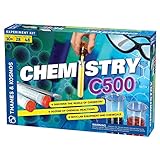
- An introductory tour of chemistry with 28 classic experiments
- Discover the colorful effects of acids and bases
- Make fizzy and foamy reactions and write messages with invisible ink
- Learn about reactions between solids, liquids, and gases
- The 48-page, full-color experiment manual gives simple instructions for setting up and performing each experiment, and then clear explanations of what happened and why
Product prices and availability are accurate as of the date/time indicated and are subject to change. Any price and availability information displayed on Amazon at the time of purchase will apply.




