Modern web applications rarely load everything at once. Buttons appear after API calls, menus animate into place, tables refresh asynchronously, and validation messages may take a moment to render. Without a reliable waiting strategy, Selenium tests can try to interact with elements before they are ready, causing flaky failures such as missing elements, stale references, and click interception errors.
Selenium waits help automation scripts synchronize with the browser by giving elements time to appear, become visible, or become clickable. Implicit waits provide a global timeout for element lookup, while explicit waits target specific conditions at specific points in a test flow. Understanding when to use each approach is essential for writing stable, maintainable UI tests.
As an Amazon Associate I earn from qualifying purchases.
This guide introduces implicit and explicit wait commands, shows practical usage patterns, compares their behavior, and highlights best practices for avoiding common timing-related mistakes in Selenium automation.
Why Waits Matter in Selenium Automation
Modern web applications rarely load in a single, predictable step. A page may render its basic HTML first, then fetch data through API calls, attach event handlers, animate menus, lazy-load images, or replace placeholder elements with final content. Selenium can execute commands faster than the browser finishes these tasks. When that happens, a test may try to click a button that is not yet clickable, read text that has not been inserted, or locate an element that does not exist in the DOM at that instant.
#1 Best Overall

- 12-ounce insulated stainless-steel tumbler with a completely leak-proof lid
- SmoothSip Slider spout offers an ultra-comfortable sip every time
- Slide-top spout design prevents splashes or spills
- Double-wall insulation keeps drinks hot for 6 hours and cold for up to 24 hours
- BPA and phthalate-free. Hand wash cup, dishwasher-safe lid—manufacturer’s limited lifetime warranty
Waits solve this timing gap by telling Selenium to pause command execution until a condition is satisfied or a timeout is reached. Instead of relying on fixed delays, well-designed waits synchronize the test with the actual state of the application. This makes automated tests more stable across different machines, browsers, network speeds, and test environments. A test that passes locally can still fail in CI if the application responds more slowly; waits help absorb those natural variations without hiding real defects.
Common timing problems waits help prevent
- NoSuchElementException: Selenium searches for an element before it is present in the DOM.
- ElementNotInteractableException: The element exists but is hidden, disabled, overlapped, or not ready for user interaction.
- StaleElementReferenceException: The page updates after Selenium stores an element reference, so the old reference is no longer valid.
- Click interception errors: A loader, modal, sticky header, or animation temporarily blocks the target element.
- Incorrect assertions: The test checks text, counts, or state before the UI has finished updating.
For example, consider a login test. After submitting credentials, the application may display a spinner while it authenticates the user and loads the dashboard. If the test immediately searches for the dashboard title, it may fail even though the application works correctly. A wait can pause until the dashboard heading is visible, the URL changes, or the spinner disappears. The test then validates behavior at the right moment rather than at an arbitrary time.
This is especially for applications built with frameworks such as React, Angular, Vue, or Next.js, where the initial DOM may not represent the final interactive screen. Components can mount, unmount, and re-render as data changes. Selenium does not automatically understand application-level readiness; it only follows browser automation commands. Wait commands provide the missing coordination layer between test execution and dynamic UI behavior.
Using waits correctly also improves test speed. A fixed sleep of ten seconds always waits ten seconds, even if the element appears after half a second. A proper wait continues as soon as the condition is met, making the test both more reliable and faster. Selenium offers two main wait strategies for this purpose: implicit waits for general element lookup tolerance and explicit waits for targeted conditions such as visibility, clickability, text presence, or URL changes.
Implicit Waits: How They Work and When to Use Them
An implicit wait tells Selenium WebDriver to keep polling the DOM for a limited amount of time when trying to find an element. If the element is available immediately, execution continues without delay. If it is not available yet, Selenium retries the lookup until the element appears or the configured timeout expires. This makes implicit waits useful for handling small, application-wide delays such as slower page rendering, minor network latency, or elements that appear shortly after navigation.
Implicit waits are configured once for a WebDriver session and then apply to element lookup calls such as findElement and findElements. For example, if an implicit wait is set to 10 seconds, Selenium may wait up to 10 seconds whenever it searches for an element. The wait does not mean every command pauses for 10 seconds; it only affects locating elements, and Selenium proceeds as soon as the element is found.
Basic implicit wait examples
In Java, an implicit wait is commonly set after creating the driver:
WebDriver driver = new ChromeDriver();

driver.manage().timeouts().implicitlyWait(Duration.ofSeconds(10));
Rank #2
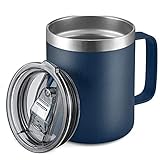
- Vacuum Insulated Coffee Mug: our coffee mug has a vacuum double walled insulation design that ensures beverage can stay either hot or cold over time, letting you enjoy hot or cold drinks
- Coffee Mug Cup with Lid: The transparent plastic lid with a rubber gasket, which is well tightness, it is easily swiped to open while keeping away from splashing
- Stainless Steel Coffee Mug: made of foodgrade 304 stainless steel, liner of coffee mug will not produce any taste and rustfree, and it is durable and not easy to break
- Comfortable Handle: 12 oz coffee mug is lightweight and easy to carry, the surface is matte powder coating, sweatfree, the coffee mug handle is long and wide, and it fits your fingers to grasp
- The stainless steel travel coffee mugs are stylish and affordable, suitable for various occasions, can be used at home, office, travel, camping and other scenes, and also on various holidays
driver.get("https://example.com");
WebElement loginButton = driver.findElement(By.id("login"));
In Python, the same idea is applied with implicitly_wait:
from selenium import webdriver
driver = webdriver.Chrome()
driver.implicitly_wait(10)
driver.get("https://example.com")
login_button = driver.find_element("id", "login")
In both examples, Selenium waits up to 10 seconds for the element with the ID login to exist in the DOM. If the element appears after 2 seconds, the script continues at that point. If it never appears, Selenium throws a NoSuchElementException after the timeout.
Free tools Windows power users keep installed
One-click scans. No signup required.
When to use implicit waits
Implicit waits are best suited for simple test suites where most delays are related to element presence rather than complex UI states. They work well when the application has generally predictable loading behavior and you want a baseline wait across the entire test run. For example, a small internal admin portal with standard page loads, basic forms, and minimal asynchronous behavior may benefit from a short implicit wait of 3 to 5 seconds.
- Use an implicit wait as a global safety net for simple element lookup delays.
- Keep the timeout short to avoid slowing down failures across the test suite.
- Use it when the main problem is that elements are not immediately present in the DOM.
- Avoid relying on it for elements that must become clickable, visible, selected, or updated with new text.
Implicit waits are less effective for modern applications with dynamic components, animations, overlays, and AJAX updates. An element may exist in the DOM but still be hidden, disabled, covered by a spinner, or not ready for interaction. In those cases, an implicit wait may pass too early because it only handles locating the element, not confirming that the element is usable. A button found in the DOM can still trigger an ElementClickInterceptedException or ElementNotInteractableException if the UI has not finished rendering.
A practical approach is to set a modest implicit wait, or skip it entirely in advanced frameworks that rely heavily on explicit waits. If you do use it, avoid combining a long implicit wait with many explicit waits, because the timings can stack and make failures take much longer than expected. Treat implicit waits as a broad default for basic presence checks, not as the main synchronization strategy for every interaction in a Selenium test.
Explicit Waits: Targeted Waiting with Expected Conditions
Explicit waits let a Selenium script pause for a specific condition on a specific element before continuing. Unlike an implicit wait, which applies broadly to element lookup, an explicit wait is tied to one action or verification point. This makes it the better choice for dynamic pages where elements may exist in the DOM but are not yet clickable, visible, enabled, updated, or ready after an AJAX request.
The Tool Desk
Outbyte Driver Updater FREEScan for outdated or missing drivers - takes under a minuteDriver Scan →Outbyte PC Repair FREERepair Windows errors before they cause bigger problemsFix Now →In Selenium, explicit waits are commonly implemented with WebDriverWait and Expected Conditions. The wait repeatedly checks the condition until it succeeds or the timeout is reached. For example, a login button may be present in the HTML immediately, but still disabled while client-side validation or API calls finish. Waiting only for presence could allow the script to move too early, while waiting for clickability matches the real action the test needs to perform.
Rank #3

- Leak-Proof Lid: Ensures no spills for on-the-go convenience
- Thermalock Double-Wall Insulation: Keeps drinks hot up to 6 hours or cold up to 12
- One-Handed Drinking: Convenient drinking without the need to remove or misplace lids or caps
- Perfect Fit: Designed to fit in most car cup holders and under most single-serve brewers
- Easy Cleanup: Features a top-rack dishwasher-safe lid and hand-washable body
Common expected conditions
- presenceOfElementLocated: waits until the element exists in the DOM, even if hidden.
- visibilityOfElementLocated: waits until the element is present and visible to the user.
- elementToBeClickable: waits until the element is visible and enabled for clicking.
- textToBePresentInElement: waits until expected text appears inside an element.
- invisibilityOfElementLocated: waits until a loader, spinner, modal, or blocking overlay disappears.
- alertIsPresent: waits until a browser alert is available for interaction.
A practical example is a search page that loads results after the user enters a term. The test should not click the first result immediately after submitting the search. Instead, it should wait until the results container is visible, then wait until at least one result item is present or until a known result title appears. This approach aligns the wait with the behavior the user expects, rather than relying on a fixed delay that may be too short on a slow network and unnecessarily long on a fast one.
Explicit waits are also useful for handling transitions and overlays. Many modern applications show loading spinners, toast notifications, slide-out panels, and modal dialogs. A stable test may first wait for the spinner to become invisible, then wait for the target button to be clickable. This two-step pattern avoids intercepted clicks, stale references, and timing failures caused by animations or temporary UI blockers.
Good uses for explicit waits
- Waiting for a button to become clickable before clicking it.
- Waiting for table rows to appear after filtering or pagination.
- Waiting for a success message after saving a form.
- Waiting for a modal dialog to open or close.
- Waiting for dynamic text, prices, statuses, or counters to update.
Keep explicit waits focused and readable. Use timeouts that reflect the application’s expected behavior, such as 5 to 15 seconds for typical UI updates, and reserve longer waits for known slow operations like report generation or file processing. Avoid replacing explicit waits with hard sleeps because fixed pauses slow down the entire suite and still fail when the application takes longer than expected. The strongest explicit waits describe the exact state needed for the next Selenium command to succeed.
Do these 3 things before closing this tab:
1Scan for outdated or missing drivers - takes under a minute2Repair Windows errors before they cause bigger problems3Fix the driver behind crashes, sound loss and screen glitchesImplicit vs Explicit Waits: Key Differences
Implicit and explicit waits both solve timing problems in Selenium, but they work at different scopes and are useful in different situations. An implicit wait is a global setting on the WebDriver instance. Once configured, Selenium applies it to element lookup calls such as findElement and findElements. An explicit wait is a targeted wait used for a specific condition, such as an element becoming clickable, visible, selected, or containing expected text.
The main difference is control. Implicit waits are broad and simple, making them convenient when most elements on a page need a small amount of time to appear. Explicit waits are more precise because they wait for a defined state before continuing. This makes them better for dynamic interfaces where an element may exist in the DOM but still not be ready for interaction, such as after an AJAX request, animation, modal transition, or client-side validation update.
| Aspect | Implicit Wait | Explicit Wait |
|---|---|---|
| Scope | Applies globally to element searches | Applies to a specific condition in a specific step |
| Common use | Waiting for elements to be present in the DOM | Waiting for visibility, clickability, text, selection, or custom conditions |
| Configuration | Set once for the driver session | Declared where the wait is needed |
| Precision | Less precise | More precise |
| Best suited for | Stable pages with minor load delays | Dynamic pages with asynchronous behavior |
| Risk | Can hide slow locators and increase test runtime | Can clutter tests if not wrapped in helper methods |
For example, an implicit wait may be enough when a login page loads a username field slightly after the page opens. Selenium will keep polling for the element until it appears or the timeout expires. However, after clicking the login button, an explicit wait is usually safer for the next page. The dashboard link may be present in the DOM before it is visible, or a success message may appear only after an API response. In those cases, waiting for visibility or element to be clickable gives the test a clearer synchronization point.
When to Use Each Wait Type
- Use implicit waits for a small, consistent default delay across simple element lookups.
- Use explicit waits when a test depends on a specific UI state, such as a button becoming enabled or a spinner disappearing.
- Prefer explicit waits for modern web applications built with React, Angular, Vue, or other JavaScript-heavy frameworks.
- Avoid relying only on implicit waits when elements are present but not interactable, because presence does not mean readiness.
Be careful when combining implicit and explicit waits in the same test suite. Because implicit waits affect every element lookup, they can extend the polling time inside explicit waits and make failures take longer than expected. A common approach is to keep the implicit wait very low, or avoid it entirely, and standardize explicit waits through reusable helper methods. This keeps test behavior predictable and makes timeout failures easier to diagnose.
Quick wins for a faster PC:
Scan for outdated or missing drivers - takes under a minuteDriver Scan →Clear out junk files and repair common Windows errorsFree Scan →Best Practices for Using Selenium Waits
Reliable Selenium tests usually come from waiting for the right browser state, not from waiting for a fixed number of seconds. Modern web apps update the DOM after AJAX calls, lazy-load content, animate menus, render components client-side, and enable controls only after validation. A good waiting strategy should match these behaviors closely: wait for an element to exist when you need to locate it, wait for visibility when the user must see it, wait for clickability before clicking, and wait for text or state changes after an action.
Rank #4

- The Rambler 20 oz. is made from durable stainless steel with double-wall vacuum insulation to protect your hot or cold beverage at all costs
- These Ramblers come standard with the YETI MagSlider Lid, the only drink lid that uses the power of magnets to keep your water, beer, or favorite drink on lock
- While the MagSlider Lid adds a barrier of protection for keeping drinks contained and preventing heat or cold from escaping, Please Note – The MagSlider Lid is not leakproof and will not prevent spills
- YETI Ramblers are BPA-free, dishwasher safe, and have a No Sweat Design to make sure your hands stay dry. The tough Duracoat coating on the colored tumblers won’t crack, peel or fade
- The YETI 20 oz Rambler Tumbler stands 6 7/8 in high and has a lip diameter of 3 1/2 in. All YETI 20 oz. Tumblers are sized to fit in standard sized cup holders
Prefer explicit waits for dynamic interactions
Use explicit waits around elements that change as a result of user actions or network activity. For example, after clicking a “Search” button, wait until the results container is visible or until a loading spinner disappears. After submitting a form, wait until a success message contains the expected text. This keeps the test aligned with the application flow and avoids unnecessary delays when the page responds quickly.
- Wait for visibility before reading text, checking layout, or asserting that the user can see content.
- Wait for clickability before clicking buttons, links, dropdowns, or menu items that may be disabled or covered by overlays.
- Wait for presence only when visibility is not required, such as checking that a hidden input exists in the DOM.
- Wait for invisibility when dealing with loaders, toast messages, modal backdrops, or blocking overlays.
- Wait for URL or title changes after navigation, redirects, login flows, or route changes in single-page applications.
Keep implicit waits short and consistent
If you use an implicit wait, set it once during WebDriver setup and keep it modest, such as 2 to 5 seconds. It applies to element lookup calls across the session, so large values can make failures slow and harder to diagnose. Avoid changing the implicit wait repeatedly inside tests, because it can create unpredictable timing behavior and make test results harder to compare across environments.
Avoid mixing long implicit waits with explicit waits
Combining a long implicit wait with explicit waits can make timeouts last longer than expected. Each explicit wait poll may trigger an element lookup, and that lookup can be affected by the implicit wait. For cleaner timing, many teams either use a very short implicit wait with explicit waits for dynamic areas, or disable implicit waits entirely and rely on explicit waits through shared helper methods.
Windows Errors? Fix Them Before They Spread
Repair common Windows errors and clear accumulated junk for a smoother, more stable PC - no reinstall needed.Free scan · no reinstallOutdated Drivers Are Slowing You Down
One free scan finds every outdated or missing driver and matches the right update for your exact hardware.Free scan · exact hardware match| Practice | Good Use | Avoid |
|---|---|---|
| Explicit wait | Waiting for a button to become clickable after a spinner closes | Using the same generic wait for every action |
| Implicit wait | Small global buffer for basic element lookup timing | Setting it to 30 or 60 seconds across the whole suite |
| Fixed sleep | Rare temporary debugging or handling a known animation gap | Replacing proper conditions with hard-coded pauses |
Use reusable wait helpers
Create wrapper methods for common actions such as clicking, typing, selecting, and reading text. A method like clickWhenReady can wait for clickability, perform the click, and produce a clear failure message if the element never becomes usable. This reduces duplicated wait code and keeps tests readable. It also makes it easier to adjust timeout values, polling intervals, and exception handling in one place instead of editing dozens of test cases.
Use clear locators with waits. A precise CSS selector or XPath makes waiting faster and failures easier to understand. If a locator matches mulle elements, the wait may pass for the wrong item or fail intermittently when the DOM order changes. Prefer stable attributes such as test IDs, accessible names, unique labels, or predictable component identifiers over brittle selectors based on long DOM paths.
Set timeout values according to the behavior being tested. A dropdown animation may need only a few seconds, while a report export or payment confirmation may need longer. Keep the default explicit wait reasonable, then override it only for genuinely slow operations. When a wait fails, include the locator, expected condition, and timeout in the error message so the failure points directly to the missing state rather than producing a vague timeout exception.
Independent reader supportYour contribution helps us test, update, and keep practical guides available for everyone.Common Wait-Related Errors and How to Fix Them
Even with implicit and explicit waits in place, Selenium tests can still fail when the wait strategy does not match how the page behaves. Most wait-related failures come from checking for an element too early, holding a stale reference after the DOM changes, or waiting for the wrong condition. These issues are common on pages built with React, Angular, Vue, or any application that updates content asynchronously after navigation, filtering, scrolling, or form submission.
What’s actually slowing this PC down?
Pick the symptom - the matching free tool is one click away.
NoSuchElementException
NoSuchElementException usually means Selenium tried to locate an element before it existed in the DOM, or the locator does not match the current page state. If the element appears after an AJAX request, animation, or delayed render, use an explicit wait for presence or visibility instead of immediately calling findElement. For example, wait until the element is present when you only need it in the DOM, and wait until it is visible when the test needs to read text or interact with it. Also verify that the locator is not too brittle; dynamic IDs, changing class names, and overly deep XPath expressions often break after small UI updates.
Best Value

- 20-ounce insulated stainless-steel tumbler with a completely leak-proof lid
- SmoothSip Slider spout offers an ultra-comfortable sip every time
- Slide-top spout design prevents splashes or spills
- Double-wall insulation keeps drinks hot for 6 hours and cold for up to 24 hours
- BPA and phthalate-free. Hand wash cup, dishwasher-safe lid—manufacturer’s limited lifetime warranty
TimeoutException
TimeoutException occurs when an explicit wait reaches its maximum duration without the expected condition becoming true. The fix is not always to increase the timeout. First, confirm that the expected condition matches the action: use elementToBeClickable before clicking, visibilityOfElementLocated before reading displayed text, and invisibilityOfElementLocated when waiting for loaders or overlays to disappear. If a spinner blocks the button, waiting for the button alone may still fail; wait for the spinner to be gone, then wait for the button to be clickable. If the condition is correct but the timeout is still too short for a real backend response, increase it selectively for that step rather than raising waits globally.
StaleElementReferenceException
StaleElementReferenceException means Selenium found an element, but the page replaced or refreshed that element before Selenium used it. This often happens after sorting a table, opening a modal, submitting a form, or updating a component. Avoid storing WebElement references for longer than necessary. Instead, locate the element again after the DOM update and wrap the interaction in an explicit wait. In list or table tests, wait for the old element to become stale, then locate the new row, cell, or button before continuing.
ElementClickInterceptedException
ElementClickInterceptedException appears when Selenium tries to click an element, but another element is covering it. Common blockers include cookie banners, fixed headers, loading overlays, tools, and modal backdrops. Fix it by waiting for the blocking element to disappear or closing it intentionally before clicking. Scrolling the target into view can help, but it should not replace a proper wait for clickability and overlay invisibility. If the application has transitions, wait for the final interactive state rather than relying on a fixed sleep.
Recommended Free Tools
- Avoid mixing implicit and explicit waits heavily: an implicit wait can extend each locator lookup inside an explicit wait, making failures slower and harder to diagnose.
- Do not use Thread.sleep as a default fix: it pauses for the same duration every time, even when the page is ready sooner, and still fails when the page is slower than expected.
- Wait for behavior, not just existence: an element can be present but hidden, visible but disabled, or clickable but covered by an overlay.
- Keep timeouts local: use longer waits only for operations known to depend on slow APIs, file uploads, reports, or third-party services.
A reliable fix starts by identifying what the test actually needs before the next step: presence, visibility, clickability, text update, URL change, frame availability, alert presence, or disappearance of a loader. Once the condition matches the user-facing behavior, Selenium waits become predictable and reduce flaky failures without making the entire suite unnecessarily slow.
Frequently Asked Questions
Should I use implicit waits or explicit waits in Selenium tests?
Use explicit waits for most real-world test scenarios because they wait for a specific condition, such as an element becoming clickable or visible. Implicit waits can be useful as a small global fallback for simple element lookup delays, but they are less precise. For stable test suites, prefer explicit waits around dynamic elements and user actions.
Can I use implicit and explicit waits together in Selenium?
You can, but it is usually better to avoid mixing them heavily. When implicit and explicit waits are combined, Selenium may wait longer than expected because both wait mechanisms can affect element lookup timing. If you do use an implicit wait, keep it short and rely on explicit waits for specific conditions.
What is the best timeout value for Selenium waits?
There is no single timeout that works for every application, but 5 to 15 seconds is common for many web tests. Use shorter timeouts for fast UI updates and longer ones only for operations that genuinely take more time, such as file uploads or slow API-backed pages. Avoid setting very large global waits because they can hide performance problems and make failed tests slow.
How do I fix ElementNotInteractableException or ElementClickInterceptedException with waits?
Use an explicit wait for the correct interaction condition instead of only checking whether the element exists in the DOM. For example, wait until the element is visible, enabled, and clickable before clicking it. If another overlay, spinner, or modal is blocking the element, wait for that blocking element to disappear before performing the action.
Do Selenium waits replace Thread.sleep?
In most cases, yes. Selenium waits are better than Thread.sleep because they continue as soon as the required condition is met, while Thread.sleep always pauses for the full duration. Use Thread.sleep only for rare debugging or demonstration purposes, not as a normal synchronization strategy in automated tests.
Bottom Line
Selenium waits are essential for building stable tests against dynamic web pages where elements may load, change, or become clickable at different times. Use implicit waits sparingly for simple, global element lookup delays, and rely on explicit waits when you need precise control over specific conditions.
For the most reliable results, prefer clear explicit waits, avoid mixing wait strategies unnecessarily, and tune timeout values to match real application behavior. Review your flaky tests, identify where timing assumptions exist, and replace fixed sleeps with the right Selenium wait command.
Quick wins for a faster PC:
Clear out junk files and repair common Windows errorsFree Scan →Fix the driver behind crashes, sound loss and screen glitchesFind Drivers →Repair Windows errors before they cause bigger problemsFix Now →Quick Recap
Product prices and availability are accurate as of the date/time indicated and are subject to change. Any price and availability information displayed on Amazon at the time of purchase will apply.




