What’s actually slowing this PC down?
Pick the symptom - the matching free tool is one click away.
USB-C power-delivery reference designs are starting points for different engineering jobs—not interchangeable charger boards. These five designs cover port control, high-speed data and display, battery charging, bidirectional power flow, and conversion to a 24-V system rail. Compare the job, power-flow direction, battery range, and stated electrical limits before choosing one to evaluate.
How to compare USB-C PD reference designs
Start with the system problem rather than the headline wattage. A port controller with a data multiplexer, a battery charger, and a converter that produces a 24-V rail solve different problems, even if all connect to USB-C power delivery (PD).
As an Amazon Associate I earn from qualifying purchases.
- System job: Is the design managing a port, carrying high-speed data, charging a battery, supporting source mode, or generating another voltage?
- Power-flow role: Does it operate as a sink only, or can it also provide power to another device?
- Electrical envelope: Separate negotiated input voltage, output voltage and current, and total output power. A controller or converter capability does not automatically describe the complete system’s output.
- Battery scope: Check the supported cell-count range and whether a battery charger is included.
- Data-path scope: Identify any USB or DisplayPort multiplexing, switching, or signal conditioning.
- Implementation resources: Look for schematics, PCB layouts, bills of materials, test reports, configuration tools, and evaluation hardware.
The figures below are specifications for the named vendor designs, not general USB-C guarantees or results from an independent comparison. Check each linked vendor page and its design guide for the current revision, conditions, component status, and evaluation-board availability.
Reference designs for port control and data
TI TIDA-00714: control power roles and route data
Texas Instruments’ TIDA-00714 combines a USB Type-C and PD controller with power switching, protection, a high-speed data multiplexer, and a USB low-speed endpoint. TI describes source- or sink-power switching and over-voltage/current protection, and says the design can support power-profile development and alternate modes such as DisplayPort. The page includes a schematic and identifies the TPS65982-EVM as an associated evaluation board.
#1 Best Overall

- Versatile Charging Options: Includes 5 USB-C PD trigger board modules designed to convert fast-charging USB Type-C to 5V, 9V, 12V, or 20V output, ensuring flexible power delivery for a variety of devices.
- Reliable Performance: Equipped with PD/QC decoy functionality, these tools deliver stable and efficient power conversion, ideal for high-speed charging applications.
- Compact and durability Design: Crafted with a compact form factor and robust materials, these modules are easy to use and built to withstand frequent usage.
- Easy to Use: Features a user-friendly design for simple installation and quick setup, making it convenient for both professionals and hobbyists.
- Wide Compatibility: Suitable for powering a range of devices such as smartphones, laptops, and other USB-C-enabled electronics that support fast charging.
This design is relevant when the engineering challenge is coordinating a port’s power behavior with data-path selection. It is not simply a battery-charger example: the emphasis is port control and the circuitry around it.
TI TIDA-010248: add USB and DisplayPort signal conditioning
Texas Instruments’ TIDA-010248 targets industrial PCs and human-machine interfaces that combine USB-C PD with high-speed data and display connections. Its page specifies output from 5 V to 20 V at up to 3 A, or 60 W. It also lists redriver support for USB 3.2 at 10 Gbps, USB 3.2 x 2 at 20 Gbps, and DisplayPort 1.4 at 8.1 Gbps, plus a configurable dual-port controller and a 5–20-V, 5-A buck-boost converter.
Rank #2

- VERSATILE PD TESTER: Supports various fast charging protocols such as PD3.0/2.0 and BC1.2, providing a maximum power output of 100W. It includes like over-temperature and over-voltage protection.
- ADJUSTABLE VOLTAGE RANGE: Equipped with a convenient DIP switch, allowing voltage adjustment from 5V to 20V. This enables flexibility in testing different devices and their power delivery capabilities
- WIDE COMPATIBILITY: Compatible with PD3.0/2.0 and BC1.2 fast charging protocols, ensuring compatibility with a wide range of devices. Users can confidently test and verify the charging performance of various gadgets
- USB TYPE-C PD SUPPORT: Specifically designed with USB Type-C PD support, enabling seamless connection and automatic switching for both forward and reverse insertion. This ensures hassle-free testing for devices with various input voltages between 4V and 22V
- RELIABLE POWER DELIVERY: With its support for high-power outputs and protective like over-temperature and over-voltage protection, this PD tester provides a reliable and safe means of evaluating and analyzing the power delivery capabilities of different devices
Those are separate listed capabilities: the stated 60-W output does not mean the design delivers 5 A at every output voltage. The page also lists an evaluation module and design simulation resources. This is the more relevant example when a product needs PD alongside signal conditioning for USB and display lanes.
Reference designs for battery charging
TI TIDA-050047: charge a 2–4-cell battery
Texas Instruments’ TIDA-050047 combines USB-C PD with charging for a 2–4-cell battery. TI specifies charging up to 20 V at 5 A without external FETs. The design pairs a TPS25750 PD controller with a BQ25798 battery charger over I²C and provides a web-based configuration GUI.
Rank #3
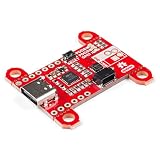
- Input and output voltage range of 5-20V. Output current up to 5A. Three configurable power delivery profiles
- Auto-run Type-C and USB PD sink controller. Certified USB Type-C rev 1.2 and USB PD rev 2.0 (TID #1000133)
- Integrated VBUS voltage monitoring. Integrated VBUS switch gate drivers (PMOS)
- Uses a standalone controller from STMicroelectronics, the STUSB4500 a USB power delivery controller that addresses sink devices. Note: Does not come with wires or Qwiic wires.
- The controller does all the heavy lifting of power negotiation and provides an easy way to configure over I2C.
TI describes source/sink or sink-only configurations and source-mode OTG support. The associated USB-PD-CHG-EVM-01 is identified for hands-on evaluation. The 20-V, 5-A figure is the reference design’s stated capability; it is not a guarantee for every battery pack or implementation.
TI PMP41013: bidirectional charging for 1–5 cells
Texas Instruments’ PMP41013 is an integrated USB-C PD and bidirectional charging design for one- to five-cell batteries. It uses the BQ25731 charger and TPS25750 PD controller, and TI describes both battery charging and on-the-go source mode. The page provides a schematic and other design resources.
Rank #4

- you will get 5PCS PD/QC Decoy Board Fast Charge USB Boost Module Type-c PD2.0 PD3.0 9V 12V 15V 20V Fast Charge Trigger Polling Detector Module
- Support a variety of fast charging protocols: PD3.0/2.0, PPS/QC4+, QC3.0/2.0, FCP, AFC
- The size of the decoy board: 23*11.5*4mm
- TYPE-C port power supply;Turn some traditional DC-powered devices into TYPE-C port power supply
Compared with the 2–4-cell TIDA-050047, PMP41013 covers a wider cell-count range. TI names power-tool chargers, vacuum cleaners, and portable power stations as application examples. Whether it fits a particular product still depends on battery chemistry, system architecture, thermal limits, and required power.
Recommended Free Tools
Other battery-charging designs: 4–10 cells and single cell
Two additional TI designs illustrate different battery scopes and power-flow requirements:
Best Value

- Fast Charging Protocols: PD2.0/PD3.0, QC2.0/QC3.0, and AFC
- Voltage: Support 5V 9V 12V 15V 20V fixed voltage output(voltage step is not supported)
- Type-C QC AFC PD2.0 PD3.0 to DC Spoof Scam Fast Charge Trigger Polling Detector USB-PD Notebook Power Supply Change Board Module
- Voltage Regulation: According to the table on the back of the module, adjust the dip switch to control the voltage output
- If the DIP switch is not adjusted according to the table, the module will output any one of the above voltages.
- PMP41083 is a 4–10-cell charging reference design. TI specifies up to 100 W and reports efficiency greater than 95.8% at full load in a test report dated 2024. These figures apply to that design and test report, not to battery chargers generally.
- PMP41062 describes 100-W bidirectional USB-C PD charging for 4–10-cell batteries. Its named application examples include power-tool chargers, vacuum cleaners, and portable power stations.
- PMP23456 is a smaller, single-cell, sink-only example. Its page specifies input contracts of either 5 V/3 A or 9 V/3 A, a system/battery output up to 4.8 V, and a 3-A total output-load design limit.
These examples should not be ranked by wattage alone: battery range and whether power must flow back out of the product can matter more than the largest stated number.
Independent reader supportYour contribution helps us test, update, and keep practical guides available for everyone.Reference design for a 24-V system rail
Analog Devices MAXREFDES1283: boost a negotiated PD input to 24 V
Analog Devices’ MAXREFDES1283 shows how a USB-C PD input can feed a downstream converter for equipment that needs a 24-V rail, such as audio, lighting, or sensor systems. The design negotiates a 15-V input from a capable USB-C PD source and uses a boost converter to produce 24 V DC at up to 1 A, with output power capability up to 30 W.
The source must support the requested PD contract, and the output is bounded by this design’s stated limits. Analog Devices provides a schematic, PCB layout, bill of materials, and test results on the reference-design page.
Quick wins for a faster PC:
Scan for outdated or missing drivers - takes under a minuteDriver Scan →Repair Windows errors before they cause bigger problemsFix Now →Choose by the design problem, not by the biggest number
For a port whose power roles and data routing need to work together, examine TIDA-00714. For an industrial interface with USB and DisplayPort lanes, examine TIDA-010248. For battery products, narrow the choices by cell count and source/sink behavior; for a system that needs 24 V, look at MAXREFDES1283’s PD-input-plus-boost-converter pattern.
Before basing a product implementation on any example, confirm the exact electrical limits and operating conditions in the vendor’s current design documentation. A reference design is an implementation starting point, not proof that its limits transfer unchanged to a different board, battery, thermal design, or USB-C source.
Quick Recap
Product prices and availability are accurate as of the date/time indicated and are subject to change. Any price and availability information displayed on Amazon at the time of purchase will apply.




