Do these 3 things before closing this tab:
1Repair Windows errors before they cause bigger problems2Fix the driver behind crashes, sound loss and screen glitches3Clear out junk files and repair common Windows errorsSticky Keys is an accessibility feature in Windows 11 that lets you use modifier keys like Shift, Ctrl, and Alt one at a time instead of holding them down together.
If you’re not using it, Sticky Keys can also be distracting because it may beep or show an indicator when modifier keys are pressed. The good news: you can turn it on or off in a few different ways.
This guide covers the standard Settings route, the Shift shortcut, legacy Control Panel options, and advanced approaches for managed devices.
What Sticky Keys Does in Windows 11
When Sticky Keys is enabled, pressing a modifier key once “locks” that modifier for the next key press. For example, you can press Ctrl and then press C to copy—without holding Ctrl.
The Tool Desk
Outbyte PC Repair FREERepair Windows errors before they cause bigger problemsFix Now →Outbyte Driver Updater FREEFix the driver behind crashes, sound loss and screen glitchesFind Drivers →Depending on your configuration, Windows may also show a status prompt and play a sound each time you press a modifier key.
As an Amazon Associate I earn from qualifying purchases.
Prerequisites and What to Expect
- You’ll need access to your Windows 11 user account (no admin required for standard Settings changes).
- Keyboard triggers can vary if you’re using a laptop keyboard, external keyboard, or accessibility hardware.
- On some work or school-managed PCs, your organization may restrict accessibility settings via policy.
Method 1: Turn Sticky Keys On/Off in Windows Settings
This is the most straightforward and the most commonly supported method on Windows 11.
- Open Settings (press Win + I).
- Go to Accessibility → Keyboard.
- Find Sticky Keys.
- Toggle Sticky Keys to On or Off.
If you turn it on, review the additional options on the same page (like behavior prompts) to match how you want it to work while typing and using keyboard shortcuts.
#1 Best Overall

- All-day Comfort: The design of this standard keyboard creates a comfortable typing experience thanks to the deep-profile keys and full-size standard layout with F-keys and number pad
- Easy to Set-up and Use: Set-up couldn't be easier, you simply plug in this corded keyboard via USB on your desktop or laptop and start using right away without any software installation
- Compatibility: This full-size keyboard is compatible with Windows 7, 8, 10 or later, plus it's a reliable and durable partner for your desk at home, or at work
- Spill-proof: This durable keyboard features a spill-resistant design (1), anti-fade keys and sturdy tilt legs with adjustable height, meaning this keyboard is built to last
- Plastic parts in K120 include 51% certified post-consumer recycled plastic*
Method 2: Use the Keyboard Shortcut (Shift key trigger)
Windows can prompt you to enable Sticky Keys when you press the Shift key multiple times.
- Press the Shift key five times (quickly).
- A prompt should appear asking whether you want to turn Sticky Keys on.
- Select Yes to turn it on, or No to keep it off.
If Sticky Keys is already on and you want it off, you can usually repeat the trigger and then choose to disable it, or you can use Method 1 for certainty.
Method 3: Turn Sticky Keys On/Off via Ease of Access / Control Panel
Windows 11 still includes legacy accessibility entry points. They may look slightly different from the newest Settings UI, but they’re useful if you prefer Control Panel-style options.
- Click the Start button (or press Win).
- Search for Control Panel and open it.
- Go to Ease of Access.
- Select Ease of Access Center.
- Choose Make the keyboard easier to use.
- Find Turn on Sticky Keys and set it to On or Off.
Some builds may redirect you back into modern Accessibility settings. If that happens, follow the on-screen link and use Method 1.
Method 4: Manage Sticky Keys with Command Line (PowerShell)
If you’re comfortable with scripting (or supporting multiple devices), PowerShell can apply accessibility-related registry settings quickly. This method is practical for admins, IT, and repair scenarios.
Rank #2

- Durable and Reliable: This USB keyboard features a curved space bar, spill-resistant design (2), durable keys that can withstand 10 million keystrokes, and sturdy, adjustable tilt legs
- Comfortable, Familiar Typing: You’ll enjoy a comfortable and familiar typing experience thanks to the deep-profile keys and standard layout with full-size F-keys and number pad
- Full-size Sculpted Mouse: The high-definition optical USB mouse puts comfort and control in your hands with smooth, accurate tracking and an ambidextrous shape that feels good hour after hour
- Simple Set-Up: Simply plug the keyboard and mouse into the USB ports on your desktop, laptop, or netbook and you're ready to work; compatible with Windows 7, 8, 10 or later
- Clear and Convenient: The bold, bright white and long-lasting characters make the keys on this PC or laptop keyboard easy to read and extra durable
Reality check: Windows doesn’t provide a clean, official single PowerShell cmdlet specifically named for Sticky Keys as a standalone feature. In most cases, the reliable approach is still to change the underlying registry value and then sign out/restart if Windows doesn’t pick it up immediately.
Use this as an advanced alternative, not a first-line consumer fix.
Quick registry-based toggle via PowerShell
Sticky Keys settings commonly live under the accessibility Control Panel / registry hive. The exact value can differ by Windows build, so you should verify before applying broadly.
Crashes, No Sound, or Screen Glitches?
Random freezes, missing sound and display glitches usually trace back to one bad driver. Find and replace yours safely.Free scan · under a minuteWindows Errors? Fix Them Before They Spread
Repair common Windows errors and clear accumulated junk for a smoother, more stable PC - no reinstall needed.Free scan · no reinstall- Right-click the Start button → choose Terminal (Admin) or Windows Terminal (Admin).
- Run a read to inspect current values. For example:
reg query "HKCU\Control Panel\Accessibility\StickyKeys"
- Locate the value typically named Flags (or a similarly named DWORD) and note its current data.
- Set the toggle value (example pattern):
reg add "HKCU\Control Panel\Accessibility\StickyKeys" /v Flags /t REG_SZ /d 506 /f
Important: That example uses a commonly seen Flags configuration (Windows uses bit flags). Your system may store a different format, so prefer verifying with reg query first.
Method 5: Use Registry (Advanced, for locked-down systems)
Registry editing is powerful, but it’s also the easiest way to break something if you don’t match your Windows build’s expected settings. Use this method when Settings/Control Panel are blocked by policy or you need to enforce a configuration.
Free tools Windows power users keep installed
One-click scans. No signup required.
Rank #3

- A plug-and-play USB connection with Low-profile keys give you a quiet, comfortable typing experience
- Simple Wired USB Connection,You will enjoy a comfortable and quiet typing experience
- The keyboard for business and office working is the budget-friendly keyboard that is built for longer use
- Low profile keys for a more comfortable and quiet keystroke, desktop-centric design, splash resistant
Where the setting usually lives
Sticky Keys is typically controlled by values under:
HKCU\Control Panel\Accessibility\StickyKeys
There may also be related accessibility keys for other modifier behaviors.
Safer workflow before changes
- Create a restore point: search Create a restore point → open it → click Create.
- Back up the registry key you’ll edit.
Then, in Registry Editor (press Win + R, type regedit, press Enter), navigate to the StickyKeys key and adjust the appropriate DWORD/value that controls activation.
After changes, restart the app you were using or sign out and back in if the UI doesn’t update immediately.
Managed devices: If your PC is joined to a domain and accessibility settings are enforced, the registry may revert or be overwritten by policy.
Rank #4

- 【Large Print Keyboard】- 4X larger than standard keyboard fonts, clear and easy to find, and can really help those who have trouble seeing keyboards. Perfect for elderly, the visually impaired, schools, special needs departments and libraries, etc
- 【White LED Backlight】- Bright and evenly distributed backlit keys, easy typing in lower light environment. Ideal for studio work, office. Backlit can choose to turn on/off and adjust brightness.
- 【Full Size & Ergonomics Design】- Unfold the feet at back of the keyboard to reduce hand fatigue and enjoy long hours of playing. Full QWERTY English (US) 104 key keyboard layout with numeric keypad, Large Print keys provides superior comfort without forcing you to relearn how to type.
- 【Plug and Play & Wide Compatibility】 - This USB keyboard takes away the hassle of power charging or swapping out batteries and is easy to setup. No drivers required.Compatible with Windows 2000/XP/7/8/10, Vista,Raspberry Pi 3/4, Mac OS(Note: Multimedia keys may not fully compatible with Mac, OS System).Works with your PC, laptop.
- 【Spill-proof】- This durable keyboard features a spill-resistant design. So you don't have to worry about spilling coffee and water. Enjoy Keys life of more than 5000W times.
Troubleshooting When Sticky Keys Won’t Turn On or Off
Sticky Keys failures usually come down to UI state not updating, hotkey triggers fighting your settings, or group policy restrictions.
1) Check whether it’s being triggered by repeated Shift presses
If Sticky Keys keeps turning itself on, you may be accidentally pressing Shift five times. Test by using the Settings toggle (Method 1) and then type normally to see if it persists.
2) Confirm you’re changing the correct profile
Accessibility settings are per user. If you changed settings in one Windows account but are typing in another, you’ll see different behavior. Verify you’re signed into the expected user.
Quick wins for a faster PC:
Repair Windows errors before they cause bigger problemsFix Now →Fix the driver behind crashes, sound loss and screen glitchesFind Drivers →Clear out junk files and repair common Windows errorsFree Scan →3) Look for policy limitations
On school/work PCs, admins can lock certain accessibility features. If the toggle in Settings won’t change (or reverts after a moment), policy may be enforcing it.
In that case, your options are to ask IT to update the policy, or try a local user account (if allowed) to confirm it’s policy-related.
Best Value
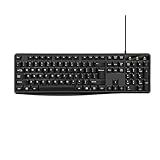
- Plug and play and Stable Connection:This wired keyboard mouse combo is plug and play, no needed install any drivers, wired connection can provide more stable signal input than wireless connection, more responsive typing, Wired connection can effectively avoid signal interruption during work or study, provides a good use experience;
- Ergonomic Design and 104 Keys Layout:full-sized wired keyboard is ergonomically designed,foldable stand make it more comfortable to type and can protect your wrist from injury. Anti-slip design on the bottom of the keyboard can prevent the keyboard from moving while typing, which is more stable to use.
- Ergonomically designed Mouse : Engineered with a high-precision optical sensor,the DPI is up to 1200dpi, this wired mouse delivers precise tracking on most smooth surfaces. Its instant-click buttons ensure lag-free responsiveness, while the ambidextrous design provides universal comfort, making it suitable for all users;
- Wide Compatibility:The wired keyboard and mouse combo is compatible with Windows 2000/ME/XP/Vista/7/8/10, Mac and other systems, suitable desktops, notebooks and PCs,more stable signal input, more responsive typing.
- Low-profile keys provide a quiet, comfortable typing experience, this wired keyboard and mouse combo is simple and effective. No fancy gadgets, By using the standard layout of a pc keyboard and mouse wired with precision focus, you will be able to work worry free.
4) Restart or sign out to force state refresh
Windows typically updates accessibility settings instantly, but some apps cache keyboard state. Sign out and back in, or restart the device if the behavior doesn’t match the toggle state.
5) Verify keyboard hardware isn’t sending abnormal modifier signals
If the problem only happens with a particular keyboard (Bluetooth, USB, KVM, or docking station), test another keyboard or connect it directly to the PC. Faulty Shift keys can make Sticky Keys appear “stuck.”
Recommended Free Tools
6) Reset other keyboard accessibility features that may be interacting
Filter Keys or Toggle Keys can change modifier behavior and notifications. Disabling competing features can clarify what’s actually causing the beeps or prompts.
Independent reader supportYour contribution helps us test, update, and keep practical guides available for everyone.Sticky Keys vs. Filter Keys vs. Toggle Keys
These three features often get confused because they all modify keyboard behavior and notifications.
| Feature | Main effect | Common symptom |
|---|---|---|
| Sticky Keys | Lets you press modifier keys one at a time | Modifier key prompts/beeps or “locked” Ctrl/Alt/Shift |
| Filter Keys | Ignores brief or repeated keystrokes | Keys feel less responsive or repeated presses don’t register |
| Toggle Keys | Audible feedback for Caps Lock, Num Lock, Scroll Lock | Beep when locking keys change |
Common Mistakes to Avoid
- Only using the Shift shortcut. If you accidentally enable Sticky Keys through the trigger prompt, use Settings to confirm the final state.
- Assuming it applies system-wide. Accessibility settings are typically per user profile (HKCU), not global for all accounts.
- Editing the wrong registry values. Sticky Keys uses bit flags; changing the wrong entry can make behavior unpredictable.
- Forgetting admin/policy controls. If toggles are grayed out or revert, don’t waste time tweaking registry locally—policy is the root cause.
FAQs
Why does Windows beep or show a prompt when I press Shift?
That’s typically Sticky Keys’ confirmation behavior or the Shift “pressed multiple times” trigger. Turn it off via Settings → Accessibility → Keyboard → Sticky Keys, then test by pressing Shift once.
How do I disable Sticky Keys if the toggle won’t change?
First, try a restart or sign out/in. If the setting reverts, the device may be managed by organization policy. You’ll likely need IT to change the policy or try another user account to confirm.
Does Sticky Keys affect keyboard shortcuts like Ctrl+C?
Yes, but in a helpful way. With Sticky Keys on, you can press Ctrl and then C without holding the modifier. It shouldn’t break shortcuts; it changes how modifier keys are interpreted.
Is there a way to turn Sticky Keys off temporarily without changing settings?
If you have a current modifier “latched” state, you can usually press the modifier key again to release it, but the exact behavior depends on the Sticky Keys options you enabled. For reliable control, use Settings.
Bottom Line
To turn Sticky Keys on or off in Windows 11, the simplest path is Settings → Accessibility → Keyboard → Sticky Keys. If it keeps toggling unexpectedly, check the Shift five-press trigger and test whether another keyboard or user account behaves differently.
When Settings is blocked or reverts, policy or registry enforcement is the likely cause—use the troubleshooting steps above before making advanced registry edits.
What’s actually slowing this PC down?
Pick the symptom - the matching free tool is one click away.
Quick Recap
Product prices and availability are accurate as of the date/time indicated and are subject to change. Any price and availability information displayed on Amazon at the time of purchase will apply.




