Short answer: Titanium dental implants for dogs are medically real, but there is no reliable public evidence that Navy SEAL dogs routinely receive titanium canine teeth—or that Cairo, the dog associated with the 2011 Abbottabad raid, had them.
The documented record points to something less cinematic and more practical: military veterinarians repair painful, broken teeth when doing so protects a working dog’s health and performance. A replacement implant can be clinically appropriate in some cases, but it is not a standard combat upgrade.
As an Amazon Associate I earn from qualifying purchases.
What the “titanium fangs” story actually claims
“Fangs” is a popular name for a dog’s four canine teeth. In veterinary dentistry, a titanium replacement would generally mean an implant anchored in the jawbone, sometimes supporting a prosthetic crown. It is not a removable metal cap casually fitted over a healthy tooth.
The Tool Desk
Outbyte PC Repair FREEClear out junk files and repair common Windows errorsFree Scan →Outbyte Driver Updater FREEScan for outdated or missing drivers - takes under a minuteDriver Scan →An implant requires surgery, imaging, anesthesia, healing and follow-up. It is also different from a root canal, which removes diseased pulp while preserving the natural tooth, and from a crown-like restoration placed over a treated tooth. A filling, restoration or reflected light can also look metallic in a photograph without being a titanium implant.
#1 Best Overall

- UPGRADED HEAVY DUTY ALLOY: Features a solid black metal D-ring, not plastic! This durable nylon dog collar handles pulls, providing a secure leash attachment for energetic small, medium, or large dogs
- SPOT YOUR PUP INSTANTLY: Highly reflective threads keep your furry friend visible during night walking. Easily locate them in a dark backyard with a flashlight, ensuring safety and your peace of mind
- NO MORE NECK CHAFING: Lined with soft, breathable neoprene padded material. It acts as a cushion to protect sensitive skin and prevent hair loss, making it a highly comfortable collar for all-day daily wear
- SECURE QUICK RELEASE CLASP: The sturdy snap buckle ensures a safe, locked fit that won't easily come undone during outdoor play. It allows for effortless taking on and off, saving you time and hassle
- VIBRANT COLORS ADJUSTABLE: Available in cute, pretty shades to match your pet's vibe. Fully adjustable for growing puppies. Please measure your dog's neck carefully before ordering to choose the perfect fit
The evidence at a glance
| Question | Best-supported answer |
|---|---|
| Are titanium dental implants in dogs real? | Yes. Veterinary institutions have documented their use. |
| Does the Navy routinely replace healthy canine teeth with titanium? | No reliable public evidence establishes such a policy. |
| Did Cairo have titanium teeth? | Unconfirmed; the claim appears in speculative reporting. |
| Has the Navy publicly documented advanced dental treatment for a working dog? | Yes: cleaning, two root canals and build-up fillings for Lyna at Camp Lemonnier. |
Where the Cairo claim came from
Public reporting after the May 2011 raid described a military dog associated with the SEAL operation, commonly identified as Cairo. Operational details were limited. A 2011 Vanity Fair account repeated the titanium-fangs idea as an update or claim, not as an official technical disclosure.
That distinction matters. A report can establish that a dog participated in an operation while leaving its dental configuration, equipment and precise task undisclosed. No official source cited here confirms that Cairo had titanium teeth, was fitted to attack body armor, or represented a general Navy practice.
Titanium implants are technically plausible
Titanium is widely used in medical implants because it can integrate with bone and tolerate demanding loads. An implant may help restore gripping function after a canine tooth is lost, but it does not automatically produce a stronger bite than a healthy natural tooth. Bite performance depends on jaw anatomy, muscles, tooth shape, body position, training and the object being bitten.
Recommended Free Tools
Rank #2
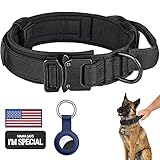
- 【Premium Material】Tactical dog collars is made of 1000D high-quality nylon fabric,very durable,wear-resisting. Soft and comfortable padded inner won’t hurt dog’s fur and can protect dog’s neck well.
- 【Double Security】Buckle training dog collar adopt integrated collar,magic sticker and quick release metal clasp dual design.Adjustable dog collar easy to put on and take off,the metal clasp can be released quickly in case of emergency.
- 【Control Handle】Military Training Nylon Dog Collar has special control handle,can efficiently control your dog when training, patrol,hiking, jogging, hunting, camping, working, running, jumping, traveling, camping.fits lots of medium and large dogs like German Shepherd, Border Collie, Rottweiler, Great Dane, Doberman, Golden Retriever, Husky, Labrador, Alaskan Malamute,etc.
- 【Airtags case and Patches】DAGANXI tactical dog collar comes with 1*Airtag protective case and 2*patches. Airtags Case Cover can protects your Airtags from scratches and damage, when Airtags used to track your dog, this enables your dog to find its way home. tactical dog collar comes with two patches, On the back of collar, you can also put a name tag, ID badge, or any Velcro accessory to make your dog unique.
- 【Warm prompt】Please follow the size chart to measure your dog's neck carefully before you place the order to ensure the collar is fit well to your dog.There should be left 2 fingers gap between the collar and the dogs neck.
Auburn University’s College of Veterinary Medicine describes a historical case in which Dr. Gary Beard placed titanium implants in a prison service dog with broken canine teeth in the 1970s. That account demonstrates that the procedure has veterinary precedent; it does not show that implants were routine for military dogs.
Implant trade-offs
- Potential benefits: restoring a grip after tooth loss, preserving service capability and eliminating problems associated with an untreated fracture.
- Costs and risks: surgery, anesthesia, healing time, infection, loosening, failure, specialist follow-up and possible loss of the prosthesis under heavy work.
- Clinical priority: a veterinarian must decide whether an implant offers a better outcome than saving the tooth or extracting it.
What military dental care looks like in public records
The clearest Navy example is not a titanium-fang program. On March 15, 2017, Navy and veterinary personnel treated the military working dog Lyna at Camp Lemonnier, Djibouti. The Navy’s account describes a focused oral examination, deep cleaning and scaling, two root canals and build-up fillings for broken teeth. Lyna reportedly returned to work the following day. See the Navy’s case report.
The treating personnel explained why this is operational medicine rather than cosmetic enhancement: fractured teeth can be painful, reduce a dog’s focus and drive, and weaken its bite. Preserving a natural tooth with a root canal and restoration can therefore be preferable to elective removal.
Rank #3
- Vet-recommended, premium flea and tick protection for dogs and puppies without the price tag
- Long-lasting flea and tick collar kills and repels fleas for 8 continuous months
- Seresto is the #1 veterinarian recommended flea and tick collar* *Elanco Animal Health, data on file
- Starts working after 24 hours to kill and repel fleas through contact so pests don't have to bite your dog to die
- Hassle-free, non-greasy, easy-to-use flea and tick protection
The main treatment paths
- Preventive care: oral examinations, cleaning and scaling, and training practices that limit unnecessary dental trauma.
- Root canal and restoration: infected or painful pulp is removed, allowing the natural canine to remain functional.
- Extraction: used when a tooth cannot be predictably saved or poses a continuing health risk.
- Implant or prosthetic replacement: considered after tooth loss when restoring function justifies the surgery and follow-up.
A detection dog may have little operational need for a replacement canine, while a patrol or apprehension dog may face different gripping demands. A dog can eat normally after losing a tooth yet still require a role-specific fitness assessment before returning to bite work.
Can titanium teeth bite through body armor?
There is no official evidence in the cited material that titanium teeth let a Navy dog pierce modern ballistic armor. “Body armor” can mean a padded bite suit, fabric or webbing, or rigid ballistic plates—materials with very different resistance.
A dog may grip or tear soft protective equipment without penetrating a ballistic plate. A prosthetic tooth might restore a damaged grip, but it can also loosen, fracture or injure surrounding tissue. The cinematic idea of an “armor-piercing” canine is therefore an unsupported performance claim, not an established capability.
Rank #4
- Humane and Safe, Eliminate Bad Behavior Effectively: Bousnic Dog shock collar features 3 humane training modes with adjustable beep(1-8 levels), vibration(1-16 levels), safe shock(1-99 levels). It helps your unruly and hard-headed dogs learn to be a better part of your household.
- Extended 3300FT Range: Bousnic Dog Training Collar covers up to 3300Ft allowing your pet to roam farther. With dual-channel, It is perfect to train 2 dogs simultaneously outdoor at distances up to 3/4 mile.
- Fits for All Sizes of Dogs 5-120lbs: Bousnic training collar for dogs is ideal to control dogs as small as 5 pounds and as big as 120 pounds. Instant response security on/off switch button allows you to carry it without any fear of accidental touch.
- IP67 Waterproof Receiver: Bousnic electric dog collar can be used in any weather and any condition thanks to the IP67 waterproof design of the receiver (You’ll have to keep the remote control away from water).
- Incredible Battery Life: Bousnic e collar for dogs training has a decent battery life. The receiver’s battery can last for up to 15 days in working modes while the remote for over 1 month. the long battery runtime is a true lifesaver on those camping or tailgating weekends.
A secondary article at Treehugger repeats versions of the armor and implant-cost narrative. It should be read as popular commentary, not military documentation.
Independent reader supportYour contribution helps us test, update, and keep practical guides available for everyone.What military working dogs actually do
“Navy SEAL dog” is not synonymous with “military dog.” A dog assigned to or supporting Naval Special Warfare is part of a much broader Department of Defense working-dog system. The February 19, 2026 Department of Defense Inspector General report covers program health care, welfare, safety and operations, including security, explosive detection, drug detection, search and rescue, tracking and patrol.
Do these 3 things before closing this tab:
1Clear out junk files and repair common Windows errors2Fix the driver behind crashes, sound loss and screen glitches3Repair Windows errors before they cause bigger problemsMany military dogs are detection specialists and never perform apprehension work. Their value comes from scent capability, conditioning, task training and reliable handler communication—not from exotic dental hardware.
Best Value
- 【SOFT MATERIALS】Nylon fabric with high density webbing to add durability; Our collar is as smooth and soft as grosgrain,no irritation to pet skin.
- 【SAFETY REFLECTIVE】Highly reflective threads keep high visibility at night for safety. It will ensurethat your dog will be seen at night and in low light situations.
- 【CONVENIENT & DURABLE】Quick release premium ABS made buckles, easy to put it on/off. The plastic buckle is curved for your dog’s comfort. The metal D ring is chrome coated to add durability.
- 【CLASSIC COLLAR】This nylon dog collar is a classic yet stylish collar that comes in 12 colors and 6 sizes so you can find just the right one for your dog. A separate loop on the collar makes it easy to add dog tags and leashs onto the collar.
- 【ADJUSTABLE LENGTH】Non-slip adjustable loop can easily adjust the size, Please take measurement of your dog's neck circumference before order placed. XXS - 3/8"x(8-12"); XS - 5/8"x(8-12"); S - 5/8"x(10-14"); M - 3/4"x(12-18") ; L - 1.0"x(14-22"); XL - 1.0"x(16-26"). Ideal personalized dog collars for small medium large boys & girls.
The technology around the dog is broader than its teeth
Public military material describes a medical and equipment ecosystem designed to keep dogs healthy and mission-ready:
- Protective vests, harnesses and restraints selected for a specific task.
- Camera or communications systems in some operational contexts.
- Appropriate paw, eye, hearing or body protection.
- Advanced veterinary imaging. Navy radiology personnel have supported military-dog care with specialized imaging, as described in this Navy report.
- Dedicated veterinary facilities, including the Camp Lemonnier clinic described by the Navy.
- Canine tactical casualty-care training for service members, documented by Navy Medicine and in a later Cherry Point training account.
The history of U.S. military dog programs is documented by the Department of Defense. That history and current medical reporting emphasize organized training, welfare and readiness rather than a universal weapons-style modification.
How to evaluate a titanium-fang claim
- Check the source: prefer a dated Navy or DoD statement, a named veterinary specialist or a veterinary institution.
- Identify the procedure: implant, crown, root canal, filling and extraction are not interchangeable terms.
- Ask why it was done: was the tooth fractured, infected or missing, or is the story claiming elective modification of a healthy tooth?
- Separate scope: one prison, police or military dog does not establish a service-wide policy.
- Demand operational evidence: a medical record, official photograph or named witness is stronger than recycled internet wording.
- Separate restoration from enhancement: returning a dog to normal function is not proof of superior bite power.
Why the myth keeps spreading
The story combines several compelling but separate subjects: a secretive special-operation raid, a highly trained dog, real veterinary implants in some working animals, protective equipment and the image of metal teeth defeating armor. Repetition turns medical plausibility into apparent confirmation.
Secrecy also creates a vacuum. When mission details are classified or simply not released, plausible-sounding descriptions can be mistaken for facts. The correct boundary is straightforward: Cairo’s association with the raid is widely reported, while titanium teeth and armor-piercing ability remain unverified.
Quick Recap
Product prices and availability are accurate as of the date/time indicated and are subject to change. Any price and availability information displayed on Amazon at the time of purchase will apply.




