An AI agent’s proposed tool call is not permission to execute it. Put an independent authorization check immediately before the side effect: validate who is acting, which tool and resource are involved, what the normalized arguments will do, and whether policy or an action-bound approval permits it. If a required check fails, block the call.
What a pre-execution guard does
A pre-execution guard is an enforcement point outside the agent’s decision-making context. The agent can propose an API request, message, configuration change, deletion, payment, or other action; a separate execution component or downstream system decides whether that exact action is authorized before it proceeds.
As an Amazon Associate I earn from qualifying purchases.
This matters because an agent can ingest untrusted material and act through tools. OWASP identifies prompt injection, tool abuse, excessive autonomy, high-impact action abuse, and sensitive-data exposure as relevant risks in its AI Agent Security Cheat Sheet. NIST describes agent hijacking through malicious instructions embedded in data such as email, files, or websites, exploiting weak separation between trusted instructions and untrusted data in its January 2025 evaluation article.
What’s actually slowing this PC down?
Pick the symptom - the matching free tool is one click away.
A prompt may tell the model what it should do, but it is not an authorization boundary. OWASP’s LLM06:2025 Excessive Agency puts the principle plainly: “Enforce authorization in downstream systems rather than relying on an LLM to decide if an action is allowed or not.”
#1 Best Overall
How to place the enforcement point
Enforce the decision on every path that can cause a side effect. Depending on the architecture, that may be a tool-execution middleware, an API gateway or proxy, a downstream service, or a platform-native approval mechanism. These are implementation categories, not interchangeable guarantees: the right choice is the one that cannot be bypassed by the agent and covers every route to the protected action.
| Approach | What to verify |
|---|---|
| In-process middleware | Does every tool call pass through it, and can the agent or a plugin bypass or modify its decision? |
| API gateway or proxy | Does all relevant traffic traverse it, and can policy inspect identity, tool, target, and arguments? |
| Downstream service policy | Does the service independently authorize the specific operation and resource, even when called by an agent? |
| Platform-native approval | Is approval bound to the exact actor and action, and does the platform enforce it rather than merely display a dialog? |
OWASP’s AI Agent and MCP Security guideline describes policy-as-code and gateways or proxies that evaluate requests using identity, tool, and arguments. Open Policy Agent and Cedar are examples of policy tools named there; choosing one does not, by itself, ensure complete coverage or correct authorization.
Rank #2

- HARDWARE PLUS SECURITY SERVICES: FortiGate-60F Firewall Appliance bundled with 3 year of FortiCare Premium and FortiGuard Unified Threat Protection.
- UNIFIED THREAT PROTECTION (UTP): Secures against advanced online threats with comprehensive web filtering and anti-botnet technologies.
- OPTIMIZED FOR MEDIUM-SIZED BUSINESSES: Tailored for businesses needing robust security without the infrastructure of larger enterprises.
- RELIABLE CUSTOMER SUPPORT: FortiCare Premium ensures high-quality support and service continuity.
- EFFECTIVE PROTECTION: Employs advanced filtering technologies to safeguard against sophisticated threats.
Build a policy flow around the exact action
- Receive the proposal, not its permission. Treat the model’s tool call as a request. Do not let the agent’s own reasoning or a tool description stand in for an authorization decision.
- Normalize it into an action record. Capture the calling identity and delegated user, tool and function, target resource, arguments, session or task, and intended side effect. Normalize parameters consistently so policy and approval refer to the same action. This is an implementation pattern for binding checks to the actor, tool, target, and parameters.
- Apply deterministic policy. Deny unknown tools by default; permit only scoped operations; verify the user’s authority and resource scope; and classify impact and reversibility using policy rather than asking the model to decide whether an action is safe.
- Choose the required assurance. Let narrowly scoped, low-risk actions proceed when policy permits. For high-impact actions, pause for an independent approval that shows the exact command and arguments. Bind the approval to the action, make it short-lived, and consume it once.
- Execute only after all checks pass. A changed target or argument set requires a new decision. Block or hold the operation if policy is unavailable, approval is expired or already used, or required audit logging fails.
- Record the decision and outcome. Log the request, policy result, relevant approver, and downstream result somewhere the agent cannot rewrite. Do not put credentials or sensitive values in the log.
OWASP’s Agentic AI guidance calls for independent validation of scope, privilege, and approval state before execution. Binding an approval to a stable action record is a practical way to make that check meaningful rather than reusable for a different request.
PC Slower Than It Used to Be?
A free scan shows the junk files, broken settings and background clutter dragging Windows down - then fixes them in one click.Free scan · Windows 10 & 11Outdated Drivers Are Slowing You Down
One free scan finds every outdated or missing driver and matches the right update for your exact hardware.Free scan · exact hardware matchMatch approval to impact
Requiring a person to approve every harmless read can create approval fatigue. OWASP’s DevSecOps guidance recommends reducing unnecessary prompts with safe allowlists and sandboxing, while showing exact commands and arguments in approval prompts. Keep routine access narrow enough that low-risk operations can proceed under policy without turning warnings into a habit of clicking through.
Rank #3

- Built on a purposed-built secure processor, this compact network firewall delivers the highest level of security performance and energy efficiency in its class – 2.25 Gbps IPS throughput | 1.1 Gbps threat protection | 1.3 Gbps SSL Inspection throughput.
- User-friendly management console gives you centralized visibility and simplifies policy enforcement across your network. Its zero-touch deployment helps you optimize your onboarding experience.
- Compact and fanless design equipped with 5 GE RJ45 ports (1 WAN port and 4 internal ports).
- Fortinet is the most deployed and trusted firewall from businesses worldwide with 99.98% security effectiveness, surpassing competition. Fortinet is the only vendor recognized as a firewall leader 13 consecutive years by Gartner.
Use stronger checks for actions whose consequences are broad, difficult to reverse, externally visible, financial, administrative, or security-relevant. Examples include:
- Bulk deletion or broad writes
- Payments and other financial actions
- External messages or publication
- Privilege changes, production deployment, or changes to security configuration or infrastructure
OWASP Cornucopia specifically recommends explicit human approval for actions that modify security-relevant configuration, permissions, or infrastructure state, and says reversibility should be classified on the action rather than left to the model to infer at runtime. Approval is a step-up control, not a replacement for least privilege or downstream authorization: a person can approve the wrong action, and approval for one set of parameters must not authorize another.
Rank #4
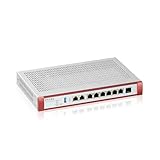
- GOLD SECURITY PACK INCLUDED (1 YEAR): Anti-malware, sandboxing, IPS 2,500 Mbps, web filtering, DNS/IP/URL reputation, app patrol, AI SecuPilot, full UTM active from day one for up to 100 users
- OFFLINE-CAPABLE SETUP AND UPDATES: Configure via Nebula portal wizard; update firmware offline via FTP on the local network, while the web interface remains fully accessible without internet after each update
- RACK-MOUNT FANLESS DESIGN: with SPI 6,500 Mbps firewall throughput, 2,500 Mbps IPS, 1,200 Mbps VPN, the firewall supports up to 100 users, 600,000 concurrent sessions, 100 IPSec tunnels, 50 SSL VPN users, and 32 VLANs
- MULTI-GIG FLEXIBLE PORTS: 6 x 1G plus 2 x 2.5G RJ-45 ports assignable as WAN or LAN, WAN load balancing, active-backup failover, 32 VLAN interfaces, Link Aggregation, and Device HA
- NEBULA MANAGEMENT AND VPN: Centralized policy control, threat monitoring, and SD-VPN orchestration; supporting IKEv2/IPSec, SSL, Tailscale VPN, 100 IPSec tunnels, 50 SSL VPN users, and up to 40 managed APs
Use least privilege and safe failure behavior
Reduce the consequences of a bad or manipulated proposal by limiting the agent’s tools, tool functions, resource scope, and downstream permissions to the task’s minimum needs. Where practical, separate read-only and write identities. A guard cannot make an overbroad credential safe if the credential remains usable through another path.
- Default-deny unknown operations: allow only explicitly scoped tools and actions.
- Fail closed on required checks: if policy lookup, risk classification, approval validation, or required logging fails, do not execute the risky action.
- Prevent approval replay: bind approval to actor and exact action, expire it, and consume it atomically.
- Keep evidence outside agent control: preserve decisions and outcomes without recording secrets.
- Constrain execution: use sandboxing and scoped credentials in addition to the authorization check.
Test the whole path, not just the policy rule
Check whether every tool and alternate execution route reaches the guard, whether the agent can alter or bypass policy, and whether rules can be versioned, reviewed, and centrally administered. Test both permitted and denied cases, including changed arguments after approval, repeated approvals, expired approvals, and unavailable policy or logging services. Verify that logs capture enough decision context to investigate an outcome without exposing secret values.
Best Value

- The WatchGuard Trade Up Program allows customers to exchange eligible older WatchGuard or competitive firewall models for the latest WatchGuard appliances at a reduced cost, making it easier and more affordable to upgrade to current-generation hardware with the newest performance capabilities and security features.
- Trade Up to Watchguard T145 Firebox with 1 Year Total Security Suite License (WGT145671) - The Firebox T145 delivers enterprise-grade protection for branch offices and retail sites. With a blend of 2.5Gb, 1Gb, and SFP/SFP+ ports, it supports high throughput, AI-driven malware protection, and DNS filtering for robust network defense.
- The Total Security Suite is WatchGuard’s most comprehensive security package, bundling every advanced service into one subscription. It delivers layered defense with AI-driven malware detection, DNS filtering, cloud sandboxing, and security correlation. Ideal for organizations that demand maximum protection and visibility across their network.
- The Total Security Suite equips your WatchGuard Firebox with the full set of advanced defenses. It adds AI powered malware detection, DNS filtering, cloud sandboxing, threat correlation, and automated response, all managed in WatchGuard Cloud. Ideal for organizations that need maximum protection, compliance ready reporting, and end to end visibility.
- Interfaces and deployment: 2.5Gb and 1Gb Ethernet with SFP or SFP+ fiber for clean aggregation and segmented backhaul at the edge.
NIST’s January 2025 article describes CAISI’s initial agent-hijacking evaluation work using AgentDojo, a benchmark with four simulated environments: Workspace, Travel, Slack, and Banking. NIST’s observations emphasize improving shared evaluation frameworks, adapting evaluations as systems change, using task-specific attack performance to inform risk analysis, and testing across multiple attempts for a more realistic assessment. Those observations support ongoing, adversarial evaluation; they are not a real-world compromise rate or proof that a particular guard works.
What the guard cannot guarantee
A pre-execution guard is one layer in the system. It cannot by itself establish that an action reflects the user’s intent, detect every prompt injection, undo an action executed outside its checkpoint, or neutralize excessive permissions. Handle external content as untrusted, constrain identities and execution environments, enforce permissions downstream, monitor activity, and test against changing attack patterns. The sources cited here describe risks and evaluation guidance, not a generalizable percentage for agent vulnerability or guard effectiveness.
Quick Recap
Product prices and availability are accurate as of the date/time indicated and are subject to change. Any price and availability information displayed on Amazon at the time of purchase will apply.




