The Tool Desk
Outbyte Driver Updater FREEFix the driver behind crashes, sound loss and screen glitchesFind Drivers →Outbyte PC Repair FREERepair Windows errors before they cause bigger problemsFix Now →Splinter Cell historically makes concealment itself the main puzzle. You read light and darkness, move deliberately, scout before committing, and try to keep an operation under control. Modern stealth is not one replacement formula: Hitman makes disguise and social access central, while Metal Gear Solid V is built around unusually broad improvisation. Later Splinter Cell entries also move toward faster traversal, marked takedowns, and active gadgets.
The useful comparison is therefore not “old stealth versus new stealth.” It is the stealth loop each game asks you to learn: how visibility works, what information your tools provide, how missions are structured, and whether combat is an emergency, a tool, or an equally supported way to play.
As an Amazon Associate I earn from qualifying purchases.
What makes classic Splinter Cell distinctive?
Ubisoft dates the original Tom Clancy’s Splinter Cell PC release to February 18, 2003, describing it as cinematic stealth action starring Sam Fisher. Its defining idea is that being seen is not an abstract status effect; it is a problem you manage through the environment. Light sources, shadows, cover, movement speed, and reconnaissance all matter before you make a move.
Recommended Free Tools
That creates a slower, more deliberate rhythm than games in which stealth is mostly a matter of crouching behind waist-high cover. A successful approach often consists of several small decisions: identify the route, understand where guards can look, alter the lighting if possible, move between safe positions, and leave yourself a recovery option. The tension comes from preserving control rather than simply reaching the next takedown prompt.
#1 Best Overall

- Incredible real movement and control - you can even shift Sam's weight when preparing him for a split jump between two walls
- Exciting new moves maximize Sam's lethal fighting skills -- spin out of the shadows and kill silently
- All-new moves and levels - fight in jungles, on rooftops, on top of(and under) a moving train
- Advanced AI makes it harder than ever to get past enemies - if you reveal yourself they'll get reinforcements and put on armor
- Weapons now have secondary functions that can be equipped on the fly - be amazed at the advantage you get from the red dot of the laser sight
The series is not mechanically identical from entry to entry. The original, Chaos Theory, Double Agent, and Blacklist each adjust movement, equipment, mission design, and the balance between lethal and non-lethal play. “Splinter Cell gameplay” therefore describes an evolving family of systems, with light-and-shadow stealth as its historical foundation rather than a rule that every entry implements in exactly the same way.
Visibility is an environmental system
Ubisoft Toronto’s account of the original game identifies dynamic lighting as a defining technology. Players can shoot out lights and use Sam’s night-vision goggles in the darkness that follows. That relationship between the world’s illumination and the player’s concealment is more concrete than a generic “stealth mode.” The level itself becomes part of the plan: a lamp can be a barrier, a target, or an opportunity.
This does not mean every Splinter Cell game uses one identical light meter or that darkness makes Sam universally invisible. It means the original design makes concealment legible. You can reason about why a position is safer, what must be disabled before crossing a room, and why moving through a bright area is risky. The player is learning a visual language rather than waiting for a simple binary hidden/seen indicator.
Free tools Windows power users keep installed
One-click scans. No signup required.
Reconnaissance comes before action
Classic Splinter Cell treats information as equipment. Night vision helps you read dark spaces, while observation and careful positioning reveal patrol routes and possible approaches. The ideal sequence is often reconnaissance, route selection, environmental manipulation, then movement. This is a different skill from reacting quickly after an alarm: you are trying to prevent a bad situation before it starts.
Movement is intentionally measured
Early missions reward controlled movement and patience. Crossing a room is not just a matter of holding a direction; the route, lighting, cover, and timing all affect whether you remain concealed. That deliberate pacing is why the games can feel more like infiltration simulations than action games, even when firearms and close-quarters moves are available.
Detection is a question of game-specific rules
It is tempting to summarize older stealth games as “one mistake and you fail” and modern games as “guards forget immediately.” The available evidence does not support that entry-by-entry claim. Alert escalation, search behavior, checkpoints, fail states, and how quickly a mission can be recovered differ across individual titles. Compare those rules in the specific game you plan to play rather than treating either era as a single system.
The reliable distinction is the role detection plays in the loop. In a light-and-shadow design, avoiding exposure is closely tied to the central puzzle of choosing a route and controlling visibility. In a disguise or sandbox design, detection may instead be managed through identity, movement between social spaces, improvised distractions, or a new plan after the situation changes.
Rank #2

- Includes three great Tom Clancy's Splinter Cell hits, including Splinter Cell, Splinter Cell: Pandora Tomorrow and Splinter Cell: Chaos Theory
- Try to unfold the conspiracy that's been digitally remastered in high definition for even more intense thrills and exciting graphics
- Jump into the role of Sam Fisher in all three games as you command an arsenal of weapons, gadgets and moves to protect the country
- Everything from gameplay to cinematic maps, menus and load screens has been visually enhanced to create stunning gameplay
- 3D stereoscope view creates visuals that pop out of the screen with 3D-enabled televisions
How Blacklist changes the Splinter Cell formula
Tom Clancy’s Splinter Cell: Blacklist shows why the series cannot be reduced to slow, stationary hiding. Ubisoft lists its release date as August 20, 2013, for PC, Xbox 360, PlayStation 3, and Wii U. The game adds faster traversal and a wider range of active options while retaining scouting, distraction, and stealth tools.
Faster traversal and more aggressive routes
Blacklist introduces Active Sprint, climbing and vaulting, and leaps over obstacles. These systems let Sam reposition quickly and flow through spaces that would demand a slower route in the earliest games. The result is a more mobile form of infiltration: stealth can involve momentum and route changes, not only waiting in darkness.
Marked multi-target actions
Blacklist also supports marking several enemies and executing a multi-target takedown. That creates a planning loop with a more immediate payoff: scout a group, decide which targets matter, mark them, and resolve the encounter in one controlled action. It is still preparation-driven, but the execution is faster and more overtly action-oriented than the patient room-by-room approach associated with the original.
Gadgets that scout, distract, and attack
Ubisoft highlights a snake cam and a tri-rotor drone among Blacklist’s equipment. The snake cam provides a way to inspect a space from a protected position. The drone can scout, mark or distract enemies, and can also attack. These tools expand the meaning of reconnaissance: the player can gather information and manipulate a room remotely rather than relying only on Sam’s physical viewpoint.
That does not erase the older stealth identity. It changes the tempo and the number of viable solutions. A player can still use darkness, cover, and non-lethal methods, but the game gives more ways to create an opening, cross a gap, or resolve several threats quickly.
Blacklist’s online status
Ubisoft currently warns that Blacklist’s online features are unsupported and that multiplayer and co-op are no longer functional. Any comparison that presents those modes as an available way to experience the game is out of date. The relevant gameplay comparison here is the single-player design and its expanded movement and gadget set.
How named modern stealth games use different information
“Modern stealth” covers multiple design philosophies. A useful contrast comes from two released games discussed by GamesRadar’s 2026 survey: Hitman 3 and Metal Gear Solid V. These are editorial characterizations of those games, not universal definitions of the genre.
Rank #3
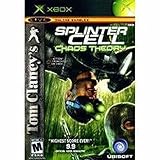
- To achieve your mission you'll kill from close-range with your combat knife, shoot with a high-tech rifle, and use radical suppression techniques like the inverted neck break
- Intelligent enemies making your mission more risky as you have to get much, much closer to them
- Completely replayable -- Totally open level design with multi-paths and optional secondary objectives
- Strive for ultimate stealth and rank yourself with the all new post-mission statistics and scoring system
- Extend the game with intense content you can download through Xbox Live
Hitman: concealment through identity and social access
Hitman 3 makes disguise and social stealth central. Agent 47 can remain in view while concealing his purpose by wearing an appropriate outfit and occupying spaces that fit that identity. The key question is not always “Can the guard see me?” It can be “Do I belong here, and what actions will expose that I do not?”
PC Slower Than It Used to Be?
A free scan shows the junk files, broken settings and background clutter dragging Windows down - then fixes them in one click.Free scan · Windows 10 & 11Outdated Drivers Are Slowing You Down
One free scan finds every outdated or missing driver and matches the right update for your exact hardware.Free scan · exact hardware matchThat produces a different information problem from shooting out a light. You study uniforms, restricted areas, routines, social roles, and opportunities around a target. Visibility still matters—being observed performing a suspicious action can compromise a plan—but ordinary visibility is not automatically failure when your identity appears legitimate.
The contrast should not be overstated. Hitman 3 is not a game in which visibility becomes irrelevant, and classic Splinter Cell is not devoid of disguise-like planning or contextual tools. Their dominant concealment questions are simply different: environmental darkness and controlled movement in one case, identity and social access in the other.
Metal Gear Solid V: improvisation and player-authored solutions
GamesRadar describes Metal Gear Solid V as supporting free-form player choice. That emphasis changes how a mission is read. Instead of searching for one intended infiltration route, you may combine equipment, terrain, timing, distractions, and recovery plans in ways the level does not prescribe in advance.
Improvisation does not mean the game lacks stealth rules. It means the player is given more latitude to decide how to solve a problem and how to respond when the first plan changes. The contrast with a more tightly staged infiltration is structural: freedom to author a solution replaces some of the pressure to follow a carefully sequenced route.
What’s actually slowing this PC down?
Pick the symptom - the matching free tool is one click away.
Splinter Cell and modern stealth compared by gameplay axis
| Gameplay axis | Splinter Cell emphasis | Named modern contrast | What you should not assume |
|---|---|---|---|
| Visibility and concealment | The original makes dynamic light and darkness central. Lights can be shot out, and night vision helps navigate the resulting darkness. | Hitman 3 often uses disguise and social access so the character can be visible while hiding his purpose. | Visibility is not irrelevant in Hitman, and every Splinter Cell entry does not use identical lighting rules. |
| Reconnaissance and tools | Blacklist’s snake cam and tri-rotor drone scout, mark, distract, and, for the drone, attack. | Metal Gear Solid V is characterized by broad, improvised player choice. | These examples come from different games; one gadget set does not describe the whole modern genre. |
| Movement and combat | Blacklist adds Active Sprint, climbing, vaulting, obstacle leaps, and marked multi-enemy takedowns. | Modern titles vary; some prioritize social positioning, others systemic experimentation. | “Modern” does not automatically mean faster or more combat-heavy. |
| Mission structure | Ubisoft says the planned remake will retain a linear structure while updating design and presentation. | Metal Gear Solid V is described as highly free-form. | This contrasts a stated remake goal with an editorial description of a released game; it is not a claim that every mission in either series is identical. |
| Detection and recovery | The central historical puzzle is preventing exposure through concealment and preparation. | Disguise systems and improvisational sandboxes provide different ways to manage a changed situation. | The available sources do not establish a complete, entry-by-entry comparison of alert escalation, search behavior, or fail states. |
Is stealth mandatory, or is combat an equal option?
The answer depends on the entry and the mission, but the design intent of early Splinter Cell is clear: stealth is not merely a cosmetic way to approach a shooting game. Ubisoft Toronto creative director Chris Auty described the original fantasy as “The idea that you’re not just going around shooting every enemy you face, leaving a ton of bodies around.” That statement frames restraint and infiltration as the point of the experience.
Blacklist broadens the action vocabulary without making the series a generic run-and-gun shooter. Active Sprint, rapid traversal, gadgets, and multi-target takedowns let skilled players act decisively, but those actions are still connected to scouting and control. Whether a given encounter permits a clean recovery after detection, forces a restart, or supports a loud alternative is a rule you must verify for that game and difficulty.
Rank #4

- Videogame Console Software XBox 360 Games
Modern stealth games can assign combat a different status. A social-stealth game may treat violence as one risky way to break a disguise-based plan. A sandbox may let you abandon the original route and improvise under pressure. The important comparison is not whether guns exist; they exist in all of these examples. It is whether the game treats combat as an emergency, a prepared tool, or a coequal playstyle.
Linear infiltration versus open-ended problem solving
Mission structure changes how every other mechanic feels. A linear mission can make lighting, patrol timing, and gadget placement legible because the designer controls the sequence of spaces and objectives. The player is solving a designed chain of infiltration problems, often with a strong sense of authored pacing.
An open or highly free-form mission shifts responsibility to the player. You decide which approach to test, what equipment to bring, and how to continue after an unexpected event. The satisfaction comes from producing a solution the systems allow, not necessarily from reproducing a route the designer appears to have intended.
Ubisoft’s announced direction for the Splinter Cell remake is notable here. The 2021 announcement said the project was planned to preserve a linear structure while modernizing presentation and design. That is a stated development goal, not evidence that a finished game has shipped with those mechanics.
What is known about the Splinter Cell remake?
Ubisoft announced the remake in 2021 and described it as being in its earliest stages. Ubisoft Toronto’s 2022 anniversary retrospective discussed planned work on artificial-intelligence engagement, lighting, animation, and audio, and reported that the team wanted the remake to support a no-kill playthrough. These are development aims and team statements, not a final feature list.
The current Ubisoft Toronto project page identifies the studio as lead developer and says the game is being rebuilt in the Snowdrop engine. It does not state a release date. Do not treat the linearity, no-kill goal, visual upgrades, or planned AI work as confirmed shipped features, and do not infer a launch window from the existence of the project page.
Quick wins for a faster PC:
Repair Windows errors before they cause bigger problemsFix Now →Fix the driver behind crashes, sound loss and screen glitchesFind Drivers →Auty summarized the team’s intention this way: “With this remake, we are building a solid base for the future of Splinter Cell.” The safest reading is that Ubisoft wants to preserve the series’ identity while making its presentation and systems meet contemporary expectations. Until Ubisoft publishes final details, the original and released entries remain the reliable basis for comparing gameplay.
Quick Recap
Which style is right for you?
Choose classic Splinter Cell if you want environmental stealth
- You enjoy reading light, shadow, cover, and patrol timing before moving.
- You prefer reconnaissance and route planning to improvising after an alarm.
- You want concealment to be a visible, physical property of the level.
Choose Blacklist if you want stealth with more momentum
- You want the Splinter Cell foundation with faster traversal, climbing, vaulting, and obstacle leaps.
- You like scouting with remote devices and resolving several threats through marked takedowns.
- You want more active gadgets without abandoning infiltration as the organizing idea.
Choose Hitman-style stealth if identity is the puzzle
- You enjoy studying uniforms, social roles, restricted spaces, and routines.
- You want to remain visible while managing whether your behavior and identity appear legitimate.
- You prefer layered opportunities around a target to a single dark route through a facility.
Choose Metal Gear Solid V-style stealth if improvisation matters most
- You want multiple viable approaches and the freedom to change plans mid-mission.
- You enjoy experimenting with systems rather than following one carefully staged route.
- You value player-authored solutions, including recovery from an imperfect opening.
A practical checklist for comparing any stealth game
- Ask what “hidden” means. Is concealment created by darkness, cover, disguise, distance, sound, or a combination?
- Identify the information tools. Look for night vision, cameras, drones, target marking, social cues, patrol views, or other ways to understand a room before acting.
- Test the movement model. Is the intended rhythm slow and positional, or can you sprint, climb, vault, and redirect quickly?
- Find out what detection changes. Check whether an alert triggers a search, a combat state, a checkpoint reload, or a chance to disguise yourself and continue. Do not assume based on the franchise name.
- Separate emergency combat from equal combat. A game may permit shooting without making loud play the intended or equally supported solution.
- Check mission structure. Linear stages emphasize authored sequences; free-form spaces emphasize experimentation and recovery.
- Verify current features. For older games, check whether advertised online or co-op modes still function. Ubisoft currently says Blacklist’s do not.
Product prices and availability are accurate as of the date/time indicated and are subject to change. Any price and availability information displayed on Amazon at the time of purchase will apply.




