If you need emotional support, start with a person you trust, a qualified mental-health professional, or therapist-supported self-help—not an AI companion chatbot as your main source of care. For urgent danger or thoughts of suicide or self-harm in the United States, contact live crisis support: call or text 988; call 911 or go to an emergency department if there is immediate danger. Outside the U.S., use local crisis and emergency services.
What counts as a safer alternative?
The best alternative depends on what you need right now. A trusted person may help you feel less alone; a clinician can assess your situation and discuss care; a guided workbook can give you a structured exercise; and crisis services are for urgent safety needs. These options do different jobs. None is the right choice for every person or every moment.
As an Amazon Associate I earn from qualifying purchases.
Emotional support can mean looking for another perspective, relationship advice, or ideas for improving mood and well-being. The American Psychological Association (APA) describes those as common reasons people seek support, but that does not mean a chatbot can safely provide care. A conversational system may sound warm and attentive without having human understanding, professional judgment, or a real relationship. The APA advises against relying on AI as your primary emotional support or as a crisis resource. APA health advisory APA guide to navigating AI-generated advice
Free tools Windows power users keep installed
One-click scans. No signup required.
Use the comparison below to choose a starting point. If several needs apply—for example, you want company but have also been struggling for weeks—you can combine options rather than expecting one to do everything.
#1 Best Overall
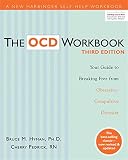
- Ocd: Your Guide to Breaking Free from Obsessive Compulsive Disorder
| Option | Best suited to | What it offers | Important limitation |
|---|---|---|---|
| A trusted friend, family member, or other safe person | Wanting to be heard, feel connected, or get help reaching care | Reciprocal human contact and personal knowledge of you | Not a clinical assessment or a substitute for professional care |
| Licensed mental-health professional or locally equivalent qualified provider | Persistent, severe, complex, or hard-to-manage distress | Professional guidance and help considering suitable care | Availability, format, cost, and fit vary by location and individual circumstances |
| Guided self-help | Practicing structured skills with support | A CBT-based workbook or course accompanied by a therapist | Not the same as a clinician assessing your needs; availability depends on area and need |
| Self-guided CBT exercise or workbook | Trying a structured reflection exercise or learning a skill | A private, self-paced way to organize thoughts | No human relationship or professional assessment; not treatment for every person |
| Crisis line, emergency service, or crisis response | Immediate safety concerns or urgent risk | Live support and routes to urgent help | For crisis needs, not a routine substitute for ongoing care |
The distinctions in this table reflect guidance from the National Institute of Mental Health (NIMH), the NHS, and the Substance Abuse and Mental Health Services Administration (SAMHSA).
Why not use an AI companion as your main support?
AI can mirror the words and tone a person uses, which may create a feeling of being understood. That can be compelling when you are lonely, distressed, or unsure whom to approach. But convincing language is not proof of insight, a genuine relationship, or clinical competence.
The APA warns that a chatbot may state inaccurate information confidently, reinforce a user’s assumptions, or validate thoughts that are distorted or harmful. It may also retain or share sensitive information. AI is not an accurate way to diagnose mental-health conditions, and the APA says it is not a safe or effective replacement for care from a licensed mental-health professional. Read the APA guide for its advice on evaluating AI-generated guidance.
Do these 3 things before closing this tab:
1Clear out junk files and repair common Windows errors2Scan for outdated or missing drivers - takes under a minute3Repair Windows errors before they cause bigger problemsThe APA’s November 2025 health advisory addresses general-purpose generative AI chatbots and wellness apps used for mental-health purposes even though they were not designed to provide treatment. Stigma and limited access to affordable care can make these tools appealing. The advisory nevertheless identifies important capabilities current systems lack, including understanding a person’s history, assessing risk, and cultural competence. It says such tools should not replace a qualified provider; at most, a technology may be carefully considered as an adjunct within an ongoing therapeutic relationship. Read the APA health advisory.
This is not a claim that every chatbot harms every user. It is a practical limit on what a fluent conversation can establish: the system cannot reliably provide the human relationship, individualized assessment, and professional care that significant distress may require. If you have already used a chatbot, you do not need to judge yourself for doing so. You can treat it as a prompt to seek support elsewhere rather than as the authority on what you should do.
Start with a trusted person when connection is what you need
A friend, family member, spiritual adviser, or another person you trust may be a useful first contact when you want to talk or need help taking the next step. NIMH includes trusted people and mental-health professionals among possible connections when supporting someone who may be thinking about suicide. Choose someone you feel safe with; family or social relationships are not safe or available for everyone. NIMH’s five action steps also discuss connecting a person with support and following up.
Make the request specific
If you are unsure how to begin, state what is happening and what kind of response would help. For example: “I’ve been having a hard time and don’t want to be alone with it. Could you listen for a while?” Or: “I’m trying to find professional support. Could you sit with me while I make a call?” These are examples, not a required script; use words that feel natural and disclose only what you want to share.
Ask for a useful kind of help
Some people want someone to listen; others want practical company or help locating care. It can help to say which you mean, rather than expecting the other person to guess. A trusted person can offer connection and help you reach a professional, but is not responsible for diagnosing or treating you. If they cannot help, try another safe person or a professional service rather than concluding that support is unavailable.
Consider professional care for ongoing or significant distress
If distress is persistent, severe, complex, or interfering with your ability to manage, a qualified provider can help you consider care in light of your needs and medical situation. NIMH says treatment planning should be guided by a professional and reflect the individual. There is no single therapy type that is right for everyone, and this article cannot determine what would suit you. NIMH’s psychotherapy overview explains psychotherapy as a treatment option and the importance of professional guidance.
Where you live affects what is available. The NHS describes talking-therapy options that can include cognitive behavioural therapy (CBT), counselling, and formats such as in-person sessions, video, phone, or online courses. Availability and suitability vary by area and need; the NHS service descriptions apply to the UK, not automatically to readers elsewhere. See the NHS overview of talking therapies. In other countries, look for a locally qualified or licensed mental-health professional and confirm that the service is appropriate for your circumstances.
Think about fit as well as format
When exploring care, the useful question is not simply whether a service is online or in person, but whether it can offer the kind of help you need and whether you can access it. Consider the provider’s qualifications in your location, the format you can use, and whether the approach feels suitable. A provider can help discuss options; a general-purpose chatbot cannot make that professional assessment. No particular therapy or service can be assumed to fit everyone.
Rank #2

- Used Book in Good Condition
Access barriers are real. The APA notes that stigma and limited access to affordable care can contribute to people turning to general-purpose chatbots and wellness apps. If finding care is difficult, a trusted person may be able to help you search or make contact, and guided self-help may be an option where offered. These alternatives do not make an AI companion an equivalent form of care; they are different routes to human or structured support.
Try guided self-help or a CBT exercise for structure
Guided self-help is more than being handed a worksheet. The NHS describes it as working through a CBT-based workbook or online course with support from a therapist. It may be offered for anxiety or depression depending on the person’s needs and local availability. That combination can provide structure while preserving a route to professional support. The NHS explains guided self-help and talking therapies.
Use the NHS thought record
The NHS publishes a free thought-record exercise. It asks you to write down a situation, your feelings, unhelpful thoughts, evidence for and against those thoughts, and a more balanced alternative. It is a way to examine a thought on paper, not a diagnosis or a guarantee that distress will resolve. Open the NHS thought record for the exercise and its instructions.
- Describe the situation. Note what happened in concrete terms, without trying to solve it in the same sentence.
- Record your feelings. Name what you felt in response to the situation. The exercise asks you to notice feelings rather than treating a thought as the only part of the experience.
- Write down the unhelpful thought. Capture the thought you want to examine as it occurred to you.
- Consider evidence on both sides. Note evidence for the thought and evidence against it. The aim is to look at the thought more fully, not to force a positive answer.
- Form a more balanced alternative. Use what you recorded to write a more balanced thought. If the exercise is confusing, distressing, or not enough for what you are facing, stop and seek support from a person or professional.
A self-guided exercise can offer privacy and a clear sequence, but it does not provide a clinician’s assessment or human connection. If you are dealing with serious or ongoing distress, a workbook should not become a reason to postpone professional support.
When a book may help
A workbook can be an optional way to learn or practice structured skills. The APA’s depression resources list Mind Over Mood, Second Edition: Change How You Feel by Changing the Way You Think as a self-help book offering CBT tools for anxiety and depression. Its presence on that resource page does not mean it is treatment for every reader or a substitute for care. The free NHS thought record is another starting point, and therapist-supported care may be more appropriate depending on your needs. See the APA’s adult depression resources.
Independent reader supportYour contribution helps us test, update, and keep practical guides available for everyone.Use crisis support for immediate safety concerns
Crisis support is a separate pathway from everyday emotional support or planned therapy. If you are in the United States and in immediate danger, or are thinking about harming yourself or someone else, seek live help now. The APA lists calling or texting 988, calling 911, or going to the nearest emergency department as routes depending on urgency. Do not rely on an AI chatbot to assess or manage immediate danger. APA’s guide gives these U.S. crisis directions.
- Call or text 988 in the United States for the 988 Suicide & Crisis Lifeline.
- Call 911 or go to an emergency department when the situation involves immediate danger and urgent emergency help is needed.
- If you are outside the United States, contact your local emergency number or crisis service. The U.S. numbers and routing above are not a worldwide service directory.
SAMHSA describes a crisis-care system through three parts: “Someone to Contact,” “Someone to Respond,” and “A Safe Place for Help.” This frames crisis care as more than a conversation with an automated tool. SAMHSA’s 988 FAQ says the Lifeline is reached by dialing 988 and that network centers adhere to suicide-risk assessment and imminent-risk intervention standards. SAMHSA crisis-care guidance SAMHSA 988 FAQ.
If you are supporting someone else who may be thinking about suicide, NIMH’s five action steps include connecting them with 988 and other community resources, reaching trusted people or a professional, and following up. Use the guidance for the U.S. context it describes, and seek local crisis or emergency support if you are elsewhere. Read NIMH’s five action steps.
Make a practical choice for your situation
Rather than looking for one replacement that behaves like a chatbot, match the support to the need. Ask yourself how urgent the situation is, whether you chiefly need human connection or professional guidance, how complex or persistent the distress feels, what is available where you live, and whether the option is clinician-led or self-guided. Those questions help distinguish a friend, a therapist, an exercise, and a crisis service without treating them as interchangeable.
- If you want company or someone to listen, contact a person you trust and feel safe with.
- If distress is ongoing, severe, or complicated, seek a qualified provider who can discuss options for your needs.
- If you want a structured reflection exercise, try the free NHS thought record or ask whether therapist-supported guided self-help is available in your area.
- If you may be in immediate danger, use live crisis or emergency support appropriate to your location.
You can also move from an AI conversation to a human one without treating the chatbot as the final authority. Take only the notes you choose to share, such as what has been troubling you or what kind of help you want. Avoid assuming that a chatbot’s confident interpretation is a diagnosis, and consider the APA’s warning that sensitive information may be retained or shared before entering personal details. Then contact a trusted person, provider, or crisis service according to the level of urgency.
Access, fit, and availability vary by person and location. A book or exercise can be useful learning or practice for some people; a trusted person can offer connection; and professional or crisis care serves needs that self-guided tools cannot assess. If the first option is unavailable or does not fit, that is a reason to try another appropriate route—not proof that you have to rely on an AI companion.
Quick Recap
Product prices and availability are accurate as of the date/time indicated and are subject to change. Any price and availability information displayed on Amazon at the time of purchase will apply.
The Tool Desk
Outbyte PC Repair FREERepair Windows errors before they cause bigger problemsFix Now →Outbyte Driver Updater FREEScan for outdated or missing drivers - takes under a minuteDriver Scan →



