Recommended Free Tools
Reliable Rust administration comes from treating the server as a layered system: define an identity and resource budget, separate startup and persistent configuration, expose only the ports you need, protect RCON, stage updates around Oxide, and rehearse restores before a wipe or failure. The procedures below follow Facepunch’s current documentation and its March 2026 plugin guidance.
Godlike.Host offers hosted Rust servers with its own game panel, SFTP access and free DDoS protection, if you would rather not host it yourself.
Design the server before installing it
Start with an operating plan rather than accepting every default. Decide whether this is a vanilla, Community-listed, or modded server; choose a region and host; and record the values you will use for the identity, map, seed, world size, player cap, hostname, and description. Facepunch notes that larger procedural worlds consume more disk space and memory, while higher player counts require more CPU capacity. These are capacity relationships, not guaranteed performance benchmarks, so leave headroom for entities, plugins, and players.
As an Amazon Associate I earn from qualifying purchases.
Quick wins for a faster PC:
Fix the driver behind crashes, sound loss and screen glitchesFind Drivers →Repair Windows errors before they cause bigger problemsFix Now →Choose an identity and isolation model
The server.identity value names the server’s data directory. A typical path is rust/server/server.identity/. Keeping each installation in its own identity lets one Rust installation run multiple independent servers with separate maps, saves, player data, configuration, and plugin data. Use descriptive identities such as survival_eu or testing_weekly; do not reuse an identity between production and test instances.
Decide what “private” means
A password in the server description is not a complete access-control system. Rust does not provide a built-in traditional whitelist. For a genuinely private environment, combine network controls with an unlisted or hidden configuration and tell players exactly how they should connect. Facepunch’s hidden-server guidance is intended for administrators who understand firewall rules, dedicated hosting, DDoS protection, and rapid IP changes: Creating a hidden, whitelisted server.
#1 Best Overall

- [Powerful PC] Mini Gaming PC equipped with Core i9-14900F, 24 Cores 32 Threads, 36M Cache, Max Turbo Frequency: 5.8GHz, Windows 11 pro (64 Bit). With GeForce RTX 50 Series GPUs. supporting ray tracing and AI cores. Delivering AI-acceleration in top creative apps. Whether you’re rendering complex 3D scenes, editing 4K video, AI Applications, Multitasking, video server or Gaming livestreaming with the best encoding and image quality, GeForce RTX GPUs give you the performance to create your best.
- [Storage Expansion] Mini computer is equipped with Dual-DDR5 RAM slots which can support up to 96G RAM(2*48G), 1 x M.2 2280 PCIE4.0 high-speed SSD, and support add 1 x 2.5-inch SATA HDD/SSD(not include) is enough to accommodate system files and massive games, Equipped with high-capacity memory, this machine powers through demanding AI applications — from generating stunning images to rendering smooth AI videos. More memory means faster responses, seamless multitasking.
- [8K@60Hz Four-Display] Mini PC equipped with GeForce RTX5060Ti 16GB GDDR7 discrete graphics card, supporting ray tracing and AI cores. easy connect 4 monitors, 1×HDMI 2.1b and 3×DisplayPort 2.1b(All Support 8K@60Hz display), It can provide you with a first-class TV experience and realistic picture quality, for your visual home entertainment, streaming video, web browsing, work design and 3D games create a very smooth experience.
- [Functional Interfaces] Mini computer is equipped with 4 x USB 3.2, 4 x USB2.0, 1 x HDMI2.1 port, 3 x DP2.1 ports, 2xRJ-45 Gigabit Network Ethernet, 1 x Fiber Optic PORT, 1 x Audio in/out. Built-in Bluetooth 5.4 and IEEE 802.11be wifi 7, Higher transfer rates and lower latency. Mini PC supports multiple device connection and can be used with servers, monitoring equipment, office equipment, projectors, televisions, etc, Mini desktop computer support automatic power on and Wake On Lan.
- [Warranty & heat dissipation] Warrant: 2 year/24 months. The compact computer size: 8.6*6.6*4.5in, 5.5lb, Inside the chassis are four all-copper turbo fans and eight vacuum heat pipes for powerful cooling performance. Make it can work smoothly and will not cause too much noise.
Install with an explicit startup command
Facepunch’s Creating a server guide documents startup parameters for the dedicated executable. Keep essential identity, port, and access settings in the launch command so the process can be reproduced after a migration or crash. The exact executable path differs by operating system and install method; the following is a pattern, not a copy-and-paste production command:
RustDedicated -batchmode
 +server.identity "survival_eu"
 +server.port 28015
 +server.queryport 28017
 +rcon.port 28016
 +rcon.password "replace-with-a-long-unique-secret"
 +server.level "Procedural Map"
 +server.seed 123456
 +server.worldsize 3500
 +server.maxplayers 100
 +server.hostname "Example Rust Server"
Choose your own ports, seed, world size, and player cap. The values above illustrate the arrangement used in Facepunch’s documentation: game port 28015, RCON port 28016, and a separate query port. Never publish the example password.
Do these 3 things before closing this tab:
1Fix the driver behind crashes, sound loss and screen glitches2Clear out junk files and repair common Windows errors3Scan for outdated or missing drivers - takes under a minuteKeep persistent settings in server.cfg
Create rust/server/survival_eu/cfg/server.cfg for groups of settings that should survive restarts. This is where you can keep hostname text, gameplay convars, descriptions, rates, and other persistent options that do not need to be supplied by the process launcher. The Rust Wiki states that server.cfg is read at startup and takes priority over lower-priority automatic settings. Do not treat the generated ServerAuto.cfg as your primary configuration file; automatic tools may rewrite it.
Rank #2

- RYZEN 7 H 255 CPU - The Ryzen 7 H 255 is a chip from the Hawk Point family and is an upgraded version of the older Ryzen 7 8745H and has 8 cores (16 threads thanks to SMT support) that run at up to 4.9 GHz, together with the powerful Radeon 780M iGPU. Unlike Zen 3, Zen 4 offers AVX512 support along with other improvements such as larger caches/registers/buffers across the board.
- GAMING PC - The Radeon 780M (12 CUs / 768 shaders, up to 2,600 MHz) can drive multiple displays simultaneously with a resolution of up to 8K. Hardware encoding and hardware decoding of the most common video codecs (AV1, AVC, HEVC) is also no problem; playing the latest games on FSR settings without issues.
- WHY CHOOSE DDR5 5600MHz DUAL CHANNEL (2×16GB): With a 5600MHz clock—a 17% frequency uplift over 4800MHz—this kit delivers massive bandwidth gains that elevate real-world performance. Gamers enjoy higher minimum FPS and less stutter in open-world and sim titles for a smoother competitive experience. Video editors and 3D creators benefit from faster 4K/8K timeline scrubbing, quicker renders in DaVinci Resolve and Premiere, and swifter asset loading. For AI/LLM workloads, the superior throughput reduces I/O bottlenecks, cuts token generation latency, and accelerates model fine-tuning by keeping processing cores fed with data—so you wait less and create more.
- 32GB DDR5 RAM + 512GB SSD - The K12 mini computer is equipped with Dual 16GB (Total 32GB) SO-DIMM DDR5 5600MHz memory sticks. 512GB PCIE 4.0 SSD Drive with 3x M.2 2280 Expansion slots. Each slot capable of reading up to 8TB. (24TB MAX)
- QUAD SCREEN 4K DISPLAY SUPPORT - K12 Mini PC support 4-screen 4K/8K output via HDMI 2.1 (8K@60Hz), DisplayPort 1.4 (4K@60Hz), and USB Type-C Transfer speed (supporting PD3.0/DP1.4/DATA). Ideal for gaming, video editing, and multitasking, it provides expansive and crisp multi-display support.
Understand precedence when values conflict
OxideMod documents this order, from highest to lowest priority:
| Priority | Source | Administrative use |
|---|---|---|
| 1 | Command-line parameters | Identity, ports, RCON, and values that must be fixed before the server loads. |
| 2 | server.cfg |
Persistent groups of server settings managed as text. |
| 3 | ServerAuto.cfg |
Lower-priority automatic values; avoid editing it as your source of truth. |
If a setting appears to be ignored, search all three locations, remove duplicate definitions, restart, and confirm the effective value in the server console. This precedence is described in OxideMod’s Server Setup documentation.
Open only the ports the server needs
Facepunch’s example separates the game, query, and RCON ports. The game port and query port must be reachable and must not be the same port. The game and query ports use UDP; create matching firewall and router rules, and verify that your provider allows inbound traffic on those ports. RCON is a separate administration endpoint and must have a password; connect to it with remote-administration software rather than exposing your operating-system shell.
Windows Errors? Fix Them Before They Spread
Repair common Windows errors and clear accumulated junk for a smoother, more stable PC - no reinstall needed.Free scan · no reinstallOutdated Drivers Are Slowing You Down
One free scan finds every outdated or missing driver and matches the right update for your exact hardware.Free scan · exact hardware matchRank #3

- Office Gaming Mini PC - UPGRADED GMKtec Nucbox M5 Ultra Series is equipped with the powerful AMD Ryzen 7 7730U processor, 8 Cores/16 Threads, Base 2.00GHz (Power Saving Quiet Mode) with Turbo Boost up to 4.50GHz (Performance Mode) in BIOS settings, Based on the ZEN 3+ architecture, this small but powerful mini pc delivers satisfying results in productivity, office work, and gaming. 35% Performance increase over AMD Ryzen 5 7430U/ Ryzen 7 5700U, 5600U, 5560U, 5500U.
- 32GB DDR4 RAM & 1TB PCIe SSD - Installed with DDR4 32GB RAM Dual Channel (2x16GB), the Nucbox M5 Ultra mini pc support expansion to 64GB RAM. Featured with 1TB M.2 2280 PCIe 3.0 SSD, support dual slot expansion each can be up to 8TB SSD. (Upgrades not included)
- DUAL NIC LAN 2.5G RJ45 - Fast Network Speeds: Enjoy up to 2500Mbps data transmission speed without worrying about lagging. Ideal for working, gaming, and surfing the internet. Great for Untangle, Pfsense or as a server office PC.
- Mini Desktop Computer with 4K Triple Screen Display - Nucbox M5 Ultra integrates AMD Radeon Graphics 8 Cores 2000 MHz GPU to deliver powerful graphics processing power to easily handle the demands of complex design software, 4K@60Hz UHD video editing, and playback. It can connect to 3 display screens simultaneously.
- Fast Internet WiFi 6E + BT5.2 Connection - GMKtec Mini PC with WiFi-6E Wireless, have 2.5G/5G/6G triple band, more faster and lower latency. Bluetooth 5.2 allowing you more quickly to connect other wireless devices (headset, mouse, keyboard, etc.) Interface features 2*USB3.2 ports, 2*USB2.0 ports, 1*HDMI 2.0 port(4K@60Hz), 1*USB-C port(PD/DP/DATA), 1*DP Port, 1*Audio 3.5mm (HP&MIC), 1*DC Power Port.
Port checklist
- Game port: the port players use to join, such as 28015 in the example.
- Query port: a separate UDP port used for server discovery and status queries.
- RCON port: a dedicated remote-console port, such as 28016 in the example, protected by a secret password.
- Firewall scope: allow only the ports and source networks required by players, monitoring, and administrators.
Protect RCON as a credential
Use a long, unique random password that is not reused for hosting, email, or operating-system accounts. Store it in a secrets manager or restricted configuration file, not in a public repository, support ticket, or screenshot. Limit firewall exposure to administrator networks where practical. If the password is disclosed, change it immediately, restart the server, and review console logs for unexpected commands. Facepunch labels the password in its example as something administrators must change; treat that value as a placeholder, never a default.
Build an update process that does not erase Oxide
Rust updates can change the server protocol and break plugins. Facepunch specifically says Oxide must be updated after server updates and warns that running SteamCMD in a startup script can revert files to vanilla. An automatic restart loop that updates first can therefore bring the server back online without its mod framework or with incompatible plugins.
Stage every update
- Announce maintenance and stop accepting new players.
- Make a verified copy of the complete server identity folder, including saves, configuration, and plugin data.
- Record the current Rust build, Oxide/uMod build, plugin versions, and active convars.
- Update the Rust server files with SteamCMD or your host’s documented updater while the process is stopped.
- Install the Oxide/uMod build that matches the updated Rust server.
- Update plugins in a test identity first. Read each plugin’s release notes for API, permission, configuration, and data changes.
- Start the test instance, inspect startup logs, connect as an administrator, and exercise critical commands.
- Only then update production, restart, and watch logs before removing the maintenance notice.
Recover from a vanilla reset
If an update leaves the server running without Oxide, stop it rather than allowing players to create data in a partially modded state. Restore the backed-up Oxide files or install the matching framework again, then verify that the oxide (or equivalent framework) directories and plugin load messages are present. Disable plugins that throw errors until their authors publish compatible versions. Keep the pre-update backup until the new build has survived a normal play session and a restart.
Rank #4

- 【AMD Ryzen 3 5300U CPU: Outperforms N150 & 3500U】 BOSGAME E5 mini PC is powered by the TSMC 7nm FinFET architecture AMD Ryzen 3 5300U processor (4 Cores, 8 Threads, up to 3.8GHz boost, 6MB total cache). Compared to low-end Intel N150 or 3500U chips which only have 4 single threads and throttle under load, the 5300U delivers over 30% faster multi-core speed. Run 30+ browser tabs, large Excel sheets, and Zoom meetings simultaneously without system lag.
- 【8GB DDR4 RAM & 256GB NVMe SSD Storage】 Installed with high-speed 8GB DDR4 dual-channel memory and a fast 256GB M.2 2280 SSD, eliminating slow boot times and application loading delays. To accommodate growing data requirements, the upgradeable hardware design features dual SODIMM slots that allow you to expand memory up to 64GB RAM, ensuring smooth operation during heavy multitasking.
- 【High-Capacity Dual M.2 SSD Storage Expansion】 Never worry about running out of space for your business files. In addition to the pre-installed 256GB system drive, the motherboard houses an extra empty internal M.2 2280 NVMe PCIe 3.0 slot. This allows you to easily add a second solid-state drive for up to an additional 2TB of storage capacity (upgrades not included) without needing to remove or reinstall the original operating system.
- 【Radeon 6-Core Graphics & Triple 4K Displays】 Integrated with official AMD Radeon Graphics (6 Graphics Cores, 1500 MHz frequency) for casual gaming, photo editing, and crisp 4K media decoding. Featuring 1x HDMI 2.0 port, 1x DisplayPort, and 1x Full-Function Type-C port, the E5 outputs true 4K@60Hz resolution to three monitors at once. This multi-screen setup eliminates constant window-switching for traders, programmers, and office workers.
- 【Dual 2.5GbE LAN Ports for Advanced Networking】 Experience fast wired network transmission speeds up to 2500Mbps without lagging or buffering. The integration of dual 2.5 Gigabit Ethernet ports (powered by Realtek RTL8125 controller) makes this compact computer an exceptional hardware choice for tech enthusiasts. Easily configure it into software routers, hardware firewalls (pfSense, OpnSense), home NAS servers, or local homelabs.
Back up the identity folder and know what a wipe changes
The identity directory is the recovery boundary. Facepunch’s Getting started with your rust server guide identifies save, map, blueprint, player, and configuration data and notes that the server creates backups whenever it saves. Those automatic save-time copies are useful for rollback, but they are not independent disaster recovery: a disk failure, accidental deletion, or compromised host can remove both the live data and local copies.
What to copy
- Map and world save files.
- Player and blueprint data, according to the wipe policy you have announced.
cfg/server.cfg, launch scripts, and any other configuration files.- Oxide/uMod plugins, plugin configuration, permission data, and plugin-generated data.
- Administrative notes such as the current build, ports, RCON rotation date, and restore order.
Set a schedule based on risk
The official guide confirms that saves create backups but does not prescribe an external interval. Choose one based on your wipe cadence and the value of player progress: for example, retain several recent save-time copies, copy the identity folder to storage on a different machine, and take an additional snapshot before every update or forced wipe. Encrypt archives that contain player or administrative data, restrict access, and periodically perform a restore into a test identity. A backup you have never restored is an assumption, not a recovery plan.
Distinguish map, save, and blueprint wipes
A forced wipe can change protocol and map data, requiring you to replace or regenerate the relevant world files. A blueprint wipe is separate: preserve or remove blueprint data according to the announced policy rather than deleting the entire identity directory. Keep a dated archive before each wipe so you can answer exactly what was removed and restore the prior state if a maintenance action was incorrect.
Best Value
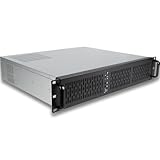
- [CPU] Intel Core Ultra 7 270K Plus Processor (24 Cores, 24 Threads, 3.2 GHz Base Clock Speed up to 5.5 GHz Max Boost Clock Speed) for Elite Gaming and Content Creation | [STORAGE] 1TB PCIe NVMe M.2 SSD - Experience Hyper-Fast Bootup and Data Transfer thats up to 30x Faster Performance than a Traditional Hard Drive.
- [ Graphics ] Integrated Intel UHD Graphics | [RAM] 64GB DDR5 RAM 5600 Gaming Memory for Seamless Multitasking from Multiple Web Pages to Playing Games Online Simultaneously | [OS] Windows 11 Pro x64
- [BUY WITH CONFIDENCE] Empowered PCs are Assembled in the USA, Rigorously Stress-Tested Before Shipping, and Supported with Lifetime Technical and Diagnostic Support and 3-Year Limited Hardware Warranty.
Apply plugin policy before choosing a server listing
Facepunch’s plugin guidance was updated March 4, 2026. Gameplay-changing and UI-changing plugins do not fit the Community rules, while administration and anti-cheat plugins are allowed when they do not alter gameplay for players. A server can still run gameplay or UI modifications in a modded environment, but it should not present itself as a Community server under those rules.
What’s actually slowing this PC down?
Pick the symptom - the matching free tool is one click away.
Plugins generally compatible with Community rules
- Administration tools that manage bans, moderation, permissions, or logs without changing player mechanics.
- Anti-cheat measures that detect or prevent cheating without granting a gameplay advantage.
- Queue or chat-moderation tools that control access or communication without changing the game rules.
Plugins that require a different classification
Anything that changes weapons, loot, progression, economy, movement, building rules, player abilities, or the game’s user interface changes the player experience. Classify and describe the server honestly rather than trying to hide those changes behind a Community label. Also avoid treating a “vanilla convar” as automatically harmless: Facepunch warns that most convars are development or debugging controls and that changing defaults can have undesirable performance side effects. Use them at your own risk, test them under load, and document every non-default value.
Monitor behavior, not just whether the process is running
A green process status does not prove a healthy server. Review console and plugin logs after every restart, then correlate player reports with tick or frame behavior, CPU, memory, network usage, save times, and plugin errors. A recurring error from one plugin can cause lag or data corruption even when players can still connect.
Use a practical incident loop
- Capture the time, affected players, map position, command or action, and relevant log lines.
- Check whether the symptom began after a Rust, Oxide, plugin, convar, or map change.
- Disable one suspected plugin in a test identity, reproduce the issue, and compare behavior.
- Roll back the smallest change that restores stability; do not delete live data as a first response.
- Record the fix and update the runbook so another administrator can repeat it.
Keep development and debugging convars out of production unless you understand their cost. Facepunch’s warning about performance side effects is especially important on high-population worlds, where an apparently minor setting can increase CPU work or memory pressure.
Choose self-hosting or managed infrastructure deliberately
| Option | Advantages | Responsibilities and risks |
|---|---|---|
| Self-hosted or dedicated machine | Maximum control over files, networking, automation, and custom tooling; easy to run isolated test identities. | You manage patching, firewall rules, backups, monitoring, DDoS response, hardware capacity, and IP changes. |
| Managed Rust hosting | Provider maintenance, administrative panels, support, DDoS protection, and faster infrastructure changes may reduce operational work. | You depend on the provider’s backup retention, update sequencing, access controls, and ability to export your identity data. |
Whichever model you choose, verify that you can download the complete identity folder, configure firewall rules, rotate the server IP quickly, and obtain timely help during a protocol update or attack. Facepunch’s hosting guidance emphasizes a dedicated environment, strong DDoS protection, and a provider capable of changing IPs quickly for administrators running hidden or private servers.
Use a repeatable daily and release checklist
Daily operations
- Confirm the process, ports, query response, and RCON access are healthy.
- Scan logs for plugin exceptions, authentication failures, save errors, and repeated warnings.
- Check CPU, memory, disk space, and recent save duration.
- Review player reports and moderation actions; verify that permissions match staff roles.
- Confirm the latest independent backup completed and can be read.
Before opening after maintenance
- Validate the Rust and Oxide versions and record them.
- Test joining, spawning, moderation commands, chat, queues, and any critical administration workflow.
- Confirm the advertised listing classification matches the actual plugins and convars.
- Check that the hostname clearly identifies the server as unofficial; Facepunch’s community guidelines say, “Don’t call it ‘official’. It should be clear that your Server is unofficial – don’t pretend to be us.”
- Keep the pre-maintenance backup until players have connected and a normal save has completed.
These habits turn Rust administration from ad-hoc firefighting into controlled change management: every setting has a known source, every exposed port has a purpose, every update has a rollback, and every plugin has a policy and compatibility check.
Quick Recap
Product prices and availability are accurate as of the date/time indicated and are subject to change. Any price and availability information displayed on Amazon at the time of purchase will apply.




