Windows Errors? Fix Them Before They Spread
Repair common Windows errors and clear accumulated junk for a smoother, more stable PC - no reinstall needed.Free scan · no reinstallOutdated Drivers Are Slowing You Down
One free scan finds every outdated or missing driver and matches the right update for your exact hardware.Free scan · exact hardware matchRemote work is sustaining demand for digital document access and sharing, while security surveys point to persistent concerns about oversharing and weak access controls. The evidence does not show that remote work alone caused file-sharing markets to grow, nor does it prove that privacy concerns have increased over time. Market forecasts vary sharply by provider, and the risks need to be understood on their own terms.
Remote work remains part of how many organizations operate
In the United States, employers planned an average of about 2.3 remote-work days per week for workers able to work from home, according to the October 2024 Survey of Working Arrangements and Attitudes, analyzed by the Federal Reserve in 2025. The same analysis found that 10% of new vacancy postings in September 2024 allowed at least one remote workday—roughly three times the pre-pandemic level. Among workers in occupations where remote work was technologically feasible, utilization was almost 45% in February 2024, compared with 20% in February 2020. These measures describe different aspects of remote work and should not be treated as interchangeable. Federal Reserve analysis
As an Amazon Associate I earn from qualifying purchases.
In the European Union, 69.01% of enterprises with at least 10 employees or self-employed persons provided remote access to enterprise documents in 2024. Remote access to email was more common, at 81.02%, while 65.57% provided remote access to business applications or software. These are measures of access provision, not file-sharing market size or the intensity with which employees share files. In the same year, 52.9% of these EU enterprises conducted meetings over the internet. Eurostat’s 2024 enterprise ICT data
What market forecasts say—and what they do not
Commercial analysts forecast growth in file-sharing-related markets, but their estimates differ enough that they should not be combined into one market series.
#1 Best Overall

- Easily store and access 2TB to content on the go with the Seagate Portable Drive, a USB external hard drive
- Designed to work with Windows or Mac computers, this external hard drive makes backup a snap just drag and drop
- To get set up, connect the portable hard drive to a computer for automatic recognition no software required
- This USB drive provides plug and play simplicity with the included 18 inch USB 3.0 cable
- The available storage capacity may vary.
| Provider and report date | Reported estimate | How to read it |
|---|---|---|
| Global Industry Analysts, 2025 | US$12.1 billion in 2024, forecast to reach US$24.9 billion by 2030 | Vendor estimate and forecast for its defined file-sharing software market, not an official statistical series. Global Industry Analysts listing |
| 6Wresearch, page updated July 2025 | US$2.4 billion in 2024, forecast to reach US$3.9 billion by 2031 | A separate commercial estimate for the global file-sharing market. Its much lower value likely reflects a different category definition or method; it is not directly comparable to the Global Industry Analysts figure. 6Wresearch market page |
“File-sharing software,” file-sharing services, cloud storage, and enterprise file synchronization and sharing can describe different market boundaries. The large gap between these forecasts is a reason to examine each provider’s definition and method, not to average the numbers or present either as a settled measure of the entire industry. The available figures also do not establish that remote work by itself caused market growth. Distributed work is one plausible source of demand for remote document access, but these forecasts do not isolate its effect from other drivers.
Sharing and access-control concerns are documented, not a proven upward trend
In an online Cloud Security Alliance survey conducted in January 2025, 63% of 420 surveyed IT and security professionals representing large organizations across industries and locations identified data oversharing as a SaaS security risk; 56% identified poor access control. These are respondents’ reported concerns, not measured incident rates or prevalence estimates for all organizations. Cloud Security Alliance announcement and report
Rank #2

- Utilizes Military Grade FIPS PUB 197 Validated Encryption Algorithm
- Super fast USB 3.0 Connection - Data transfer speeds up to 10X faster than USB 2.0
- Software Free Design - With no admin rights needed
- Sealed from Physical Attacks by Tough Epoxy Coating
- Brute Force Self Destruct Feature
HashiCorp’s 2024 State of Cloud Strategy survey page lists data theft (47%), phishing or social engineering (46%), and password, credential, or secrets leakage (45%) among the top cloud security threats named by respondents. It also identifies data and privacy protection (41%) as the top internally focused cloud security threat. These are survey responses, and the cited page does not provide enough sampling detail to generalize the percentages to all organizations. HashiCorp’s State of the Cloud page
These findings document concerns at particular survey dates. They do not, on their own, show that privacy concerns have increased over time; establishing a trend would require comparable measurements across multiple periods. Nor are all the risks the same: oversharing and weak permissions can expose personal or confidential information, while phishing and credential theft are cybersecurity threats that may lead to exposure. Privacy is about how information is accessed and handled; cybersecurity includes the safeguards against unauthorized access and attack.
Rank #3
- Hardware encrypted drive
- Simple to use pin access. RPM-5400
- Administrator password feature
- Bus powered
- Utilizes Military Grade FIPS PUB 197 Validated Encryption Algorithm
Practical checks for organizations choosing or managing file sharing
Rather than relying on a provider label or a promise of “secure sharing,” organizations can assess the controls around identities, access, visibility, and response. The Cloud Security Alliance’s findings make oversharing and access control salient areas to examine. Separately, the U.S. Government Accountability Office reported that a nongeneralizable sample of 18 private-sector companies described practices including incident response, continuous monitoring, and clearly assigned cloud security responsibilities. Those examples are useful practice references, not evidence that most companies follow them. GAO report on cloud computing practices
- Permissions: Check whether access can be limited to named people and appropriate roles, and whether shared links can be restricted rather than left broadly accessible.
- Sharing visibility: Determine whether administrators can see who shared a file, who can access it, and when permissions or links change.
- Identity and third-party access: Review how employee identities are managed and how external collaborators are granted, monitored, and removed from access.
- Incident response: Establish who is responsible for investigating exposure or account compromise and what steps are available to contain it.
- Continuous monitoring: Look for ways to detect unexpected access or sharing activity over time, rather than relying only on a setup-time permissions review.
CSA lead author and AVP for Research Hillary Baron summarized a broader operational challenge in the organization’s April 22, 2025 announcement: “The reality is that distributed adoption, inconsistent tools, and fragmented processes leave critical gaps in visibility, identity management, and third-party access.” The practical implication is to consider not only a file-sharing service’s features but also how consistently an organization configures, monitors, and governs access across its tools.
Quick Recap
Best Value
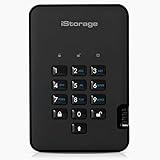
- Easy to use: Perfect solution to protect your digital assets. Simply enter a 7-15 digit PIN to authenticate and use as a normal portable HDD. When the drive is disconnected, all data is encrypted using AES-XTS 256-bit hardware encryption (no software required).
- The diskAshur2 helps you ensure compliance with data regulations such as GDPR, CCPA, HIPAA.
- The diskAshur2 is the perfect solution for storing your personal or company data. Carry the diskAshur2 with you wherever you go. Portable, rugged, dust & splashproof (IP56 certified) Without the PIN, there’s no way IN! All data transferred to the drive is encrypted in real time and is protected from unauthorised access even if the device is lost or stolen! The diskAshur2 incorporates a Common Criteria EAL 5+ (Hardware Certified) secure microprocessor.
- The diskAshur2 will work on any device with a USB port, no software is required. Compatible with: MS Windows, macOS, Linux, Chrome, Android, Thin Clients, Zero Clients, Embedded Systems, Citrix and VMware.
- Transfer your files in seconds Lightning fast backwards compatible USB 3.2 data transfer speeds. Up to 160MB/s Read speeds Up to 143MB/s Write speeds.
Rank #4

- Slim durable design to help take your important files with you
- Vast capacities up to 6TB[1] to store your photos, videos, music, important documents and more
- Back up smarter with included device management software[2] with defense against ransomware
- Help secure your important files with password protection and hardware encryption
- 3-year limited warranty
Product prices and availability are accurate as of the date/time indicated and are subject to change. Any price and availability information displayed on Amazon at the time of purchase will apply.




