Recommended Free Tools
Printer makers have long turned ink and toner into tightly controlled ecosystems, using chips, firmware checks, subscription plans, and region locks to steer customers toward approved cartridges. An open printer challenges that model by treating the device as user-owned equipment rather than a gateway to proprietary consumables.
The concept centers on refillable supplies, repairable hardware, transparent firmware, and compatibility with third-party ink or toner. If executed well, it could lower printing costs, extend device lifespans, reduce cartridge waste, and give homes, schools, and offices more control over how their printers are maintained.
As an Amazon Associate I earn from qualifying purchases.
The Problem With Proprietary Printer Cartridges
Modern inkjet and laser printers are often sold as part of a closed ecosystem in which the machine, cartridge, firmware, and supply chain are tightly controlled by the manufacturer. The printer itself may appear inexpensive, but the long-term cost is shifted to ink or toner cartridges that are shaped, chipped, and validated for a specific brand or model family. This model turns a basic consumable into a restricted component, making users dependent on official replacements even when cheaper or refillable alternatives could perform the same function.
A common mechanism is the cartridge authentication chip. These chips can track page counts, ink levels, region codes, expiration dates, or whether a cartridge has been used before. In some printers, a cartridge may be rejected even if it still contains ink or toner, simply because the chip reports it as empty, expired, refilled, or non-genuine. Firmware updates can also change what the printer accepts after purchase, leaving users with third-party supplies that previously worked but are later blocked. For households, schools, libraries, and small businesses, that means a device they own can still be governed by remote manufacturer policies.
#1 Best Overall

- Innovative Cartridge-Free Printing ― High-capacity ink tanks mean no more tiny, expensive ink cartridges; Epson’s exclusive EcoFit ink bottles make filling easy and worry-free
- Impressive Print Quality ― Unique Micro Piezo Heat-Free Technology produces sharp text – plus impressive color photos and graphics – on virtually any paper type
- Zero Cartridge Waste – By using an EcoTank printer, you can help reduce the amount of cartridge waste ending up in landfills
- Built-in Scanner & Copier ― High-resolution flatbed scanner and a color display for easy document copying and navigation
How lock-in affects users
- Higher operating costs: proprietary cartridges can cost far more per milliliter of ink than many other liquids used in precision equipment.
- Reduced choice: users may be limited to official cartridges, subscription plans, or region-specific supplies.
- Premature replacement: printers may refuse to print when one color is reported empty, even for black-and-white jobs.
- Uncertain compatibility: firmware changes can disable remanufactured or third-party cartridges without a hardware failure.
The economic frustration is especially visible in low-cost consumer printers, where the purchase price may be lower than a full set of replacement cartridges. This encourages a cycle in which users buy a cheap printer, discover the consumables are expensive, and eventually replace the whole unit rather than maintain it. In office environments, the same pattern appears through managed print contracts and cartridge programs that bundle supplies, service, and monitoring into a vendor-controlled relationship. While these arrangements can be convenient, they also reduce transparency around actual supply costs and limit the ability to shop competitively.
There is also an environmental cost. Cartridges combine plastic housings, metal contacts, foam, drums, rollers, chips, and residual ink or toner, making them harder to recycle than simple containers. When cartridges are designed to resist refilling or remanufacturing, more material moves through a single-use pipeline. If a blocked cartridge or unsupported printer leads to the disposal of an otherwise functional device, the waste expands from consumables to motors, circuit boards, scanners, displays, power supplies, and structural plastic. Proprietary cartridge systems therefore create a problem larger than annoyance at the checkout counter: they shape how printers are used, repaired, discarded, and replaced.
What Makes a Printer “Open”
An open printer is not simply a conventional printer with cheaper ink. It is a device designed so owners can understand, maintain, refill, repair, and modify it without being blocked by artificial restrictions. In practice, that means the printer treats ink and toner as consumable materials rather than as cryptographically controlled accessories. It also means the hardware, firmware, service procedures, and supply interfaces are documented well enough for users, repair shops, and independent suppliers to participate.
Free tools Windows power users keep installed
One-click scans. No signup required.
The most visible difference would be the absence of cartridge lock-in. Instead of relying on chips that authenticate only manufacturer-approved cartridges, an open printer could use transparent ink tanks, standard toner containers, or cartridges with published mechanical and electrical specifications. If a sensor is needed to track ink levels, the method should be documented and replaceable rather than tied to a secret handshake with the vendor’s servers. The goal is not to remove safety checks, but to prevent those checks from being used as a business barrier.
Core traits of an open printer
- Documented consumable interfaces: Ink, toner, drums, printheads, and maintenance boxes should have published dimensions, flow requirements, and compatibility details.
- No forced cartridge authentication: The printer should not reject a functional supply solely because it lacks a vendor-controlled chip or subscription status.
- User-serviceable parts: Rollers, pads, belts, fusers, printheads, and waste containers should be replaceable with ordinary tools where practical.
- Transparent firmware behavior: Updates should be optional, reversible where feasible, and clearly described before installation.
- Local control: Printing and maintenance should work without mandatory cloud accounts, remote activation, or always-online checks.
Openness can apply at several layers. At the hardware layer, screws are preferable to glued assemblies, modular parts are preferable to sealed units, and common connectors are preferable to custom parts that cannot be sourced. At the software layer, users should have access to drivers that work across operating systems without invasive telemetry or forced account sign-ins. At the supply layer, refill systems should be clean, repeatable, and supported by published specifications for ink viscosity, toner formulation, nozzle compatibility, and maintenance intervals.
This does not require every open printer to be fully open source in the strictest sense, although that would be a strong version of the idea. A manufacturer could still sell its own branded cartridges, inks, parts, and support plans. The difference is that customers would not be technically prevented from choosing alternatives. A genuinely open model competes on print quality, reliability, service, and convenience rather than on disabling third-party supplies or locking basic functions behind firmware policy.
| Feature | Locked-down printer | Open printer |
|---|---|---|
| Ink and toner | Vendor-approved cartridges with chips | Refillable or third-party supplies using published requirements |
| Firmware | Updates may block supplies or features | Updates are disclosed, optional, and focused on function or security |
| Repair | Sealed assemblies and limited parts access | Replaceable modules, manuals, and available spare parts |
| Connectivity | Cloud account may be required | Local printing and maintenance remain available |
The open printer concept also depends on trust. A printer marketed as open should make clear commitments: it will not disable printing because a cartridge is refilled, it will not silently change supply rules through an update, and it will provide maintenance information for the expected life of the product. Without those commitments, “open” risks becoming another marketing label. With them, it becomes a practical alternative to the disposable, cartridge-driven model that has shaped much of the printer market.
Quick wins for a faster PC:
Scan for outdated or missing drivers - takes under a minuteDriver Scan →Clear out junk files and repair common Windows errorsFree Scan →Fix the driver behind crashes, sound loss and screen glitchesFind Drivers →How Refillable and Third-Party Supplies Could Work
An open printer would treat ink and toner as standard consumables rather than cryptographically gated accessories. Instead of requiring a cartridge with a vendor-approved chip, the printer could accept refillable tanks, reusable toner hoppers, or cartridges built to a published mechanical specification. The user would be able to buy supplies from the printer maker, a local refill shop, or an independent manufacturer without triggering warnings, feature limits, or print-quality lockouts.
For inkjet models, the most practical design is a tank-based system with clearly marked fill ports, replaceable caps, and optical or weight-based level sensing. The printer would measure how much ink is present without depending on a single-use chip embedded in the cartridge. Ink bottles could follow a standard nozzle and color-keying pattern to reduce spills and misfills, while still allowing compatible third-party suppliers to produce bottles that meet the same dimensions and labeling rules.
Rank #2

- THE LAST PRINTER YOU'LL EVER NEED – Set it up once and print with confidence; no complicated maintenance, just easy, reliable printing you can count on
- FULLY LOADED WITH SAVINGS – Best for low-cost, high-volume printing—up to 3 years of HP Ink included; get up to 6,000 color or black pages right out of the box
- KEY FEATURES – Print, copy and scan, plus borderless prints, mobile and wireless printing
- MESS-FREE REFILL – Replenish ink with HP's easy-access, mess-free refill system; simply plug the ink bottles into this cartridge-free ink tank and let them drain—no squeezing, no spilling
- BEST PRINT QUALITY, PERIOD – Sharper text, richer colors, only with HP Smart Tank
For laser printers, an open approach could use refillable toner reservoirs or reusable cartridges with replaceable wear parts. Toner is more complex than liquid ink because particle size, melting point, charge behavior, and drum compatibility affect output and reliability. A transparent specification would therefore matter: it could define acceptable toner characteristics, cartridge geometry, waste-toner handling, and safety requirements. That would let suppliers compete on price and quality while giving users a clear way to select materials that will not damage the printer.
Supply compatibility could be handled through standards, not lock-in
- Published cartridge dimensions: independent suppliers could make containers that fit reliably without reverse engineering.
- Open ink and toner specifications: users could compare pigment type, viscosity, page yield, and fusing requirements.
- Non-restrictive level sensing: the printer could report remaining supply without disabling refilled containers.
- Serviceable consumable parts: printheads, drums, rollers, and waste pads could be replaced separately instead of bundled into expensive cartridges.
The printer could still protect itself from genuinely unsafe or unsuitable materials. For example, firmware might warn that a toner formulation is outside a recommended temperature range, or that an ink viscosity may cause clogging. The difference is that the warning would be informational and overrideable, not a commercial block. A user running a school, repair shop, studio, or small office could decide whether to prioritize lowest cost, archival color stability, high-speed draft printing, or manufacturer-certified supplies.
What’s actually slowing this PC down?
Pick the symptom - the matching free tool is one click away.
This model would also support a healthier aftermarket. Local refill services could clean and refill containers repeatedly, reducing shipping and packaging waste. Third-party suppliers could sell economy, premium photo, archival pigment, or high-yield office formulations. The original printer maker could still sell its own supplies, but it would have to compete on consistency, support, and convenience rather than relying on exclusive authentication chips.
The result would be closer to how many other tools handle consumables: a drill can use compatible bits, a coffee machine can accept standard beans, and a car can be serviced with parts from mulle suppliers. An open printer would not eliminate the need for quality control, but it would shift control over purchasing and maintenance back to the owner of the machine.
Repairability, Firmware, and User Control
An open printer would treat repairability as a core design requirement rather than an afterthought. That means parts most likely to wear out—rollers, belts, print heads, fusers, sensors, waste-ink pads, paper-feed assemblies, and control boards—would be accessible with standard tools and documented procedures. Instead of sealing components behind plastic clips that snap during disassembly, the chassis could use screws, labeled connectors, and modular assemblies that can be replaced without discarding the entire machine.
This approach would also require practical access to spare parts. A repairable printer is only useful if users, local repair shops, schools, and small businesses can buy replacement components at fair prices. Service manuals, exploded diagrams, calibration steps, and diagnostic information would need to be public. For inkjet models, that could include instructions for replacing or cleaning print heads and waste-ink systems. For laser printers, it could include drum, fuser, and transfer-belt replacement procedures without artificial page-count lockouts.
PC Slower Than It Used to Be?
A free scan shows the junk files, broken settings and background clutter dragging Windows down - then fixes them in one click.Free scan · Windows 10 & 11Crashes, No Sound, or Screen Glitches?
Random freezes, missing sound and display glitches usually trace back to one bad driver. Find and replace yours safely.Free scan · under a minuteFirmware Without Lock-In
Firmware is where much of the modern printer ecosystem becomes restrictive. Many printers use firmware updates to reject third-party cartridges, enforce region locks, disable refilled supplies, or stop printing when a cartridge chip reports “empty” even if usable ink or toner remains. An open printer would need firmware that prioritizes device function and user control over supply-chain enforcement. Updates should improve security, stability, and print quality, not remove compatibility that existed when the product was purchased.
In a more open model, firmware could be auditable, reproducible, or at least documented well enough for independent review. Users should be able to choose whether to install updates, roll back faulty releases, and run the printer without creating an online account. Local network printing, USB operation, and offline configuration should remain available. A printer that requires cloud activation for basic printing gives the manufacturer an ongoing gatekeeping role; an open design would reduce that dependency.
User-Controlled Maintenance
User control also means letting the owner make informed maintenance decisions. Instead of blocking operation because a cartridge chip, drum counter, or maintenance box reaches a preset limit, the printer could display clear warnings and allow the user to continue at their own risk. Sensors should report real conditions where possible: toner density, ink levels, paper path errors, temperature faults, and part wear. Page counters can still help schedule service, but they should not become hidden kill switches.
Rank #3

- INNOVATIVE CARTRIDGE-FREE PRINTING — No more dealing with tiny, expensive ink cartridges; With this wireless printer each ink bottle set is equivalent to about 80 individual cartridges²
- LESS FREQUENT INK REPLACEMENT — Replacement ink bottles don't have to be changed nearly as often as ink cartridges¹; Color printer lets you print up to 4,500 black and white pages and 7,200 color³
- PRINT FOR LONGER — Up to 2 years of ink in the box⁴ (and with every replacement ink set) for fewer out-of-ink frustrations; This home printer keeps printing longer
- HIGH CAPACITY INK TANKS – Printer, scanner and copier utilizes Epson’s exclusive EcoFit ink bottles, making the refill process easy and worry-free
- ZERO CARTRIDGE WASTE — By using an Epson EcoTank printer you can help reduce the amount of cartridge waste ending up in landfills; Cartridge-free printer utilizes ink bottles for more convenience and less waste
- Replaceable wear parts: rollers, fusers, print heads, pads, trays, and boards should be obtainable and serviceable.
- Transparent diagnostics: error codes should describe the actual fault and link to repair steps.
- Update control: users should be able to defer, verify, or roll back firmware updates.
- Offline functionality: printing, scanning, and maintenance should not depend on a remote server.
- Open configuration: common settings should be available through local controls, a web interface, or documented protocols.
Security still matters in this model. Printers sit on networks, handle sensitive documents, and can be abused if poorly maintained. Openness does not mean leaving devices unprotected; it means separating genuine security protections from business restrictions. Signed firmware, sandboxed services, documented network behavior, and timely vulnerability patches can coexist with cartridge freedom and repair rights. The difference is that security mechanisms would protect the owner, not prevent the owner from using lawful supplies or performing repairs.
Do these 3 things before closing this tab:
1Fix the driver behind crashes, sound loss and screen glitches2Repair Windows errors before they cause bigger problems3Scan for outdated or missing drivers - takes under a minuteFor buyers, the practical result would be a printer with a longer useful life and fewer surprises. A school could stock rollers and maintenance kits instead of replacing entire fleets. A small office could keep working after a firmware update rather than discovering that refilled cartridges no longer function. A home user could clean a clogged print head, replace a pad, or ignore a conservative toner warning long enough to finish a job. Repairability, open firmware practices, and user control are what turn an open printer from a cartridge alternative into a durable computing device that the owner actually owns.
Cost and Environmental Benefits
An open printer could change the economics of home and small-office printing by shifting the purchase decision away from locked consumables and back toward the machine’s actual operating cost. In the conventional model, a low upfront printer price often hides years of expensive cartridge replacements. If a printer is designed to accept refillable tanks, standardized toner containers, or independently manufactured cartridges without firmware interference, users can compare supplies on price, yield, and quality rather than being limited to one vendor’s catalog.
The most immediate savings would come from lower cost per page. A proprietary ink cartridge may contain only a small volume of ink and include a chip that prevents reuse after a fixed count or expiration date. Refillable systems can instead sell ink by the bottle and toner by weight, making the consumable itself the main expense rather than the plastic shell, embedded electronics, packaging, and brand markup. For schools, libraries, community workshops, and small businesses that print frequently, the difference can add up quickly across thousands of pages per year.
| Area | Conventional locked printer | Open printer approach |
|---|---|---|
| Consumable cost | Brand-specific cartridges with limited alternatives | Refillable ink or toner from multiple suppliers |
| Waste | Frequent disposal of plastic cartridges and chips | Reusable containers, replaceable wear parts, bulk packaging |
| Maintenance | Repairs often discouraged or uneconomical | User-serviceable components and published part information |
| Device lifespan | Premature replacement after firmware, parts, or cartridge issues | Longer service life through updates, repairs, and supply flexibility |
The environmental case is closely tied to that cost structure. Single-use cartridges combine molded plastic, metal springs, foam, print heads, chips, and residual ink or toner, making them difficult to recycle at scale. Even when take-back programs exist, cartridges must be shipped, sorted, and processed, and many still end up in landfill or incineration. A refillable or remanufacturable design reduces the number of complete cartridge assemblies being produced and discarded, while standardized containers could simplify recycling when parts eventually wear out.
Longer hardware life would also reduce electronic waste. Printers are often replaced not because their motors, frames, or rollers have failed, but because supplies become unavailable, firmware blocks affordable replacements, or a minor component is too difficult to service. An open design that uses replaceable feed rollers, accessible waste-ink pads, modular print heads, documented sensors, and long-term firmware support would let owners maintain a printer for many more years. That keeps plastics, circuit boards, motors, scanners, and power supplies in use instead of pushing them into the waste stream.
There are also indirect benefits from a healthier supplies market. If mulle vendors can produce compatible ink, toner, refill kits, and spare parts, competition can reward better formulations, clearer labeling, and less wasteful packaging. Users could choose archival inks for photos, economical inks for drafts, or regionally sourced consumables for lower shipping impact. The result would not be printing without environmental cost, but a system where the user has practical ways to reduce waste, avoid premature replacement, and spend money on materials rather than artificial restrictions.
Independent reader supportYour contribution helps us test, update, and keep practical guides available for everyone.Challenges to Adoption and Industry Pushback
An open printer would enter a market shaped by decades of razor-and-blades economics, where many manufacturers accept low margins on hardware and recover profit through cartridges, toner, service contracts, and managed print subscriptions. A device designed around refillable reservoirs, documented parts, replaceable print heads, and third-party consumables directly challenges that model. Even if the technical design is sound, adoption depends on whether buyers are willing to pay more upfront for hardware that is cheaper and less restrictive over time.
The first barrier is manufacturing scale. Established printer companies benefit from mature supply chains, discounted components, retail placement, and global service networks. A new open printer vendor would need to source reliable pumps, nozzles, sensors, rollers, chips, and enclosures while keeping tolerances tight enough for consistent print quality. Inkjet systems are especially demanding because ink chemistry, nozzle geometry, drying time, and paper interaction all affect results. Laser printers bring different constraints, including toner formulation, fuser temperature, drum wear, and safe handling of fine particles.
Rank #4
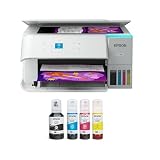
- STRESS-FREE PRINTING — Epson EcoTank comes with enough ink to print up to 6,600 pages black/5,500 color¹⁰ for fewer out-of-ink frustrations. Each replacement ink bottle set is equivalent to about 80 cartridges¹¹
- SIMPLE INK REFILLING — Supersized ink tanks and uniquely keyed EcoFit bottles make refilling ink simple—no mess, no stress and no ink bottle mix-ups
- THE WORLD’S #1 SELLING SUPERTANK PRINTER² — Epson invented EcoTank to revolutionize the way people print; we’ve sold 100 million EcoTanks worldwide⁷ and this is our 7th generation of cartridge-free printers
- ADVANCED PRODUCTIVITY FEATURES — Fast 15 black/8 color ISO ppm print speeds with zero warmup time, built-in scanner, 100-sheet paper tray, auto duplex printing and a 1.44" color display for easy navigation
- STUNNING PRINT QUALITY — High 4800 x 1200 dpi print resolution for exceptional photos and text; enjoy amazing image quality on a wide range of media
Where resistance is likely to appear
- Firmware restrictions: Incumbent vendors may continue using authentication chips, update locks, and security messaging to frame third-party supplies as risky or unsupported.
- Warranty pressure: Buyers may be warned that refillable or non-original supplies could void coverage, even when failures are unrelated to ink or toner choice.
- Retail influence: Cartridge sales generate recurring revenue for stores, so shelf space and promotion may favor closed ecosystems.
- Patent disputes: Open designs could face legal scrutiny around cartridge interfaces, print head mechanisms, toner handling, or maintenance systems.
- Enterprise procurement hurdles: Businesses often prefer established vendors with support contracts, fleet management tools, and predictable replacement cycles.
User perception is another challenge. Many people associate third-party ink with clogged heads, color shifts, leaks, or unreliable page yields because earlier refill experiences were inconsistent. An open printer would need clear specifications for compatible supplies, calibration routines, and maintenance intervals so users can distinguish well-made consumables from poor ones. Without that structure, the freedom to choose supplies could become confusing rather than empowering.
Security and compliance will also matter, particularly in offices, schools, hospitals, and public agencies. A printer with user-controlled firmware is attractive to repair advocates, but organizations may require signed updates, audit logs, network isolation, and long-term vulnerability patching. The challenge is to support transparency without making the device seem unmanaged or unsafe. Open firmware does not have to mean uncontrolled firmware; it can still use verifiable builds, reproducible releases, and administrator-approved update channels.
Industry pushback may be subtle as well as direct. Manufacturers can argue that proprietary cartridges protect quality, prevent counterfeiting, and ensure environmental compliance through official recycling programs. Some of those concerns are valid in poorly regulated supply chains, but they can also be used to preserve lock-in. An open printer ecosystem would need credible standards for ink chemistry, toner safety, refill packaging, page-yield testing, and end-of-life recovery to compete on trust rather than ideology alone.
The strongest path to adoption may begin with communities that already value repairability and long service life: makerspaces, schools, libraries, small offices, public-sector buyers, and right-to-repair advocates. If those early users can demonstrate lower operating costs, dependable output, and easy maintenance, larger buyers may follow. The open printer will not only compete on price; it will have to prove that user control can be practical, supportable, and reliable at everyday scale.
Frequently Asked Questions
Would an open printer let me use any ink or toner I want?
In principle, yes: an open printer would avoid cartridge authentication chips and firmware blocks that reject third-party or refilled supplies. In practice, inks and toners still need to match the printer’s printhead, paper path, heat settings, and color profile, so reputable compatible supplies would matter.
Would print quality be worse with refillable or third-party cartridges?
Not necessarily, but quality would depend on the supply formulation and printer design. A well-designed open printer could publish ink or toner specifications, recommended tolerances, and calibration profiles so third-party suppliers can make reliable products instead of reverse-engineering locked cartridges.
How would an open printer be easier to repair than today’s printers?
An open printer would ideally use standard screws, replaceable rollers, accessible printheads, modular circuit boards, and published service manuals. That would let owners or repair shops replace worn parts instead of throwing away the entire printer after a clogged head, failed sensor, or broken paper feed mechanism.
Could printer companies still block open printers through firmware updates?
If the printer is truly open, users would control firmware updates and could review, replace, or refuse them. The risk is lower when firmware is open source or independently auditable, because hidden cartridge locks, telemetry, or anti-repair changes are easier to detect.
Would an open printer actually save money over time?
It could, especially for people who print regularly, because ink and toner costs often exceed the price of the printer itself. The upfront hardware price may be higher, but savings would come from refillable supplies, longer service life, replaceable parts, and competition among consumable makers.
Bottom Line
An open printer points to a more user-friendly future for printing: one where cartridges are refillable, parts are replaceable, firmware is transparent, and buyers are not locked into a single vendor’s consumables. That shift could lower long-term costs, reduce waste, and give homes, offices, schools, and repair shops more control over the hardware they already own.
The next step is watching whether open designs can move from promising concept to reliable, affordable products with strong parts and ink support. If they do, they could pressure the wider printer market to compete on durability, serviceability, and fair pricing instead of cartridge lock-in.
Quick Recap
Product prices and availability are accurate as of the date/time indicated and are subject to change. Any price and availability information displayed on Amazon at the time of purchase will apply.
The Tool Desk
Outbyte Driver Updater FREEFix the driver behind crashes, sound loss and screen glitchesFind Drivers →Outbyte PC Repair FREERepair Windows errors before they cause bigger problemsFix Now →



