Choose an online executive course if you need focused, flexible learning for a specific skill and do not require a formal postgraduate award. Choose a postgraduate diploma if you need a substantial academic qualification, defined credit and assessment, or a documented route to further study. The labels are not equivalent: “executive” often describes the intended audience or format, while “postgraduate diploma” names an award whose exact status depends on the institution and country.
What is the difference?
An executive course may be a short course for working professionals, but the label alone does not tell you whether it carries academic credit, includes assessment, or leads to a formal award. It might offer only a completion certificate, or it might be credit-bearing or part of a larger qualification. Check the exact outcome and identify which institution awards it.


As an Amazon Associate I earn from qualifying purchases.
A postgraduate diploma is generally a defined academic qualification with specified credit and assessment, but its structure is not universal. For example, the University of Edinburgh describes its postgraduate diploma as 120 academic credits and its postgraduate professional development courses as carrying up to 50 credits. Its diploma typically takes nine months full-time or two years part-time and does not include an independent dissertation. These details apply to Edinburgh’s system, not every postgraduate diploma worldwide. University of Edinburgh: taught diplomas and certificates.
Compare the actual programmes, not the names
Before choosing, compare the outcome you will receive, the work required and whether it meets the requirements of the employer, regulator or university you have in mind.
| What to compare | Questions to ask |
|---|---|
| Award and recognition | Is the outcome a completion certificate, academic credit or a formal award? Which institution awards it? Will the specific employer, regulator or receiving university accept it for your purpose? |
| Credit and progression | How many credits or points do you earn? Is transfer to another programme published, conditional or unavailable? What requirements must you meet? |
| Depth and assessment | Does the curriculum address your goal at the right level? Are there assignments, exams, a project or a dissertation? Will you receive instructor feedback? |
| Format and workload | How long does it take? Are sessions live or asynchronous, and how many hours each week are expected? Does the format fit around work? |
| Entry requirements and total cost | Do you need a prior degree, professional experience or other prerequisites? What is the full tuition and fee cost, and how much time away from work or employer support will it require? |
| Career relevance | Does the programme teach a skill required for a specific role or meet a stated qualification requirement? Do not assume a course or diploma guarantees promotion, a salary increase or employer preference. |
What provider examples show—and what they do not
These examples illustrate how much programmes can differ. They are not a universal definition of either category or an endorsement.
University of Edinburgh: credit and duration in one system
Edinburgh states that its postgraduate diploma requires 120 academic credits, while its postgraduate professional development courses can carry up to 50 credits. It gives typical diploma durations of nine months full-time or two years part-time, and says the diploma does not include an independent dissertation. See Edinburgh’s qualification details.
University of Canterbury UC Online: a defined part-time diploma and conditional MBA route
UC Online’s Postgraduate Diploma in Business Administration is a 120-point programme designed to take two years part-time. The university normally expects one 15-point course per term and recommends about 20 study hours per week for that course. Its 2026 information estimates total tuition at NZ$29,288 for domestic students and NZ$41,904, plus GST if applicable, for international students; fees may change, and elective choices can affect the total. These are programme-specific estimates, not typical market prices. UC Online says the diploma can be credited toward certain named online MBA specialisations if programme conditions are met; that is not a general transfer entitlement for diplomas or executive courses. The programme’s entry information specifies professional or scholarly experience. Check UC Online’s programme, entry and fee details.
Do these 3 things before closing this tab:
1Clear out junk files and repair common Windows errors2Scan for outdated or missing drivers - takes under a minute3Repair Windows errors before they cause bigger problemsBharathiar University: an executive-mode diploma with formal assessment
Bharathiar University’s page describes an online executive-mode PG Diploma in Career Guidance with 46 credits, two semesters, a one-year minimum and a two-year maximum. It lists assignments, a written examination, and an assessed project with viva. The page was last updated on 26 July 2022, so confirm current admission and delivery details with the university before relying on them. See Bharathiar University’s programme page.
Otago and Sydney: availability and progression need checking
The University of Otago’s Executive Management PGDip regulations describe six 15-point papers and a 30-point business project, with up to three years part-time. However, the university currently says the qualification is not offered. Regulations or archived programme details do not establish that a course is open for applications. Check Otago’s current availability notice.
The University of Sydney explains that graduate certificates and diplomas can provide a route toward master’s study, but entry rules vary and a qualification does not necessarily map to an equivalent master’s. Ask the receiving university to confirm how it treats the specific award you plan to complete. See the University of Sydney’s guidance on graduate certificates and diplomas.
Rank #4
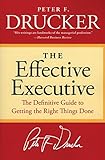
- Managing time
- Choosing what to contribute to the organization
- Knowing where and how to mobilize strength for best effect
- Setting the right priorities
- Knitting all of them together with effective decision-making
When an executive course makes more sense
An executive course can be the better fit when you need a particular skill, want a shorter commitment, or would like to explore a subject before enrolling in a longer programme. It is a sound choice only if the course’s actual content, delivery and outcome match your goal.
The Tool Desk
Outbyte Driver Updater FREEScan for outdated or missing drivers - takes under a minuteDriver Scan →Outbyte PC Repair FREEClear out junk files and repair common Windows errorsFree Scan →- Check whether you receive a certificate, academic credit or another outcome—and who awards it.
- Look for assessed work and instructor feedback if you need evidence of demonstrated learning, not just attendance.
- Confirm any claimed credit or progression route directly with the receiving institution; do not infer it from words such as “executive” or “postgraduate.”
When a postgraduate diploma makes more sense
A diploma is usually the stronger candidate when you need a substantial formal award, a structured curriculum with defined assessment, or a published pathway to further study. Its title alone does not establish recognition for every employer, regulated occupation or university.
Best Value
- Verify the awarding institution and the qualification’s credit or points in that institution’s system.
- Check admission requirements, course structure, assessment and expected workload before committing.
- If you need the diploma for licensing, employment or entry to a master’s, ask the relevant authority or receiving university whether it accepts that exact qualification.
How to decide
- Write down the required outcome. Decide whether you need a specific skill, a certificate, academic credit, a formal qualification or eligibility to progress to another programme.
- Check the receiving authority first. If an employer, regulator or university must accept the result, confirm its requirements with that organization before you enrol.
- Inspect the programme details. Find the named awarding institution, credit value, assessment, prerequisites, duration and workload. Treat an undefined claim of being “accredited” or “recognized” as a reason to ask for specifics.
- Calculate the real commitment. Compare total fees and study hours, not just advertised course length or tuition. For online study, confirm live-session requirements and term schedules as well as the weekly estimate.
- Confirm progression in writing. If credit transfer matters, check the receiving programme’s conditions. A stated pathway may apply only to named programmes and eligible students.
Bottom line
Pick the executive course for focused learning when its verified content and outcome meet your immediate need. Pick the postgraduate diploma when you need a structured formal award and its credit, recognition and progression rules fit your next step. If either choice depends on acceptance by an employer, regulator or university, verify that exact programme with the organization that must recognize it.
Quick Recap
Product prices and availability are accurate as of the date/time indicated and are subject to change. Any price and availability information displayed on Amazon at the time of purchase will apply.




