Recommended Free Tools
Choose Nintendo Switch 2 if Nintendo’s games and the option to play handheld, tabletop, or on a TV matter most. Choose Steam Deck OLED if you want a portable PC for Steam games, with trackpads and an OLED screen. Neither is the universal winner: start with the games you want, then compare how you plan to play and the current price where you live.
Start with the games and ecosystem
Choose Switch 2 for Nintendo’s library
Switch 2 plays Switch 2 game cards and is compatible with some original Nintendo Switch games. Nintendo cautions that some older games may not be supported or fully compatible, so check its Switch-to-Switch-2 compatibility guidance for titles you already own. Nintendo also highlights games exclusive to Switch 2; confirm that the specific games you want are available for the system.
| # | Preview | Product | Price | |
|---|---|---|---|---|
| 1 |

|
Nintendo Switch – OLED Model w/White Joy-Con | $388.44 | Buy on Amazon |
| 2 |
|
Nintendo Switch OLED Model w/ White Joy-Con (Renewed) | $256.00 | Buy on Amazon |
| 3 |

|
Nintendo Switch – OLED Model w/Neon Red & Neon Blue Joy-Con | $384.98 | Buy on Amazon |
| 4 |

|
Nintendo Switch 2 System | $499.00 | Buy on Amazon |
| 5 |
|
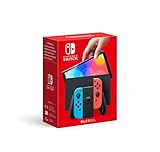
Nintendo Switch (OLED Model) - Neon Blue/Neon Red (Renewed) | $259.00 | Buy on Amazon |
As an Amazon Associate I earn from qualifying purchases.
Choose Steam Deck OLED for Steam games
Valve describes Steam Deck as portable PC gaming and provides compatibility ratings for games in the Steam catalog. Check the rating and game-specific details for the titles you care about rather than assuming every Steam game works equally well on Deck. Valve’s compatibility information and product details are on its Steam Deck page.
What’s actually slowing this PC down?
Pick the symptom - the matching free tool is one click away.
How the hardware compares
| Feature | Nintendo Switch 2 | Steam Deck OLED |
|---|---|---|
| Screen | 7.9-inch LCD, 1920 × 1080, HDR10, VRR up to 120 Hz (Nintendo) | 7.4-inch HDR OLED, 1280 × 800, refresh rate up to 90 Hz (Valve) |
| Manufacturer battery estimate | About 2–6.5 hours; varies with the game and use (Nintendo) | 3–12 hours; varies with content (Valve) |
| Built-in storage | 256 GB UFS (Nintendo) | 512 GB or 1 TB NVMe, depending on model (Valve) |
| Storage expansion | microSD Express for game storage; older, non-Express microSD cards can only copy screenshots and videos from Nintendo Switch (Nintendo) | High-speed microSD slot (Valve) |
| Play modes and controls | Handheld, tabletop, or docked TV play; detachable magnetic Joy-Con 2 (Nintendo) | Portable PC with two trackpads and a gamepad-oriented interface (Valve) |
These are manufacturer specifications and estimates, not results from a shared test. In particular, the battery ranges are not directly comparable benchmarks. Nintendo’s Switch 2 specifications and Valve’s Steam Deck specifications describe different hardware and do not establish how long either lasts in a particular game.
#1 Best Overall
- Vivid 7” OLED screen
- Local co-op, online, and local wireless multiplayer
- 64 GB internal storage (a portion of which is reserved for use by the system)
- Enhanced audio in handheld and tabletop modes
- Wide adjustable stand
What the play modes mean in practice
Switch 2 moves between handheld, tabletop, and TV play
Nintendo documents all three modes, with a dock included. For compatible games and display equipment, Nintendo lists TV output up to 3840 × 2160 at 60 fps, or up to 1920 × 1080 or 2560 × 1440 at 120 fps. These are supported output configurations, not a promise that every game runs at those resolutions or frame rates. The Joy-Con 2 controllers attach magnetically and can be used separately; compatible games may also support mouse-style use. See Nintendo’s Switch 2 features and play modes.
Steam Deck OLED is built around portable PC play
Deck’s Steam-focused interface, compatibility ratings, and pair of trackpads suit players who want access to a PC game library and controls beyond conventional thumbsticks. Those facts do not establish performance or control quality for any specific title. If a game’s frame rate, setup requirements, or input scheme will decide your purchase, look for evidence about that game on Deck rather than extrapolating from the system specifications.
Rank #2
- Vivid 7” OLED screen
- Local co-op, online, and local wireless multiplayer
- 64 GB internal storage (a portion of which is reserved for use by the system)
- Enhanced audio in handheld and tabletop modes
- Wide adjustable stand
Screen, battery, and storage trade-offs
Pick a display based on the feature you value
Switch 2 has the larger, higher-resolution panel and supports HDR10 and VRR up to 120 Hz. Steam Deck OLED has an OLED panel with HDR and refresh rates up to 90 Hz. Resolution, refresh-rate ceilings, and panel technology describe different characteristics; the specifications alone do not say which screen will look better to you.
Plan around variable battery life
Nintendo estimates roughly 2–6.5 hours for Switch 2, while Valve lists 3–12 hours for Steam Deck OLED. Both manufacturers say runtime depends on what you play or how you use the device. Treat the ranges as broad estimates, not a guarantee for a particular game or a controlled head-to-head result.
Rank #3
- Vivid 7” OLED screen
- Local co-op, online, and local wireless multiplayer
- 64 GB internal storage (a portion of which is reserved for use by the system)
- Enhanced audio in handheld and tabletop modes
- Wide adjustable stand
Check the memory-card standard before buying
Switch 2 requires a microSD Express card for expanded game storage. Nintendo says a non-Express microSD card can only be used to copy screenshots and videos from Nintendo Switch. Steam Deck OLED has a high-speed microSD slot. The standards are not interchangeable by assumption, so check the card type and device requirements before purchasing.
Independent reader supportYour contribution helps us test, update, and keep practical guides available for everyone.Make the decision with your own games and budget
- Write down the games you most want to play. Verify availability and compatibility individually: Nintendo’s catalog and Steam’s PC catalog are different, and neither device should be assumed to support every game in its broader ecosystem.
- Choose your usual way to play. Prioritize Switch 2 if switching between handheld, tabletop, and docked TV play is central. Prioritize Deck if portable Steam gaming and its PC-oriented controls are the draw.
- Decide which screen characteristics matter. Compare Switch 2’s larger 1080p LCD and higher listed refresh-rate ceiling with Deck OLED’s OLED panel and 800p resolution.
- Allow for game-dependent battery life. Use the manufacturers’ ranges as estimates, not as a promise that either device will last through a particular trip or game session.
- Account for storage needs. Check included capacity and the required expansion-card standard, especially Nintendo’s microSD Express requirement for Switch 2 game storage.
- Compare current local costs. Prices, stock, and bundles vary by market and date. Check the cost of the device, the games you plan to buy, storage expansion, and any online membership you need; there is no verified universal price comparison here.
For Switch 2 online features such as GameChat, Nintendo lists an internet connection, a Nintendo Account, and Nintendo Switch Online membership as requirements. Video features also require camera hardware. Check current terms and availability in your region before relying on a particular online feature.
Quick Recap
Rank #4
- The next evolution of Nintendo Switch
- One system, three play modes: TV, Tabletop, and Handheld
- Larger, vivid, 7.9” LCD touch screen with support for HDR and up to 120 fps
- Dock that supports 4K when connected to a compatible TV*
- GameChat** lets you voice chat, share your game screen, and connect via video chat as you play
Product prices and availability are accurate as of the date/time indicated and are subject to change. Any price and availability information displayed on Amazon at the time of purchase will apply.




