Network peering connects networks so resources can communicate over private addresses; multi-region architecture deploys application infrastructure in multiple geographic regions. They solve different problems and can be used together. Peering by itself does not replicate data, move users to a healthy region, or provide regional failover.
What network peering does
Peering establishes a private network connection between two virtual networks. For example, AWS VPC peering enables direct routing between two VPCs, including VPCs in different AWS Regions; Google Cloud also offers VPC Network Peering to connect VPC networks. The connection is about reachability between networks, not where an application is deployed or how it recovers from an outage.
As an Amazon Associate I earn from qualifying purchases.
On AWS, peering is pairwise and non-transitive: if VPC A peers with VPC B, and VPC B peers with VPC C, that does not let A communicate with C through B. Each communicating pair needs a direct connection. The networks’ address ranges must not overlap, and route tables and security rules need appropriate configuration. See AWS VPC peering basics and AWS VPC peering limitations and prerequisites.
Free tools Windows power users keep installed
One-click scans. No signup required.
What multi-region architecture does
A multi-region design places application infrastructure in more than one geographic region. Depending on the workload, this can put services closer to users or reduce exposure to a region-wide failure. It is a deployment and resilience choice, not a particular network connection.
#1 Best Overall

- Easier-Than-Ever Setup — Convenient and easy router management via web browser or the ASUS ExpertWiFi mobile app through Bluetooth setup.
- VLAN for Added Security —Each of the Ethernet ports can be assigned to one or more VLAN IDs that provides additional security for your business.
- Up to 3 WAN Ethernet Ports – 1 gigabit WAN port and 2 gigabit WAN/LAN ports with load balancing optimize multi-line broadband usage.
- Backup WAN for Stable Connectivity –The USB port can be used as a backup WAN by connecting it to a mobile phone with hotspot to maintain a reliable internet connection.
- Commercial-Grade Network Security and VPN — Secure public WiFi connections with Safe Browsing and VPN features. Enjoy a free-subscription ASUS AiProtection Pro, including robust intrusion prevention system (IPS) features like deep packet inspection (DPI) and virtual patching to block malicious traffic.
Having resources in two regions does not guarantee that traffic will shift when one region fails. Regional resilience also depends on application behavior, data replication or recovery, health detection, traffic steering, and the ability to restore service in the surviving region. The required behavior varies by application; connectivity between regions is only one part of that design. AWS discusses multi-region trade-offs in its multi-region approach guidance.
How the choices compare
| Decision area | Network peering | Multi-region architecture |
|---|---|---|
| Primary purpose | Private connectivity between virtual networks. | Deploying application infrastructure in multiple geographic regions. |
| What it changes | Which network resources can route to one another. | Where application components run and how the system handles regional placement or disruption. |
| Resilience by itself | Does not provide regional failover or data replication. | Can support regional resilience, but requires application, data, health-check, and traffic-management design. |
| Topology consideration | AWS peering is pairwise and non-transitive; address ranges must not overlap. | Requires operating and coordinating deployments across regions; the exact topology depends on the application. |
| Typical operational burden | Configure and maintain connections, routes, and security rules. | Manage duplicated infrastructure, data synchronization, and cross-region transfer costs. |
The AWS topology and operational details in this table are provider-specific; other cloud providers have their own constraints and service models.
Rank #2

- Next-Gen WiFi 7 Router with MLO – Powered by the latest WiFi 7 technology, this wireless router supports Multi-Link Operation (MLO) to intelligently manage bandwidth for gaming, streaming, and work at the same time. Enjoy smoother performance and lower latency across devices. Actual speeds may vary based on environment, distance, and obstacles. Dual-band routers do not support the 6 GHz band
- Ultra-Fast Speeds with Powerful Quad-Core Chip – This WiFi 7 router delivers up to 5765 Mbps on 5GHz and 1376 Mbps on 2.4GHz, powered by a high-performance quad-core 2 GHz chipset. Enjoy smooth 4K/8K streaming, responsive gaming, and stable connections when multiple devices are running at the same time
- Stronger WiFi with 9 Signal-Boosting Modules – Built with 9 high-performance signal enhancement modules, this WiFi 7 router delivers stronger, more stable WiFi across your home. Intelligently focuses signals on areas that need them most, reducing dead zones and dropped connections
- Easy Setup & App Control – Set up this WiFi router 7 in minutes using the Tenda App (Android & iOS) or a web browser. Manage your network easily and buy with confidence knowing our support team is ready to help at [email protected]
- NFC Tap-to-Connect for Guests – No passwords needed. Guests can instantly connect by tapping a compatible NFC-enabled Android device on NFC stickers, making this wireless router for home perfect for family visits and shared spaces. NFC connection requires a compatible Android device
When direct peering is a reasonable fit
- A small number of networks need deliberate, limited communication.
- The networks have non-overlapping address ranges and their owners can configure routes and security rules.
- The required connectivity is pairwise, rather than a need for traffic to transit through one network to reach another.
As an AWS network grows, individually managing many peering relationships can become harder. AWS Transit Gateway is a centralized option designed to support transitive routing across multiple VPCs. Consider it when many networks need shared or centralized routing, and compare its routing and operating model with direct peering. See AWS Transit Gateway documentation.
The Tool Desk
Outbyte PC Repair FREERepair Windows errors before they cause bigger problemsFix Now →Outbyte Driver Updater FREEFix the driver behind crashes, sound loss and screen glitchesFind Drivers →When multi-region is worth considering
- You have a defined requirement to tolerate a region-level disruption, not just an availability-zone failure.
- Users are geographically dispersed and placing services in additional regions could address a meaningful latency need.
- Regulatory or geographic requirements call for workloads or data to be located in particular regions.
Multi-region is not automatically the right next step for every workload. AWS guidance notes that a multi-Availability Zone deployment in one region may be sufficient for many applications. Multi-region adds infrastructure management, data synchronization, and cross-region data-transfer costs; those costs and operational demands should be justified by the requirement. See AWS reliability guidance on disaster recovery planning and AWS reliability guidance on recovery planning.
Rank #3

- Coverage up to 2,000 sq. ft. for up to 25 devices
- Ultrafast AX3000 speeds up to 3Gbps with WiFi 6 technology for uninterrupted streaming, HD video gaming, and web conferencing
- This router does not include a built-in cable modem. A separate cable modem (with coax inputs) is required for internet service.
- Connects to your existing cable modem and replaces your WiFi router. Compatible with any internet service provider up to 1Gbps including cable, satellite, fiber, and DSL
- Plug in computers, game consoles, streaming players, and more with 4 x 1G Ethernet ports
Can you use peering and multi-region together?
Yes. An organization can deploy VPCs in multiple AWS Regions and connect selected pairs with inter-region peering. That gives those networks private connectivity; it does not, on its own, make the application resilient to a region outage. You still need a plan for data availability, detecting failures, directing traffic, and recovering application services.
Quick Recap
Best Value

- Wireless N speed up to 150Mbps
- Multi-wireless modes to expand the wireless network:AP; WDS; AP+WDS; Client; Repeater; multiple AP
- Easy wireless security encryption with single WPS button
- Slim body design and internal antenna to save space
- Fast setup the router with the setup CD
Rank #4
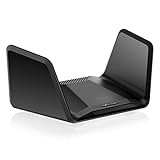
- 6GHz WiFi band dedicated to WiFi 6E devices including Samsung Galaxy S21 Ultra 5G. Enjoy 4K/8K video streaming, AR/VR gaming and HD videoconferencing
- Powerful 1.7GHz quad-core processor gives you exceptional 7.8Gbps WiFi speed, 6.5x faster than WiFi 5. Backward compatible for all WiFi devices on 2.4GHz and 5GHz bands
- Coverage up to 2,500 sq. ft. and 40 devices
- NETGEAR devices come with security measures built in as well as enhanced safety features and updates designed to help protect you and your family
- Replace your existing WiFi Router (separate modem or modem router required). Compatible with any Internet Service Provider plan up to 1 Gigabit including cable, satellite, fiber, DSL and more
A practical decision sequence
- Define the requirement. Decide whether you need private communication between networks, resilience to a regional disruption, lower latency for users in another geography, or some combination.
- Map the communication paths. List which networks must reach which others. For AWS, check whether direct pairwise connections are sufficient or whether transitive, centralized routing is needed.
- Check network prerequisites. For AWS peering, confirm non-overlapping address ranges and plan route-table entries and security rules on the relevant networks.
- Design recovery separately from connectivity. If regional resilience is required, specify how the application detects an unhealthy region, how traffic is directed elsewhere, and how data remains available or is recovered.
- Account for operating costs and complexity. Include duplicated regional infrastructure, synchronization, network management, and cross-region data transfer in the decision.
- Choose the smallest design that meets the requirement. Use direct peering for suitable limited connectivity; evaluate centralized routing as network needs grow; add regions when geography, resilience, or regulatory needs support the additional burden.
Product prices and availability are accurate as of the date/time indicated and are subject to change. Any price and availability information displayed on Amazon at the time of purchase will apply.




