What’s actually slowing this PC down?
Pick the symptom - the matching free tool is one click away.
Artificial muscles are engineered actuators that create muscle-like motion by changing shape in response to a stimulus. They are not one material or a direct replacement for biological muscle: some use pressurized air or liquid, while others respond to heat, electricity, humidity or chemicals. The best design depends on the job, because force, movement range, speed, durability, power needs and control requirements vary by technology.
What are artificial muscles?
An artificial muscle is a device or material system that deforms to produce useful movement, often contraction, extension, bending or twisting. The term describes a family of technologies rather than a single product. Like biological muscle, these systems can make compliant movement; unlike living muscle, each relies on a particular external input and mechanism. Reviews of robotic artificial muscles and soft-robotics actuators describe this range of approaches, from fluid-powered systems to electroactive polymers (IEEE Transactions on Robotics, 2019; ScienceDirect, 2022).
As an Amazon Associate I earn from qualifying purchases.
“Natural artificial muscles” is best understood as muscle-like engineered actuators, including designs inspired by how living organisms move or change volume. It does not mean the devices are natural tissue, nor that they all reproduce the structure or performance of a human muscle.
The Tool Desk
Outbyte PC Repair FREERepair Windows errors before they cause bigger problemsFix Now →Outbyte Driver Updater FREEFix the driver behind crashes, sound loss and screen glitchesFind Drivers →How do artificial muscles produce motion?
Fluid-powered muscles
Pneumatic actuators use pressurized gas, while hydraulic actuators use pressurized liquid. Pressure deforms a flexible chamber or structure, and the design turns that deformation into movement. These systems can provide high force and fast response, but pumps, valves and other supporting hardware can make a complete system bulky, noisy or energy-intensive (Molla, Chen and Xu, npj Robotics, 2026).
#1 Best Overall
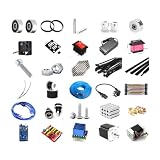
- This project was designed by Arctos Robotics. We have simply assembled the components needed for the robot based on this project and selected high quality parts to make it easier for Arctos v2.0 enthusiasts to purchase parts kits. The project website is located at arctosrobotics.com
- Powerful Components: Includes Arctos V2.0 Robotic Hardware Kit with six high-torque motors, assorted bearings, gears, pulleys and more for building complex robots.
- Easy Assembly: Extensive documentation and tutorials guide assembly, with all required hardware, fasteners and tools included for smooth construction.
- Endless Customization: Modular design allows for flexible configurations to achieve a wide range of robotic functions and motions for any project.
- Lifetime Support: Backed by expert technical assistance for help with any stage of your builds, from initial planning to ongoing programming and improvements.
Thermally activated materials
Shape-memory alloys and polymers change shape in response to temperature or a phase transition. Heat is therefore part of their actuation and control, and cooling can limit how quickly a system is ready to move again. Their response speed and practical demands differ from those of fluid-driven or electrically driven actuators (ScienceDirect, 2022).
Humidity- and solvent-responsive yarns
Some engineered yarns twist, contract or otherwise deform as they absorb or release moisture or solvent. They can turn a change in their environment into movement, rather than relying on a pump or direct electrical drive. Their usefulness depends on the working environment and the speed and repeatability required (ScienceDirect, 2022).
Rank #2
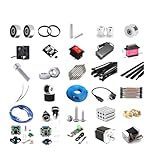
- Closed loop provides better precission, greater speeds and overall better performance.
Dielectric elastomer actuators
A dielectric elastomer actuator (DEA) places a soft insulating elastomer between compliant electrodes. Applying voltage creates opposing charges on the electrodes; electrostatic Maxwell stress compresses the elastomer through its thickness and expands it across its area. The actuator’s geometry converts that deformation into a chosen output, such as linear movement, bending, buckling or vibration. DEAs can be thin, light and fast, but high-voltage control and electrical breakdown are important design and safety concerns (Molla, Chen and Xu, 2026).
Dielectric fluid and ionic actuators
Dielectric fluid actuators (DFAs) use a soft enclosure and dielectric fluid; electrostatic stress redistributes the fluid to produce mechanical output. HASEL is a name used for some related electrohydraulic actuator designs. Ionic polymer-metal composites (IPMCs) work differently: electrically induced ion migration causes uneven swelling that bends the material. The 2026 review describes IPMCs as operating below 5 V, but low voltage alone does not establish suitability for a particular task; force, response speed and environmental stability remain constraints (Molla, Chen and Xu, 2026).
Rank #3

- Hands-On STEM Robot Learning---This STEM robot kit combines coding, electronics, and robotics into a fun, hands-on learning experience. Powered by an ESP32 controller and guided by 16 story-based tutorials, this robotics kit for kids helps children ages 8–12 and 12–16 build real-world STEM skills. Ideal for robotics for kids, classroom teaching, or at-home learning.
- 3 Programming Languages for All Skill Levels---This coding robot kit supports Scratch, Arduino, and Python, making it suitable for beginners and advanced learners alike. Scratch block coding is perfect for younger kids and first-time coders, while Arduino and Python support deeper learning for teens and tech enthusiasts. A flexible programmable robot designed to grow with students.
- Mobile-Friendly Coding – Learn Anytime, Anywhere---Unlike many traditional robot kits, this robotics kit supports programming on computers, laptops, tablets, and mobile devices like smartphones and iPads. Kids can code directly on mobile devices, making it especially suitable for schools, training centers, and self-learning at home. A practical STEM kit for kids in modern learning environments.
- Build Your Own Robot – Beginner-Friendly DIY---This robot building kit includes HD videos and illustrated step-by-step instructions, allowing kids to assemble the robot independently or with parents. No soldering required. The building process strengthens hands-on skills, patience, and confidence—making it a strong choice among STEM toys for kids and engineering kits for kids. Tutorial path: ACEBOTT Official Website → Resources → WIKI & Assembly Video Note: Batteries not included.
- App & Remote Control for Interactive Learning---Control the robot using the smartphone App (iOS & Android) or the included IR remote. Kids can instantly see how their code affects movement and behavior, reinforcing core coding logic. This robot kit keeps learning engaging while remaining easy to use for beginners.
How the main actuator types compare
No one type is best for every application. Compare the complete system, including its power source and support equipment, rather than judging an actuator only by how soft or strong its active material is.
| Actuator family | How it moves | Useful characteristics | Important trade-offs |
|---|---|---|---|
| Pneumatic or hydraulic | Pressurized gas or liquid deforms a chamber or structure. | Can deliver high force and fast response. | Pumps and valves may add bulk, noise and energy use. |
| Shape-memory materials | Heat or a phase transition changes the material’s shape. | Movement can come directly from a material change. | Thermal response and cooling can constrain speed and control. |
| Humidity- or solvent-responsive yarns | Moisture or solvent uptake and release changes the yarn’s shape. | Uses an environmental stimulus to produce motion. | Performance depends on operating conditions and required response. |
| DEAs and DFAs | Electric fields deform an elastomer or redistribute dielectric fluid. | Can be lightweight and compliant, with fast response and high achievable areal strain. | High-voltage operation, electrical breakdown, fluid leakage in relevant designs, control and lifespan need attention. |
| IPMCs | Electricity moves ions, creating asymmetric swelling and bending. | The 2026 review describes this class as operating below 5 V. | Force, response speed and environmental stability can limit use. |
The comparison reflects classes of devices, not guaranteed performance for every design. Output force and stroke or strain determine what load and movement range are possible; response speed matters for rapid action; fatigue life and reliability matter under repeated use. Efficiency, compliance, safe interaction, control complexity and fabrication needs also depend on the whole system (Molla, Chen and Xu, 2026).
Rank #4

- Highly-integrated Includes motor, driver circuitry, planetary reducer, and dual magnetic encoders in a lightweight 310g design
- Simplified Wiring Features a "One-in-One-out" wiring design, enabling easy daisy-chain connections for complex robot joints
- Dual Encoder Features 14-bit absolute magnetic encoders for high-precision position control
- Wide Voltage Compatibility Supports 24-60V input range (Rated 48V), optimized for modern battery-powered robots
- High Torque Density Delivers 14 N.m peak torque with a 10:1 reduction ratio using machined steel gears
Where are artificial muscles being used?
Research and development spans soft robotic grasping and manipulation, robot locomotion, haptic interfaces, and devices that interact with people. Biomedical soft robotics literature also discusses tools for diagnosis and drug delivery, wearable and assistive devices, prostheses, artificial organs and active simulators. These are areas of investigation, not evidence that every application is a widely available or clinically established product. A review of biomedical soft robotics identifies durability and reliability as continuing challenges (Cianchetti et al., Nature Reviews Materials, 2018; Biomimetics, 2025).
Softness can help an actuator conform to delicate objects or a human interface, but it does not by itself make a robot or device safe. The 2026 review frames soft robots as an alternative to rigid-bodied systems because of compliance and adaptability; actual safety depends on the full design, controls and conditions of use (Molla, Chen and Xu, 2026).
Best Value

- 35+ Guided Electronics Projects: Progress from LEDs and buttons to RFID access, real-time clocks, motion and distance sensing, environmental monitoring, motor control and interactive displays for STEM learning, coding clubs and maker projects
- More I/O and Memory for Larger Builds: The MEGA 2560 R3 provides 54 digital I/O pins, including 15 PWM outputs, 16 analog inputs, 4 hardware serial ports and 256 KB flash for projects that combine more sensors, controls and displays
- 200+ Components for Prototyping: Includes LCD1602, RC522 RFID, RTC, DHT11, HC-SR501 PIR, ultrasonic and water-level sensors, GY-521, MAX7219, keypad, joystick, rotary encoder, relay, SG90 servo, stepper motor, DC motor, breadboard and more
- Learn, Modify and Create: Follow 35+ guided lessons with example code, then adjust sensor thresholds, timing, display text, motor behavior and control logic to turn structured exercises into access systems, monitors, alarms and interactive projects
- Organized for Repeatable Learning: Pre-soldered modules, a solderless breadboard, storage case and small-parts box reduce setup time and keep sensors, LEDs, ICs, wires and other components easy to find between projects
What should you consider when building or evaluating one?
- Define the motion and load. Decide whether the task needs contraction, bending, twisting or another movement, and how much force and travel it requires.
- Match the input to the setting. Consider whether the design can practically use pressure, heat, voltage, humidity or another stimulus where it will operate.
- Include supporting hardware. Pumps, valves, high-voltage electronics, sensing, sealing and control can determine whether a promising actuator works as a usable system.
- Plan for repeated use. Fatigue, electrical breakdown, leakage and fabrication variation can affect reliability; a result from one device configuration is not a general lifespan guarantee.
- Assess safety at system level. Soft materials do not remove hazards from high voltage, pressure, heat or the device’s motion.
For early DEA prototypes, silicone elastomers are materials used in research, not turnkey artificial-muscle products. The 2026 review names commercial elastomers including Dow Sylgard 184, Wacker Elastosil, and Smooth-On Ecoflex and Dragon Skin, while noting trade-offs such as relatively low dielectric constant and energy density for the named silicone materials. A silicone elastomer kit for soft robotics can be a prototype supply, but silicone alone is not an actuator and does not make a high-voltage build safe (Molla, Chen and Xu, 2026).
What does a reported actuator lifetime mean?
Molla, Chen and Xu’s 2026 review reports more than 10,000 cycles for a 3M VHB 4910 dielectric elastomer actuator operated at approximately 6.5 kV. That figure belongs to the actuator configuration described in the review; it is not a universal life expectancy for VHB material or for artificial muscles as a class (Molla, Chen and Xu, 2026).
Quick Recap
Product prices and availability are accurate as of the date/time indicated and are subject to change. Any price and availability information displayed on Amazon at the time of purchase will apply.
Quick wins for a faster PC:
Fix the driver behind crashes, sound loss and screen glitchesFind Drivers →Repair Windows errors before they cause bigger problemsFix Now →



