Windows Errors? Fix Them Before They Spread
Repair common Windows errors and clear accumulated junk for a smoother, more stable PC - no reinstall needed.Free scan · no reinstallCrashes, No Sound, or Screen Glitches?
Random freezes, missing sound and display glitches usually trace back to one bad driver. Find and replace yours safely.Free scan · under a minuteSoil DNA can help researchers find enzymes that add new chemical groups to known antibiotic molecules. In a 2010 study, Jacob J. Banik and colleagues searched environmental DNA libraries for glycopeptide biosynthetic gene clusters, then used enzymes from soil-derived clones to make new sulfated derivatives. The work showed how metagenomic discovery can expand the chemical variety of natural products; it did not establish new treatments for patients.
What are “molecular decorators”?
Molecular decorators are tailoring enzymes: proteins that modify a natural-product molecule by attaching a chemical group, such as a sugar, sulfate, or methyl group. The enzyme changes a molecule’s structure without rebuilding its central framework.
| # | Preview | Product | Price | |
|---|---|---|---|---|
| 1 |
|
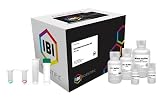
Soil DNA Extraction Kit, 4 Preps | $32.77 | Buy on Amazon |
| 2 |

|
Innovating Science - DNA Extraction Kit | $55.29 | Buy on Amazon |
| 3 |
|
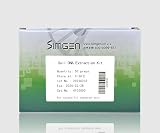
Soil DNA Purification Kit | $160.00 | Buy on Amazon |
| 4 |
|
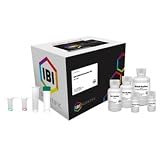
Soil DNA Extraction Kit, 50 Preps | $355.26 | Buy on Amazon |
| 5 |

|
Innovating Science DNA Extraction Kit, Learning Kit, for 2 Student Groups | Distance Learning at... | $20.55 | Buy on Amazon |
As an Amazon Associate I earn from qualifying purchases.
In this study, the target molecules were glycopeptides, a family of defensive antibiotics with a cyclic peptide core and attached sugars and sulfate groups. The research focused on modifying known glycopeptide molecules, rather than making their core structures from scratch.
How can soil DNA help make new antibiotic molecules?
Soil contains DNA from many microbes, including organisms that may be difficult to grow in a laboratory. Researchers can screen environmental DNA (eDNA) libraries for biosynthetic gene clusters—groups of genes associated with producing natural products—and look for enzymes encoded within them.
#1 Best Overall
The DNA itself does not decorate a molecule. It provides the genetic instructions for enzymes; researchers identify and test those enzymes, then apply them to a target compound. That makes the approach different from extracting finished antibiotics from soil.
What did the 2010 study find?
Banik, Craig, Calle, and Brady analyzed six glycopeptide biosynthetic gene clusters derived from soil eDNA libraries and tested enzymes associated with enzyme-rich clones. Chemistry World reported that the team identified six previously unknown tailoring enzymes and used them to generate 15 new sulfated glycopeptides with sulfate groups at particular positions. The six clusters and six enzymes are distinct reported counts; they should not be treated as interchangeable.
Rank #2
- DNA extraction kit for study of history of DNA discovery and DNA structure
- Develops student understanding of genetic inheritance, role of DNA and proteins in genetic expression, and how to use biological detergents, enzymes, and ethanol to isolate DNA from plant material
- Materials for 15 groups of students for hands-on learning
- Teacher’s manual and student study guide copymasters for instructional use
- Suitable for age 13 and older with adult supervision
The researchers tested enzyme-mediated derivatization in vitro and in vivo. In this context, those terms describe experimental work with the molecules and enzymes; they do not mean the compounds were tested as treatments in people. The derivatives were research outputs, not approved medicines.
The Tool Desk
Outbyte Driver Updater FREEFix the driver behind crashes, sound loss and screen glitchesFind Drivers →Outbyte PC Repair FREEClear out junk files and repair common Windows errorsFree Scan →Why choose glycopeptides?
Glycopeptides offered known core structures and many existing derivatives, giving the researchers a useful way to show that enzymes from environmental pathways could add new modifications. Sean F. Brady explained the choice to Chemistry World: “We chose glycopeptides as model compounds because there are many known derivatives out there.”
Rank #3
- The special sample tube can efficiently and simultaneously release the total DNA of various microorganisms in the soil. Specially designed extraction reagents are highly effective in removing PCR inhibitors such as humic acid. Instruments required: A high-speed centrifuge with rotor for 2 ml centrifuge
The broader idea was to find enzymes from different pathways that could act selectively on a shared molecular core. If successful, such enzymes can provide access to modification patterns that may be difficult to achieve through conventional synthesis alone.
Quick Recap
Best Value
- EXPLORE DNA || Explore the discovery and the history of DNA, DNA structure, genetic inheritance and the role that DNA and proteins play in genetic expression
- ACTIVITY || Learners will experiment using biological detergents, enzymes and ethanol to extract DNA from fruits or vegetables
- EXCELLENT FOR REMOTE LEARNING || Perfect for distance learning and home schooling - includes instruction manual, worksheets and enough materials for 2 groups of students. Makes an exciting home science project!
- MATERIALS INCLUDED || Kit includes 7.5% SNS/1.5% NaCl, pepsin, 95% ethanol, zipper bags, filters, plastic tubes, graduated pipettes, cups and stirrers
- INNOVATING SCIENCE || Innovating Science distance learning kits are designed to offer engaging activities and educational content to for teachers to use with small groups and to distribute to remote students, or for parents with learners at home. Kits incorporate applied math and science principles into home school and distance learning projects
What the result does—and does not—show
- It demonstrates a discovery strategy: environmental DNA can be screened for enzyme sources, and candidate enzymes can be tested on known natural products.
- It expands chemical diversity: the study produced sulfated glycopeptide derivatives with modifications at particular positions.
- It does not demonstrate clinical benefit: the reported derivatives were not shown here to be effective or approved human treatments.
- It is not a guarantee of broad success: the authors proposed that eDNA-derived enzymes could be broadly useful for derivatizing known natural products, but that does not establish that every enzyme or compound family will work with the approach.
Sources
- Akshat Rathi, “Mining soil DNA for molecular decorators,” Chemistry World, 21 October 2010.
- Jacob J. Banik, Jeffrey W. Craig, Paula Y. Calle, and Sean F. Brady, “Tailoring Enzyme-Rich Environmental DNA Clones: A Source of Enzymes for Generating Libraries of Unnatural Natural Products,” Journal of the American Chemical Society, 132(44), 15661–15670; published online 14 October 2010.
- PubMed record, PMID 20945895.
Product prices and availability are accurate as of the date/time indicated and are subject to change. Any price and availability information displayed on Amazon at the time of purchase will apply.




