Loosing a Logitech wireless mouse receiver is frustrating because most 2.4GHz models can’t “just reconnect” without that tiny USB dongle. The good news: some Logitech mice support Bluetooth, and several others can pair to a compatible Logitech receiver type (Unifying or Bolt).
This guide walks you through every viable way to connect without the original receiver—starting with identifying your mouse model, then choosing the right pairing path on Windows or macOS, plus what to do when pairing fails.
As an Amazon Associate I earn from qualifying purchases.
Why a Lost Logitech Receiver Feels So Blocking (and When You Don’t Need It)
Logitech “wireless” usually means one of two technologies: Bluetooth (no USB receiver required) or 2.4GHz via a USB receiver (receiver required unless you can pair to a compatible replacement/receiver type).
If your mouse is Bluetooth-capable, you can connect without any receiver at all. If it’s a Unifying or Bolt model, you’ll need the correct receiver type—either one you already have, a replacement, or a compatible Logitech receiver that supports the same pairing system.
#1 Best Overall
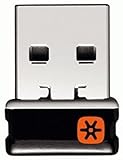
- Logitech Unifying receiver for mouse and keyboard
- Logitech Unifying receiver (M/N:C-U0007)
- Will work with any product that display the Unifying Logo
- The unifying receiver working with 7 mice and keyboards in the same time.
- Compatible with: Logitech wireless mouse M505 Marathon Mouse M705 Logitech Mouse M905 Logitech keyboard K340 Logitech keyboard K350
First Identify Your Mouse Type: Bluetooth, Unifying, or Bolt
Before you buy anything or run pairing software, confirm what your mouse is. The label is often printed on the bottom, near the serial number, and may include terms like Bluetooth, Unifying, or Bolt.
- Bluetooth mouse: can pair to a computer or iPad/iPhone without any USB dongle. Often has a Bluetooth mode button.
- Logitech Unifying: uses a specific Logitech USB receiver that can pair multiple devices. Look for “Unifying” on the receiver packaging or receiver label.
- Logitech Bolt: uses Bolt-specific receivers, typically labeled “Bolt.” Bolt is not the same as Unifying.
Model number check: locate the model number on the mouse underside (example formats often look like M185, M720, M720 Triathlon, MX Anywhere 3). Cross-check it on the Logitech support page if the hardware labeling isn’t clear.
Method 1: Pair a Bluetooth Logitech Mouse (No Receiver Required)
If your mouse supports Bluetooth, you can connect it directly. This is the only “receiver-free” scenario that’s universally straightforward.
The Tool Desk
Outbyte Driver Updater FREEScan for outdated or missing drivers - takes under a minuteDriver Scan →Outbyte PC Repair FREEClear out junk files and repair common Windows errorsFree Scan →Windows 10 / Windows 11
- Turn on the mouse and set it to Bluetooth mode (some models require switching a mode button to the Bluetooth icon).
- On the PC, open Settings → Bluetooth & devices.
- Click Add device → Bluetooth.
- Wait for the mouse to appear (it may show as the model name).
- Select the mouse and click Pair.
If you see a pairing code prompt, confirm it on the mouse or accept the prompt shown on-screen. Bluetooth mice usually connect in seconds after the device is discovered.
macOS (Monterey, Ventura, Sonoma)
- Turn on the mouse and switch to Bluetooth mode.
- Open System Settings (or System Preferences on older macOS).
- Go to Bluetooth.
- Wait for the mouse to show up, then click Connect.
On macOS, if the mouse doesn’t appear, remove it (if it was previously paired) and re-enter pairing mode.
Rank #2

- Long-lasting and Versatile: Designed for endurance with 24-month battery life (1), M720 is compatible with computers, laptops and tablets, Windows, macOS, Chrome OS, Linux, and iPadOS.
- Comfortable Grip: Crafted for the right hand, this full-sized wireless PC mouse features a rubber body and a sculpted design for palm rest grip and comfort like never before
- Hyper-Fast Scrolling: Fly through long documents and web pages with a simple spin of the mouse wheel with the additional instant-stop feature and an option to switch to click-to-click scrolling
- Dual Connectivity: Connect the cordless mouse via Bluetooth or the wireless Logitech Unifying receiver, which lets you connect up to 6 compatible Logitech peripherals with only 1 USB receiver
- Multi-Device Wireless Mouse: Move cursor, text, and files across multiple computers with Logitech FLOW; easily switch between up to 3 computers or laptops with the touch of a button
Method 2: Use a Compatible USB Receiver (Unifying/Bolt) You Already Have
If your mouse is 2.4GHz and uses Unifying or Bolt, the core trick is simple: you must use a receiver that supports the same pairing system.
Example logic: a Unifying mouse can pair to a Unifying receiver. A Bolt mouse won’t pair to an Unifying receiver, even if the USB port is the same.
On Windows (Unifying receiver path)
- Plug in the compatible receiver (the one labeled Unifying) to a USB port directly on the PC (avoid hubs at first).
- Open the Logitech pairing utility, typically Logitech Unifying Software from Logitech. (Install if needed.)
- Put the mouse into pairing mode. Many Unifying mice use a Connect button or a specific mode button sequence.
- In the software, choose the option to Add a device and follow the prompts.
- Click the on-screen step to confirm pairing (the mouse should work once paired).
Where is the Connect button? Often inside the battery compartment or on the underside. If there’s a small Connect button, press and hold it until the pairing LED starts blinking.
On macOS (Unifying receiver path)
- Plug in your compatible Unifying receiver.
- Enable Bluetooth only if you’re dealing with a Bluetooth mouse—otherwise it’s not required for Unifying 2.4GHz.
- Use Logitech’s Unifying pairing utility for macOS if available for your macOS version, then select Add device.
- Enter pairing mode on the mouse and follow the on-screen prompts.
Some older macOS setups may make Unifying utilities less consistent. If the pairing tool won’t run properly, try Windows or use a different USB port as part of troubleshooting.
Method 3: Replace the Missing Receiver (Official Best Path)
If you don’t have a compatible spare receiver, replacement is usually the most reliable fix. Logitech sells replacement receivers and also ties pairing to device families.
Rank #3

- Compact Mouse: With a comfortable and contoured shape, this Logitech ambidextrous wireless mouse feels great in either right or left hand and is far superior to a touchpad
- Durable and Reliable: This USB wireless mouse features a line-by-line scroll wheel, up to 1 year of battery life (2) thanks to a smart sleep mode function, and comes with the included AA battery
- Universal Compatibility: Your Logitech mouse works with your Windows PC, Mac, or laptop, so no matter what type of computer you own today or buy tomorrow your mouse will be compatible
- Plug and Play Simplicity: Just plug in the tiny nano USB receiver and start working in seconds with a strong, reliable connection to your wireless computer mouse up to 33 feet / 10 m (5)
- Better than touchpad: Get more done by adding M185 to your laptop; according to a recent study, laptop users who chose this mouse over a touchpad were 50% more productive (3) and worked 30% faster (4)
Finding the correct part
When you order a replacement, match the receiver type and the part number. On many compatible Logitech receivers, you’ll find a label like:
Do these 3 things before closing this tab:
1Clear out junk files and repair common Windows errors2Scan for outdated or missing drivers - takes under a minute3Repair Windows errors before they cause bigger problems- Unifying (commonly called a Unifying receiver)
- Bolt (often a Bolt receiver)
To get it right, check the packaging, the receiver label, or the mouse model documentation. Bluetooth mice don’t require this step.
Pairing after replacement
- Plug the new replacement receiver into your computer.
- Install the pairing software for your receiver type: Unifying Software for Unifying, or the appropriate Bolt pairing flow for Bolt.
- Put the mouse into pairing mode (Connect button/LED blinking or a Bluetooth mode switch, depending on your mouse tech).
- Run the pairing wizard and confirm device addition.
- Verify movement and button functions before closing the wizard.
Keep your receipt and receiver packaging for the first week in case you need an exchange due to mismatch.
What You Can’t Do (Common Misconceptions)
These are the traps that waste time:
- A random “universal” USB receiver usually won’t work. Logitech pairing is device-family specific. Universal receivers typically don’t replicate Logitech’s pairing schemes reliably.
- Unifying ≠ Bolt. They’re different ecosystems. A Bolt mouse generally requires a Bolt receiver.
- Bluetooth pairing won’t work on non-Bluetooth mice. If your mouse doesn’t support Bluetooth, switching Bluetooth on won’t magically make it appear in macOS/Windows device lists.
- Reinstalling drivers alone won’t fix pairing. Pairing is controlled by the receiver handshake and pairing mode.
Troubleshooting: Pairing Fails or the Cursor Won’t Move
When pairing doesn’t complete, the fix is usually one of: incorrect mode, low battery, receiver/USB issue, or wrong receiver type.
Basic checks that fix most cases
- Replace batteries (or fully charge if rechargeable). Fresh alkaline batteries can be the difference between blinking and silence.
- Remove interference: move the receiver to another USB port, ideally closer to the computer (avoid USB 3.0 ports if you notice noise).
- Power-cycle: unplug receiver, restart PC, reinsert receiver, then enter pairing mode again.
- Confirm the correct switch position: Bluetooth vs 2.4GHz vs channel (some mice have a mode slider).
Receiver pairing won’t complete
Try this sequence:
- In your pairing utility, cancel out, then close it fully.
- Unplug the receiver, then plug it back into a different USB port.
- Put the mouse into pairing mode again (hold the Connect button until the LED blinks).
- Run the pairing wizard again and add the device.
- If it still fails, confirm the receiver type matches the mouse: Unifying vs Bolt.
If you paired previously with the same mouse, clear old pairing entries when possible. Bluetooth mice can show as paired but non-functional until you remove and reconnect.
Free tools Windows power users keep installed
One-click scans. No signup required.
Rank #4

- TECHNICAL REQUIREMENT: This is not a standard plug-and-play receiver. It strictly requires -downloading the official Logitech Unifying Software to sync and pair with your compatible keyboard or mouse
Mouse connects but feels laggy or drops
- Receiver distance: keep the receiver within a few feet of the mouse. If you use a USB extension, use a short one.
- Battery level: even partially drained batteries can cause dropouts.
- USB interference: swap ports (test both front and back ports on desktops).
Alternatives If You’re in a Hurry
Sometimes you need immediate cursor control while you wait for a replacement receiver.
Try Bluetooth mode if your model supports it
Many Logitech mice with multi-mode support can operate over Bluetooth. If your mouse has a mode switch with a Bluetooth symbol, this is often the fastest path to get working again without ordering anything.
Borrow a compatible receiver temporarily
If you have another Logitech Unifying receiver or Bolt receiver that matches the mouse type, borrowing for a few minutes can restore functionality. Pairing typically persists to the receiver for future use.
Use an interim wired mouse
A cheap wired USB mouse can keep your system usable while you resolve the receiver replacement. It won’t solve the wireless setup, but it prevents you from being stuck.
Recommended Free Tools
FAQs
Can I connect a Logitech 2.4GHz mouse without the receiver?
Only in limited cases. If your model supports Bluetooth, yes. If it’s Unifying or Bolt 2.4GHz, you’ll need a compatible receiver of the correct type (original, compatible, or replacement).
Best Value

- FOR BACKUP OR MULTI-COMPUTER USE - Have it handy in case you need to replace the receiver that came with your Logi Bolt wireless device. Connect to two different computers with a strong, secure Logi Bolt wireless connection on both devices. Use it with your Flow-enabled Logi Bolt mouse for your multi-computer workflows. These are just a few reasons to buy a Logi Bolt receiver.
- RELIABLE, SECURE WIRELESS - Designed for security and high performance, Logi Bolt delivers a strong and secure, no drop-off connection for up to 10 meters (33 feet)¹, even in congested wireless environments. Compatible with: Windows, macOS, Linux, Chrome OS.
- DISCRETE AND CONVENIENT - One port is all it takes. Once the receiver is plugged in, you can keep it installed. Take your laptop and connected Logi Bolt devices with you to different workspaces and keep working.
- ONE RECEIVER - 6 DEVICES - Connect up to 6 Logi Bolt wireless keyboards and mice to one computer with a single Logi Bolt receiver and forget the hassle of multiple USB receivers. Plus, keep one wireless keyboard/mouse set in each workspace, then simply move your laptop into range. No need to carry or commute with mice or keyboards.
How do I know if my Logitech mouse is Unifying or Bolt?
Look for labels on the mouse underside and on the receiver or packaging. The receiver type is usually printed as “Unifying” or “Bolt.” If your mouse supports multiple modes, it may also show Bluetooth support.
Will a Unifying receiver work with a Bolt mouse?
No. Bolt and Unifying are different pairing ecosystems. You typically need a Bolt receiver for a Bolt mouse.
Where is the Connect button on my Logitech wireless mouse?
Many Unifying mice hide it under the battery cover. Others place a small pairing button on the underside. Look for a tiny Connect label and confirm the LED behavior when you press it.
My mouse won’t show up in Bluetooth settings. What should I do?
Switch the mouse into Bluetooth mode, then remove any previous device entry on your computer and pair again. Also check battery charge, because weak power can prevent the mouse from advertising.
Bottom Line
If your Logitech mouse is Bluetooth-capable, you can connect without the receiver by pairing through Windows or macOS Bluetooth settings. If it’s a 2.4GHz Unifying or Bolt model, you’ll need a compatible receiver type—either one you already have or an official replacement—then pair using the correct Logitech pairing software.
Once you identify the mouse tech (Bluetooth vs Unifying vs Bolt), the rest is mostly a predictable setup and troubleshooting checklist.
Quick Recap
Product prices and availability are accurate as of the date/time indicated and are subject to change. Any price and availability information displayed on Amazon at the time of purchase will apply.




