Recommended Free Tools
LOGOS is a generative AI strategy for designing protein binders to targets that are difficult to address with conventional structure-guided methods. Chemistry World reported that the approach produced tight binders for 39 of 43 tested targets, including one dynorphin binder that blocked pain pathways in cultured human cells. Those results are promising laboratory findings—not evidence of a treatment for people.
Why are these proteins called “undruggable”?
In this context, “undruggable” is shorthand, not a claim that a protein cannot be targeted by any kind of medicine. Intrinsically disordered regions do not settle into one stable, pocket-like shape. That makes them difficult targets for conventional small molecules designed around a fixed protein structure.
As an Amazon Associate I earn from qualifying purchases.
LOGOS instead aims to create binding proteins that recognize disordered regions and peptides. The approach was inspired by designed ankyrin repeat proteins (DARPins), engineered repeat-protein scaffolds used as binders.
The Tool Desk
Outbyte Driver Updater FREEFix the driver behind crashes, sound loss and screen glitchesFind Drivers →Outbyte PC Repair FREEClear out junk files and repair common Windows errorsFree Scan →How does LOGOS design a binder?
Rather than searching experimentally through a large library of finished binders, LOGOS combines prefabricated binding-pocket parts into candidate designs. Chemistry World’s 29 July 2025 report describes a library of 1,000 parts and trillions of possible combinations. These figures are reported by Chemistry World and are not independently verified here against the primary paper.
#1 Best Overall
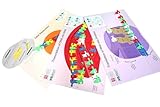
- Identify essential enzymes like helicase and polymerase
- Model replication of the leading and lagging strands of DNA
- Explore transcription as they copy one strand of DNA into mRNA using an RNA polymerase
- Engage in translation/protein synthesis as they decode the mRNA into protein on the ribosome placemat
- Reenact the different results of the Meselson and Stahl experiments
The design goal is to assemble a pocket suited to a target whose shape may not be fixed. As co-lead author Kejia Wu put it, “I was curious whether a system like this could exist for fully disordered regions, but without the tedious library screening.”
What did the experiments show?
Chemistry World reports that the team tested 43 targets and obtained tight binders for 39. The report does not provide the definition of “tight binder” or target-by-target results, so the figure should be read as the reported outcome rather than a universal success rate for future targets.
Rank #2
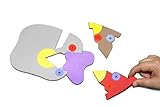
- Explore how enzymes interact with substrate
- Investigate the active site of an enzyme and its specificity
- Simulate competitive and allosteric inhibition
- Contrast the lock-and-key and induced fit theories using evidence
- Examine how an enzyme may affect activation energy
- Dynorphin: A designed binder reportedly blocked pain pathways in cultured human cells. This is a cell-culture result, not evidence that the binder relieves pain in people.
- Cancer-linked signalling proteins: Researchers designed binders for three such proteins.
- Cell-surface protein: The team demonstrated targeting and fluorescent tagging of a protein linked to cancer.
These demonstrations show experimental targeting and biological activity in specific settings. They do not establish a cancer or pain therapy, a diagnostic product, or a benefit in patients. The primary study is K. Wu et al., Science (2025), DOI 10.1126/science.adr8063; the experimental details here are drawn from Chemistry World’s account.
Quick wins for a faster PC:
Scan for outdated or missing drivers - takes under a minuteDriver Scan →Repair Windows errors before they cause bigger problemsFix Now →Fix the driver behind crashes, sound loss and screen glitchesFind Drivers →How strong is the evidence—and what remains uncertain?
The reported findings establish that the strategy can yield binders against the tested targets and that at least one binder had a functional effect in cultured cells. They do not answer several questions needed to judge how broadly the method will work.
Rank #3

- 50 individual phospholipid molecule models demonstrate hydrophobic and hydrophilic concepts to create monolayers, micelles, and bilayers
- Water molecule models show polarity and how water interacts with cell membranes
- Bilayer membrane model creates a cell structure that is flexible yet sturdy
- Active and passive transport is made easy with 5 different proteins, ion models, and ATP
Target length and disorder
David Baker acknowledged a limit involving the length of disordered region LOGOS can target. Pranam Chatterjee of the University of Pennsylvania also questioned how representative the tested set was of fully disordered proteins. As quoted by Chemistry World, he said the targets were “mostly short peptides (8–40 residues) with inherent structural propensity, not true disordered proteins”. The 8–40-residue range is Chatterjee’s characterization in that report, not a complete target-length analysis independently checked against the paper.
Specificity
Binding to a chosen target is not enough if a designed binder also binds similar molecules. Birte Höcker, who heads a protein-design lab at the University of Bayreuth, said: “Many binders are shown to have high affinity for their targets. [But] how specific this is and whether very similar targets can be discriminated is not fully explored.” She also wanted more information about what determines specificity and how binding pockets interact with peptide side chains.
Rank #4
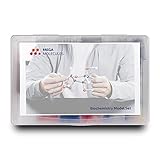
- Perfect for Visual Learners - This hands-on Biochemistry Model Kit is a tool that doesn’t just show you molecular structures; it lets you explore the magic of bonding, resonance, and chemical interactions like never before. It’s your key to understanding how molecular 3D structures influence chemical properties, such as in nucleotides and their base pairs, or in lipids and their hydrophobic behavior. You'll connect the dots between a compound's physical and chemical properties and its three-dimensional structure, deepening your understanding and making complex concepts intuitive.
- Versatile & Suitable for All Learning Levels - Whether you're a biochemistry student, an educator, or just passionate about molecular science, this model set will elevate your learning experience. It’s a powerful way to transform abstract molecular diagrams into tangible, interactive models you can touch, build, and explore. Get ready to turn curiosity into mastery—because biochemistry isn't just a subject, it's the science of life itself. With the Biochemistry Model Set, the possibilities are endless. Don’t just learn it—build it, see it, and truly understand it!
- High-Quality, Durable Components - Components are color-coded to international standards, with scaled bond lengths for accuracy. Rigid bonds allow easy single-bond rotation, while flexible bonds are ideal for double and triple bonds. Lost parts? No problem—Mega Molecules offers replacement atoms and bonds to keep your kit complete and long-lasting.
- Easy Assembly & Disassembly - Unlike many competitor kits that require special tools and make loud popping sounds during assembly or disassembly, Mega Molecules Model Sets offer a quiet, hassle-free experience. Atoms and bonds connect with a gentle push-and-twist motion and easily disconnect with a pull-and-twist—no noise, no tools needed. This thoughtful design minimizes distractions, making it perfect for classrooms, study sessions, and testing environments, ensuring a smooth, focused learning experience.
- Satisfaction Guarantee - Backed by a refund or replacement policy, this biochemistry building set offers a risk-free investment in chemistry education. Whether you're studying the protein structure, the base pairing in DNA, or the intricacies of a glycosidic linkage, this set brings your biochemistry lessons to life. Use it to model the relationships between carbon, hydrogen, oxygen, nitrogen, phosphorus, and sulfur as they form covalent bonds. With every build, you’ll gain deeper insights into the connections between molecular structure and function.
Clinical relevance
The reported work includes laboratory experiments and cultured-cell findings. The account does not establish animal efficacy, clinical testing, safety in people, or a treatment benefit. Potential therapeutic and diagnostic applications therefore remain future possibilities, not available uses.
What could LOGOS mean for protein design?
The central advance is a design strategy aimed at targets that lack a single stable structure, using modular pocket parts rather than relying only on a fixed structural pocket. If the approach proves capable of handling longer, genuinely disordered regions while maintaining selectivity, it could broaden the set of targets considered for protein-based diagnostics or therapies.
Best Value

- Compare and contrast models of phospholipids
- Discover the spontaneous formation of cell membranes
- Create a micelle and liposome potential for drug delivery
- Explore dehydration synthesis reaction in a triglyceride or phospholipid
- Identify and simulate the function of proteins involved in membrane transport
That possibility is distinct from showing that a particular binder is safe, selective, deliverable, or effective as a medicine. The current report supports a promising experimental method and early functional demonstrations; it does not support calling its binders drugs.
Quick Recap
Product prices and availability are accurate as of the date/time indicated and are subject to change. Any price and availability information displayed on Amazon at the time of purchase will apply.




