Free tools Windows power users keep installed
One-click scans. No signup required.
The Intel DQ77KB is a compact Mini-ITX motherboard built around the LGA1155 socket and Intel Q77 chipset, designed for systems where low power consumption, small size, and business-class reliability matter more than gaming features or heavy expansion. Its thin Mini-ITX layout, external DC power input, and support for efficient 2nd and 3rd generation Intel Core processors made it a strong fit for compact desktops, kiosks, digital signage, and embedded deployments.
Unlike many consumer LGA1155 boards, the DQ77KB focused on practical efficiency: stable chipset features, integrated graphics support, mulle display outputs, flexible storage, and Intel manageability technologies. For builders working with tight enclosures or energy-conscious installations, it offered a clean path to a capable x86 system without the bulk of a standard ATX power supply or full-size desktop platform.
As an Amazon Associate I earn from qualifying purchases.
Intel DQ77KB Overview and Target Use Cases
The Intel DQ77KB is a compact Mini-ITX motherboard built around the LGA1155 socket and Intel Q77 Express chipset, aimed less at gaming desktops and more at reliable, low-power systems that need desktop-class compatibility in a very small footprint. Unlike many consumer Mini-ITX boards of its era, the DQ77KB was designed with business, embedded, and thin-client style deployments in mind. Its thin Mini-ITX layout, external DC power support, and Intel business platform features made it attractive for builders who wanted a quiet, efficient, and serviceable machine without moving to a proprietary small-form-factor PC.
Recommended Free Tools
One of the board’s defining traits is its low-profile design. The DQ77KB follows the thin Mini-ITX concept, which places emphasis on reduced height, direct DC input, and compatibility with slim enclosures. This made it suitable for systems that needed to sit behind a display, inside a kiosk, under a counter, or in a shallow industrial chassis. With the right processor and cooling solution, it could be used in builds that were much smaller and quieter than a typical tower while still using standard Intel desktop CPUs from the Sandy Bridge and Ivy Bridge generations.
#1 Best Overall

- Capacity: 8GB
- Speed: PC3-12800 DDR3 1600MHz
- Form Factor: 204 pin SODIMM
- Halogen Free; ROHS Warranty: Lifetime
Common roles for the Intel DQ77KB
- Compact office desktops: The board worked well for everyday productivity PCs running office software, web applications, email clients, and lightweight multitasking workloads.
- Digital signage systems: Its small size, stable chipset, and integrated graphics support made it practical for driving displays in retail, hospitality, education, and corporate environments.
- Embedded and kiosk PCs: The thin Mini-ITX form factor suited enclosed installations where serviceability, low heat output, and predictable hardware behavior mattered.
- Home lab and appliance builds: Builders used boards like the DQ77KB for low-power servers, firewall appliances, monitoring boxes, and dedicated utility machines.
- Quiet media or control systems: Paired with a modest Core i3, Pentium, or low-power Core i5, it could provide enough performance for playback, control panels, or automation tasks.
The DQ77KB appealed to integrators because it combined standard desktop CPU flexibility with a platform that was easier to deploy in volume than many enthusiast boards. The Q77 chipset brought a business-oriented feature set, including support for Intel management technologies on compatible processors and configurations. For organizations maintaining fleets of small PCs, that class of platform was valuable because it favored stability, remote administration, and long-term consistency over overclocking or flashy consumer extras.
Its audience was also shaped by what it intentionally avoided. The board was not meant for high-wattage processors, large discrete graphics cards, or expansion-heavy workstations. Instead, it was best matched with efficient 35 W to 65 W LGA1155 processors, SO-DIMM memory, onboard display outputs, and compact storage. In that role, the Intel DQ77KB offered a practical middle ground: smaller and more power-efficient than a conventional desktop motherboard, but more standardized and upgradeable than many fixed-configuration mini PCs. For builders prioritizing reliability, low noise, low energy use, and clean installation in tight spaces, it was a particularly sensible LGA1155 platform.
LGA1155 CPU Support and Q77 Chipset Features
The Intel DQ77KB is built around the LGA1155 socket and Intel Q77 Express chipset, placing it in the Ivy Bridge and Sandy Bridge desktop platform family. Its strongest fit is with low-to-mid-power 2nd and 3rd generation Intel Core processors, especially Core i3, Core i5, and selected Core i7 chips that stay within the board’s thermal and power limits. In compact systems, CPUs such as 35 W and 45 W “T” series models are especially attractive because they reduce heat output while still offering full x86 desktop compatibility.
Windows Errors? Fix Them Before They Spread
Repair common Windows errors and clear accumulated junk for a smoother, more stable PC - no reinstall needed.Free scan · no reinstallOutdated Drivers Are Slowing You Down
One free scan finds every outdated or missing driver and matches the right update for your exact hardware.Free scan · exact hardware matchCPU support depends on BIOS revision, so Ivy Bridge processors generally require an appropriate firmware version, while Sandy Bridge support is more broadly associated with the original LGA1155 platform. The board also supports certain Pentium and Celeron LGA1155 processors, making it suitable for lower-cost thin clients, kiosks, point-of-sale systems, and basic office desktops. Because the DQ77KB uses a thin Mini-ITX style layout and external power design, choosing a processor is not only about socket compatibility; cooling clearance, adapter wattage, and sustained load behavior matter just as much.
Q77 chipset capabilities
The Q77 chipset was Intel’s business-oriented 7 Series chipset for LGA1155 systems. Compared with consumer chipsets of the same era, Q77 emphasized manageability, stability, and deployment features rather than overclocking. It brought native support for USB 3.0, SATA 6 Gb/s, PCI Express connectivity, Intel Rapid Storage Technology, and platform management functions that made the DQ77KB more useful in fleets of small commercial PCs than a typical home theater motherboard.
- Processor family: 2nd and 3rd generation Intel Core, plus compatible LGA1155 Pentium and Celeron models.
- Memory support: DDR3 SO-DIMM memory, commonly used to keep the board compact and low profile.
- Integrated graphics path: display output driven by the CPU’s Intel HD Graphics engine, depending on the installed processor.
- Storage platform: Q77 support for SATA storage, including faster SATA 6 Gb/s ports for SSD-focused builds.
- Business features: compatibility with Intel vPro and Active Management Technology when paired with supported CPUs and network configuration.
One of the practical advantages of Q77 is that it pairs well with integrated graphics. Since the graphics engine resides on the CPU, the DQ77KB can run without a discrete GPU, which is ideal for slim desktops, digital signage players, medical carts, control terminals, and appliance-like systems. This keeps power consumption and heat output low while still allowing multi-display productivity or media playback, depending on the processor and available display outputs on the board.
The chipset also defines what the DQ77KB is not meant to be. It is not an enthusiast overclocking platform, and it is not designed for high-wattage gaming CPUs running at full load in cramped cases. Its value comes from the combination of mature LGA1155 CPU options, business-class chipset features, and stable integrated I/O. For builders working with spare Ivy Bridge or Sandy Bridge processors, the DQ77KB offered a reliable way to turn mainstream desktop silicon into a compact, efficient, and centrally manageable system.
Do these 3 things before closing this tab:
1Repair Windows errors before they cause bigger problems2Scan for outdated or missing drivers - takes under a minute3Clear out junk files and repair common Windows errorsRank #2
- 8GB PC3-12800S DDR3 1600MHz 204 pin SODIMM for Intel DQ77KB Motherboard
- Capacity: 8GB
- Speed: PC3-12800 DDR3 1600MHz
- Form Factor: 204 pin SODIMM
- Halogen Free; ROHS Warranty: Lifetime
Low-Power Design and External Power Input
The Intel DQ77KB stands out from many LGA1155 Mini-ITX boards because it was designed around thin, low-power systems rather than conventional tower desktops. Instead of using a standard 24-pin ATX connector and relying on a bulky internal power supply, the board accepts DC input directly. This made it well suited for slim desktops, point-of-sale terminals, kiosks, digital signage players, and embedded PCs where reducing internal cabling, heat, and chassis volume mattered as much as raw performance.
Its external power approach typically pairs the motherboard with a laptop-style power brick, with DC power delivered through the rear input or onboard power connector depending on the enclosure and integration method. This design allowed system builders to avoid an internal ATX PSU entirely, improving airflow in compact cases and simplifying thermal planning. For builds using a 35 W or 45 W Sandy Bridge or Ivy Bridge processor, the total platform power could remain modest enough for quiet operation with a small CPU cooler and minimal chassis ventilation.
Power design characteristics
- Direct DC input: Enables use with external AC adapters, reducing the need for an internal PSU in thin Mini-ITX enclosures.
- Low-profile system focus: Works well in cases designed for compact desktops, all-in-one-style systems, and embedded deployments.
- Efficient CPU pairing: Best matched with lower-TDP LGA1155 processors, especially Core i3, Core i5 T-series, Pentium, and Celeron models.
- Reduced cable clutter: Fewer internal power leads improve assembly and airflow in cramped chassis.
- Quiet build potential: Lower heat output makes fan profiles easier to tune for near-silent operation.
The board’s power delivery was not aimed at high-wattage enthusiast CPUs or heavy overclocking. Its value came from providing stable, business-class operation in compact systems where predictable power draw was more useful than peak performance. A Core i5-3470T or Core i3-3220T, for example, offered enough processing power for office workloads, signage playback, light server duties, or appliance-style applications while keeping heat and energy use under control. Even with a standard 55 W or 65 W desktop processor, builders generally had to pay closer attention to adapter capacity, cooler clearance, and enclosure airflow.
Because the DQ77KB used Intel’s desktop platform in a thin Mini-ITX format, it offered a practical middle ground between ultra-low-power mobile boards and larger desktop motherboards. Compared with Atom-class systems of the same era, it could deliver much stronger single-threaded and general-purpose performance. Compared with a full ATX LGA1155 build, it was easier to package into a small enclosure and run from an efficient external adapter. That balance explains much of its appeal in energy-conscious deployments: it could behave like a real desktop PC while fitting into spaces and power budgets normally associated with much smaller systems.
Expansion, Storage, and Connectivity Options
The Intel DQ77KB is compact, but it was not designed as a stripped-down board. Its expansion layout reflects its thin Mini-ITX purpose: instead of a full-height PCIe slot intended for a gaming GPU, it focuses on low-profile, embedded-friendly, and small-form-factor expansion. This made it especially useful for compact office PCs, digital signage players, kiosks, point-of-sale terminals, and appliance-style systems where networking, storage, display output, and reliability mattered more than add-in graphics performance.
For internal expansion, the board provides a PCI Express Mini Card slot, commonly used for wireless networking, mobile broadband, or specialized embedded modules depending on the build. In many deployments, this was paired with Intel Wi-Fi or a half-size adapter to keep cabling and external dongles to a minimum. The board also includes internal headers for features such as front-panel USB, serial connectivity, and chassis integration, which helped system builders adapt it to commercial enclosures rather than only consumer desktop cases.
Storage support
Storage flexibility is one of the DQ77KB’s strengths for a low-power LGA1155 motherboard. It supports SATA storage for standard 2.5-inch SSDs or hard drives, making it suitable for silent solid-state systems as well as small file server or appliance roles. Depending on configuration, builders could use a fast SSD for the operating system and a larger secondary drive for local data, logging, caching, or media storage. The Q77 platform also supports Intel storage technologies associated with the 7-series business chipset family, including AHCI operation and RAID support where enabled by board firmware and port configuration.
Rank #3
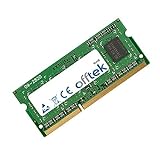
- Boost Your System’s Performance: Increase available memory for smoother multitasking, improved responsiveness and better performance when running memory-intensive applications.
- Matched Specifically to Your Machine: OFFTEK selects the correct memory configuration for the computer shown in this listing, removing the uncertainty from choosing a compatible upgrade.
- We Do the Technical Checking for You: There is no need to compare memory speeds, voltages, form factors or other technical details, as the upgrade has been matched to the machine’s supported requirements.
- Extend the Life of Your Computer: Increasing the available memory can help your existing machine remain productive for longer, offering a cost-effective alternative to replacing the complete system.
- Quick and Straightforward Upgrade: Memory is normally simple to install and requires no software installation; shut down and disconnect the machine before fitting and follow the manufacturer’s instructions.
- SATA connectivity: suitable for 2.5-inch SSDs, laptop hard drives, and compact internal storage layouts.
- Mini Card expansion: useful for Wi-Fi, Bluetooth combinations, WWAN modules, or embedded add-ons.
- Internal USB headers: practical for front-panel ports, embedded boot devices, touch controllers, or security modules.
- Serial/header options: valuable for retail, industrial, and kiosk equipment that still depends on legacy device communication.
External connectivity
On the rear I/O side, the DQ77KB was built for business desktops and integrated systems rather than enthusiast towers. It typically offers mulle USB ports, Gigabit Ethernet, audio output, and digital display connectivity. Display outputs are particularly significant because the board relies on integrated graphics from compatible LGA1155 processors. With the right CPU, it can drive business monitors, signage panels, dashboards, and media displays without needing a discrete graphics card. This kept power use, heat output, and system thickness under control.
Quick wins for a faster PC:
Fix the driver behind crashes, sound loss and screen glitchesFind Drivers →Repair Windows errors before they cause bigger problemsFix Now →Networking is another practical advantage. Gigabit Ethernet gives the board stable wired connectivity for managed desktops, thin-client-style workstations, signage endpoints, and small servers. In business or embedded environments, wired Ethernet is often preferred over wireless because it is easier to secure, monitor, and manage remotely. When wireless was needed, the Mini Card slot allowed it to be added internally without occupying rear USB ports or creating a fragile external adapter setup.
| Feature area | Practical benefit |
|---|---|
| Mini-ITX expansion | Supports compact wireless or embedded modules without increasing chassis size. |
| SATA storage | Enables quiet SSD-based desktops or small local storage appliances. |
| Digital display outputs | Uses CPU integrated graphics for office, signage, and kiosk displays. |
| Gigabit Ethernet | Provides dependable wired networking for managed and always-on systems. |
The main limitation is that expansion is specialized rather than broad. Builders looking for a full PCIe x16 graphics slot, mulle add-in cards, or large storage arrays would be better served by a conventional desktop motherboard. The DQ77KB is strongest when used as intended: a thin, quiet, low-power platform with enough storage, networking, display, and internal header support to build a capable compact system without unnecessary bulk.
BIOS, Management, and Business-Class Features
The Intel DQ77KB was built around Intel’s business desktop platform rather than the enthusiast motherboard market, and that shows clearly in its firmware and management feature set. Its BIOS is practical, conservative, and focused on stability, device control, boot behavior, and fleet deployment. Instead of overclocking menus or gaming-oriented tuning pages, the board provides the options most useful in compact office PCs, digital signage systems, kiosks, point-of-sale terminals, and embedded workstations that need to run unattended for long periods.
Because the board uses the Q77 Express chipset, it supports several platform features associated with Intel Stable Image Platform Program and business-class desktop management. In suitable configurations, the DQ77KB can work with Intel Active Management Technology, allowing remote inventory, power control, and maintenance functions when paired with a compatible processor, network controller, and firmware configuration. For IT departments, this made the board more attractive than many consumer Mini-ITX LGA1155 alternatives, especially when systems were installed behind displays, inside cabinets, or across mulle branch locations.
Firmware controls suited to deployed systems
The BIOS setup includes controls for boot order, SATA operating mode, USB behavior, onboard devices, fan response, security options, and recovery behavior after power loss. The last item is especially useful for appliances and signage players, since a system can be configured to power back on automatically after an outage. The board also supports UEFI-style booting for modern operating systems while retaining compatibility options needed for older deployment images and legacy peripherals.
- Boot management: configurable boot priority for SATA, mSATA, USB, and network devices.
- Power recovery: options to resume operation after AC power is restored.
- Device enablement: the ability to disable unused onboard controllers to reduce attack surface or simplify deployments.
- Security settings: supervisor and user passwords, trusted platform features on supported configurations, and controlled boot behavior.
- Thermal monitoring: fan and temperature reporting for compact chassis where airflow is limited.
Remote and business-management capabilities were a major part of the DQ77KB’s appeal. Intel AMT, when available and provisioned, could allow administrators to reach a machine even when the operating system was unavailable, making it easier to troubleshoot failed updates, reimage systems, or power-cycle remote units. This was valuable in environments where physical access was inconvenient, such as wall-mounted displays, classroom podium PCs, retail counters, medical carts, and industrial control stations.
Rank #4

- Supports 12th/13th Gen Intel Core, Pentium Gold and Celeron processors for LGA 1700 socket
- Supports DDR4 Memory, Dual Channel DDR4 5333+MHz (OC)
- Enhanced Power Design: 12+1 Duet Rail Power System with P-PAK, 8-pin + 4-pin CPU power connectors, Core Boost, Memory Boost
- Premium Thermal Solution: Extended Heatsink, MOSFET thermal pads rated for 7W/mK, additional choke thermal pads and M.2 Shield Frozr are built for high performance system and non-stop gaming experience
- High Quality PCB: 6-layer PCB made by 2oz thickened copper and server grade level material
| Feature Area | Practical Benefit |
|---|---|
| Intel Q77 platform | Business-oriented chipset features and stable deployment support |
| Intel AMT support | Remote management on compatible CPU and firmware configurations |
| UEFI and legacy boot options | Flexibility for newer operating systems and older deployment images |
| Power-loss recovery | Automatic restart for unattended systems after outages |
| BIOS-level device control | Simpler, more controlled configurations for business and embedded use |
The DQ77KB’s firmware philosophy matches the rest of the board: compact, efficient, and deployment-friendly. It was not intended for users chasing voltage tweaks or high-performance memory tuning. Its strengths were predictable behavior, long service life, remote administration potential, and enough BIOS control to tailor the system for appliance-like operation. For organizations building small desktops or embedded PCs around LGA1155 processors, those qualities often mattered more than enthusiast features.
Independent reader supportYour contribution helps us test, update, and keep practical guides available for everyone.Best Builds and Practical Limitations
The Intel DQ77KB fits best in systems where low idle power, a thin enclosure, and business-class reliability matter more than gaming performance or heavy expansion. Its Mini-ITX layout, external DC power input, SO-DIMM memory slots, and mobile-style connectivity make it well suited to compact desktops, wall-mounted PCs, kiosks, digital signage players, point-of-sale terminals, and lightweight home servers. Paired with a modest LGA1155 processor such as a Core i3, Pentium, or low-TDP Core i5, it can deliver responsive everyday performance while staying quiet and efficient.
One of the most practical builds for the DQ77KB is a thin client or office workstation using integrated Intel graphics, an mSATA SSD for the operating system, and a 2.5-inch SATA SSD for extra storage. This keeps cabling minimal and allows the board to fit into slim cases that cannot accept a standard ATX power supply. It also makes sense for embedded deployments where the machine needs to run unattended for long periods, especially when Intel AMT, vPro support with compatible CPUs, and stable chipset features are useful for remote administration.
Strong use cases
- Compact office desktops: efficient systems for web apps, productivity software, remote desktop clients, and business terminals.
- Digital signage: reliable playback hardware for displays in retail, education, healthcare, and corporate spaces.
- Kiosks and POS systems: small form factor deployments where external power bricks and low heat output simplify installation.
- Light home servers: basic file sharing, print services, monitoring dashboards, or network utilities using SSD-based storage.
- Industrial and embedded PCs: systems that benefit from Mini-ITX mounting, legacy-friendly I/O options, and remote management features.
The main limitations come from the board’s specialized design. It is not a good match for high-end discrete graphics cards, large storage arrays, or heavily overclocked processors. LGA1155 support is limited to 2nd and 3rd generation Intel Core-family CPUs, and memory uses SO-DIMM modules rather than standard desktop DIMMs. Expansion is also more constrained than on a full-height Mini-ITX board with a conventional PCIe x16 slot, so builders should confirm riser, case, and add-in card compatibility before planning a system around it.
Power planning is another area that deserves care. The external power input is a major advantage for slim builds, but the adapter must be properly rated for the chosen CPU, drives, USB devices, and any expansion hardware. A low-TDP processor is usually the most balanced choice, since it reduces heat, fan noise, and stress on the power delivery system. Cooling also depends heavily on the enclosure: a processor that is easy to cool in an open test bench may run warm in a sealed signage chassis or fanless case.
For modern buyers, the DQ77KB is most appealing as a purposeful legacy platform rather than a general-purpose new build foundation. It lacks newer conveniences such as NVMe boot support, USB-C, modern integrated graphics media engines, and current platform security features. Even so, when matched with the right CPU, SSD, power adapter, and enclosure, it remains a capable board for compact, quiet, low-power systems where the priority is dependable operation over cutting-edge performance.
The Tool Desk
Outbyte Driver Updater FREEFix the driver behind crashes, sound loss and screen glitchesFind Drivers →Outbyte PC Repair FREEClear out junk files and repair common Windows errorsFree Scan →Frequently Asked Questions
What CPUs work with the Intel DQ77KB motherboard?
The Intel DQ77KB supports LGA1155 Intel Core processors, mainly 2nd and 3rd generation Core i3, i5, and i7 chips, along with some Pentium and Celeron models depending on BIOS support. For low-power builds, 35W “T” series CPUs such as the Core i5-3470T or i3-3220T are often better fits than standard 65W or 77W desktop parts.
Best Value

- Capacity: 8GB
- Speed: 1333MHz PC3-10600
- Form Factor: 204 pin SODIMM
- Halogen Free; ROHS; Warranty: Lifetime
Does the Intel DQ77KB need a normal ATX power supply?
No, the DQ77KB is designed around external DC power rather than a standard ATX PSU. It uses a 19V DC input, making it suitable for compact systems, all-in-one PCs, kiosks, and silent or near-silent builds where an external laptop-style adapter is preferred.
Can the Intel DQ77KB be used for a home server or NAS?
It can work well for a small home server, firewall, lightweight NAS, or always-on utility PC, especially with a low-power Ivy Bridge CPU. The main limitation is expansion: storage and add-in card options are more restricted than on larger desktop boards, so it is best for modest drive counts and compact enclosures.
What storage options does the Intel DQ77KB provide?
The board includes SATA connectivity for 2.5-inch SSDs or hard drives, and many builds use it with compact internal storage to keep power draw and noise low. It also offers Mini PCIe/mSATA-style expansion depending on configuration, which made it useful for embedded and small-form-factor systems that needed solid-state storage without extra cabling.
Is the Intel DQ77KB still worth using today?
It is still useful for retrofits, embedded replacements, thin-client projects, light desktop work, and low-power lab systems if you already have compatible LGA1155 parts. For modern heavy workloads, media transcoding, or systems needing NVMe, USB-C, and current platform support, a newer Mini-ITX board will be a better choice.
Bottom Line
The Intel DQ77KB stood out as a practical low-power Mini-ITX LGA1155 motherboard for builders who wanted desktop-class Intel CPUs in a compact, efficient platform. Its Q77 chipset, thin Mini-ITX-friendly power design, and support for 2nd and 3rd Gen Core processors made it a strong fit for small PCs, kiosks, digital signage, and embedded deployments.
For anyone working with legacy LGA1155 hardware today, the DQ77KB remains worth considering when low noise, modest power use, and reliable connectivity matter more than modern upgrade paths. Pair it with a compatible Ivy Bridge CPU, efficient storage, and the right external power setup to get the best from this compact board.
Quick Recap
Product prices and availability are accurate as of the date/time indicated and are subject to change. Any price and availability information displayed on Amazon at the time of purchase will apply.
What’s actually slowing this PC down?
Pick the symptom - the matching free tool is one click away.




