Free tools Windows power users keep installed
One-click scans. No signup required.
A useful small-business AI use policy does not need to be long, but it should make clear which tools and tasks are allowed, what information staff may enter, who checks important outputs, and who handles questions or incidents. Start with the outline below, then tailor it to your business’s data, contracts, industry, and locations; no generic policy can establish every business’s legal obligations.
Start with an owner and a defined scope
Name one person responsible for the policy, the approved-tool list, questions from staff, and coordinating updates. The owner could be the business owner or an assigned operations, IT, privacy, or security lead; the key is that responsibility is explicit.
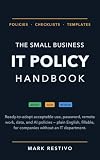


As an Amazon Associate I earn from qualifying purchases.
State who must follow the policy, such as employees, temporary staff, and contractors, and what it covers. Define AI in practical terms for your business: for example, text or image generators, transcription services, coding assistants, or software features that analyze information or make recommendations. Include tools embedded in other products if staff may use them for business work.
Explain the policy’s purpose in plain language: to help staff use approved tools productively while protecting the business, customers, workers, and other people affected by the output.
List approved tools and permitted work
Keep an approved-tool list that staff can find easily. For each service, identify the permitted business tasks, any restrictions, the person or team that approved it, and where staff can find relevant instructions. A tool approved for drafting public marketing copy is not automatically approved for processing customer records or making a consequential decision.
Give staff a route to request a new tool or a materially different use. The reviewer should consider the task, information involved, consequences of errors, provider terms, and available safeguards before approval. NIST’s AI Risk Management Framework Playbook organizes suggested risk-management work under Govern, Map, Measure, and Manage; these can help structure a review, but the Playbook says it is “neither a checklist nor set of steps to be followed in its entirety.” NIST AI RMF Playbook.
Set clear data boundaries
Tell staff not to enter sensitive information into a third-party AI service unless the business has reviewed and authorized that use. Spell out the categories that need protection, including confidential business information, customer or employee personal data, credentials, regulated records, and information subject to a contract or confidentiality obligation. Make clear that removing a person’s name may not be enough to make information safe to share.
Do these 3 things before closing this tab:
1Scan for outdated or missing drivers - takes under a minute2Clear out junk files and repair common Windows errors3Fix the driver behind crashes, sound loss and screen glitchesBefore approving sensitive use, review what the provider does with prompts and uploads. Ask whether data is used to train or improve models, whether it is shared with other parties, how long it is retained, how deletion works, and what security and access controls are available. Check the contract and settings as well as public-facing explanations: a control may vary by service, account type, or configuration.
NIST’s 2024 Generative AI Profile identifies privacy and information-security concerns in third-party generative-AI integrations. The FTC’s small-business cybersecurity guidance also recommends considering vendors’ data practices, including use, sharing, retention, and deletion. See the NIST AI Risk Management Framework overview and the FTC’s cybersecurity guidance for small businesses.
Require human review where the stakes warrant it
Make a named employee responsible for checking AI-assisted work before it is relied on or shared. Specify what they should verify for the task: factual claims, calculations, citations, code, tone, confidential information, and whether the output actually answers the question. A review should be substantive, not just a quick glance or an assumption that fluent language is accurate.
Set stronger review or approval requirements for uses that could affect employment, eligibility, safety, finances, legal rights, or regulated advice. Depending on the task, that may mean review by a qualified professional, approval by a manager, or not using AI for that decision at all. Define the required reviewer and escalation route for your actual workflows.
Frame AI output as a draft, aid, or recommendation—not as a transfer of responsibility. The employee and business remain responsible for how the material is checked and used. This is a practical policy control informed by NIST’s risk-management approach, not a universal review rule prescribed by NIST. Its AI Risk Management Framework 1.0, released January 26, 2023, is voluntary; as of October 4, 2026, NIST says it is being revised. NIST AI RMF overview; NIST AI RMF FAQs.
Name prohibited uses and stop conditions
Make the prohibitions concrete and relevant to your business. Examples to consider include:
Rank #4
- Entering restricted data into a tool that is not approved for it.
- Using AI to bypass access controls or other security protections.
- Presenting unverified generated material as checked, authoritative, or written by a person when that would mislead the audience.
- Using AI for a high-impact decision without the review or approval the policy requires.
- Using a tool for a purpose outside its approval, such as moving from internal brainstorming to automated customer decisions.
Adapt the list rather than treating these examples as a universal legal inventory. If staff are unsure whether a use is allowed, tell them to pause and ask the policy owner before entering data or acting on the output.
Set disclosure, recordkeeping, and rights-review rules
Decide when staff must disclose AI assistance internally or to customers. A disclosure may be appropriate when a person needs to understand how content or a recommendation was produced, or when a contract, customer commitment, or applicable requirement calls for it. Give staff a clear rule for the situations relevant to your business instead of relying on individual guesses.
Quick wins for a faster PC:
Scan for outdated or missing drivers - takes under a minuteDriver Scan →Repair Windows errors before they cause bigger problemsFix Now →Fix the driver behind crashes, sound loss and screen glitchesFind Drivers →Specify what records to keep for material uses: for example, the tool and version or service, the task, the human reviewer, and any approval or corrections. Avoid requiring staff to retain prompts that contain sensitive information unless the business has a justified, approved way to store them securely.
For content, code, images, and other deliverables, require appropriate source checking and rights review before commercial use. NIST’s Generative AI Profile notes that third-party generative-AI use can raise intellectual-property concerns. Do not promise that a business owns an output or that it is eligible for copyright protection without advice suited to the relevant facts and jurisdiction. NIST AI 600-1, Generative AI Profile (July 26, 2024).
Independent reader supportYour contribution helps us test, update, and keep practical guides available for everyone.Train staff and make reporting straightforward
Give workers a short orientation before they use approved tools, then provide updates when rules or services change. Training should cover approved uses, data boundaries, review responsibilities, disclosure, and how to report a problem. Keep instructions accessible at the point of use, not only in an onboarding document.
Tell staff where to report a suspected data exposure, harmful or misleading output, security concern, or policy violation. Identify who receives the report, who triages it, and how urgent issues should be escalated. The policy should direct staff to stop the risky use and promptly report what happened; avoid promising that a particular response will satisfy every applicable notification duty.
Assign review and update responsibility
Name the policy owner and describe when the policy and approved-tool list will be revisited: for example, when the business adopts a tool, changes a workflow, signs a relevant contract, learns of an incident, or faces a change in applicable requirements. NIST describes its AI RMF Playbook as a living resource, but the cited general guidance does not set a universal review interval. NIST AI RMF Playbook.
Before adopting the outline, check requirements that may depend on where your business and customers are located, your sector, the data you handle, and the decisions you make. NIST’s framework is voluntary and scalable across organizations; it is not a legal-compliance certificate. FTC small-business cybersecurity guidance is useful for vendor and security questions, but it is not a ready-made AI policy. For a regulated or higher-impact use, seek legal, privacy, security, or sector-specific review appropriate to the circumstances.
Quick Recap
Policy-writing checklist
- Have we named an owner and defined which people, tools, and work the policy covers?
- Can staff find approved tools, permitted uses, restrictions, and the route for requesting approval?
- Are sensitive-data categories and provider review questions explicit?
- Does each consequential use have a responsible human reviewer and a clear escalation path?
- Have we identified prohibited uses, disclosure expectations, recordkeeping, and rights checks?
- Do staff know how to learn the rules and report a suspected problem?
- Is there an owner and a practical trigger for reviewing the policy and tool list?
- Have we checked whether jurisdiction, sector, contracts, or data-specific obligations require tailored advice?
Product prices and availability are accurate as of the date/time indicated and are subject to change. Any price and availability information displayed on Amazon at the time of purchase will apply.




