Recommended Free Tools
PDF generation is harder than HTML rendering because a PDF has to fit content into fixed, finite page boxes and then decide where every page breaks, what sits in the margins, and how the print engine interprets print-specific rules. A screen browser never has to answer those questions. It lays content out in a continuous viewport that can grow vertically without limit, so most HTML layout assumptions stop holding once the output is paper or a paged PDF.
The core difference: continuous media versus discrete pages
The W3C’s CSS Paged Media Module Level 3 draws the distinction directly. It says that paged media, which includes paper and “pages displayed on computer screens as printed output simulations,” “differ from continuous media in that the content of the document is split into one or more discrete static display surfaces.” (CSS Paged Media Module Level 3, W3C)
As an Amazon Associate I earn from qualifying purchases.
That single change explains most of the difficulty. The table below sets the two models side by side.
| Concern | Screen HTML rendering | Paged PDF output |
|---|---|---|
| Available space | A viewport whose width is set by the window, with content flowing downward | A page box with a defined width and height, minus margins |
| Where content ends | Wherever the document ends | At a page break that must be chosen, sometimes adjusted, and repeated for every page |
| Repeated elements | Usually part of the page content, such as a navigation bar | Running headers, footers, and page numbers placed in page margins |
| Styles | The screen stylesheet, unless a print stylesheet is loaded | Often a print stylesheet, plus @page rules for size, orientation, and margins |
| Final result | The displayed page | One file that may be printed, duplexed, or arranged several pages to a sheet |
Six layout pressures that make paged output harder
Each pressure below is a separate decision the layout engine must make before the PDF can be written. Understanding them one at a time makes it easier to see where a given problem comes from.
#1 Best Overall

- BEST FOR SMALL BUSINESSES – Engineered for extraordinary productivity, the Brother DCP-L2640DW Monochrome (Black & White) 3-in-1 combines laser printer, scanner, copier in one compact footprint and delivers high-quality black & white prints
- FAST PRINTER WITH EFFICIENT SCANNING – Produces documents quickly with print speeds up to 36 ppm(2) and scan speeds up to 23.6/7.9 ipm(3) (black/color). A 50-page auto document feeder(4) allows for convenient, time saving multi-page scanning and copying
- FLEXIBLE CONNECTION OPTIONS – Easily navigate the changing demands of your business with secure multi-device connectivity via built-in dual-band wireless (2.4GHz / 5GHz) and Ethernet. Or connect locally to a single computer via USB interface
- BROTHER MOBILE CONNECT APP – Print, scan, and manage your wireless printer anytime, from almost anywhere from your mobile device. Order Brother Genuine Supplies, track toner usage, and complete more work on-the-go(5)
- CHOOSE BROTHER GENUINE TONER – When it’s time to replace your toner, be sure to choose Brother Genuine TN830 or TN830XL replacement toner. And with Refresh EZ Print Subscription Service, you’ll never worry about running out of toner again and you’ll enjoy savings of up to 50%(6) on Brother Genuine Toner. Get started with Refresh today with a Free Trial(1)
1. Finite page geometry
A page box has a defined size, and the content area must fit inside it after margins are subtracted. Paper size, orientation, and margins all change how lines wrap and how much content fits on each page. The W3C model also separates the page box from the page sheet, and it notes that a physical printer can have non-printable edge areas. A layout that looks correct in a 16:9 browser window can therefore clip or reflow badly once it is placed on a letter or A4 page.
2. Pagination and fragmentation
Continuous content has to be cut into pages. Browsers may adjust a break to avoid an awkward split, and CSS gives authors controls for that work: break-before, break-after, break-inside, widows, and orphans. MDN’s fragmentation guide explains how these properties govern where content is divided. (CSS fragmentation, MDN)
Fragmentation also has a knock-on effect. A table, a card, or a tall image placed early in the document can push later content onto a different page, so a small change near the top can reshape the whole output. The W3C specification states that flowing content across pages with different widths is complex and is not solved in many popular printing implementations, notably web browsers.
Rank #2

- BEST FOR HOMES & HOME OFFICES – Engineered for consistent, premium print quality, the Brother HL-L2405W Monochrome (Black & White) Laser Printer delivers sharp, crisp prints at an affordable price. Prints one-sided documents at speeds up to 30ppm(2)
- COMPACT, CONNECTED PRINTER – Flexible connection options make this an ideal printer for home use and at-home offices. Securely connect to multiple devices with built-in dual-band wireless (2.4GHz/5GHz) or locally to a single computer via USB interface
- BROTHER MOBILE CONNECT APP – Manage your printer remotely and print from your mobile device anytime, from almost anywhere. Order Brother Genuine Supplies, track toner usage, and complete more work on-the-go(3)
- VERSATILE PAPER HANDLING – Enjoy seamless, reliable everyday printing with the 250-sheet paper tray(4) and a manual feed slot that enables printing on envelopes and specialty pape
- BROTHER IS AT YOUR SIDE – Backed by Brother with a 1-year limited warranty and free online, call, or live chat support for the life of your printer
3. A second, print-specific rendering path
Print CSS lets authors hide screen navigation, change content, and restyle the document only for print. The @media print rule selects those print-only styles, and @page controls page dimensions, orientation, and margins. (Printing, CSS, MDN) These tools are what make a good print layout possible, but they also mean the PDF is not a screenshot of the screen version. Every print rule is a second path that needs its own review, and a change to the screen layout can break the print layout without any visible sign on screen.
4. Page furniture: headers, footers, and counters
Running headers, footers, and page numbers live in the page margins, outside the ordinary document flow. That is a different place from where HTML normally puts content, so a footer that looks fine in the browser may collide with the body text once the page margins are applied.
Browsers can also add their own headers and footers when a page is printed. Chrome’s guidance on margin content notes that these automatic additions can be turned off in the print dialog, and it describes a Chromium edge case in which the default page layout misbehaves when the first page does not have room for the automatic content. (Add content to the margins of web pages when printed using CSS, Chrome for Developers) If a PDF has unexpected text at the top or bottom of every page, check the browser’s print settings before changing the CSS.
Rank #3

- FAST PRINT SPEEDS: Print up to 19 pages per minute.
- COMPACT DESIGN: Space-saving, compact design fits anywhere in your home, school or small office.
- WIRELESS CONNECTIVITY: Print from almost anywhere in your workspace using your compatible mobile device.
- PAPER CAPACITY: Up to 150 sheets.
- SUSTAINABILITY: Uses less than 2 watts in Energy Saver mode.
5. Uneven implementation of the specification
The CSS Paged Media Module Level 3 is a Working Draft, not a finished recommendation. Specifications at that stage describe intended behavior, but engines implement features at different times and to different degrees. MDN reports that browsers do not currently support the bleeds and marks descriptors, which are used for print production features such as bleed areas and crop marks. (CSS paged media, MDN)
Crashes, No Sound, or Screen Glitches?
Random freezes, missing sound and display glitches usually trace back to one bad driver. Find and replace yours safely.Free scan · under a minuteWindows Errors? Fix Them Before They Spread
Repair common Windows errors and clear accumulated junk for a smoother, more stable PC - no reinstall needed.Free scan · no reinstallThe practical rule is that support depends on the engine and its version. A property that works in one renderer may be ignored in another, so the target PDF engine is the authority on what will happen, not the specification alone.
6. Output transformation after layout
The CSS 2.1 description of paged media lists output arrangements beyond printing one page per sheet. These include duplex output, multiple pages per sheet (n-up), tiling one large page across several sheets, signatures, and output to a file. (Paged media, W3C CSS 2.1) The page layout and the final output are therefore separate stages. A PDF that is correct page by page can still need adjustment if it is later imposed for a booklet or a multi-up print run.
Rank #4

- BEST FOR HOME OFFICES & SMALL TEAMS – Engineered for consistent, premium print quality, the Brother HL-L2460DW Monochrome (Black & White) Laser Printer produces documents that are clear, crisp, and easy to review and share, all at an affordable price
- COMPACT, CONNECTED, EXCEPTIONALLY EFFICIENT– Connect with built-in dual-band wireless (2.4GHz/5GHz), Ethernet, or to a single computer via USB interface. Prints at speeds up to 36ppm(2), plus automatic duplex printing saves time and reduces paper waste
- BROTHER MOBILE CONNECT APP – Manage your wireless printer remotely and print from your mobile device anytime, from almost anywhere. Order Brother Genuine Supplies, track toner usage, and complete more work on-the-go(3)
- VERSATILE PAPER HANDLING – Tackle high-volume black & white printing with the 250-sheet capacity paper tray.(4) The manual feed slot enables printing on envelopes and specialty paper
- BROTHER IS AT YOUR SIDE – Backed by Brother with a 1-year limited warranty and free online, call, or live chat support for the life of your printer
Why the PDF is not a screenshot of the page
A common assumption is that a PDF is simply the screen rendering saved to paper. The sources do not support that view. The screen layout is continuous, print layout divides content into finite pages, and print CSS can intentionally produce a different layout from the screen version. Once you accept that the PDF is a separately laid-out document, many puzzling results become expected: a table that fits on screen splits across two pages, a sidebar disappears, or a heading ends up stranded at the bottom of a page.
Independent reader supportYour contribution helps us test, update, and keep practical guides available for everyone.A practical workflow for diagnosing a PDF layout problem
- Confirm the target. Name the exact renderer and version that will produce the PDF, and the print settings it will use, such as paper size, margins, and whether browser headers and footers are enabled.
- Define the page explicitly. Set the page size, orientation, and margins with
@pagewhere the engine supports them, so the layout does not depend on defaults. - Separate the print styles. Put deliberate print changes in a print stylesheet loaded through
@media print, so screen styles are not edited for print purposes. - Control breaks. Apply
break-before,break-after, andbreak-insideto headings, tables, figures, and blocks that must stay together, and setwidowsandorphansfor body text. - Account for page furniture. Decide which running headers, footers, and page numbers the document needs, and check that the browser’s own headers and footers are turned off if the document supplies its own.
- Inspect the generated PDF. Open the actual output, check every page, and compare it against the intended settings. Do not rely on the browser preview alone, because it may not reflect the final file.
- Test the output stage. If the PDF will be printed duplex, n-up, or imposed, test that arrangement too, since it is a separate step after layout.
What to compare when choosing a rendering option
When you evaluate a rendering engine or PDF generation tool for print layout, compare the properties that the sources identify as relevant:
Do these 3 things before closing this tab:
1Clear out junk files and repair common Windows errors2Scan for outdated or missing drivers - takes under a minute3Repair Windows errors before they cause bigger problems- The engine name and version, because paged-media support varies by implementation.
- Support for the paged-media features you need, such as
@pagesize and margin control, and whether the engine documents support forbleedsandmarks. - Control over page size, orientation, and margins, and whether these can be set from the document or only from the tool’s own options.
- Handling of breaks and page furniture, including running headers, footers, and page numbers.
- Stability of the output under the settings you intend to use, such as duplex, n-up, or file output.
What the available sources do not establish
The W3C, MDN, and Chrome documents explain the model and the controls, but they do not provide a benchmark that ranks rendering engines by speed or quality, and they do not name a product that is best for print layout. They also do not supply a statistic on how common HTML-to-PDF problems are or what they cost to fix. Claims about which engine is universally fastest or most accurate should be treated as unsupported unless you test them yourself on the documents you produce.
Best Value
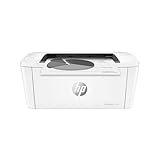
- FROM AMERICA'S MOST TRUSTED PRINTER BRAND – Perfect for small teams printing professional-quality black & white documents and reports. Perfect for 1-3 people
- WORLD'S SMALLEST LASER IN ITS CLASS – Precision laser printing that fits anywhere
- FAST PRINT SPEEDS – Up to 21 black-and-white pages per minute single-sided
- WIRELESS WITH SELF-RESET – Helps you stay connected
- PRINT FROM ANY DEVICE – Wireless printing from any mobile device, PC or tablet. Works with Microsoft, Mac, AirPrint, Android, Chromebook and more
The W3C specification’s own phrasing is the clearest summary of the gap: a specification can describe paged layout in full, and an engine can still implement only part of it. Test the renderer you will actually use, with the page size, margins, and print settings you will actually deliver.
The fundamental difficulty is a change of layout model rather than a flaw in HTML itself. HTML and CSS were built for continuous display, and print adds finite pages, page furniture, and output transformations on top of that model. Once that change is clear, the practical steps above follow directly from it.
Quick Recap
Product prices and availability are accurate as of the date/time indicated and are subject to change. Any price and availability information displayed on Amazon at the time of purchase will apply.




