Windows Errors? Fix Them Before They Spread
Repair common Windows errors and clear accumulated junk for a smoother, more stable PC - no reinstall needed.Free scan · no reinstallCrashes, No Sound, or Screen Glitches?
Random freezes, missing sound and display glitches usually trace back to one bad driver. Find and replace yours safely.Free scan · under a minuteTrack pH and fermentation progress for routine process control, titratable acidity when you need to compare total acidity, and a validated enzymatic assay or HPLC when you need the concentration of a named acid. These measurements answer different questions: pH is not a direct acid-concentration test or a reliable score for perceived sourness, and results from different analytical methods should not be treated as interchangeable without validation.
Which sour-beer compounds and measurements should you track?
Choose the measurement to match the question. For day-to-day fermentation records, follow core process measures. For a broader comparison of acidity, use titratable acidity. For an individual acid such as lactic or acetic acid, use a method designed and validated to quantify that compound.
As an Amazon Associate I earn from qualifying purchases.
| Measurement | What it helps answer | What it does not establish |
|---|---|---|
| pH | How the beer’s pH changes during fermentation and how the batch compares with the brewery’s own historical batches. | It does not directly measure lactic or acetic acid concentration, nor reliably predict perceived sourness. |
| Gravity and fermentation kinetics | Whether fermentation is progressing in line with previous batches. | They do not identify the acids responsible for sourness. |
| Titratable acidity | A comparative measure of total acidity, useful for consistency checks, blending, and slow fermentations. | It does not separate the contribution or concentration of each acid. |
| Enzymatic lactic-acid assay | The concentration of lactic acid when the assay is appropriate and validated for the sample. | It does not provide a complete sensory assessment or a profile of every acid. |
| HPLC | With a suitable validated setup, the concentration of more than one organic acid, including lactic and acetic acid. | Results should not be assumed equivalent to titration or enzymatic results. |
| Broader aroma-chemistry analysis | A more extensive investigation of volatile and aroma-active compounds, potentially including acids, esters, alcohols, and phenols. | A study of one commercial sample is not a universal compound inventory for all sour beers. |
How should you track fermentation over time?
The American Society of Brewing Chemists (ASBC) general fermentation sampling guidance recommends daily measurements of gravity, pH, yeast cell count, and yeast viability, with fermentation kinetics compared against historical batches. It also recommends validating complete fermentation and using a forced or rapid fermentation when needed for troubleshooting. This is general fermentation-control guidance, not a requirement to run daily organic-acid assays on every sour beer.
What’s actually slowing this PC down?
Pick the symptom - the matching free tool is one click away.
- Build a consistent process record. Take the same core measurements—gravity, pH, yeast cell count, and viability—on a repeatable schedule, and record the fermentation conditions and culture used.
- Compare like with like. Review the current batch against historical batches made with relevantly similar process conditions. A different souring sequence or culture may produce a different trajectory.
- Add acidity testing to answer a specific question. Use titratable acidity for total-acidity comparison, or a validated compound-specific assay or HPLC when the concentration of an individual acid matters.
- Check completion and investigate deviations. Use the brewery’s fermentation validation practices; a forced or rapid fermentation can help troubleshoot when progress is uncertain.
- Interpret the measurements with sensory assessment. Analytical values describe particular properties of a sample; they do not by themselves capture what a drinker perceives.
Does pH tell you how sour a beer tastes?
No. pH is useful process information, but it is not a reliable stand-in for the sourness a consumer perceives. At a 2015 Brewers Association Craft Brewers Conference presentation, Kara Taylor cautioned: “When producing sour beers, a brewer typically measures the tartness of the beer by looking at the pH. Unfortunately, pH isn’t a great indicator of what the consumer is actually tasting.” Keep pH in the process record, but use sensory evaluation to assess taste and a suitable chemical method when you need acid concentration.
#1 Best Overall

- Easy Home Brew - This all-in-one kit includes everything you need, from fermentation equipment to supplies and ingredients, making it the perfect kit for beer enthusiasts.
- Complete Beer Making Kit - No need for additional large pots, strainers, or brewing equipment. All you need is a Mr. Beer Kit, water and common kitchen items to get started.
- Brews in 30 Minutes - Using our hopped Malt extract, you can brew up a batch of beer in less than 30 minutes. You will have ready to drink beer in 3-4 weeks.
- Includes A Second Refill - This kit comes with a bonus refill so you can get to brewing your second batch right away. Makes a total of 4 gallons.
- DIY Kit Beer Accessory - The Mr. Beer four gallon kit comes with Canadian Blonde and Octoberfest Lager you can create your own unique craft beer.
What is the difference between pH and titratable acidity?
pH and titratable acidity are different measurements, so they answer different questions. pH is a process parameter commonly tracked during fermentation; titratable acidity is used as a comparative measure of total acidity. An ASBC sour-beer presentation describes titratable acidity as useful for assessing sourness relative to pH, including for consistency, blending, and slow fermentations.
Neither measurement identifies the concentration of every individual acid. The ASBC presentation notes that lactic acid is the primary sour taste in many cases, while some sour beers have high acetic acid levels. If the distinction between acids matters, choose an assay that measures the named compound rather than inferring its concentration from pH or total acidity.
Rank #2
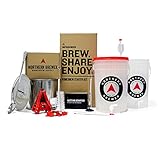
- Highest Rated Starter Kit! The Northern Brewer Brew. Share. Enjoy Homebrew Starter Kit is the perfect choice for holiday gifts and beginners, complete with foolproof instructions.
- This all-in-one kit includes everything you need to start brewing beer at home today including a Brew Kettle and our Hank's Hefeweizen recipe kit.
- Hank's Hefeweizen: This recipe brings a Bavarian classic over the pond to spread the joy of hefeweizen for all to enjoy. Expect a hazy, deep golden ale with a firm and lasting white head and heaps of flavors consisting of soft, luscious wheat notes, medium-low bitterness and fermentation derived flavors ranging from spicy clove to ripe banana.
- Kit Includes: Hank's Hefeweizen recipe kit, Hydrometer, Test Jar, Lab Thermometer, 6.5 gallon fermentor w/ Spigot, lid & Bubbler airlock, Bottling Bucket w/Spigot assembly, Bottle Filler, 5 Gallon Stainless Brew Kettle, 21” Stainless Spoon, 5 ft. Clear Tubing, Cleaner/Sanitizer - Fermenter's Favorites Oxygen Wash, Bottle Brush, Royal Crown Bottle Capper & Caps (60ct.) Yields 5 gallons of finished beer, filling 50 twelve ounce bottles.
How do you measure lactic or acetic acid?
A validated enzymatic method can quantify lactic acid. HPLC can be configured to measure lactic and acetic acids together. Select the method based on the analytes you need and the laboratory capability available; do not substitute total-acidity titration for a specific-acid result.
Quick wins for a faster PC:
Fix the driver behind crashes, sound loss and screen glitchesFind Drivers →Repair Windows errors before they cause bigger problemsFix Now →A 2016 ASBC World Brewing Congress paper by Chadwick, Lozen, Tipler, and Reuter compared total-acidity titration, an enzymatic method specific to lactic acid, and HPLC. The authors reported poor correlation among the three fundamentally different approaches, despite describing their precision as more than adequate. That finding makes method consistency important: trend samples with the same method, and validate a method change before treating old and new values as comparable.
Rank #3
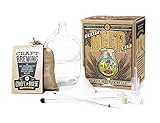
- MAKE YOUR OWN BEER – Be more than a beer drinker; be a beer maker! This craft beer kit turns beer lovers into beer brewers and gives you all the independence, experience, and fun that comes with brewing your own home beer.
- MUNICH CALLING – Oktoberfest is here, wherever and whenever you want “here” to be. With a light red hue, subtle bitterness, caramel sweetness, and a clean dry finish, you can enjoy this full-bodied, malty beer just like they do in old Bavaria.
- HOME BREW STARTER KIT – Designed to help first-timers and hobbyists alike get the most of their beer experience, this beer maker starter kit teaches you about the art of brewing with our Craft a Brew Guide to Craft Brewing.
- FULL BREWERY KIT – This homemade beer making kit comes with the right supplies to brew beer. Enjoy our beer making kits complete with everything you need to become a master brewer, so hop to it!
- CRAFT A BREW QUALITY – Each beer crafting kit is assembled by hand in Orlando, FL instilled with the core values of providing high-quality ingredients, elegant and effective design, and an environmentally sustainable mindset. Enjoy beer the right way with your own Craft a Brew kit.
The paper described one HPLC setup using chilled sample preparation, centrifugation, a C18 column, phosphate-buffer mobile phase at pH 2.4, and UV detection at 210 nm. The analysis took ten minutes, followed by wash and equilibration. In replicate injections of a calibrant under that particular method, the authors reported 0.08% relative standard deviation (RSD) for retention-time precision. This is a method-specific precision result, not a universal concentration-accuracy claim for production beer samples.
Independent reader supportYour contribution helps us test, update, and keep practical guides available for everyone.Why do process and culture matter when interpreting acids?
Sour beer can be acidified through different process routes, and those routes shape the context for a compound time series. Brewers Association style guidance describes sour-beer acidity as usually including lactic, acetic, and other organic acids. They may arise from acidified malt or from microorganisms during kettle or post-wort fermentation; the resulting character can reflect a balance of acids and age.
Rank #4

- MAKE YOUR OWN BEER – Be more than a beer drinker; be a beer maker! This craft beer kit turns beer lovers into beer brewers and gives you all the independence, experience, and fun that comes with brewing your own home beer.
- BREW-S-A – Exercise your right to brew! Our decidedly patriotic American Pale Ale makes a crisp, hoppy, and bitter pale ale with light malt flavors.
- HOME BREW STARTER KIT – Designed to help first-timers and hobbyists alike get the most of their beer experience, this beer maker starter kit teaches you about the art of brewing with our Craft a Brew Guide to Craft Brewing.
- FULL BREWERY KIT – This homemade beer making kit comes with the right supplies to brew beer. Enjoy our beer making kits complete with everything you need to become a master brewer, so hop to it!
- CRAFT A BREW QUALITY – Each beer crafting kit and all our home brew recipe kits for beer are assembled by hand in Orlando, FL instilled with the core values of providing high-quality ingredients, elegant and effective design, and an environmentally sustainable mindset. Enjoy beer the right way with your own Craft a Brew kit.
Kettle souring
In the Brewers Association’s description of kettle souring, lactic acid bacteria (LAB) acidify unhopped wort after an initial boil. A second boil and hop addition stop the LAB before alcoholic fermentation proceeds. The association also summarizes work combining homo- or hetero-fermentative LAB with different Saccharomyces strains, noting that LAB strain combinations affect flavor profile.
Mixed-culture fermentation
Yeast and LAB contribute different metabolite groups. An ASBC Journal paper describes yeast during alcoholic fermentation as producing mainly esters, higher alcohols, fatty acids, aldehydes, and sulfur compounds. It describes LAB in cereal-based substrates as excreting primarily organic acids, aldehydes, and some esters. The paper also discusses diacetyl formation from alpha-acetolactate and its later uptake and reduction by yeast.
Best Value
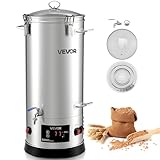
- Large Capacity Brewing: The VEVOR electric brewing system features an 8 gal / 30L kettle can mash up to 5 kg of malt per batch—ideal for home gatherings or small craft batches. Brew diverse beers like lager, IPA, ale, porter, or stout for true brewing freedom
- Craft Brewing Support: The mash and boil device features a high-power design for fast heating and excellent sugar extraction and boiling, supporting quality beer brewing. Homebrewed beer uses pure malt and natural methods, preserving authentic beer flavor
- Easy Operation: Our home brewing equipment has an electronic panel to adjust temperature, and power smoothly. Paired with precise sensors, it controls mashing temperature accurately, extracting more sugars and rich malt flavor
- Premium Materials: The brew kettle is made of 304 stainless steel with 0.5 mm thick walls, sturdy and deformation-resistant. Its smooth, seamless interior is easy to clean and prevents residue buildup for reliable use
- User-Friendly Design: This brewing pot has a glass lid for monitoring wort and a hollow midsection for inserting silicone tubes. A bottom spigot allows the collection of cooled wort. Compact size fits kitchens, garages, basements, or patios
These observations are process-dependent, not a universal schedule in which a particular compound must rise or fall at a fixed point in every fermentation. Record the process and culture alongside measurements so that comparisons account for those differences.
When is a broader compound analysis useful?
If the question concerns flavor beyond the principal souring acids, a broader analytical investigation may include volatile acids, esters, alcohols, phenols, and other aroma-active compounds. An ASBC conference proceedings abstract by Shi Feng and Michael Qian reported these kinds of compounds in an examined commercial sour-beer sample using GC-olfactometry and GC-MS, and proposed that concentration differences contribute to distinctive flavors. Because the report concerned one sample, it should not be treated as a universal checklist or profile for every sour-beer style.
Are there universal target acid concentrations for sour beer?
No general target concentration for lactic acid, acetic acid, or other compounds applies across sour styles and production methods. Use the brewery’s own comparable batches and sensory goals as context, and do not turn a pH, titratable-acidity, enzymatic, or HPLC result into a universal target without evidence specific to the beer and method.
Quick Recap
Product prices and availability are accurate as of the date/time indicated and are subject to change. Any price and availability information displayed on Amazon at the time of purchase will apply.




