Quick wins for a faster PC:
Scan for outdated or missing drivers - takes under a minuteDriver Scan →Clear out junk files and repair common Windows errorsFree Scan →Fix the driver behind crashes, sound loss and screen glitchesFind Drivers →To tell whether an app alert was rejected, blocked after an opt-out, or delivered, track three separate controls: invalid-destination handling, consent suppression, and asynchronous delivery-status callbacks. SMS does not share email’s single, standardized “bounce” model—and an API accepting a send request does not prove that a handset received the message.
What “bounce” means for SMS alerts
Email systems often use “bounce” for a returned delivery failure. SMS APIs may instead report distinct events: a destination number is invalid or unreachable, a provider or carrier rejects a message, a recipient is suppressed because of an opt-out, or a delivery report arrives later from the network or device. These states are not interchangeable, and providers do not use one universal status vocabulary.
As an Amazon Associate I earn from qualifying purchases.
Check the exact API product, channel, country, sender configuration, and carrier context before relying on a provider-specific status or suppression promise. The documentation compared here does not establish a single cross-provider regional feature matrix.
Which three controls tell you what happened?
1. Invalid-destination rejection
An invalid number is a destination problem, not necessarily a consent problem. Sinch’s Latam SMS API documentation distinguishes INVALID_DESTINATION_NUMBER from DESTINATION_BLOCKED_BY_OPTOUT. Those codes are useful for application logic, but should not be assumed to apply identically to every Sinch product or geography. Sinch SMS API delivery reports
#1 Best Overall
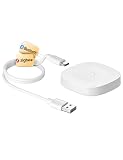
- 【2 Modes in 1 Gateway】Support MOES/Tuya Bluetooth mesh (SIG) + Zigbee3.0 multi-protocol communication. Only one gateway is needed to connect devices of different protocols to the 2.4Ghz network.
- 【Support 128 Devices】 Support up to 128 Tuya smart home devices, such as Bluetooth Door Lock, ZigBee Light Switch No Neutral, Bluetooth Finger, Zigbee Power Monitor Plug, Bluetooth Thermometer, ZigBee Window Gate Sensor, etc.
- 【Sound & Light Alarm】 Support sound and light alarm.Support Local Scenario / Support Local Automation / Support Security Function and be integrated into the Tuya Security Saas Platform.
- 【Voice & App Remote Control】 No matter where you are, you can control the connected smart devices through the MOES/Smart Life App on your mobile phone. Support voice control of Alexa, and Google Assistant.
- 【ESAY SET-UP】Designed for quick and easy set-up with absolutely no wiring or technical skills required.Quickly and easily add, reset, and group devices via the hub.
2. Opt-out suppression
A recipient who has opted out should be handled separately from an invalid destination. Vonage Messages API documentation says a message to a recipient who opted out from the sending number is blocked, with the result reported asynchronously through a receipt or webhook. A successful initial request can therefore be followed by a rejection status. Vonage Messages API status callbacks Vonage opt-out management
Consent mechanisms are product-specific. Sinch Conversation API documents consent lists for all, marketing, and notification opt-outs, but its documentation also says SMS STOP replies do not trigger opt-out callbacks on channels where that behavior is unsupported. Do not treat Conversation API consent features as a promise about every Sinch SMS product. Sinch Conversation API consent management
Rank #2

- 16 ports industrial-grade modem pool
- Based on EC21-E module for Quectel
- USB port Interface
- Control via AT commands
- Support FDD LTE: B1/B3/B5/B7/B8/B20 (800/850/900/1800/2100/2600), WCDMA: B1/B5/B8 (850/900/2100), GSM: 900/1800
3. Asynchronous delivery-status reporting
A send response describes an early stage, not necessarily the final outcome. Vonage’s Messages API distinguishes submitted from SMS outcomes such as delivered and rejected. Its documentation explains: “The Messages API sends status callbacks to your webhook URL to inform you whenever an event changes the state of a message — for example, when it’s submitted, delivered, or rejected.” Vonage Messages API status callbacks
What’s actually slowing this PC down?
Pick the symptom - the matching free tool is one click away.
Sinch’s Latam SMS API documentation separates carrier submission from a later device delivery report. Twilio’s Message resource documentation describes status callback fields, including channel failure information; that page alone does not establish an equivalent provider-managed opt-out policy or a full feature comparison across products. Sinch SMS API delivery reports Twilio Message resource
Rank #3

- 16 Ports Industrial-Grade GSM Modem Pool
- Based on Wavecom Q2403A Module
- USB Port Interface
- Control via AT Commands
- Support Dual Frequencies: GSM/GPRS 900/1800MHz
How the documented controls compare
| API product | Invalid destination or opt-out behavior | Status visibility | Scope to keep in mind |
|---|---|---|---|
| Vonage Messages API | Opted-out sends are blocked and reported later; rejection can include error detail. | Lifecycle status callbacks; SMS can end in delivered or rejected. | An accepted or submitted response is not final delivery confirmation. |
| Sinch SMS API (Latam documentation) | Separate codes identify an invalid destination and a destination blocked by opt-out. | Carrier submission and a later device delivery report are distinct levels. | The cited documentation is for the Latam SMS API; codes and behavior should not be generalized to all Sinch products or regions. |
| Sinch Conversation API | Consent lists can block all, marketing, or notification messages. | Consent notifications and message callbacks depend on channel support. | The documentation says SMS STOP replies do not trigger opt-out callbacks on unsupported channels. |
| Twilio Messaging | The reviewed Message resource page does not establish a comparable provider-managed opt-out policy. | A StatusCallback endpoint receives message updates, with channel failure information among the documented fields. | The cited page is not a complete cross-product feature matrix. |
How to interpret the status flow in your app
- Request accepted: Your API call receives an initial response. Record its provider message identifier, but do not show the alert as delivered.
- Submitted or carrier accepted: A later status may indicate that the provider or carrier accepted the message for processing. This is still not proof of handset delivery.
- Delivered, rejected, or failed: Process the later callback or delivery report and update the alert’s state. Preserve any provider error code and detail so the reason can be investigated.
The exact names and meanings vary by product. For example, Vonage documents submitted, delivered, and rejected, while Sinch’s cited SMS documentation describes carrier submission followed by a device delivery report. Treat statuses as provider-specific inputs rather than a shared SMS standard.
Implementation practices that make callbacks useful
Callbacks are useful only if the application associates them with the right message and interprets them safely. The following are implementation recommendations, not provider guarantees:
Quick Recap
Best Value

- ◇Introduction: USB to GSM is a four-frequency GSM/GPRS module, its stable performance, and can meet a variety of customer needs. Integrated USB to serial port chip, directly plug in the computer can be debugging. The operating frequency of SIM800C is GSM/GPRS 850/900/1800/1900mhz, which can be used worldwide. It can realize the transmission of voice, SMS messages, and data information with low power consumption, and can be suitable for various compact product design requirements.
- ◇ On-board original SIM800C GSM/GPRS module; On-board CH340T USB to serial port chip, simple driver installation and high compatibility; self-elastic SIM card slot design, can use 2G/3G/4G Micro SIM and Nano card;
- ◇The USB to GSM module will automatically start up and connect to the network when it is powered on. It does not need to control the startup with buttons, which saves the troublesome startup process;
- ◇Support SMS sending and receiving, provide management software; provide reference host computer source code (c#, vb) supporting materials and instructions for use; support GPRS data transmission under 2G network, which can be used in mobile meter reading and other occasions;
- ◇Support Bluetooth data transmission, IEEE802.15 bluetooth standard, 2.4GHz working frequency band; support adaptive baud rate; with working indicator, no network, no SIM card or when the SIM card is inserted backward, the LED light flashes quickly at 1-second intervals, normal Blinks once every 3 seconds when connected to the network.
Rank #4

- Smart Home Appliance Connector: Tuya bluetooth Gateway,Support 128 smart home devices supporting Tuya functionality, compatible with smart locks, light sources, switches, sockets, smart appliances and more. Easily extend the smart home system to every room, automate, and remote.
- Tuya App Remote Control: It connects with the tuya smart door lock to realize remote control and open the door lock when you are not at home. Please note that other apps cannot be connected.
- Stable and Reliable: The gateway connection works stably, with wide coverage, strong reception signal, low power consumption, and the Micro-USB can keep working when it is powered on.
- Perfect Size: It only occupies a small space, 2.36*2.36*0.59 inches (6*6*1.6 cm) and weighs 50 grams. White square design, it is a nice decoration in your home.
- Service Guarantee: No installation is required, the gateway powers up and is ready to use, with absolutely no wiring or technical skills required. There are detailed instructions and operation videos, cell phone connection is more convenient. If you have any questions, please contact us by email in time.
- Persist the provider message ID from the initial response and use it to match later callbacks to the alert.
- Make callback processing idempotent so duplicate notifications do not create duplicate state changes or user alerts.
- Map provider-specific status and error codes into a small set of application states, such as pending, delivered, rejected, or failed, while retaining the raw status and error details for support and debugging.
- Keep consent suppression distinct from invalid-number rejection in logs and reporting; they call for different remediation.
- Do not mark a message delivered solely because the API accepted the request or reported submission.
Product prices and availability are accurate as of the date/time indicated and are subject to change. Any price and availability information displayed on Amazon at the time of purchase will apply.




