Recommended Free Tools
A low-latency HLS pipeline needs more than a fast encoder: the packager or origin must publish partial segments and LL-HLS playlists, the CDN must pass through the required requests correctly, and the player must support and actually use LL-HLS. Set part duration and hold-back against measured audience network conditions, then validate latency and fallback across the complete delivery path.
What a low-latency HLS pipeline needs
Apple describes HLS as a chain in which an encoder prepares media, a segmenter creates media segments and a playlist, servers and CDNs distribute them, and client software fetches and plays them. Low-Latency HLS (LL-HLS) extends that chain with partial segments and playlist and delivery behavior intended to reduce the delay between a live event and playback. As Apple’s developer documentation puts it, “Low-Latency HLS extends the protocol to enable low-latency video streaming while maintaining scalability.”
As an Amazon Associate I earn from qualifying purchases.
Plan for four working components, not a single “low-latency” setting:
- Live ingest and encoding: prepares the audio and video. This can be hardware or software; the encoder alone does not make a workflow LL-HLS.
- LL-HLS packager or origin: creates partial media segments and publishes playlists with the required LL-HLS features.
- HTTP delivery path: the origin and CDN must support requests that wait for playlist or media availability and preserve the relevant request directives.
- Compatible player: the player must understand the playlist and delivery behavior and use low-latency playback on the target device.
A break anywhere in that chain can prevent low-latency playback. LL-HLS syntax is backward-compatible with HLS, but that does not guarantee every player will use the low-latency mode: Apple documents that clients may fall back to regular-latency HLS when required server support is missing.
#1 Best Overall

- 【Ultra-Compact & Low-Power Design】 Experience maximum portability with this pocket-sized (2.95 x 1.26 x 0.87 in) HDMI video encoder, weighing only 1.13oz. Engineered for extreme efficiency, it consumes just 2.4W and can be powered directly via USB or the HDMI source. This eliminates the need for bulky external adapters—perfect for professional live broadcasting, mobile setups, and installations with limited space.
- 【Pro-Grade 1080P HD Encoding】 Deliver crystal-clear video transmission with support for up to 1080P60 HD input and stable 1080P30 encoding output. This versatile hardware encoder is fully compatible with a wide range of HDMI sources, including NVRs, PCs, drones, DSLR cameras, and professional camcorders. Whether for security monitoring or live broadcasting, it ensures a high-quality, low-latency video feed for a truly reliable user experience.
- 【2K SRT & Multi-Protocol Compatibility】 Experience broadcast-level stability with 2K SRT support, delivering secure, reliable, and ultra-low latency video over any network. This hardware encoder ensures peak efficiency with H.265/HEVC and H.264/AVC compression. Fully compatible with a wide range of protocols—including RTMP, RTMPS, HLS, RTSP, and UDP—it is tailor-made for social media live production, house of worship, secure IP surveillance, and corporate training.
- 【Centralized Cloud Management】 Beyond standard Web-UI, this encoder supports DDMALL LinkCloud for remote monitoring and control via the Internet. For large-scale deployments, we provide specialized support to assist you in building a self-hosted private cloud, ensuring absolute data security and efficient video distribution. This professional-grade centralized control simplifies complex workflows for multi-site corporate, educational, or broadcast environments.
- 【More Excellent Features & Reliable Support】This encoder elevates your broadcasting with dual-stream output, enabling simultaneous streaming to platforms like YouTube and Facebook. It also features real-time OSD overlays and direct Web-UI signal preview for precise control. Beyond the device, our professional technical team provides customized solutions, continuous firmware updates, and expert guidance to ensure your live production stays seamless.
Choose part duration and hold-back from network conditions
Start with the audience and serving path, not a latency promise copied from a segment setting. Measure or estimate the 95th-percentile (P95) client-to-server round-trip time (RTT) for the networks and regions you expect to serve. Apple’s 2025 HLS authoring specification recommends a one-second Part Target Duration, but the target must be at least P95 RTT and should be at least three times P95 RTT. The recommended one-second value is therefore not a universal setting: a higher measured RTT can require a longer target.
The same Apple specification requires PART-HOLD-BACK to be at least three times the Part Target Duration. Treat these as authoring constraints, not as an end-to-end latency formula. Encoding, packaging, network delivery, CDN behavior, and player buffering all contribute to the delay viewers see.
| Setting or measure | Guidance | How to apply it |
|---|---|---|
| Part Target Duration | Apple (2025): one second recommended; must be at least P95 client-server RTT and should be at least three times P95 RTT. | Measure RTT for the intended serving path, then choose a target that respects both the minimum and preferred relationship. |
PART-HOLD-BACK |
Apple (2025): must be at least three times the Part Target Duration. | Set it consistently with the part target and verify the player’s actual distance from the live edge. |
Build and configure the workflow
-
Define the latency objective and audience
Specify the acceptable glass-to-glass delay, the regions and networks to support, and the devices and players viewers use. Measure or estimate P95 RTT along the actual client-to-serving path before selecting the part target. Do not infer a guaranteed viewer delay from part duration alone.
What’s actually slowing this PC down?
Pick the symptom - the matching free tool is one click away.
Special offer. See more information about Outbyte and uninstall instructions. Please review EULA and Privacy policy.Rank #2
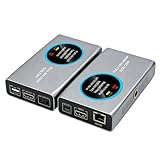 HDMI to Full NDI Encoder | NDI to HDMI Converter, Decoder 1080P60fps with POE, HDMI Loop Out, Low Latency for Live Streaming & Live Production
- 2-in-1 Full NDI Encoder & Decoder Easily switch between HDMI to Full NDI encoding and NDI to HDMI decoding via Web UI. One device replaces two, ideal for live streaming and IP video workflows.
- True Full NDI – Not NDI HX Supports Full NDI protocol for higher bitrate, sharper image quality, and lower latency compared to NDI HX. Built for professional broadcast environments.
- Ultra-Low Latency Performance End-to-end latency is under 60ms for smooth real-time video transmission. Perfect for live events, conferences, and production setups.
- PoE Powered for Easy Setup Supports Power over Ethernet (PoE) for single-cable setup, or use USB-C for flexible power options. Simplifies installation in any environment.
- Professional Features Built-In Includes HDMI loop out, PTZ control, tally light, audio embed/de-embed, and LCD display for real-time monitoring and control.
-
Choose an encoder and ingest path
Select a hardware or software encoder that integrates with the ingest and packaging system you plan to use. Confirm that it can supply the required live audio and video input to that system. An encoder produces the media input; it does not by itself create valid LL-HLS partial segments or playlists.
-
Use an LL-HLS-capable packager or origin
Configure the packager to publish partial media segments and the LL-HLS playlist features needed by the workflow. Apple’s documentation describes these core tags and mechanisms:
EXT-X-PARTidentifies a partial segment that can become available before its complete parent segment.EXT-X-PART-INFdescribes part information, including the part target.EXT-X-SERVER-CONTROLcommunicates server-control behavior, including low-latency playlist options.EXT-X-PRELOAD-HINTlets a player request an upcoming part or initialization section in advance; the request can be held until the resource is available.EXT-X-RENDITION-REPORThelps a player switch between renditions while keeping near the live edge.EXT-X-SKIPsupports delta updates that omit older playlist content and reduce repeated transfer.
Use the features appropriate to the packager, player, and workflow rather than assuming every tag is required in every playlist.
Rank #3
 Unisheen 4G Video Encoder-H.264 & H.265 Low Latency Live Stream Transmitter for IP Broadcast WiFi Connectivity Ideal for Church Services,Education,Gaming,andSurgical Use (RTMP, RTMPS, SRT, RTSP)
- 【Up max to 1080P@60FPS HDMI Video】Support full HD 1080P60 live video, support resolution adjustment, see every detail. Meanwhile, it adopts high efficiency H.265, which can play the same quality video by saving half of the bandwidth on the basis of H.264, making the video encoding faster and with lower latency.
- 【4G HDMI Video Encoder】This unisheen video encoder is ideal for broadcast video and audio, support live broadcast,Note: It is prohibited to capture video protected by digital rights management (DRM).
- 【One Key Operation】The video encoder comes with two operation buttons "A" and"B".The "A" button supports one-key switching of network priority among the three networking modes of 4G /network cable/ WIFl; the "B" button supports one-key start/stop streaming.
- 【Portable Live Broadcast & No Computer Needed】The encoder does not need to use a computer during the live broadcast. After the push address is set through thecomputer or mobile phone when it is used for the first time,the encoder can be separated from the computer for livebroadcast, and there is no need to set it up again. The en-coder has a primary and secondary stream, which can si-multaneously push live broadcasts to two live broadcastplatforms.
- 【After Services】In case of any issue, just contact us and we will resolve your problem.(1, Find Your Order. 2, Click The "contact Seller" Button) And We Will Solve Your Problem Within 24 Hours.
-
Align playlist reload and hold-back behavior
Enable blocking playlist reload where supported. Delivery directives such as
_HLS_msnand_HLS_partallow a client to ask for a specific media sequence or part and let the server wait until it is available, instead of relying on frequent polling. Make sure the origin’s server-control values and the player’s requests agree, and setPART-HOLD-BACKto the Apple minimum described above.The Tool Desk
Outbyte Driver Updater FREEFix the driver behind crashes, sound loss and screen glitchesFind Drivers →Outbyte PC Repair FREEClear out junk files and repair common Windows errorsFree Scan →Special offer. See more information about Outbyte and uninstall instructions. Please review EULA and Privacy policy. -
Configure the CDN for the LL-HLS request path
Check that the CDN forwards blocking requests and LL-HLS query parameters to the origin as intended, and that cache behavior does not serve a stale playlist or part when a fresh response is needed. Validate the complete path, including any intermediary proxies or gateways.
AWS’s MediaPackage guidance is specific to that service: it recommends including
_HLS_msnand_HLS_partin the CDN cache key, following MediaPackage’s cache-control max-age guidance, and allowing a response timeout of at least three part durations. These are AWS product directions, not universal CDN settings; check the documentation for the CDN and origin you actually use.Rank #4
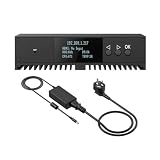 ENC1Pro 4K60 HDMI-Encoder Board (Basic Kit)
- Basic Kit: 1pcs* 【ENC1Pro+Power Adapter】
- Delay is less than 100ms, Enjoy real-time interactive experience.
- Easy Installation ,stable and durable, Wide Compatibility.
-
Confirm player support on target devices
Check LL-HLS support for the exact player library, device, operating system, and browser versions in scope. Then verify through playback behavior and telemetry that clients enter low-latency mode. A playlist that looks correct at the origin is not proof that a viewer’s player is using it.
Validate the full path before launch
Test with the intended encoder, origin, CDN, and players together. Inspect playlist responses and request timing at the origin and through the CDN; where possible, compare them to what the client receives. Measure actual glass-to-glass delay rather than treating the part target as the result.
Free tools Windows power users keep installed
One-click scans. No signup required.
- Playlist and part publication: check that partial segments arrive before their parent segments complete, playlist updates progress, and preload hints refer to resources that subsequently become available.
- Blocking reload and cache behavior: confirm that requests using
_HLS_msnand_HLS_partare handled as intended through the CDN, not stripped, cached incorrectly, or cut off by a timeout. - Playback modes: record join time and live-edge distance on each target player, and check for fallback to regular-latency HLS when LL-HLS support is unavailable.
- Live operations: test rendition switching, seeking, and recovery after a connection interruption or missing segment. Repeat on representative network conditions and regions.
- Scale and resilience: establish how the origin, CDN, and monitoring behave under expected load and during component failures. A successful single-client test does not establish performance at audience scale.
Know what service-specific guidance does—and does not—tell you
AWS’s MediaPackage documentation says standard HLS typically has 18–30 seconds of latency and that LL-HLS can achieve 3–5 seconds. Those figures are AWS’s broad product-documentation comparison, not a guaranteed result or a universal range for other providers. The outcome depends on the entire encode-to-player workflow and audience conditions.
Best Value

- ⭐【Innovative Product with Leading Technology】- Equipped with an advanced H.265/H.264 dual encoding chip, supports 1920x1080 resolution input and output, achieving 60fps high-definition presentation with realistic and delicate color reproduction and lossless detail. It also supports HDCP 1.4 decryption, easily decoding various HDMI high-definition video sources, delivering a cinematic visual experience for both professional live streaming and high-definition content transmission.
- ⭐【Multi-protocol and Multi-platform Compatibility】- Fully compatible with streaming protocols such as HTTP, RTSP, RTMP(S), SRT, HLS(M3U8), MP4, Multicast(UDP, RTP, PTL), ONVIF, FLV, it can simultaneously output 4 video streams with different protocols and push them to live streaming platforms such as YouTube, Facebook, Twitch, and Vimeo with one click. Simultaneous live streaming across multiple platforms can be achieved without additional equipment.
- ⭐【Highly Customizable Settings to Meet Individual Needs】- It supports adding static text, scrolling captions, brand logos, and timestamps. Users can freely adjust core parameters such as video resolution, frame rate, and bitrate, and also perform personalized editing functions such as video cropping, rotation, flipping, and mirroring. It supports dual input of HDMI embedded audio and line-in audio, with adjustable sound quality, making your live stream content more distinctive and allowing you to create a unique brand live stream style.
- ⭐【Stable and Efficient Transmission, Easy Operation】- Employing HDMI to Ethernet core connection technology, it ensures stable and reliable network transmission with low latency and no lag, adapting to various network environments. Equipped with an intuitive user interface and detailed instruction manual, no professional technical background is required; setup can be completed quickly after connecting the device. It is also compatible with multiple terminals such as computers and mobile phones for management, and the video stream status can be viewed in real time via a URL.
- ⭐【Lifetime Free Warranty and Technical Supports】- All URayCoder video codecs come with a lifetime free warranty and technical supports, supporting secondary development and feature customization to meet enterprise-level personalized needs. Meanwhile, we providing many kinds of customization services such as shell pattern printing, logo addition, hardware and function development, ensuring reliable quality and worry-free after-sales service.
AWS also documents MediaPackage-specific details: its LL-HLS manifests require EXT-X-PROGRAM-DATE-TIME, and the service supports LL-HLS manifests using TS or CMAF containers. Do not treat those requirements or container options as universal rules for every origin or packager. When comparing managed and self-managed options, evaluate client compatibility, container and workflow requirements, CDN behavior, regional coverage, resilience, cost, and how much operational control you need. Pricing and feature availability depend on the provider and configuration; no general cost figure follows from the protocol settings.
Troubleshoot common LL-HLS failures
| Symptom | Likely area to inspect | What to check or change |
|---|---|---|
| Playback works, but latency is closer to regular HLS | Player mode or missing server support | Verify the exact player supports LL-HLS and inspect its requests and playback mode. Check that the origin publishes the required playlist behavior and that the CDN preserves it. |
| Playlist requests wait too long, time out, or poll repeatedly | Blocking reload or CDN request handling | Check handling of _HLS_msn and _HLS_part, origin blocking-reload support, cache-key treatment, and intermediary/CDN response timeouts. Apply the relevant vendor’s configuration guidance. |
| Parts or preload-hinted resources are missing | Packaging cadence or playlist publication | Inspect whether the packager publishes partial segments and updates the playlist in the expected order, and whether the hinted part becomes available. Check origin and CDN logs for delayed or failed requests. |
| Playback stalls or repeatedly falls behind the live edge | Network conditions, part target, or player buffering | Compare audience RTT with the configured part target, inspect segment delivery and player behavior, and test on the affected network. Revisit the target and hold-back together rather than reducing one value blindly. |
| Rendition switches disrupt low-latency playback | Variant alignment or rendition reporting | Check that renditions advance coherently and that rendition reports are present and usable where appropriate; test switches on the actual target players. |
| A service rejects or alters a manifest | Provider-specific packaging requirements | Compare the manifest with the chosen origin’s LL-HLS requirements. For AWS MediaPackage, check its documented EXT-X-PROGRAM-DATE-TIME requirement; do not generalize it to other services. |
Or let it run in the cloud
If your goal is an always-on YouTube channel playing uploaded videos, rather than interactive low-latency delivery from a live camera or a custom LL-HLS pipeline, StreamNeo is a different, simpler use case: upload a recording or build a playlist, add your YouTube stream key, and go live. It loops uploaded video from the cloud; it is not an LL-HLS packager or a substitute for the encoder, origin, CDN, and compatible player described above.
- Nothing has to stay on at home: the stream keeps going from the cloud with your computer off.
- Any quality up to 4K 60fps streams as uploaded at one price per slot, with no re-encode or quality tiers.
- Automatic recovery is provided if YouTube drops the stream.
- The first day is free with no card.
Monthly: $9.99 per month. Start your free day with StreamNeo.
Do these 3 things before closing this tab:
1Scan for outdated or missing drivers - takes under a minute2Clear out junk files and repair common Windows errors3Fix the driver behind crashes, sound loss and screen glitchesQuick Recap
Product prices and availability are accurate as of the date/time indicated and are subject to change. Any price and availability information displayed on Amazon at the time of purchase will apply.




