Recommended Free Tools
Prepare a few flexible talking points, a short list of questions, and one realistic goal before you arrive. At the event, introduce yourself in about 30–60 seconds, then make room for a real conversation: listen, follow the other person’s lead, and respect their time. Afterward, note what you discussed and follow through on any next step you offered.
Before the event: decide what you want to learn
Choose a realistic aim, such as learning about a startup’s market, understanding someone’s role, or meeting people who work on a topic you care about. A clear aim helps you decide whom to approach and which questions are relevant; it does not need to be a target number of conversations.
As an Amazon Associate I earn from qualifying purchases.
Look up a few relevant attendees or organizations if that information is available. Read enough to identify a specific point you can ask about, but do not simply repeat facts from a profile. The University of Florida’s Professional Introduction (Elevator Pitch) Guide recommends tailoring an introduction to its audience. University career-center advice is useful preparation, though a career fair and a startup networking event are not identical settings.
Prepare question options, not a checklist
Write down several open-ended questions, then choose one that fits the exchange. Examples include:
#1 Best Overall

- Personalized name tag inserts stay secure in the soft, clear badge holders designed to provide flexibility and easy readability
- Keep name tag holders in place all day with the included self-adhesive, garment-friendly clips that won't damage fabric
- Reuse plastic name tag holders again and again; durable PVC plastic ensures holders can stand up to frequent use
- Quickly create custom name badges with personal titles, company names, logos, and more using our Avery online design software and available Avery templates
- Name tag holders with clips are great as staff ID card holders, nurse name badge clips, visitor pass holders, name tags for meetings, trade show badges, and more
- “What problem is your startup working on, and what have you learned from customers so far?”
- “How did you get into your current role?”
- “What are you learning about the market that surprised you?”
- “What has stood out to you at this event?”
- “What did you take away from the speaker?”
The startup-specific examples are practical adaptations, not questions shown to produce better outcomes. The University of Iowa Pomerantz Career Center also suggests questions such as “Tell me more about your role” and “What do you like about this conference so far?” in its Tips for Connecting at Events.
Keep your questions curious and pertinent. Opening with a demand for a job, investment, customer, or introduction can make a conversation feel transactional. You can raise a specific request later if the discussion makes it appropriate.
Rank #2
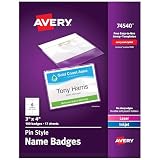
- Keep name tags in place with clear plastic badge holders that affix securely to clothing with a no-snag pin
- Quickly create custom name badges with personal titles, company names, logos, and more using our Avery online design software and available Avery templates
- Get professional-looking DIY name badges made from premium cardstock optimized for most standard laser and inkjet printers
- Reuse plastic name badge holders again and again; durable plastic ensures holders can stand up to frequent use
- Personalized name tags are great as staff ID card holders, corporate event tags, meeting name badges, trade show ID badges, and more
How to introduce yourself naturally
A concise introduction is an opening, not a performance. The University of Florida Career Connections Center says introductions should be customized to the target audience and last 30–60 seconds in its Professional Introduction (Elevator Pitch) Guide. Treat that as a useful guide rather than a requirement to fill a set amount of time.
Prepare the key points, but do not memorize a speech. The center’s Career Fair Readiness Resources says introductions should guide a conversation rather than serve as a word-for-word script.
Rank #3

- Color: Clear | Includes attachable metal pins
- Size: 3 5/8 x 2 1/5
- Quantity: 24 Tags per pack
- Easy to assemble with clear pocket pouch, white cards, white thread and metal fasteners
- Great for students, office workers, and work conferences!
A flexible four-part frame
- Name and focus: Say who you are and what you work on, study, or want to explore.
- Relevant detail: Add one concise example of a project, experience, interest, or strength that connects to the context.
- Reason for speaking: Mention what drew you to the person, organization, or event, using something accurate and specific.
- Invitation: Ask a genuine question that gives the other person room to respond.
For example, adapt this framework with details that are true for you: “Hi, I’m [name]. I’m [current role or focus], and recently I’ve been working on [relevant project or interest]. I’m here to learn more about [specific topic or organization]. What has your experience with [relevant topic] been like?” Leave out any detail that does not fit your background or the conversation.
Starting and sustaining a conversation
You do not have to begin with a polished question. A simple greeting and a reference to the event, a speaker, or a shared topic can open the exchange. Then ask one question and listen to the answer before deciding what to ask next. A detail in their response may offer a more natural follow-up than the next item on your prepared list.
Rank #4
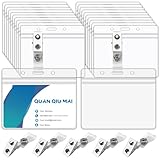
- Package includes: 50 Pcs horizontal badge holders and 50 Pcs metal badge clips
- Material: Made of high quality transparent PVC material, The metal clip is not prone to rust and has a tight spring that can be firmly fixed
- Easy to Use: Transparent PVC strap is easy to open and close, just use the metal clip to clip the horizontal badge holder,which can be securely clipped to collars, pockets, belts, backpacks
- Widely Used: Name tag holders with clips are great as staff ID card holders, nurse name badge clips, visitor pass holders, name tags for meetings, trade show badges, and more
- Waterproof : Reliable waterproof seal with resealable zipper to keep your name card, ID card or traffic pass secure and dry
Make the conversation mutual: share a relevant detail about yourself when it fits, rather than delivering your entire introduction and moving straight to another question. If you are unsure how to begin, try a brief observation—such as “That talk raised an interesting point about customer discovery”—and let the other person respond.
What’s actually slowing this PC down?
Pick the symptom - the matching free tool is one click away.
Notice when the other person needs to move on
Keep an eye on the setting and the other person’s cues. If they give brief answers, turn toward another group, or mention needing to leave, wrap up politely instead of pressing for more time. The University of Iowa’s event guidance emphasizes respecting others’ time and noticing when they are ready to move on. A worthwhile exchange matters more than treating the event as a contest to meet the most people.
Best Value
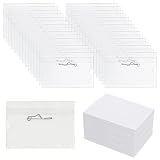
- Great Value in Bulk: Includes 100 transparent badge holders and 100 insert cards, enough for businesses and events requiring large quantities of name badges, providing an affordable, organized solution for teams and groups.
- Product Size: Covzoe name badge holder measures approx 3.62"L x 2.44"W, and the accompanying card measures approx 3.54"L x 2.36"W, perfectly accommodating most name badges and ID cards.
- Durable Material: Made from flexible yet sturdy PVC, these badge sleeves offer reliable protection against daily wear and tear. The transparent design keeps name cards fully visible without removal.
- Secure Pin Clips for Easy Wear: Each badge holder includes a safety pin clip, ensuring your card stays firmly in place on shirts, lanyards or bags. Simply insert the name badge or ID card into the name tag, then secure it to your clothing with pin.
- Versatile Use: Ideal for workplace, office, school, trade shows, meetings, seminars, conferences, hospitals and more, providing a professional look and practical card protection.
Following up after the event
Soon after the event, make a short note of whom you spoke with and what you discussed. A few accurate details can help you remember the context and make any follow-up more personal without inventing familiarity.
- Thank someone if they shared useful information or made a referral.
- Connect on a professional platform when it makes sense for the conversation.
- If you offered to send something or take another action, follow through.
- In a message, refer to a real point from the conversation and make any request clear and proportionate.
For example: “Hi [name]—I enjoyed hearing your perspective on [specific topic] at [event]. Thanks for explaining [specific detail]. As promised, here is [item].” Send only what you actually promised, and do not imply a closer relationship than you have.
Quick Recap
A quick preparation checklist
- Set one realistic aim for the event.
- Research a few relevant people or organizations, if attendee information is available.
- Prepare a flexible introduction from true, relevant details.
- Write several open-ended questions and choose among them in the moment.
- Bring a way to record names and conversation details afterward.
- Be ready to listen, share the conversation, and end it graciously.
Product prices and availability are accurate as of the date/time indicated and are subject to change. Any price and availability information displayed on Amazon at the time of purchase will apply.




