What’s actually slowing this PC down?
Pick the symptom - the matching free tool is one click away.
Measure the project’s net greenhouse-gas balance over a defined boundary and reporting period—not just the tonnes of CO2 it captures. Count what is captured and delivered to storage, subtract attributable emissions and losses, and compare the result with a documented baseline using a stated accounting method. Captured tonnes alone do not prove that emissions fell.
First decide what claim you are measuring
“Reducing emissions” can describe several different claims. State which one the result supports, because the accounting question and tests may differ:
As an Amazon Associate I earn from qualifying purchases.
- Physical net emissions reduction: whether emissions within the defined project boundary are lower than in a stated baseline over a reporting period.
- Atmospheric removal: whether carbon dioxide was taken from the atmosphere and durably stored. Capturing fossil CO2 from a source before it is emitted is not, by itself, atmospheric removal.
- Offset credit: whether a program allows a quantified benefit to be issued as credits. In addition to measurement, programs can require eligibility, additionality, verification, and permanence tests.
A project can have a positive engineering net balance yet fail a particular crediting program’s requirements. Conversely, a crediting result should not be taken as proof of a broader claim if its boundary or baseline does not cover the emissions a reader cares about.
Quick wins for a faster PC:
Clear out junk files and repair common Windows errorsFree Scan →Fix the driver behind crashes, sound loss and screen glitchesFind Drivers →Set the boundary and reporting period
Draw the boundary around the parts of the project that the chosen protocol requires, and say where it begins and ends. Follow the CO2 and the inputs needed to capture and store it. Depending on the project and method, relevant stages can include the capture source and facility, conditioning, energy and material inputs, transport, injection, storage, construction, operation, completion, and post-closure monitoring.
#1 Best Overall

- 𝐔𝐩 𝐓𝐨 𝟮 𝐘𝐞𝐚𝐫𝐬 𝐨𝐟 𝐅𝐢𝐥𝐭𝐫𝐚𝐭𝐢𝐨𝐧: Includes 2 360° All-in-One True HEPA Filter Sets
- 𝐀𝐇𝐀𝐌 𝐕𝐞𝐫𝐢𝐟𝐢𝐝𝐞 𝐚𝐭 𝟒𝟏𝟎 𝐬𝐪 𝐟𝐭.: Also cleans rooms up to 1,968 sq ft in 1 hour (984 sq ft in 30 minutes, 656 sq ft in 20 minutes, 492 sq ft in 15 minutes)
- 𝐑𝐞𝐚𝐥-𝐓𝐢𝐦𝐞 𝐀𝐢𝐫 𝐐𝐮𝐚𝐥𝐢𝐭𝐲 𝐃𝐢𝐬𝐩𝐥𝐚𝐲 + 𝐃𝐲𝐧𝐚𝐦𝐢𝐜 𝐅𝐞𝐞𝐝𝐛𝐚𝐜𝐤: A combined digital display and color-coded LED indicator shows air quality as Good (Blue), Fair (Amber), or Poor (Red), while dynamically displaying setting changes such as fan speed, WiFi, and brightness before returning to live air quality status
- 𝐓𝐡𝐞 𝐒𝐦𝐚𝐫𝐭𝐞𝐫 𝐀𝐢𝐫 𝐏𝐮𝐫𝐢𝐟𝐢𝐞𝐫: Control and monitor your unit anytime from anywhere by instantly accessing your unit with the Winix Smart App through the convenient WiFi feature
- 𝐖𝐢𝐧𝐢𝐱 𝐓𝐫𝐮𝐞 𝐇𝐄𝐏𝐀: Captures 99.99%* of airborne particles including pollen, dust, smoke, and pet dander, as small as 0.01 microns
Choose a reporting period and identify whether the accounting also covers later leakage or reversal. A result for one operating year is not automatically a lifetime result. ISO/TR 27915:2017 describes lifecycle quantification and verification issues across the CCS chain, including project assessment through post-closure; confirm its current status and any regulatory or contractual requirements that apply. The European Union’s Delegated Regulation 2026/285 contains provisions for carbon-removal quantification, including capture-facility and input emissions, losses, and mass balance; apply it only when the activity and legal framework fall within its scope.
Track captured CO2 through to storage
Measure mass at the points required by the applicable method, using its specified instruments, stream-composition and flow procedures, calibration, sampling, and records. Keep the quantities distinct: CO2 captured is not necessarily the same amount as CO2 transferred, injected, or retained in storage.
| Quantity | What it tells you | Records to reconcile |
|---|---|---|
| Captured | Mass removed from the source stream at the capture point | Required flow and composition measurements, sampling, calibration, and operating records |
| Transferred | Mass handed from the capture operation to transport or another project component | Transfer records and any measured losses or vents between capture and handoff |
| Injected | Mass delivered into the storage site | Transport and injection records, including losses before injection |
| Stored and monitored | Mass accounted for under the method’s storage and permanence rules | Storage-site monitoring, reported leakage or reversals, and records for the required monitoring period |
Australia’s Measurement Determination specifies measurement of the captured greenhouse-gas stream at the point of capture and sets sampling and gas-analysis requirements; its methods are jurisdiction-specific. Reconcile capture measurements with downstream transport and injection records rather than treating the capture-meter total as the stored total.
Rank #2

- 𝐀𝐇𝐀𝐌 𝐕𝐞𝐫𝐢𝐟𝐢𝐝𝐞 𝐚𝐭 𝟑92 𝐬𝐪 𝐟𝐭.: Also cleans rooms up to 1,882 sq ft in 1 hour (941 sq ft in 30 minutes, 627 sq ft in 20 minutes, 470 sq ft in 15 minutes)
- 𝐖𝐢𝐧𝐢𝐱 𝐓𝐫𝐮𝐞 𝐇𝐄𝐏𝐀: Captures 99.99%* of airborne allergens including pollen, dust, smoke, and pet dander, as small as 0.01 microns
- 𝐀𝐝𝐯𝐚𝐧𝐜𝐞𝐝 𝐎𝐝𝐨𝐫 𝐂𝐨𝐧𝐭𝐫𝐨𝐥 𝐂𝐚𝐫𝐛𝐨𝐧 𝐅𝐢𝐥𝐭𝐞𝐫: Reduces VOCs and household odors from cooking, pets, and smoke. It is designed to catch airborne particles found indoors, which also helps prolong the True HEPA Filter life
- 𝐖𝐚𝐬𝐡𝐚𝐛𝐥𝐞 𝐅𝐢𝐧𝐞 𝐌𝐞𝐬𝐡 𝐏𝐫𝐞-𝐅𝐢𝐥𝐭𝐞𝐫: The first line of defense against the largest airborne particles found indoors
- 𝐀𝐢𝐫 𝐐𝐮𝐚𝐥𝐢𝐭𝐲 𝐈𝐧𝐝𝐢𝐜𝐚𝐭𝐨𝐫: Visual indicator displays real-time air quality in the room with LED lights
Inventory project emissions and losses
Quantify emissions attributable to the project within the chosen boundary. Depending on the applicable method, the inventory can include:
- Fuel and electricity used by the capture plant, including the emissions associated with producing that energy.
- Emissions from relevant materials and process inputs, as well as conditioning, transport, injection, and storage operations.
- Other material greenhouse gases covered by the method.
- Intentional vents, accidental fugitive emissions, transport losses, and other losses before permanent storage.
- Storage-site leakage, above-ground fugitive emissions, or later reversals where the protocol requires them.
Do not assume that a project powered by low-emissions electricity has zero energy-related emissions, or that a loss is immaterial because it is small relative to capture. Use the measurement and calculation rules of the chosen method and disclose material exclusions. The EU’s 2026/285 provisions explicitly address capture-facility emissions, input emissions, and certain pre-storage losses; those provisions do not establish a universal accounting rule for every project.
Calculate the net result against a baseline
A useful conceptual calculation is:
Net project reduction for a reporting period = baseline emissions avoided or removed under the chosen method − project emissions within the boundary − transport and storage losses or reversals included by that method.
Rank #3

- 𝐀𝐇𝐀𝐌 𝐕𝐞𝐫𝐢𝐟𝐢𝐝𝐞 𝐚𝐭 𝟑92 𝐬𝐪 𝐟𝐭.: Also cleans rooms up to 1,882 sq ft in 1 hour (941 sq ft in 30 minutes, 627 sq ft in 20 minutes, 470 sq ft in 15 minutes)
- 𝐖𝐢𝐧𝐢𝐱 𝐓𝐫𝐮𝐞 𝐇𝐄𝐏𝐀: Captures 99.99%* of airborne allergens including pollen, dust, smoke, and pet dander, as small as 0.01 microns
- ?𝐝𝐯𝐚𝐧𝐜𝐞𝐝 𝐎𝐝𝐨𝐫 𝐂𝐨𝐧𝐭𝐫𝐨𝐥 𝐂𝐚𝐫𝐛𝐨𝐧 𝐅𝐢𝐥𝐭𝐞𝐫: Reduces VOCs and household odors from cooking, pets, and smoke. It is designed to catch airborne particles found indoors, which also helps prolong the True HEPA Filter life
- 𝐖𝐚𝐬𝐡𝐚𝐛𝐥𝐞 𝐅𝐢𝐧𝐞 𝐌𝐞𝐬𝐡 𝐏𝐫?-𝐅𝐢𝐥𝐭𝐞𝐫: The first line of defense against the largest airborne particles found indoors
- 𝐀𝐢𝐫 𝐐𝐮𝐚𝐥𝐢𝐭𝐲 𝐈𝐧𝐝𝐢𝐜𝐚𝐭𝐨𝐫: Visual indicator displays real-time air quality in the room with LED lights
This is a guide to the accounting logic, not a universal crediting equation. Apply the selected protocol’s equations, gas-conversion factors, monitoring periods, and eligibility rules. State the baseline clearly: it represents what would have happened without the project under the chosen accounting method. For crediting, assess additionality separately using the program’s criteria; measuring a physical net balance does not itself establish additionality.
Report the origin of the CO2—for example, fossil, biogenic, or atmospheric—so readers can tell whether the claim concerns avoided emissions or atmospheric removal. These are different claims and need the source and accounting treatment to be clear.
Monitor leakage and permanence for the required period
Storage performance is part of the result, not a separate detail. Track injection and the monitoring required for the storage site, report leakage or reversals, and apply the method’s post-injection or post-crediting requirements. Some schemes require monitoring after crediting ends.
Rank #4
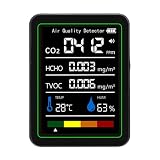
- [Real-time Multi-parameter Detection] This advanced air quality detector utilizes cutting semiconductor, infrared, and electrochemical sensors to provide real-time monitoring of co2, tvoc, hcho, temperature, and humidity levels. with updates every second and no need for calibration, you'll always have accurate data at your fingertips. the high-performance analysis chip ensures precise measurements by capturing even the weakest electrochemical currents.
- [Intuitive Color-coded Display] Easily interpret your air quality with our smart visual indicator system. the detector flashes green (0-799ppm), yellow (800-1199ppm), orange (1200-1599ppm), red (1600-1999ppm), or all colors (1999ppm+) to instantly communicate air quality levels. this simple color-coding makes it perfect for users of all ages to understand their environment's safety at a glance.
- [User-friendly Operation] Experience hassle-free monitoring with simple one-button control. just hold the power button for 3 seconds to turn on/off, or press for 1 second to switch between celsius and fahrenheit. the device automatically begins detection upon activation, making it ready to use right out of the box with minimal setup required.
- [Versatile Indoor Air Monitoring] Perfect for various indoor spaces, this 5-in-1 detector helps maintain environments in homes, offices, classrooms, and more. the sturdy abs housing ensures long-term reliability while the comprehensive detection capabilities provide peace of mind about your air quality. monitor potential pollutants and create safer breathing environments wherever you go.
- [Long-lasting & Portable Design] Designed for continuous use, our detector features a powerful 1200mah rechargeable battery providing up to 7 hours of operation. the type-c usb charging port offers convenient charging options anywhere. its compact abs construction (90x70x35mm) makes it both durable and lightweight - ideal for carrying between home, office, or school environments.
The California Air Resources Board’s CCS accounting and permanence protocol is identified as a draft; it describes accounting for operating emissions, surface leakage, above-ground fugitive emissions, and post-well-closure emissions. Check its status and applicability before treating it as a binding current requirement. Australia’s ACCU CCS method page, last updated 4 August 2026, describes crediting for capture and permanent underground geological storage, with an extended accounting period to monitor possible leakage after the crediting period. That is Australian scheme guidance, not a global rule.
Independent reader supportYour contribution helps us test, update, and keep practical guides available for everyone.Document the result and its verification
A reader should be able to see how the number was produced and what it does—and does not—cover. Report:
Recommended Free Tools
- The accounting claim, protocol name and version, jurisdiction, system boundary, and reporting period.
- The baseline and how it was determined, plus any separate additionality assessment for crediting.
- Captured, transferred, injected, and stored quantities, with measurement sources and reconciliation.
- Energy and material inputs, project emissions, losses, and any exclusions or assumptions.
- Storage monitoring, leakage or reversal treatment, the period covered, and uncertainty.
- Verification status and the identity of the verifier, if independently verified.
The American Carbon Registry identifies CCS Methodology version 2.0, published 4 May 2026, as covering eligibility, additionality, quantification, monitoring, reporting and verification, and reductions or removals. Check the current methodology documents before applying to a project. ISO/TR 27915:2017 discusses quantification and verification options across the CCS chain, but assurance requirements depend on the applicable scheme and jurisdiction. Call a result independently verified only when a verification statement supports that description.
Best Value

- Whole‑Room Rapid Purification: Delivers 360° airflow covering up to 430 sq. ft. (40㎡) twice per hour—quickly refreshes kitchens, bedrooms, dorm rooms, and pet‑friendly spaces. Enjoy clean air throughout your entire home in minutes, effectively reducing pet odors and airborne particles.
- True HEPA 3‑in‑1 filtration: system (pre‑filter + activated carbon + True HEPA) specifically targets pet‑related pollutants—trapping pet hair, dander, smoke, pollen, and other allergens. Perfect for pet owners and allergy sufferers seeking relief from furry friends. The Smoke Remover Filter addresses smoke from wildfires, smoke, and other particulates.
- Real‑Time Air Quality Monitor: The built‑in TVOC sensor tracks harmful volatile organic compounds (like formaldehyde, benzene) and alerts you to air quality changes—even those caused by pet dander or odors. The air quality display shows real-time air quality levels: green for good, orange for moderate, and red for bad.
- Smart Auto Mode: Automatically adjusts fan speed based on real‑time air quality readings, quickly responding to pollution spikes from pet activity, cooking, or smoke. The built-in child/pet lock prevents accidental touches, ensuring safe and uninterrupted operation—perfect for homes with curious kids or furry friends.
- Maintenance & Support: For optimal performance—especially in homes with pets—replace the AromaRoom genuine filter (B0D72V2QG3) every 3‑6 months. Remove the PE bag from the filter before first use. Avoid placing the unit in high‑humidity areas (e.g., bathrooms). Our 24/7 local customer service team is always ready to assist you.
What a project comparison must include
Do not rank projects by captured tonnes alone. For a meaningful comparison, use a common protocol or explain the methodological differences, and align the reporting periods and boundaries. Compare the following:
- Net tonnes of CO2e and the stated period and boundary.
- Capture source and whether the CO2 is fossil, biogenic, or atmospheric in origin.
- Energy source and emissions intensity, plus relevant material and process-input emissions.
- Captured, transferred, injected, and stored quantities; transport losses and fugitive emissions.
- Storage permanence plan, leakage and reversal monitoring, and the period covered.
- Baseline and additionality treatment, crediting program, verification status, and uncertainty.
Without matched project data and a consistent method, a numerical league table would not establish which project delivers the greater net benefit.
Quick Recap
Product prices and availability are accurate as of the date/time indicated and are subject to change. Any price and availability information displayed on Amazon at the time of purchase will apply.
Free tools Windows power users keep installed
One-click scans. No signup required.




